

Antioxidant Foods That Reduce Inflammation and Reset Cell Health
If you’re dealing with joint pain, sluggish digestion, or that low-grade “off” feeling that never quite resolves, your plate is one of the fastest levers you can pull. Berries, leafy greens, fatty fish, nuts and seeds, olive oil, tomatoes, anti-inflammatory spices like turmeric and ginger, and fermented foods form the core of an evidence-backed, anti-inflammatory eating pattern. These aren’t trendy add-ons. They’re food categories with real research behind their ability to blunt the chemical signals that drive chronic inflammation.
Start small this week:
- Add one serving of berries daily (about ¾ cup) to breakfast or a snack.
- Swap one dinner for fatty fish like salmon, sardines, or mackerel.
- Aim for the target set by the 2025 Dietary Guidelines: two servings of fruit and three servings of vegetables a day, plus two fish meals a week.
The rest of this guide breaks down exactly why these foods work at a cellular level, what the research actually shows (and where it’s shaky), specific serving sizes, a one-week meal blueprint, and the safety details worth knowing before you overhaul your plate or reach for a supplement.
Pro Tip: Don’t try to add all eight food categories at once. Pick two you already like, build them into your routine for two weeks, then layer in a third.
Key Takeaways
An anti-inflammatory eating pattern built on berries, leafy greens, fatty fish, nuts, olive oil, and fermented foods lowers inflammatory markers more reliably than any single antioxidant food or supplement.
| Point | Details |
|---|---|
| Pattern beats single foods | Mediterranean and plant-forward dietary patterns show more consistent CRP and IL-6 reductions than isolated “superfoods.” |
| Hit the daily targets | Aim for the recommended fruit and vegetable servings daily, plus two fatty fish meals weekly. |
| Subtract, not just add | Cutting refined carbs, added sugars, and processed meats matters as much as adding antioxidant-rich foods. |
| Pair for absorption | Combine turmeric with black pepper and fat, and eat cooked tomatoes with olive oil, to boost compound absorption. |
| Consider food-first supplementation | Tryrevivify’s gel supplement combines SOD, prebiotic fiber, polyphenols, and lactobacillus as an adjunct to, not a substitute for, an antioxidant-rich diet. |
Table of Contents
- How Antioxidant Foods Reducing Inflammation Actually Work in Your Body
- What the Research Shows About Diet, CRP, and IL-6
- The Core Antioxidant Food Categories That Fight Inflammation
- Foods and Ingredients That Drive Inflammation Up
- Building an Anti-Inflammatory Day and Week Without Overhauling Your Kitchen
- How Much to Eat and When Supplements Enter the Picture
- When You’ll Notice a Difference and How to Track It
- Why Pattern Beats Superfood Hunting
- Where Tryrevivify Fits Into a Food-First Plan
- Frequently Asked Questions
- Sources
How Antioxidant Foods Reducing Inflammation Actually Work in Your Body
Antioxidants neutralize unstable molecules called reactive oxygen species before they can damage cells, and in doing so, they quiet down a signaling pathway called NF-κB that triggers the production of inflammatory cytokines. That’s the short version. The longer version explains why some foods do this better than others, and why no single “superfood” acts alone.
Your body already runs its own antioxidant defense system. Enzymes like superoxide dismutase (SOD), catalase, and glutathione peroxidase work in sequence, almost like a relay team, converting dangerous free radicals into harmless byproducts before they can trigger the oxidative stress that keeps inflammatory pathways switched on. When that internal system gets overwhelmed by poor sleep, pollution, excess sugar, or age-related decline, dietary antioxidants step in as reinforcements.
Different compound classes handle different jobs. Omega-3 fatty acids from fish interrupt the production of inflammation-causing chemicals called eicosanoids. Polyphenols in berries and green tea bind to reactive molecules directly and also appear to upregulate your own SOD and glutathione activity. Carotenoids like lycopene and beta-carotene protect cell membranes from oxidative damage. Curcuminoids in turmeric block NF-κB activation at the molecular level, which is a more targeted mechanism than most food compounds offer. Vitamins C and E round things out by protecting different environments in the body, C in watery tissues, E in fatty ones.
The clinical relevance comes down to two biomarkers researchers track most often: C-reactive protein (CRP) and interleukin-6 (IL-6). Both rise when your body is running a low-grade inflammatory response, and both have shown measurable movement in dietary intervention studies, though the size of that effect varies a lot by population and study design.
Oxidative stress and chronic inflammation are tightly linked biological processes, and antioxidants are considered a promising therapeutic target, but most human antioxidant trials have delivered mixed results rather than clean, universal wins.
That mixed track record isn’t a reason to ignore antioxidants. It’s a reason to focus on food patterns rather than chasing a single compound in pill form, a distinction that matters more than most headlines let on.
What the Research Shows About Diet, CRP, and IL-6
The pattern matters more than the individual ingredient. That’s the honest, unglamorous summary of where the evidence stands. Mediterranean-style and plant-forward diets consistently show associations with lower inflammatory markers across population studies, while trials testing a single antioxidant food or supplement in isolation produce far more inconsistent results.
Here’s where confidence is highest and where it thins out. Large epidemiological studies, the kind that track thousands of people’s eating habits over years, show a fairly consistent link between diets high in vegetables, fruit, olive oil, nuts, and fish and lower rates of chronic inflammatory conditions. Some randomized controlled trials of Mediterranean-style interventions have shown measurable reductions in CRP and IL-6 over several months. That’s a meaningfully stronger form of evidence than an observational association, since it points more directly at cause and effect.
Where the picture gets murkier is with isolated compounds. Trials of single antioxidant supplements, vitamin E capsules, isolated polyphenol extracts, high-dose vitamin C, have shown far more inconsistent effects on inflammatory markers than whole-food dietary patterns. Some show modest benefit. Others show none. A few have flagged potential harm at high doses in specific populations. This isn’t a knock against the underlying biology; it’s a signal that the food matrix itself, fiber, water content, the way compounds interact together, does something a capsule can’t fully replicate.
There’s also a practical intake gap worth naming plainly: roughly 90% of American adults don’t meet the daily fruit and vegetable targets set by the Dietary Guidelines. That’s not a small compliance gap. It means the vast majority of people asking “what foods reduce inflammation” are starting from a baseline well below the intake level where most of the positive research even applies.
What’s well-supported:
- Whole dietary patterns (Mediterranean, plant-forward, DASH-style) show the most consistent biomarker improvements.
- Fatty fish consumption two or more times weekly correlates with lower inflammatory markers in multiple trial designs.
What’s still preliminary:
- Isolated antioxidant supplement trials remain inconsistent, with effect sizes that vary widely by dose and population.
- Long-term disease-outcome data (not just biomarker shifts) is still catching up to the shorter biomarker studies.
The Core Antioxidant Food Categories That Fight Inflammation
This is the practical center of the guide. Each category below carries its own compound profile, its own strength of evidence, and a serving size you can act on today rather than a vague suggestion to “eat healthier.”
Berries. Blueberries, blackberries, and strawberries are dense in anthocyanins, the polyphenol responsible for their deep color, which appear to work synergistically with other plant compounds to lower oxidative and inflammatory markers more effectively than any single isolated antioxidant. Aim for ¾ to 1 cup daily. A simple swap: replace your usual sweetened yogurt topping with frozen blueberries stirred into plain Greek yogurt.
Leafy greens. Spinach, kale, and Swiss chard supply vitamin C, vitamin E, and lutein, a carotenoid that protects cell membranes. Two cups raw or one cup cooked most days is a reasonable target. Wilt a big handful of spinach into your morning eggs instead of eating it only in salads, where it’s easy to skip.
Cruciferous vegetables. Broccoli, Brussels sprouts, and cauliflower contain sulforaphane, a compound that activates your body’s own detoxification and antioxidant enzyme pathways rather than acting as a direct antioxidant itself. Half a cup to one cup daily, roasted or lightly steamed, preserves more of the compound than boiling.
Fatty fish. Salmon, sardines, and mackerel deliver EPA and DHA, the omega-3s that directly interrupt inflammatory eicosanoid production. This is one of the better-supported categories in the entire list, with multiple trial designs pointing the same direction. Two 3 to 4 ounce servings weekly is the standard target. Canned sardines on whole-grain toast is a five-minute version of this.
Nuts and seeds. Walnuts, almonds, flaxseed, and chia seeds bring vitamin E, fiber, and, in the case of walnuts and flaxseed, plant-based ALA omega-3s, useful for people who don’t eat fish regularly. A small handful, roughly 1 to 2 ounces, most days works well. Swap a mid-afternoon granola bar for a small handful of walnuts and a piece of fruit.
Extra-virgin olive oil. The oleocanthal in high-quality extra-virgin olive oil has a mechanism of action similar in structure to ibuprofen, though far milder. One to two tablespoons daily, used as your primary cooking and finishing fat, is the practical target.
Tomatoes. Lycopene, the carotenoid behind their red color, becomes more bioavailable when tomatoes are cooked and paired with fat, which is part of why tomato sauce made with olive oil is nutritionally smarter than raw tomato alone. One cup of cooked tomatoes or sauce a few times weekly is reasonable.
Colorful fruits. Oranges, pomegranates, and cherries add a wider spread of polyphenols and vitamin C beyond what berries alone provide. One to two servings daily, rotating varieties, captures more compound diversity than eating the same fruit every day.
Whole grains and legumes. Oats, quinoa, lentils, and chickpeas supply fiber that feeds gut bacteria producing short-chain fatty acids, which have their own anti-inflammatory signaling role. Half a cup to one cup daily is a workable target.
Fermented foods. Yogurt, kefir, kimchi, and sauerkraut introduce live cultures that support gut barrier integrity, a factor increasingly tied to systemic inflammation control. A small daily serving, a few tablespoons of kimchi or a cup of plain yogurt, is enough to matter.
Turmeric and ginger. Curcumin, turmeric’s active compound, blocks NF-κB activation directly, but it’s poorly absorbed on its own. Gingerol, ginger’s key compound, works through a related but distinct anti-inflammatory pathway. A half to one teaspoon of turmeric and a similar amount of fresh ginger, used regularly in cooking, is more realistic than a single large dose.
| Food category | Key compounds | Example serving | Simple meal example |
|---|---|---|---|
| Berries | Anthocyanins, vitamin C | ¾–1 cup daily | Blueberries stirred into oatmeal |
| Leafy greens | Vitamin C, vitamin E, lutein | 1–2 cups daily | Spinach wilted into scrambled eggs |
| Cruciferous vegetables | Sulforaphane | ½–1 cup daily | Roasted broccoli as a dinner side |
| Fatty fish | EPA, DHA | Two 3–4 oz servings/week | Grilled salmon with olive oil |
| Nuts and seeds | Vitamin E, ALA, fiber | 1–2 oz most days | Walnuts and fruit as a snack |
| Extra-virgin olive oil | Oleocanthal, polyphenols | 1–2 tbsp daily | Drizzled over roasted vegetables |
| Tomatoes | Lycopene | 1 cup cooked, a few times weekly | Tomato sauce with olive oil |
| Whole grains and legumes | Fiber, short-chain fatty acid precursors | ½–1 cup daily | Lentil soup for lunch |
| Fermented foods | Probiotic cultures | Small daily serving | Kimchi alongside dinner |
| Turmeric and ginger | Curcumin, gingerol | ½–1 tsp regularly | Turmeric stirred into rice or soup |
Pro Tip: Curcumin absorption jumps significantly when paired with black pepper (piperine) and a source of fat, so a turmeric latte made with whole milk and a pinch of black pepper does more than turmeric powder sprinkled on dry rice.
Pro Tip: Eat tomatoes cooked, not raw, and always with a fat source like olive oil. Lycopene is fat-soluble, so raw tomato salad without dressing leaves most of the compound unabsorbed.
Foods and Ingredients That Drive Inflammation Up
Refined carbohydrates, added sugars, processed and red meats, trans fats, and ultra-processed foods are consistently associated with higher inflammatory markers, and cutting these back may matter as much as adding antioxidant-rich foods on top. This “subtraction” side of the equation gets less attention than the “addition” side, but clinical guidance treats it as equally important.
- Sugary drinks and refined carbs spike blood sugar rapidly, which drives glycation reactions that generate inflammatory byproducts.
- Processed and red meats (bacon, sausage, deli meat) are linked to higher CRP levels in multiple population studies.
- Trans fats, found in some fried and packaged baked goods, directly promote endothelial inflammation.
- Ultra-processed snack foods combine refined carbs, added sugar, and industrial oils in a way that compounds the inflammatory load of each ingredient alone.
A few practical swaps make this manageable without turning grocery shopping into a research project. Trade sugary soda for sparkling water with a squeeze of citrus. Replace a bag of chips with a small handful of walnuts and an apple. Swap deli ham for roasted turkey breast or a portion of grilled fish. Use olive oil instead of margarine or shortening in cooking. None of these require giving anything up entirely, they’re substitutions, not sacrifices, and reviewing common inflammatory food triggers can help you spot patterns specific to your own diet.
Building an Anti-Inflammatory Day and Week Without Overhauling Your Kitchen
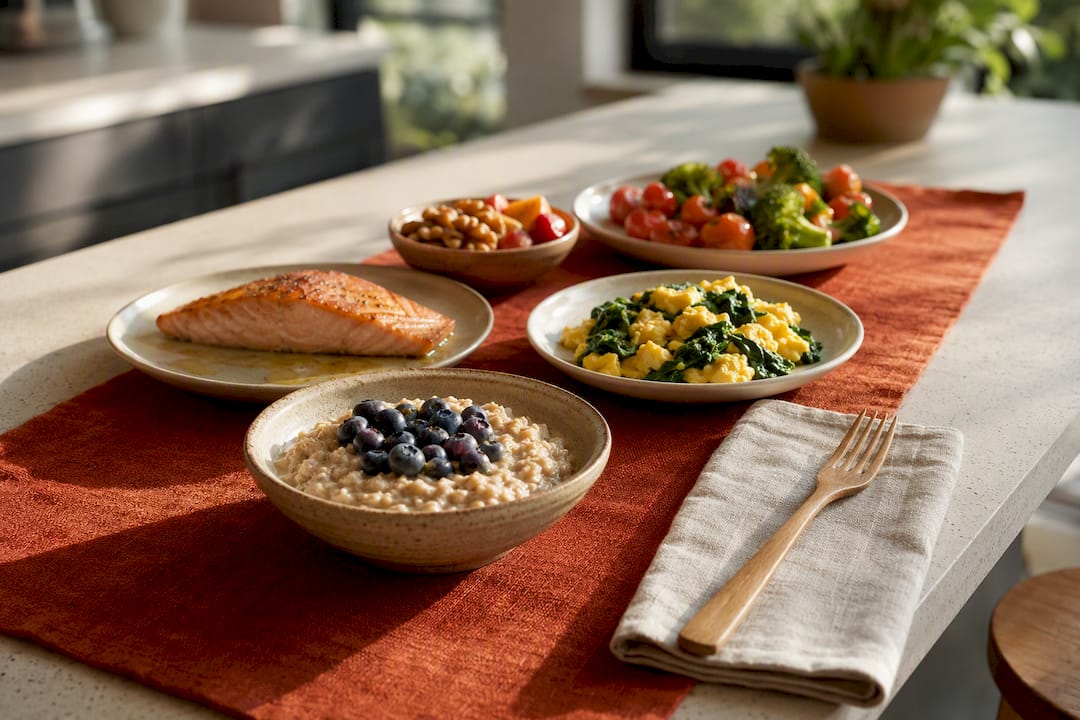
A single day that meets both the fruit and vegetable target and the fish goal might look like this: berries and walnuts on oatmeal for breakfast, a big spinach salad with chickpeas and olive oil dressing for lunch, an apple and a small handful of almonds as a snack, and grilled salmon with roasted broccoli and a side of quinoa for dinner. That one day alone hits close to five combined fruit and vegetable servings and covers a fish serving in a single sitting.
Stretched across a week, the pattern is about rotation, not repetition. Breakfasts can cycle between berry oatmeal, spinach and egg scrambles, and Greek yogurt with fruit and flaxseed. Lunches rotate through big salads with legumes, leftover grain bowls with roasted vegetables, and lentil soup. Dinners are where the fatty fish targets get met, two nights of salmon, sardines, or mackerel, with the remaining nights split between a plant-forward meal like a chickpea and vegetable curry spiced with turmeric and ginger, and a lean protein paired with a colorful vegetable side. Snacks stay simple and repetitive on purpose: nuts, fruit, yogurt, and vegetables with hummus cover most of the gaps.
| Instead of this | Try this |
|---|---|
| Sugary cereal | Oatmeal with berries and walnuts |
| Deli sandwich with processed meat | Grilled chicken or fish on whole-grain bread |
| Chips as a snack | Handful of almonds with an apple |
| Soda with lunch | Sparkling water with citrus |
| Butter or margarine for cooking | Extra-virgin olive oil |
| White rice as a side | Quinoa or lentils |
Grocery shopping gets easier once you think in three zones. Your fridge should carry leafy greens, berries, plain yogurt, and a jar of kimchi or sauerkraut for quick fermented additions. Your pantry needs canned sardines, canned tomatoes, dried or canned lentils and chickpeas, olive oil, turmeric, and ginger, all shelf-stable and ready when fresh produce runs low. Your freezer is the quiet workhorse: frozen berries hold their antioxidant content well, frozen salmon fillets thaw fast on a busy weeknight, and frozen broccoli or spinach means you’re never without a vegetable option.
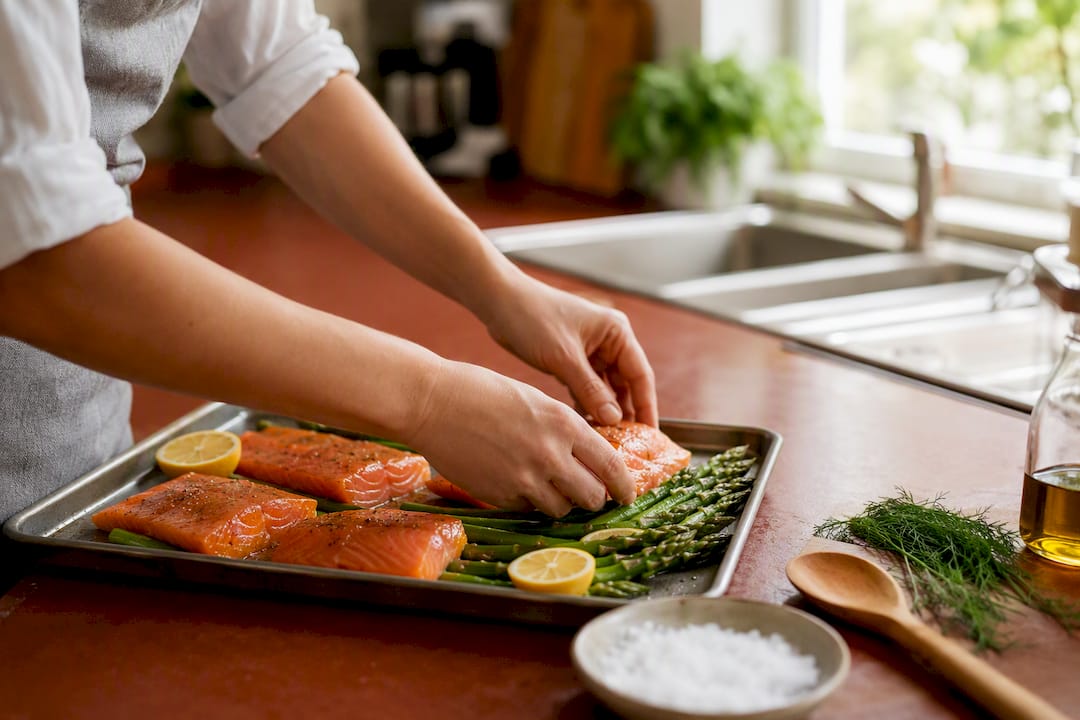
For two recipes worth keeping on repeat: a sheet-pan salmon dinner, salmon fillets rubbed with olive oil, black pepper, and a little turmeric, roasted alongside broccoli and cherry tomatoes at 400°F for about 15 minutes, covers your fish, cruciferous vegetable, and lycopene targets in one pan. A lentil and spinach soup, built from canned lentils, diced tomatoes, garlic, ginger, and a big handful of spinach stirred in at the end, delivers fiber, lycopene, and leafy greens in a single pot that reheats well for lunches all week.
How Much to Eat and When Supplements Enter the Picture
The Dietary Guidelines target of two fruit servings and three vegetable servings daily remains the clearest, most research-backed benchmark available, alongside two 3 to 4 ounce servings of fatty fish weekly for EPA and DHA, and roughly 1 to 2 ounces of nuts most days.
Food should be the primary strategy, not a supplement stack. Whole foods deliver fiber, water, and a mix of compounds that interact together in ways an isolated capsule doesn’t replicate, and supplement trials have shown mixed or even null results, with some high-dose formulations carrying more risk than benefit for certain populations. That said, some people, those with documented deficiencies, limited dietary variety, or specific clinical guidance, may reasonably consider a targeted supplement as an addition to, not a replacement for, food-based strategies.
A few safety notes deserve equal weight regardless of which inflammatory pathway you’re targeting. High-dose omega-3 supplements can have a blood-thinning effect, which matters if you’re already on anticoagulant medication. High-dose turmeric or curcumin supplements carry a similar blood-thinning consideration and can interact with certain medications metabolized by the liver. Fat-soluble vitamins like E can accumulate to harmful levels at high supplemental doses in a way food sources rarely approach.
Modern clinical guidance increasingly favors supporting your body’s own antioxidant enzyme systems through food first, reserving supplementation for cases where a clinician has identified a specific need.
Pro Tip: If you’re on blood thinners, take daily aspirin, or have a bleeding disorder, talk to a clinician before starting high-dose fish oil or turmeric supplements, even though the food-based versions of these are generally fine at normal serving sizes.
When You’ll Notice a Difference and How to Track It
Modest changes in inflammation often show up within weeks, but meaningful biomarker shifts typically take longer and depend heavily on how consistent you are and where your inflammation levels started.
- Two weeks in: many people notice better digestion, more stable energy, and less bloating, changes that reflect fiber and fermented food intake more than measurable biomarker shifts.
- Six to twelve weeks in: this is the window where trial-setting research has captured measurable changes in CRP and IL-6, assuming consistent adherence to the dietary pattern.
- Three to six months in: longer studies start to show movement in broader disease-risk markers, the kind of change that reflects sustained pattern eating rather than a short-term push.
Track progress with a simple food log focused on servings rather than calories, a brief symptom journal noting energy, joint discomfort, or digestion, and periodic lab work done with a clinician if you want to see CRP or IL-6 directly. Small movements in these numbers are normal and expected; don’t read too much into a single lab draw.
Why Pattern Beats Superfood Hunting
The single biggest misconception I see repeated across wellness content is the hunt for one magic anti-inflammatory food, as if turmeric or blueberries alone could offset a diet otherwise built on processed carbs and fried food. The research doesn’t support that framing. Dietary pattern, sustained over months, consistently outperforms any single ingredient in the studies that actually measure CRP and IL-6 over time.
What actually works is unglamorous: small, repeatable swaps that you can sustain past the second week. A handful of walnuts instead of chips. Salmon twice a week instead of once a month. Fermented food in small daily amounts instead of a big kombucha binge on Sundays. None of that trends well on social media, but it’s what shows up in the trials with the strongest designs.
Food changes also don’t operate alone. Pairing dietary shifts with regular movement and decent sleep amplifies the effect, since physical activity independently lowers the fat tissue that produces inflammatory substances in a way that diet alone can’t fully replicate. If you only take one thing from this guide, let it be this: consistency with an imperfect pattern beats perfection with an unsustainable one.
Where Tryrevivify Fits Into a Food-First Plan
Food comes first. No supplement replaces a plate built around berries, leafy greens, fatty fish, and olive oil, and nothing in this guide changes that order of priority. But for people who want extra support at the cellular level, particularly around the free radical load that diet alone doesn’t always fully address, Tryrevivify’s daily gel supplement combines superoxide dismutase, prebiotic fiber, polyphenols, and lactobacillus in a single third-party tested, plant-based formula designed to work alongside the eating pattern you just read about, not instead of it.
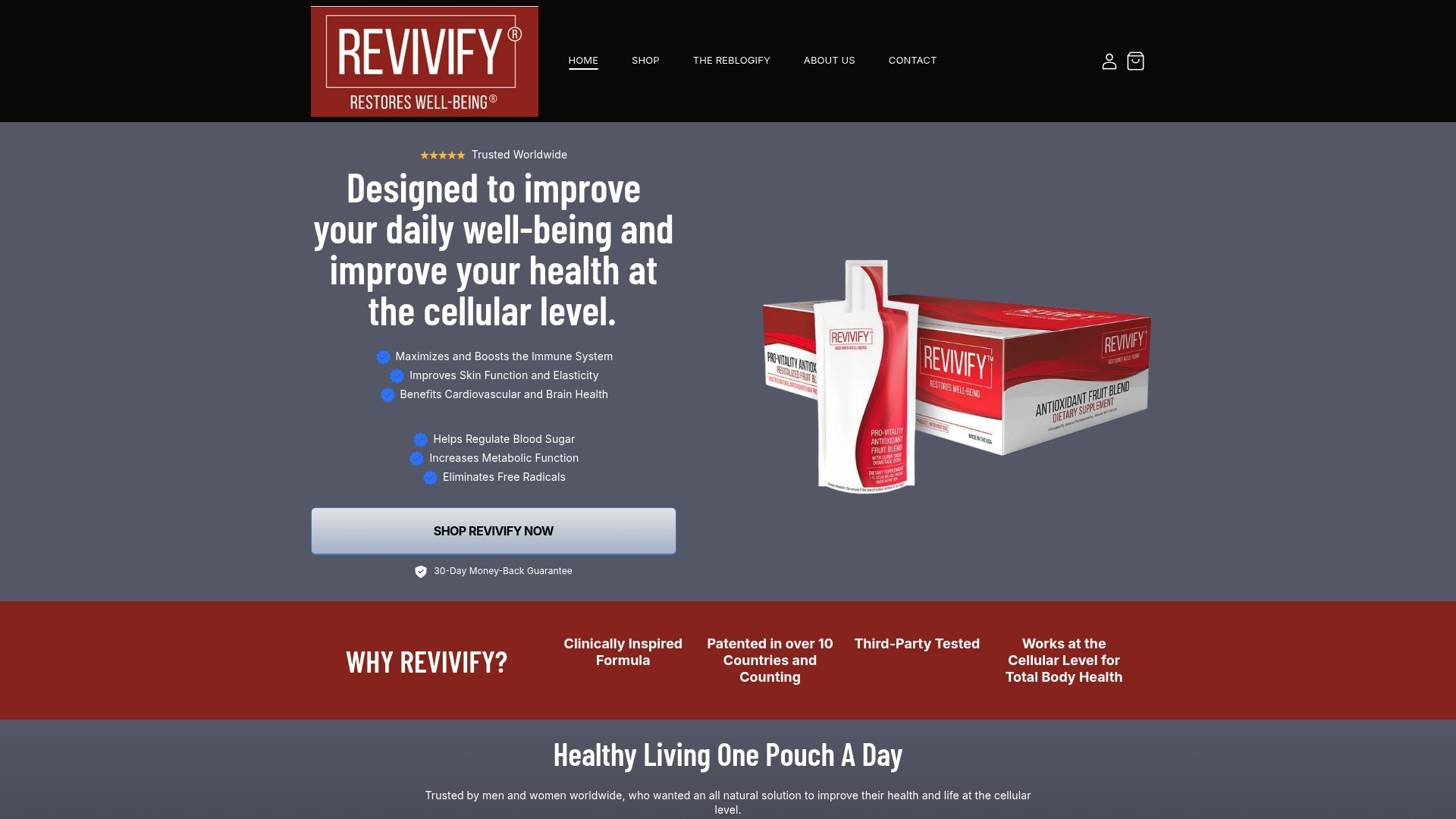
Where Tryrevivify differs from a typical antioxidant capsule is the layered approach: SOD support for your body’s own enzyme defenses, prebiotic fiber for the gut bacteria tied to inflammation control, and lactobacillus for digestive balance, all in one gel format rather than a shelf of separate bottles. If you’ve built your plate around the food categories in this guide and want to explore an additional layer of cellular support, check out Tryrevivify’s risk-free guarantee and subscription options, and talk to your clinician first if you’re on blood thinners or managing another chronic condition.
Frequently Asked Questions
What are the best antioxidant foods for reducing inflammation? Berries, leafy greens, fatty fish, nuts and seeds, olive oil, tomatoes, turmeric, ginger, and fermented foods carry the strongest combined evidence for lowering inflammatory markers when eaten as part of a consistent dietary pattern.
How quickly can antioxidant foods reduce inflammation? Some people notice digestive and energy improvements within two weeks, but measurable changes in biomarkers like CRP and IL-6 typically take six to twelve weeks of consistent intake to appear in research settings.
Can supplements replace antioxidant-rich foods? No. Trials of isolated antioxidant supplements show far more inconsistent results than whole-food dietary patterns, so food should remain the primary strategy, with supplements considered only as an addition for specific needs.
What foods make inflammation worse? Refined carbohydrates, added sugars, processed and red meats, trans fats, and ultra-processed snack foods are consistently linked to higher inflammatory markers across population studies.
How many servings of fruits and vegetables do I need daily to fight inflammation? The current Dietary Guidelines recommend servings of fruit and vegetables daily; however, many American adults fall short of this target.
Sources
- MMWR / 2025 Dietary Guidelines (summary)
- Anti-inflammatory diet: Foods that help reduce chronic inflammation (Harvard Health)
- Potential use of antioxidants for the treatment of chronic inflammatory diseases (Frontiers, 2024)
- Functional foods for health: antioxidant and anti-inflammatory roles (PMC review)
- Inflammation and diet (Linus Pauling Institute, Oregon State University)