

30–60 Minutes or Weeks? Antioxidants vs Anti-Inflammatories
Antioxidants and anti-inflammatories solve different problems on different timelines. Antioxidants neutralize unstable molecules called free radicals and support your body’s own defense enzymes, making them a fit for chronic, low-grade inflammation and long-term cellular wear. Anti-inflammatories, especially NSAIDs like ibuprofen, block the specific enzymes driving pain and swelling, making them the faster choice for an acute injury or flare. The safety trade-off runs in opposite directions: NSAIDs carry real short-term risks with long-term overuse, while antioxidants carry a lesser-known risk of backfiring at high, isolated doses.
TL;DR:
- NSAIDs provide quick relief for acute injuries within 30 to 60 minutes, but long-term use carries significant gastrointestinal, kidney, and cardiovascular risks.
- Antioxidants like curcumin, resveratrol, and quercetin support cellular defense mechanisms over weeks or months and can modulate inflammatory pathways, offering a safer alternative for chronic inflammation.
- Natural polyphenols often show promising effects on inflammatory biomarkers in studies, though their clinical benefits depend heavily on bioavailability and formulation strategies.
- Combining short-term NSAID use with long-term antioxidant support can be effective, but medical guidance is essential to avoid adverse interactions or overuse.
- High-dose isolated antioxidant supplements may disrupt redox signaling and produce negative outcomes, making balanced, enzyme-supporting formulations a safer long-term strategy.
Table of Contents
- Antioxidants vs Anti-Inflammatories: Comparing How They Work
- What Happens at the Molecular Level
- What the Clinical Evidence Actually Shows
- Choosing Between Antioxidants and Anti-Inflammatories
- The Risks Nobody Mentions on the Label
- How Tryrevivify Approaches Oxidative Stress
- Why This Isn’t Really an Either/Or Decision
- A Daily Approach to Oxidative Balance
- Sources
- FAQ
Antioxidants vs Anti-Inflammatories: Comparing How They Work
Think of it this way: an antioxidant is a bodyguard that absorbs a hit meant for your cells, while an anti-inflammatory is more like a dispatcher that tells the alarm system to stop ringing. Both reduce damage, but they intervene at completely different points in the chain of events.
Antioxidants such as curcumin, resveratrol, and quercetin work primarily by donating electrons to neutralize reactive oxygen species (ROS), the unstable molecules that damage cell membranes, proteins, and DNA when they build up faster than your body can clear them. Anti-inflammatories, on the other hand, interrupt the signaling cascade that produces pain, heat, redness, and swelling. NSAIDs do this by blocking cyclooxygenase (COX) enzymes directly. It’s a mechanical difference with real practical consequences.
Here’s how the two categories stack up on the factors that actually matter when you’re deciding what to reach for:
- Mechanism: Antioxidants scavenge ROS and support enzymes like superoxide dismutase (SOD); NSAIDs inhibit COX-1 and COX-2 enzymes to shut down prostaglandin production.
- Speed of onset: NSAIDs typically bring noticeable relief within 30 to 60 minutes; antioxidant and polyphenol support tends to show measurable effects over weeks, not hours.
- Primary examples: Curcumin, resveratrol, quercetin, and superoxide dismutase (SOD) for antioxidant support; ibuprofen, naproxen, and aspirin for pharmaceutical anti-inflammatory action.
- Typical use case: NSAIDs for a sprained ankle, a headache, or post-surgical pain; antioxidants for ongoing joint stiffness, metabolic inflammation, or general oxidative load.
- Safety profile: NSAIDs risk gastrointestinal, kidney, and cardiovascular strain with regular use; antioxidants risk diminishing returns or paradoxical effects at high, isolated doses.
The overlap is where things get genuinely interesting. Curcumin, resveratrol, and quercetin aren’t purely antioxidants. Research on these plant compounds shows they also modulate inflammatory signaling pathways directly, which puts them in a dual-action category that neither a pure antioxidant nor a classic NSAID occupies. That dual identity is exactly why the “vs” in this comparison can be a little misleading. These aren’t always competing tools. Sometimes they’re the same tool doing two jobs at once.
What Happens at the Molecular Level
Every cell in your body produces reactive oxygen species as a normal byproduct of using oxygen for energy. In small amounts, ROS actually serve useful signaling functions. Problems start when production outpaces cleanup, a state researchers call oxidative stress.
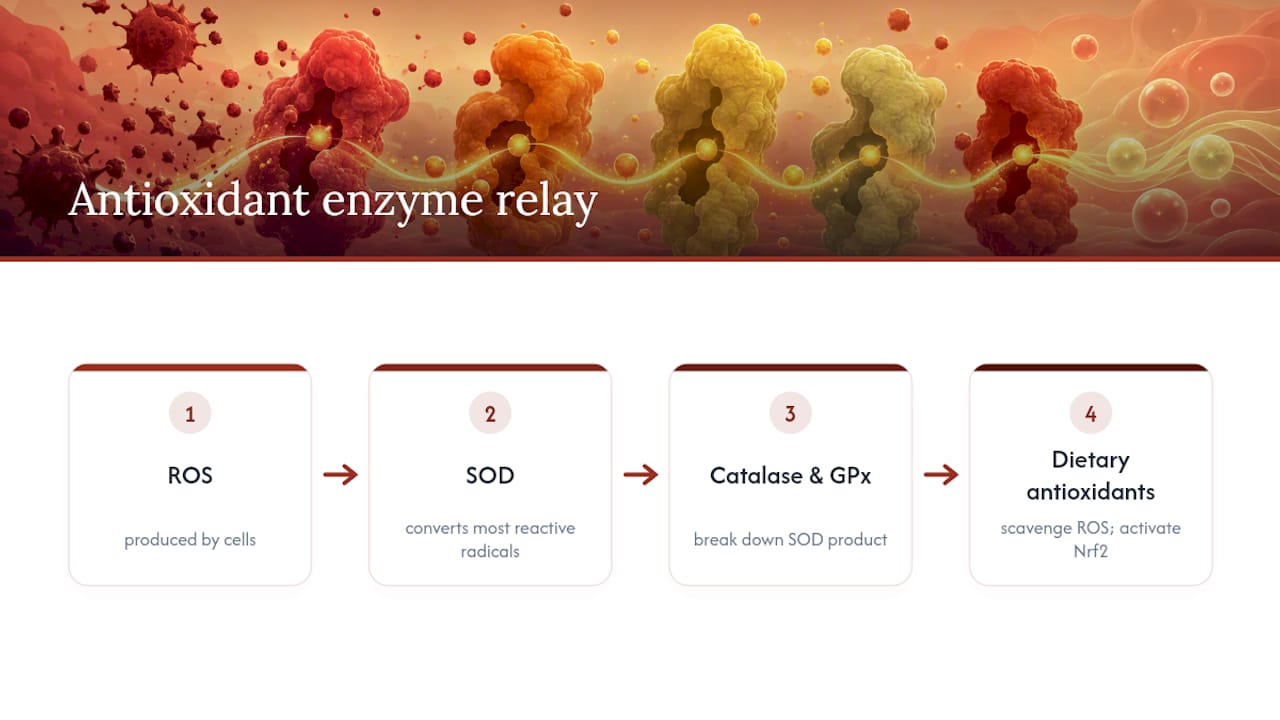
Your body isn’t defenseless against this. Three enzyme families handle most of the cleanup: superoxide dismutase (SOD), catalase, and glutathione peroxidase (GPx). SOD acts first in the sequence, converting the most reactive and destructive form of oxygen radical into a less dangerous compound that catalase and GPx then break down further. If SOD is the first runner in a relay, catalase and GPx are the teammates who carry the baton the rest of the way. Weaken any one link, and the whole handoff slows down. Dietary antioxidants and polyphenols support this system two ways: some scavenge ROS directly, and others activate a cellular switch called Nrf2, which turns up production of your own protective enzymes rather than just adding outside reinforcements.
Anti-inflammatories work through an entirely separate circuit. NSAIDs block COX-1 and COX-2 enzymes, which your body uses to build prostaglandins, the compounds responsible for pain signaling, fever, and swelling. COX-1 also protects your stomach lining, which is precisely why blocking it comes with gastrointestinal trade-offs. That single fact explains most of what you need to know about NSAID side effects.
There’s a second inflammatory pathway worth knowing: NF-κB, a protein complex that switches on genes for inflammatory messengers like TNF-alpha and interleukins. Chronic activation of NF-κB is a hallmark of long-term, low-grade inflammation, the kind linked to metabolic and cardiovascular strain rather than an obvious injury. This is where curcumin, resveratrol, and quercetin get interesting again. Natural products research shows these compounds can modulate NF-κB signaling and NLRP3 inflammasome activity, the same inflammatory machinery NSAIDs target, but through upstream gene expression rather than direct enzyme blocking. Oxidative stress and inflammation also feed each other in both directions. Excess ROS can trigger inflammatory signaling, and chronic inflammation in turn generates more oxidative stress, which is the biological argument for addressing both pathways rather than picking one and ignoring the other.
What the Clinical Evidence Actually Shows
The strongest human data on natural anti-inflammatory compounds comes from curcumin trials in osteoarthritis. Several randomized controlled trials on knee osteoarthritis found curcumin produced pain and symptom relief comparable to ibuprofen, with meaningfully fewer gastrointestinal complaints. That’s a genuinely notable finding, not a supplement-industry talking point. Some reviews describe curcumin as “non-inferior” to ibuprofen in these specific trials, which makes it a reasonable option for people who need long-term relief but want to avoid chronic NSAID exposure.
A closer look at the biomarker data: A dose-response meta-analysis of ginger supplementation found measurable improvements across CRP, TNF-alpha, and IL-6, alongside gains in total antioxidant capacity and SOD activity. The catch is heterogeneity. Study designs, doses, and populations varied enough that the researchers flagged the overall certainty of evidence as inconsistent, which is a common theme across botanical supplement trials.
That heterogeneity problem shows up across the polyphenol research generally. Curcumin, resveratrol, and quercetin all demonstrate NF-κB and MAPK pathway modulation in laboratory and animal studies, but human trial results are mixed once you account for bioavailability limitations. Curcumin in particular is absorbed poorly and metabolized quickly, which means a supplement without any absorption strategy may deliver a fraction of the dose used in successful trials. This is why formulations paired with piperine (black pepper extract), lipid carriers, or cyclodextrin complexes show up so often in the clinical literature. The compound itself matters less than whether your body can actually use it.
Here’s the honest accounting: evidence for curcumin’s effect on osteoarthritis symptoms is genuinely robust, with multiple RCTs pointing the same direction. Evidence for broader claims like “antioxidants prevent chronic disease” is far weaker and more inconsistent, and government health resources are candid about it. The National Cancer Institute notes that antioxidant supplement trials have produced mixed results overall, and in some high-dose cases, no benefit or even a modestly worse outcome. Precision matters here. Antioxidants aren’t a blanket fix, and treating them as one oversells what the research supports.
Choosing Between Antioxidants and Anti-Inflammatories
The decision usually comes down to one question: are you dealing with a sudden problem or a slow-burning one?
- A sprained ankle or acute injury calls for an NSAID. The inflammatory response is sharp, localized, and short-lived, and ibuprofen’s fast COX inhibition matches that timeline. Expect relief within an hour or two.
- Osteoarthritis or chronic joint stiffness is where curcumin and similar polyphenols earn their reputation, particularly for people who cannot tolerate regular NSAID use. Expect gradual improvement over several weeks, not days.
- Metabolic inflammation tied to blood sugar or cardiovascular strain responds better to sustained antioxidant and lifestyle support than to episodic NSAID use, which does nothing for the underlying oxidative burden.
- Neuroinflammatory risk factors, where oxidative stress is believed to play a long-term role, point toward consistent antioxidant enzyme support rather than anything acute.
Pro Tip: If you’re managing a flare-up on top of a chronic condition, short-term NSAID use alongside daily antioxidant support isn’t contradictory. Just tell your doctor about both, since timing and dosage matter more than most people assume.
The honest rule of thumb: reach for an anti-inflammatory drug when you need relief in hours, and reach for antioxidant support when you’re playing a weeks-to-months game. If pain persists beyond a few days, worsens, or comes with swelling that doesn’t respond to over-the-counter treatment, see a clinician rather than escalating the dose yourself.
The Risks Nobody Mentions on the Label
NSAIDs are effective precisely because they’re powerful, and that power cuts both ways. Regular or high-dose use carries well-documented risks:
- Gastrointestinal irritation and bleeding, tied directly to COX-1 inhibition in the stomach lining.
- Kidney strain, especially with long-term use or in people with existing kidney conditions.
- Increased cardiovascular risk with sustained high-dose use, a concern flagged for several NSAID classes.
- Dangerous interactions with blood thinners, certain blood pressure medications, and other NSAIDs taken concurrently.
Antioxidants have a quieter but real risk profile of their own. High-dose isolated antioxidant supplements have shown mixed or even negative outcomes in some clinical trials, a pattern researchers call the antioxidant paradox. The theory is that megadoses of a single compound can disrupt the very redox signaling that low levels of ROS are supposed to support, since your body needs some oxidative signaling to function properly. Multi-component formulations that support your endogenous enzyme systems, rather than flooding your system with one isolated antioxidant, are increasingly viewed as the more sound approach.
A few practical safeguards apply regardless of which path you’re on: talk to a clinician before combining supplements with prescription blood thinners, avoid unsupervised long-term NSAID use beyond a week or two, and treat “natural” as a description, not a safety guarantee.
How Tryrevivify Approaches Oxidative Stress
Some antioxidant supplements combine superoxide dismutase, prebiotic fiber, polyphenols, and lactobacillus in one daily gel, with the goal of supporting the body’s own enzymatic defenses rather than replacing them with an outside megadose.
This is daily, cumulative support for oxidative balance and low-grade inflammation, not a substitute for an NSAID during an acute flare. If you sprain something this weekend, reach for what your doctor recommends for acute care. Tryrevivify’s role is longer-term: supporting the redox and digestive systems that stay under quiet, constant pressure from everyday oxidative stress. For readers who want the deeper mechanistic picture, the Revivify blog covers how antioxidants influence inflammatory signaling in more detail. As always, check with a clinician before adding any new supplement, especially if you’re managing a chronic condition or taking prescription medication.
Why This Isn’t Really an Either/Or Decision
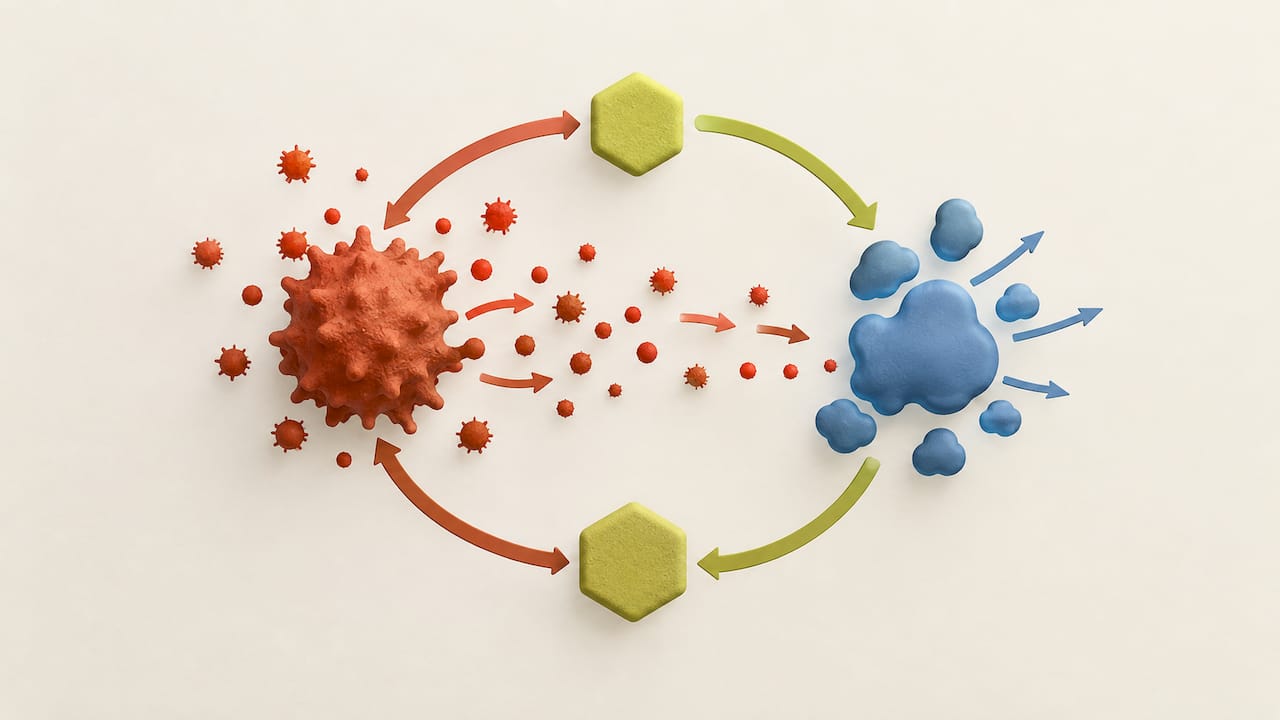
The framing of antioxidants versus anti-inflammatories makes for a clean headline, but it oversimplifies how your body actually handles damage. Oxidative stress and inflammation aren’t separate problems running on parallel tracks. They amplify each other, which means a strategy that only addresses one is leaving the other unchecked.
My honest read on the research: NSAIDs remain the right tool for acute pain, and nobody should feel guilty reaching for ibuprofen after twisting a knee. But the growing curcumin and polyphenol data suggests something the wellness industry has oversold for years and clinicians have understated. Multi-component, enzyme-support approaches deserve a real place in long-term inflammation management, not as a replacement for medicine, but as a parallel track. The compounds that work best are rarely the ones marketed as miracle cures. They’re the ones with unglamorous mechanisms, like supporting an enzyme your body already makes.
Combine short-term medication with long-term formulation strategy when your situation calls for both, keep your clinician in the loop, and don’t neglect the basics of diet, sleep, and movement that no supplement replaces.
— Larry
A Daily Approach to Oxidative Balance
If chronic, low-grade inflammation is more your situation than an acute injury, a single ibuprofen isn’t built for that timeline, and neither is a random antioxidant pill picked off a shelf. Tryrevivify was built specifically around the idea that supporting your body’s own enzymatic defenses, through a patented combination of superoxide dismutase, prebiotic fiber, polyphenols, and lactobacillus, offers a more complete daily strategy than any single isolated compound.
Such supplements are not painkillers and do not replace acute anti-inflammatory medications, but are intended for long-term support of oxidative stress and the body’s existing defense systems. If you’re managing a chronic condition or taking prescription medication, talk to your doctor before adding it to your routine. Ready to see how it fits your daily health goals? Check out the Revivify 30-Day Supply and read the full ingredient breakdown before you order.
Sources
- Overview of antioxidant and anti-inflammatory activities of selected plant compounds
- Antioxidants and cancer prevention — National Cancer Institute
FAQ
Which Antioxidant Is Best for Inflammation?
Curcumin has the strongest human clinical evidence among natural antioxidants for inflammation, particularly for osteoarthritis symptom relief, with some RCTs showing results comparable to ibuprofen. Resveratrol and quercetin show promising lab-level activity on inflammatory pathways, but their human trial data is less consistent. No single antioxidant works for every type of inflammation, which is why multi-component formulas targeting several pathways at once are gaining traction.
Is There a Downside to Antioxidants?
Yes. High-dose, isolated antioxidant supplements have produced mixed or even negative results in some clinical trials, a phenomenon researchers call the antioxidant paradox. Megadosing a single compound can disrupt normal redox signaling your cells rely on, which is why balanced, enzyme-supporting formulations are generally viewed as a sounder long-term approach than large single-nutrient doses.
What Are the Top Inflammatory Foods to Avoid?
Refined sugar, fried foods, and processed meats are consistently linked to elevated inflammatory markers in nutrition research. Refined carbohydrates and excess alcohol also tend to worsen chronic, low-grade inflammation over time. Cutting back on these while adding polyphenol-rich foods, like berries, leafy greens, and turmeric, addresses inflammation from the dietary side rather than through medication alone.
What Do Some Traditional Practices Use for Inflammation?
Traditional Chinese medicine has long used turmeric (the source of curcumin), ginger, and various herbal formulas for conditions involving swelling and pain. Modern research on ginger backs some of this up, with meta-analysis data showing improvements in inflammatory biomarkers like CRP and IL-6. These traditional approaches align with what current polyphenol research is now confirming through controlled trials.
Can I Take Antioxidants and NSAIDs Together?
Combining daily antioxidant support with occasional NSAID use for acute flares is common and not inherently contradictory, since they work through different mechanisms. Still, tell your doctor about everything you’re taking, particularly if you’re on blood thinners or have kidney concerns, since interactions depend on dosage and duration. Some supplement formulas are intended for daily oxidative-stress support rather than acute pain relief, so they may be used alongside occasional NSAID use rather than replacing it.