

Your Daily Heart Health Supplement Routine: 2026 Guide
A well-built daily heart health supplement routine starts with five evidence-backed options: omega-3 fatty acids, CoQ10, psyllium husk fiber, plant sterols/stanols, and turmeric. Each plays a distinct role in cardiovascular wellness, and each works best alongside a healthy diet and regular exercise, not instead of it. Aspirin deserves a separate conversation entirely, since cardiologists classify it as a medication with specific indications rather than a general supplement anyone should add to their routine.
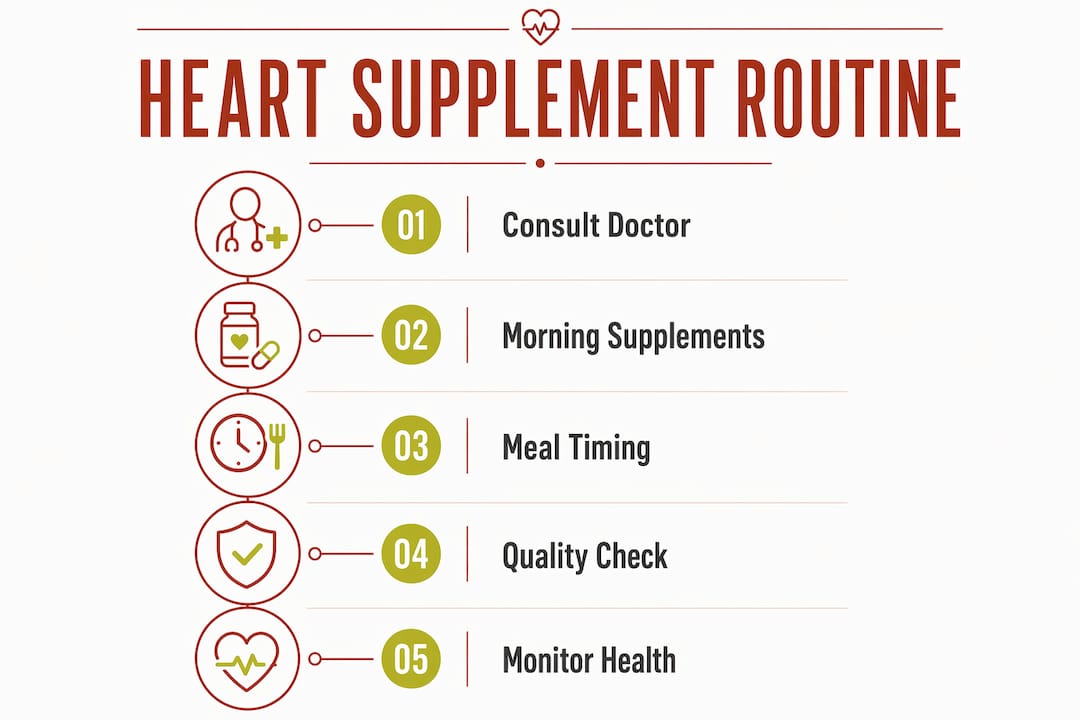
Before you buy anything, talk to your doctor. Supplement-medication interactions are real, and your lipid profile, existing prescriptions, and health history should shape your regimen from the start. A cardiologist or registered dietitian can tell you which of these options actually makes sense for your situation.
- Omega-3 fatty acids (EPA and DHA): Lower triglycerides; most useful at prescription doses for severe triglyceridemia
- CoQ10: Supports cellular energy in heart muscle; most evidence favors statin users and people with heart failure
- Psyllium husk fiber: Binds cholesterol in the gut to reduce LDL levels
- Plant sterols/stanols: Lower LDL by 6%–12% and reduce vascular inflammation
- Turmeric (curcumin): Anti-inflammatory properties with emerging cardiovascular evidence
- Aspirin: Recommended only for specific patients under direct medical guidance
- Red yeast rice: Contains statin-like compounds; requires physician oversight due to variable potency
Pro Tip: Before building your supplement stack, ask your doctor to run a full lipid panel and CRP (C-reactive protein) test. Your results will tell you which supplements are most likely to move the needle for your specific cardiovascular risk profile.
1. How omega-3 fatty acids support your heart
Omega-3 fatty acids, specifically EPA (eicosapentaenoic acid) and DHA (docosahexaenoic acid), are among the most studied nutrients in cardiovascular medicine. Their clearest benefit is lowering triglycerides, a blood fat that raises heart disease risk when elevated. Fatty fish like salmon, mackerel, and sardines are the most bioavailable dietary sources, and most cardiologists recommend food-first before reaching for a capsule.
The picture for over-the-counter fish oil is more complicated. Fish oil supplements have not consistently shown the ability to prevent heart attacks or strokes in the general population, and Johns Hopkins cardiologists have been direct about this limitation. Prescription-strength omega-3 formulations, used at doses well above what you find in a standard 1,000 mg softgel, are a different story for people with severely elevated triglycerides.
- EPA and DHA are the active forms; ALA (found in flaxseed) converts poorly in the body
- Dietary sources: Salmon, mackerel, sardines, herring, and anchovies
- OTC fish oil: Mixed evidence for heart attack and stroke prevention in healthy adults
- Prescription doses: Used under medical supervision for severe triglyceridemia
- Side effects: Fishy aftertaste, GI upset, and at high doses, increased bleeding risk
- Quality tip: Look for third-party tested products certified by NSF International or USP to confirm purity and potency
Timing: Taking fish oil with your largest meal of the day reduces GI side effects and may improve absorption.

2. Why CoQ10 belongs in a heart-focused supplement plan
Coenzyme Q10 is a compound your body produces naturally, concentrated most heavily in organs with high energy demands, including the heart. It sits at the center of mitochondrial energy production and doubles as an antioxidant, neutralizing free radicals before they can damage heart muscle cells. Think of it as the spark plug for cellular energy in cardiac tissue.
The strongest evidence for CoQ10 supplementation applies to two groups: people with heart failure and people taking statin medications. Statins lower cholesterol effectively, but they also reduce the body’s natural CoQ10 synthesis, which can contribute to the muscle pain and fatigue some statin users experience. CoQ10 supplementation may help ease those symptoms, though the evidence is not uniform across all studies. For healthy adults with no statin use and no heart failure diagnosis, the preventive case is less clear.
- Ubiquinol vs. ubiquinone: Ubiquinol is the reduced, more bioavailable form, often preferred for adults over 40
- Typical study doses: 100–300 mg daily in most clinical research
- Heart failure evidence: Some studies show improved exercise tolerance and reduced hospitalizations
- Statin users: CoQ10 may reduce statin-associated muscle pain, though results vary
- Safety profile: Generally well tolerated; mild GI effects at higher doses
- Consult first: If you take blood thinners or blood pressure medications, discuss CoQ10 with your physician before starting
For a deeper look at how low CoQ10 affects heart health, the connection between mitochondrial function and cardiac output is worth understanding before you decide on a dose.

3. Fiber supplements and plant sterols for cholesterol management
Soluble fiber is one of the most underrated tools in a heart health regimen. Psyllium husk, derived from the seeds of Plantago ovata, forms a gel in the digestive tract that physically binds to cholesterol and bile acids, pulling them out of circulation before they can be reabsorbed. The result is a measurable drop in LDL cholesterol with consistent daily use.
Plant sterols and stanols work through a different mechanism. Structurally similar to cholesterol, they compete for absorption in the small intestine, blocking dietary cholesterol from entering the bloodstream. Research shows they lower LDL by 6%–12% and carry anti-inflammatory effects on blood vessel walls. Many functional foods, including certain margarines and orange juices, are fortified with plant sterols, but standalone supplements give you more precise dosing control.
- Psyllium husk dose: 5–10 grams of soluble fiber daily, taken with at least 8 oz of water
- Plant sterol dose: 2 grams daily is the amount most studies associate with meaningful LDL reduction
- Start low: Increase fiber gradually over 1–2 weeks to minimize bloating and gas
- Hydration matters: Fiber supplements without adequate water can cause constipation
- Timing: Take psyllium husk before meals to maximize its cholesterol-binding window
- Diet synergy: Fiber supplements work best alongside a diet already low in saturated fat and refined carbohydrates
4. Red yeast rice and aspirin: what cardiologists actually say
Red yeast rice occupies a gray zone between supplement and drug. It contains monacolin K, a compound chemically identical to lovastatin, a prescription cholesterol medication. That statin-like activity is exactly why it can lower LDL, and also why it carries the same risks as statins: muscle damage, liver stress, and drug interactions. The deeper problem is that monacolin K content varies wildly between products because the supplement industry does not regulate it the way the FDA regulates pharmaceuticals. You may be getting a therapeutic dose or almost none at all, with no reliable way to know from the label.
Aspirin is not a supplement. Cardiologists are consistent on this point. It is a medication with a specific risk-benefit calculation, and the calculus has shifted in recent years. Aspirin is now recommended only for people who have already had a heart attack or stroke, or for select high-risk patients under physician guidance. For most adults without established cardiovascular disease, the bleeding risk outweighs the benefit.
- Red yeast rice risks: Muscle pain, liver toxicity, and interactions with other cholesterol medications
- Potency variability: No standardized monacolin K content across brands; some products contain negligible amounts
- Aspirin caution: One in three US adults has high LDL cholesterol, yet aspirin is not appropriate for most of them as a preventive measure
- Who should avoid aspirin: Adults over 60 with no prior cardiovascular event face higher bleeding risk than benefit
- Physician oversight required: Both red yeast rice and aspirin warrant a conversation with your doctor before use
- Warning signs to watch: Muscle weakness or pain, unusual bruising, dark urine, or GI bleeding
5. How to safely build supplements into a heart-healthy lifestyle
Supplements work best when they are the final layer, not the foundation. The American Heart Association’s Life’s Essential 8 framework puts 150 minutes of moderate aerobic exercise weekly and a sodium intake below 2,300 mg daily at the core of cardiovascular health. No supplement replaces that. What a well-chosen supplement routine can do is fill specific nutritional gaps and support the biological processes that diet and exercise are already driving in the right direction.
Choosing quality products matters as much as choosing the right supplements. Third-party certification from NSF International, USP, or ConsumerLab means an independent lab has verified that what is on the label is actually in the bottle, at the stated dose, without harmful contaminants. This is not a minor detail. The FDA does not approve dietary supplements before they go to market, so third-party testing is your primary quality filter.
- Timing consistency: Take supplements at the same time each day to build the habit and maintain steady blood levels
- With food: Fat-soluble supplements like CoQ10 and omega-3s absorb better alongside a meal containing healthy fats
- Medication interactions: Omega-3s and vitamin E can increase bleeding risk when combined with blood thinners; always disclose all supplements to your prescribing physician
- Adverse reaction signals: Nausea, rash, unusual fatigue, or new muscle pain after starting a supplement warrants stopping it and calling your doctor
- Simplify your stack: More supplements do not equal more protection. A focused routine of two or three well-evidenced options is easier to maintain and safer to monitor than a dozen capsules
- Consult before starting: Healthcare provider consultation before beginning any heart-related supplement routine is the single most important step you can take
For a broader look at supplement best practices, including how to evaluate quality certifications and avoid common pitfalls, Tryrevivify’s 2026 guide covers the selection process in detail.
Pro Tip: Cardiologists consistently recommend anchoring your routine to morning habits: take your supplements after breakfast, pair them with a brief walk, and track any changes in energy or symptoms in a simple notes app. That feedback loop is more valuable than any single supplement.
6. Cellular-level heart health and what the science says about oxidative stress
Most conversations about heart health focus on cholesterol numbers and blood pressure readings. Those matter, but the damage that leads to cardiovascular disease often starts much earlier, at the cellular level. Oxidative stress is a key driver of endothelial dysfunction, the process by which the inner lining of blood vessels becomes inflamed and stiff, setting the stage for atherosclerosis. Free radicals, unstable molecules produced by normal metabolism and amplified by poor diet, pollution, and stress, are the primary agents of that damage.
Superoxide dismutase (SOD) is the body’s first-line enzymatic defense against superoxide free radicals. Think of it as the first runner in a relay team: it converts the most reactive oxygen species into less harmful compounds before the damage cascades. SOD activity naturally declines with age, which is one reason oxidative damage to the cardiovascular system tends to accelerate over time. Prebiotic fiber adds another layer by supporting the gut microbiome, which influences systemic inflammation and, by extension, heart disease risk.
At Tryrevivify, we built our formula around this cellular reality. Tryrevivify combines patented superoxide dismutase with prebiotic fiber in a single daily supplement, targeting free radical damage and gut-driven inflammation simultaneously. It is designed to work alongside the traditional supplements covered in this guide, not to replace them.
- Endothelial health: The inner lining of blood vessels regulates blood flow and inflammation; protecting it is central to long-term heart health
- SOD’s role: Neutralizes superoxide radicals before they oxidize LDL cholesterol and damage arterial walls; learn more about SOD’s protective effects
- Prebiotic fiber: Feeds beneficial gut bacteria that produce short-chain fatty acids, which reduce systemic inflammation
- Why endothelial function matters: Endothelial dysfunction precedes most cardiovascular events by years, making early cellular support a meaningful strategy
- Synergy with traditional supplements: SOD and prebiotic fiber address oxidative and inflammatory pathways that omega-3s, CoQ10, and fiber supplements do not fully cover on their own
Pro Tip: Pair a cellular-level antioxidant supplement like Tryrevivify with your omega-3 or CoQ10 in the morning. The combination addresses both the energy-production side of cardiac cell health and the oxidative damage side, giving your heart two distinct lines of support from a single daily habit.
Key Takeaways
A well-structured daily heart health supplement routine combines evidence-backed supplements, third-party quality verification, and physician guidance with the foundational lifestyle habits that no capsule can replace.
| Point | Details |
|---|---|
| Lead with lifestyle | 150 minutes of weekly aerobic exercise and sodium below 2,300 mg daily form the foundation supplements build on. |
| Prioritize proven options | Omega-3s, CoQ10, psyllium husk, and plant sterols have the strongest cardiovascular evidence among common supplements. |
| Plant sterols lower LDL measurably | Research shows plant sterols reduce LDL by 6%–12% with consistent daily use at 2 grams. |
| Treat aspirin and red yeast rice carefully | Both require physician oversight; aspirin is a medication, and red yeast rice potency varies widely between products. |
| Address oxidative stress at the cellular level | SOD and prebiotic fiber target free radical damage and gut-driven inflammation, complementing traditional heart supplements. |