

Minutes vs Weeks: Which to Try First, Digestive Enzymes or Probiotics
Digestive enzymes act within minutes, breaking down the food sitting in your stomach right now. Probiotics work on a different clock entirely, recalibrating your gut microbiome over weeks of steady use. If your bloating shows up predictably after dairy, beans, or a heavy meal, an enzyme is the faster fix. If your gut has been off since a round of antibiotics, or you’re managing a chronic pattern like IBS, probiotics are the better long game.
TL;DR:
- Digestive enzymes act immediately during meals to break down specific foods, while probiotics require weeks of continuous use to improve gut microbiome balance.
- Enzyme supplements are most effective for conditions like lactose intolerance and pancreatic insufficiency, with variable potency outside prescription products.
- Probiotic benefits are strain-specific and mainly support long-term conditions such as antibiotic-related diarrhea and some IBS subtypes, not immediate digestion.
- Testing enzyme or probiotic effects should involve targeted trials over multiple weeks, with careful symptom tracking, before adding more supplements or seeking medical advice.
- OTC enzyme and probiotic products lack standard regulation, so choosing products with clear strain identifiers, CFU counts, and third-party testing is essential for safety and efficacy.
Table of Contents
- What Are Digestive Enzymes and When Do They Actually Work?
- What Are Probiotics and Which Strains Actually Help?
- Enzymes vs Probiotics: Mechanism, Timing, and Real-World Results
- Should You Take an Enzyme, a Probiotic, or Both?
- How Do You Check Safety and Product Quality Before Buying?
- How to Run a Safe Trial and Track Real Results
- Where Prebiotic and Cellular Support Supplements Fit In
- What Actually Matters When You’re Choosing Between the Two
- Does a Daily Microbiome Supplement Fit Alongside Enzymes or Probiotics?
- Where to Read More on Enzymes and Probiotics
- Sources
What Are Digestive Enzymes and When Do They Actually Work?
Digestive enzymes are proteins your pancreas, stomach, and small intestine produce to break carbohydrates, fats, and proteins into pieces small enough to absorb. Think of them as molecular scissors: they cut, they don’t build. That’s why they act the moment food hits them, not over days or weeks.
The main players you’ll see on a supplement label:
- Amylase breaks down starches and carbohydrates.
- Protease breaks down proteins.
- Lipase breaks down fats.
- Lactase breaks down lactose, the sugar in dairy.
- Alpha-galactosidase breaks down the complex sugars in beans and cruciferous vegetables that cause gas.
Timing with meals isn’t optional. An enzyme taken between meals has nothing to work on. The evidence base is strongest for lactose intolerance, where lactase supplementation eases digestion of a known trigger food, and for exocrine pancreatic insufficiency (EPI), where prescription-strength enzyme replacement therapy (PERT) is standard care. Over-the-counter enzyme blends are not FDA-regulated as drugs, so potency and purity vary from bottle to bottle.
What Are Probiotics and Which Strains Actually Help?
Probiotics are live microorganisms, most commonly strains of Lactobacillus, Bifidobacterium, and the yeast Saccharomyces boulardii. Unlike enzymes, they don’t dismantle your dinner. They compete with harmful bacteria for space and resources, and they produce metabolites like short-chain fatty acids that support the intestinal lining. That process takes time to show results, typically several weeks of consistent daily use.
A few things worth knowing before you buy a bottle:
- Benefits are strain-specific. A study result for one Lactobacillus strain doesn’t automatically apply to a different one, even in the same genus.
- The best-supported uses are antibiotic-associated diarrhea and certain IBS symptom patterns, based on strain- and condition-specific trials rather than blanket population data.
- Some meta-analyses show modest reductions in total cholesterol and LDL over 3 to 12 weeks in select groups, particularly older adults with elevated baseline levels.
- For someone with no diagnosed digestive issue, evidence for a noticeable benefit is thin.
Trial windows matter here. If you’re not tracking symptoms for at least three weeks, you likely won’t see the effect either way.
Enzymes vs Probiotics: Mechanism, Timing, and Real-World Results
The clearest way to separate these two supplement categories is mechanism. Enzymes are non-living catalytic proteins that act immediately during digestion, while probiotics are living organisms that need weeks to shift your microbial balance. One is a chemical reaction; the other is an ecosystem adjustment.
- Mechanism: enzymes break molecular bonds; probiotics compete with and crowd out less favorable bacteria.
- Onset: enzymes act within the same meal; probiotics need consistent use over weeks to show measurable change.
- Best outcomes: enzymes deliver short-term relief from a specific trigger food; probiotics offer modest, population-level improvements in targeted conditions like antibiotic-associated diarrhea.
- Where each falls short: enzymes won’t fix a microbiome imbalance, and probiotics won’t help you digest a lactose-heavy meal you’re eating right now.
Review literature on gastrointestinal disease notes that enzyme supplementation is clinically useful mainly where enzyme production itself is impaired, such as EPI or lactose intolerance, rather than as a general digestive booster for people with normal enzyme function.
Should You Take an Enzyme, a Probiotic, or Both?
Matching the supplement to the symptom pattern saves you money and guesswork.
- Reach for an enzyme if your symptoms are predictable and tied to a specific food, like dairy-triggered bloating (try lactase) or bean-triggered gas (try alpha-galactosidase). If you’ve been diagnosed with EPI, talk to a clinician about prescription PERT rather than an OTC blend.
- Reach for a probiotic if your gut has been unsettled since a course of antibiotics, or you have a diagnosed IBS subtype where specific strains have shown benefit. Probiotics are also studied as adjuncts for preventing recurrent C. difficile infection alongside standard treatment.
- Consider both, or see a clinician, if your symptoms are mixed, chronic, or not improving after a focused trial of one supplement. Overlapping symptoms (bloating plus irregular bowel habits) sometimes call for a combined approach reviewed with a professional.
How Do You Check Safety and Product Quality Before Buying?
Prescription pancreatic enzyme replacement therapy is manufactured under strict potency standards for patients with confirmed EPI. Over-the-counter enzyme supplements carry no such guarantee. OTC products are regulated as dietary supplements, not drugs, so labeled activity units and actual potency can diverge.
For probiotics, quality control looks different but matters just as much:
- Check for a specific strain identifier (not just “Lactobacillus” but the full strain name).
- Look for CFU count per dose, not just total CFU on the label.
- Favor products with third-party testing to confirm what’s actually in the capsule.
- Watch for bloating, gas, or mild GI upset when starting either supplement, and stop if symptoms worsen rather than improve.
Pro Tip: If a label lists a proprietary blend without individual strain names or enzyme activity units, treat it as a red flag. Precision on the label usually tracks with precision in manufacturing.
How to Run a Safe Trial and Track Real Results
- Enzyme trial: take it with the specific meal that triggers symptoms, across 2 to 4 exposures, and note whether bloating or discomfort changes within hours.
- Probiotic trial: choose a strain with evidence for your specific issue, take it daily, and track bowel pattern and symptom severity for 3 to 12 weeks.
- Combined trial: if you’re testing both, change one variable at a time when possible, and keep a simple log of food, dose, and symptoms to bring to a clinician if nothing improves.
Pro Tip: A two-line daily note (what you ate, how you felt) is often more useful in a doctor’s visit than a week of vague memory.
Where Prebiotic and Cellular Support Supplements Fit In
A product formula combining prebiotic fiber, superoxide dismutase, and live cultures can be positioned as daily support for cellular and microbiome health rather than a fix for a specific enzyme deficiency. A product like this can support the broader ecosystem probiotics rely on, but it doesn’t substitute for prescription PERT in confirmed EPI or targeted lactase for dairy intolerance.
What Actually Matters When You’re Choosing Between the Two
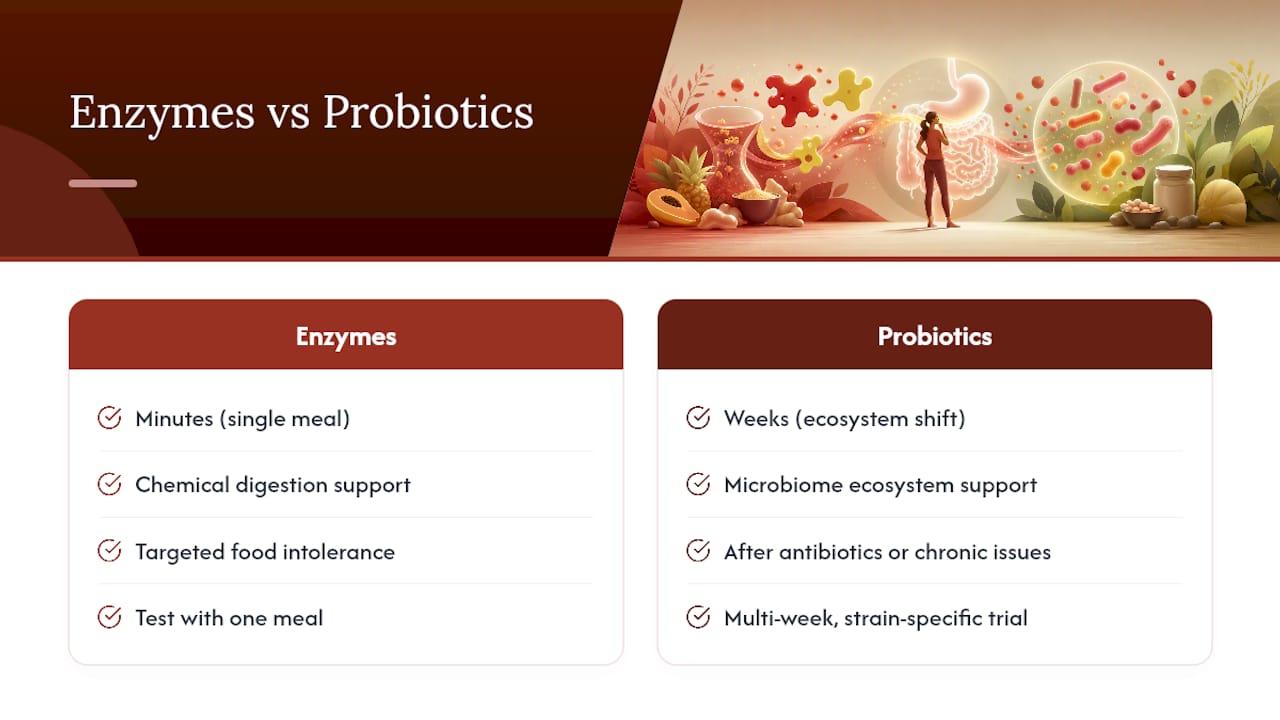
The conventional advice treats enzymes and probiotics as interchangeable “gut health” products you grab off the same shelf. That framing misses the point. One is a tool for a chemical reaction happening at lunch; the other is a slow investment in an ecosystem that takes weeks to shift. Confusing the two wastes money and delays real relief.
My honest read: start with diet and pattern recognition before any supplement. If a specific food reliably causes trouble, test a targeted enzyme first, since dietitians and clinicians consistently frame supplements as adjunct tools, not replacements for a sound diet. If your gut has felt unsettled since antibiotics or fits a chronic pattern, give a strain-specific probiotic a real multi-week trial. And if symptoms are severe, persistent, or mixed, get a clinician involved before layering supplements on top of each other.
— Larry
Does a Daily Microbiome Supplement Fit Alongside Enzymes or Probiotics?
If diet changes and targeted enzyme or probiotic trials haven’t fully closed the gap, a daily supplement built around microbiome and cellular support can be a reasonable next layer. A supplement combining prebiotic fiber, superoxide dismutase, polyphenols, and lactobacillus in a plant-based, third-party tested gel formula can be designed to support digestion, immune function, and oxidative stress management over time. It’s built for the maintenance phase, not the acute fix.
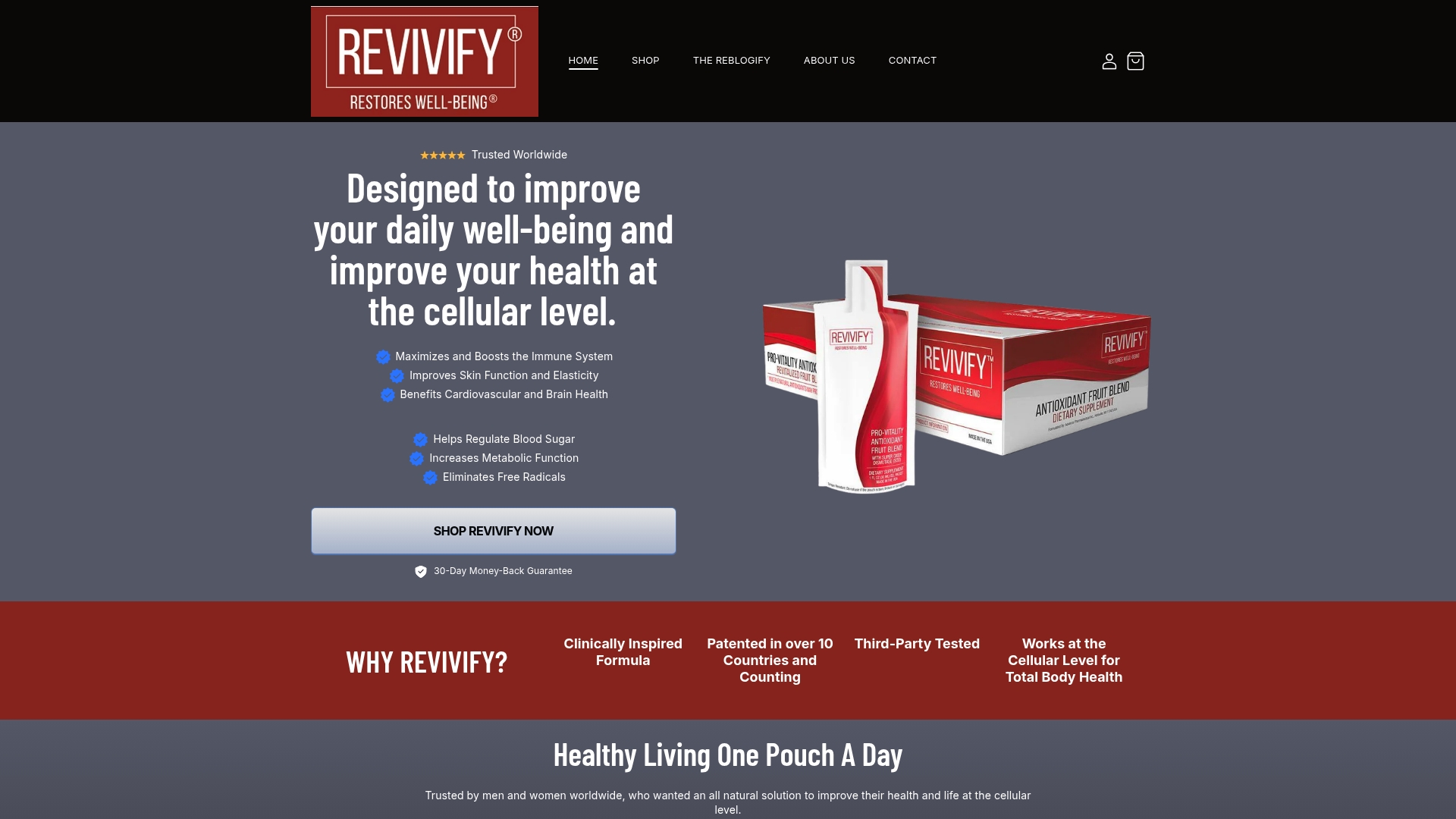
Be clear about the boundary: if you have confirmed EPI or diagnosed lactose intolerance, prescription PERT or lactase belongs at the front of the line, not a general wellness supplement. But if your baseline goal is steady, long-term gut and cellular support once acute symptoms are under control, Tryrevivify’s daily supplement is worth a look, and the subscription option makes it easy to stay consistent, which is exactly what probiotic-style benefits require.
For a deeper dive into symptom-first supplement routines, see this guide to building a digestive supplement routine, and for post-antibiotic care specifically, read about which probiotic strains work best after antibiotics.
Where to Read More on Enzymes and Probiotics
- Digestive Enzymes and Digestive Enzyme Supplements — Johns Hopkins Medicine
- Probiotics: In Depth — NIH Office of Dietary Supplements
- Digestive Enzyme Supplementation in Gastrointestinal Diseases — PMC
- Best Supplements for Digestion & Gut Health — RankOfSupplements
This article is general information, not a substitute for advice from a qualified doctor. Consult a qualified healthcare professional about your own circumstances before acting on anything here.
Sources
- Digestive Enzymes and Digestive Enzyme Supplements | Johns Hopkins Medicine
- Will digestive enzyme supplements help your heartburn? | Harvard Health
- Probiotics: In depth | Office of Dietary Supplements (NIH)
- Digestive Enzyme Supplementation in Gastrointestinal Diseases (review) | PMC