

Free Radical Damage and Inflammation: A Science-Based Guide
Oxidative stress and inflammation feed each other in a loop: excess free radicals trigger inflammatory signaling, and inflammatory cells generate more free radicals, wearing down tissue over time and raising your risk for chronic disease. That is the mechanism behind a startling share of modern chronic illness, from heart disease to cognitive decline. The good news is that this cycle is interruptible, and you do not need a lab coat to start today.
Here are seven actions worth starting this week:
- Quit smoking or vaping. Tobacco smoke is one of the densest sources of exogenous free radicals you can encounter.
- Fix your sleep window. Poor sleep disrupts the repair processes that clear oxidative debris overnight.
- Eat a polyphenol-rich diet. Colorful produce, olive oil, and whole grains supply the raw materials your antioxidant systems need.
- Move your body most days. Moderate aerobic exercise trains your cells to handle oxidative load more efficiently.
- Protect your skin from UV. Sun exposure is a major, controllable radical generator.
- Cut pollutant exposure where you can. Indoor air quality and commute routes matter more than most people realize.
- Talk to a clinician about targeted supplements. Blind high-dose supplementation is not the same as an informed strategy.
Markers like C-reactive protein (CRP) and interleukin-6 (IL-6) give clinicians a window into how active this cycle is in your body, and companies like Tryrevivify have built formulas around supporting both sides of the equation at once, rather than just flooding your system with a single antioxidant.
Pro Tip: A single antioxidant pill rarely fixes chronic oxidative-inflammatory conditions. The research consistently favors combined lifestyle changes plus selective, targeted supplementation over any one-ingredient fix.
Key Takeaways
Reducing chronic disease risk from free radical damage and inflammation requires cutting oxidative exposures, restoring redox balance through diet and lifestyle, and addressing inflammation and oxidative stress together rather than separately.
| Point | Details |
|---|---|
| Reduce exposures first | Cut tobacco, excess UV, alcohol, and pollutant exposure before considering any supplement. |
| Eat a polyphenol-rich diet | A Mediterranean-style, color-diverse eating pattern supports both antioxidant intake and inflammation control. |
| Prioritize sleep and movement | Consistent sleep and regular moderate exercise support your body’s natural repair and Nrf2 pathways. |
| Remember ROS have dual roles | Low-level free radicals are useful signaling molecules; the goal is balance, not elimination. |
| Use supplements strategically | Evidence favors combined, moderate-dose formulas over isolated high-dose antioxidants; confirm choices with a clinician. |
| Consider combined formulas like Tryrevivify | Tryrevivify pairs SOD, prebiotic fiber, polyphenols, and lactobacillus as one evidence-aligned, dual-action option. |
Table of Contents
- Free Radical Damage and Inflammation Guide: What’s Actually Happening in Your Cells
- Where Do Free Radicals Actually Come From?
- How Do Free Radicals Damage Your Cells at the Molecular Level?
- Why Do Oxidative Stress and Inflammation Feed Each Other?
- What Health Conditions Are Linked to Chronic Oxidative Stress and Inflammation?
- How Does Your Body Naturally Defend Against Free Radicals?
- What’s a Practical Daily and Weekly Plan to Reduce Oxidative Damage?
- Do Antioxidant Supplements Actually Work?
- What Tests Should You Ask For, and When Should You See a Doctor?
- What Does the Research Actually Show, and Why Do Some Trials Fail?
- Author Perspective: Practical Priorities and Realistic Expectations
- An Evidence-Aligned Option Worth Considering
- Sources
Free Radical Damage and Inflammation Guide: What’s Actually Happening in Your Cells
Free radicals are molecules or atoms with an unpaired electron, which makes them chemically unstable and desperate to grab an electron from whatever is nearby. That “theft” is where the damage starts. Your body produces two broad categories: reactive oxygen species (ROS), built around oxygen, and reactive nitrogen species (RNS), built around nitrogen. Both are natural byproducts of being alive.
Here is the part that surprises most people: free radicals are not inherently bad. At low, controlled levels, ROS act as signaling molecules that help regulate cell growth, immune defense, and wound healing. Researchers call this oxidative eustress, the good kind of oxidative activity. Problems begin when production outpaces your antioxidant defenses, tipping the balance into oxidative distress, a state where damage accumulates faster than your body can repair it.
The mechanism is straightforward once you see it: a free radical steals an electron from a nearby molecule, which turns that molecule into a new free radical, which then steals an electron from something else. This chain reaction can cascade through cell membranes, proteins, and even DNA strands before it burns out. Left unchecked, it produces the classic trio of oxidative injury:
- Lipid peroxidation, which degrades the fatty membranes that hold your cells together.
- Protein oxidation, which misfolds or deactivates enzymes your body depends on.
- DNA damage, which can introduce mutations if repair mechanisms fall behind.
Free radicals and the oxidative stress they cause have been linked to cardiovascular disease, neurodegeneration, cancer, and rheumatoid arthritis, among other chronic conditions. That breadth of connection is precisely why understanding this mechanism pays off. It is not one narrow health issue. It is a shared root cause running underneath many of the conditions people spend decades trying to manage separately.
Where Do Free Radicals Actually Come From?
Some free radical production happens inside you no matter what you do. Other sources are entirely a function of your environment and habits. Knowing the difference helps you decide where to spend your effort.
Endogenous sources (generated internally):
- Mitochondrial respiration, the process your cells use to turn food into usable energy, naturally leaks ROS as a byproduct.
- NADPH oxidase enzymes, which your immune cells deploy deliberately to kill pathogens.
- The immune system’s “respiratory burst,” a flood of ROS released by white blood cells during infection.
- Peroxisomes, small organelles that generate hydrogen peroxide while breaking down fatty acids.
Exogenous sources (introduced from outside):
- Tobacco smoke and vaping aerosols
- UV radiation and other forms of ionizing radiation
- Air pollution, including fine particulate matter and ozone
- Certain medications and industrial chemicals
- Excess alcohol consumption
- Heavy metal exposure
Both categories draw from a well-documented body of research on where reactive oxygen and nitrogen species originate and what they damage, and the exogenous list is where you actually have leverage.
Pro Tip: Three overlooked sources deserve more attention than they get: indoor air quality (cooking fumes and off-gassing furniture matter more than people assume), hobby-related solvents like paint thinners or resin adhesives, and frequent high-UV activities such as long outdoor training sessions without protection. These add up quietly over years.

How Do Free Radicals Damage Your Cells at the Molecular Level?
Understanding the targets helps explain why oxidative stress shows up as such different symptoms in different people. The damage always follows the same basic physics, but where it lands determines the consequence.
When a free radical attacks a lipid molecule in a cell membrane, it starts a chain reaction called lipid peroxidation. Membranes lose structural integrity, which can disrupt everything from nerve signaling to hormone receptor function. Proteins take a different kind of hit: oxidation can misfold them, causing aggregation or simply switching off their catalytic function, the same way heat denatures an egg white. DNA damage is the most consequential target, since oxidized DNA bases can lead to mutations if your repair enzymes don’t catch them in time.

These reactions leave behind measurable byproducts. Reactive aldehydes such as malondialdehyde (MDA) and 4-hydroxynonenal (4-HNE) form during lipid peroxidation and are used as practical biomarkers to track oxidative damage in research settings.
| Molecular Target | Type of Damage | Common Biomarker |
|---|---|---|
| Lipids (cell membranes) | Lipid peroxidation, membrane instability | MDA, F2-isoprostanes |
| Proteins | Oxidation, misfolding, enzyme inactivation | Protein carbonyls |
| DNA | Base oxidation, strand breaks, mutation risk | 8-OHdG |
| Mitochondrial components | Reduced energy output, further ROS leakage | Mitochondrial DNA damage markers |
The functional consequences compound quickly once damage accumulates:
- Cell membranes become leaky or rigid, disrupting normal signaling.
- Key enzymes lose activity, slowing metabolic processes that depend on them.
- Mutated DNA can trigger faulty cell replication if repair mechanisms are overwhelmed.
- Mitochondria become less efficient, creating a feedback loop of more ROS and less usable energy.
Why Do Oxidative Stress and Inflammation Feed Each Other?
This is the mechanism that makes free radical damage so stubborn to treat with a single fix. Oxidative stress and inflammation are not two separate problems sitting side by side. They are locked in a bidirectional loop, and that loop is the real target if you want lasting results.
Here’s how it works mechanically. Excess ROS activate a protein complex called NF-κB, a master switch for inflammatory gene expression. Once triggered, NF-κB ramps up production of pro-inflammatory cytokines, including TNF-α, IL-6, and IL-1β. ROS also activate the NLRP3 inflammasome, a molecular structure that amplifies the inflammatory response even further. So oxidative stress doesn’t just damage tissue directly. It actively recruits your immune system into the fight, whether you need it or not.
The loop closes from the other direction too. Chronic inflammation activates immune cells that generate their own ROS through NADPH oxidase (NOX) enzymes and myeloperoxidase, both deployed as antimicrobial weapons. That’s useful during a real infection. It becomes a problem when inflammation persists at a low simmer for months or years, since those same enzymes keep pumping out free radicals long after any actual threat is gone.
What does this mean practically?
- Treating inflammation alone without addressing oxidative load tends to leave the underlying driver in place.
- Treating oxidative stress alone without calming inflammatory signaling often fails for the same reason in reverse.
- Interventions that work on both fronts simultaneously, sometimes called dual-action or immunometabolic strategies, tend to outperform single-target approaches.
That last point isn’t a minor footnote. Researchers examining why antioxidant trials often underdeliver point to exactly this: treating oxidative stress and inflammation as separate problems when they are mechanistically entangled. Combined strategies that address redox balance and inflammatory signaling together show more consistent promise than single-agent radical scavenging.
What Health Conditions Are Linked to Chronic Oxidative Stress and Inflammation?
The clinical relevance of this cycle spans a wider range of conditions than most people expect. Some of these links are well-established through decades of research; others are strong associations still being clarified by ongoing study.
- Cardiovascular disease: Oxidized LDL cholesterol and endothelial dysfunction are central mechanisms in atherosclerosis, where oxidative damage to artery walls sets the stage for plaque buildup.
- Neurodegeneration: The brain’s high oxygen consumption and lipid-rich composition make it especially vulnerable, a factor implicated in conditions like Alzheimer’s and Parkinson’s disease.
- Cancer: Oxidative DNA damage can introduce mutations that, left unrepaired, contribute to abnormal cell growth over time.
- Metabolic disease: Insulin resistance and type 2 diabetes both show strong associations with elevated oxidative and inflammatory markers.
- Rheumatologic conditions: Rheumatoid arthritis involves oxidative damage to joint tissue alongside chronic inflammatory activity.
- Pulmonary conditions: Chronic obstructive pulmonary disease and asthma both show oxidative stress signatures tied to inhaled irritants.
Some of these connections reflect causal mechanisms confirmed through controlled research. Others remain strong observational associations where causality is harder to isolate. Aging itself compounds all of this: as mitochondrial efficiency naturally declines with age, tissues become more vulnerable to oxidative injury, which partly explains why chronic disease risk climbs so steeply after midlife.
How Does Your Body Naturally Defend Against Free Radicals?
Your body isn’t defenseless against any of this. You come equipped with a layered antioxidant defense system, and understanding how it works changes how you think about supplementation.
Think of your enzymatic defenses like a relay team, each handing off the baton at exactly the right moment. Superoxide dismutase (SOD) is the first runner: it converts the highly reactive superoxide radical into hydrogen peroxide, a less dangerous but still reactive molecule. Catalase picks up from there, breaking hydrogen peroxide down into water and oxygen. Glutathione peroxidase (GPx) works alongside catalase, using glutathione as a cofactor to neutralize peroxides throughout the cell. These three enzymes operate in different cellular compartments, mitochondria, cytosol, and peroxisomes, covering different points along the oxidative cascade.
Beyond enzymes, your body relies on small-molecule antioxidants: glutathione itself, vitamins C and E, and dietary polyphenols. These work more like sacrificial shields, absorbing free radical attacks so your cell structures don’t have to. There’s also the Nrf2 pathway, a genetic switch that senses rising oxidative stress and ramps up production of your own antioxidant enzymes in response. This adaptive system is part of why moderate stressors, like exercise, actually strengthen your resilience rather than weakening it.
Ways to support these systems directly:
- Eat protein sources containing cysteine (eggs, poultry, legumes) to supply raw material for glutathione synthesis.
- Exercise regularly to trigger mild, beneficial oxidative stress that activates Nrf2 and strengthens your adaptive response.
- Get adequate zinc, selenium, and copper, all essential cofactors for antioxidant enzyme function.
- Eat a wide variety of colorful plant foods rather than relying on one “superfood.”
Pro Tip: Compartmental targeting matters more than people realize. Mitochondria generate the bulk of your cellular ROS, but most oral antioxidants never reach them in meaningful concentrations. This is one reason isolated, high-dose vitamin supplements can underdeliver or even backfire: they flood the bloodstream without necessarily reaching the compartments where damage originates, and megadosing can disrupt the very signaling functions that low-level ROS are supposed to perform.
What’s a Practical Daily and Weekly Plan to Reduce Oxidative Damage?
Knowing the mechanism is one thing. Building a routine around it is another. Here’s a structured approach you can actually follow.
Daily habits:
- Build meals around a Mediterranean-style pattern: vegetables, fruit, olive oil, fish, and whole grains, a dietary approach that Harvard Health specifically recommends for lowering inflammatory burden.
- Prioritize consistent sleep timing over simply logging eight hours on paper.
- Moderate or eliminate alcohol and tobacco use.
- Wear sunscreen daily, not just on beach days.
- Maintain basic oral hygiene, since gum inflammation contributes to systemic inflammatory load.
Exercise and recovery:
Aim for moderate aerobic activity most days of the week, paired with regular strength sessions. This approach triggers beneficial hormesis, that adaptive stress response mentioned earlier, without tipping into overtraining, which can itself spike oxidative markers if recovery is neglected.
Environmental tactics:
Use a HEPA air filter in bedrooms if you live in a high-pollution area. Favor lower-heat cooking methods like steaming or braising over charring, since high-heat cooking of meat generates additional oxidative compounds. Ventilate your kitchen when cooking with oil.
A staged action plan:
- This week: Eliminate the single biggest exposure source in your life, whether that’s smoking, heavy alcohol use, or unprotected sun exposure.
- This month: Rebuild your diet around a Mediterranean-style pattern and establish a consistent sleep schedule.
- Next quarter: Add structured exercise if it isn’t already part of your routine, and reassess your indoor air and cooking habits.
- Ongoing: Discuss targeted testing and supplementation with a clinician if symptoms or risk factors warrant it.
Pro Tip: If you can only change three things, make them diet pattern, sleep consistency, and eliminating your worst exposure source (usually smoking or chronic sun damage). These three carry outsized impact compared to any supplement stack.
Do Antioxidant Supplements Actually Work?
This is where the science gets genuinely nuanced, and where marketing claims often outrun the evidence. Here’s an honest look at the most commonly used options.
Vitamin C supports collagen synthesis and regenerates oxidized vitamin E, and food-based intake shows consistent benefit. High-dose supplemental forms show more mixed results in clinical trials. Vitamin E is fat-soluble and protects cell membranes from lipid peroxidation, but high-dose supplementation has been associated with increased risk in certain populations, particularly around cardiovascular outcomes, which is why dosing matters more than simply “more is better.”
Curcumin, the active compound in turmeric, shows anti-inflammatory activity in laboratory and some clinical settings, though poor natural bioavailability limits its effect unless paired with absorption enhancers like piperine. Resveratrol, found in grapes and red wine, has generated interest for activating longevity-related pathways, but human trial results remain inconsistent, partly due to its own bioavailability limitations. N-acetylcysteine (NAC) serves as a direct precursor to glutathione synthesis and has reasonably solid evidence in specific clinical contexts, including respiratory conditions. SOD preparations taken orally face a structural problem: as a protein, SOD is largely broken down during digestion before it can act, which is why formulation and delivery method matter enormously for this particular compound. Polyphenol mixes from diverse plant sources tend to outperform isolated single compounds, likely because they work through multiple complementary mechanisms rather than one narrow pathway.
The National Cancer Institute cautions that antioxidant supplements can interact with cancer treatments and generally favors food-first approaches for prevention. This points to something researchers call the antioxidant paradox: megadosing on a single antioxidant can disrupt the very redox signaling that low-level ROS are meant to perform, which may explain why isolated high-dose trials sometimes show neutral or even negative results.
- Vitamin E supplementation above certain thresholds has raised safety concerns in some populations; always discuss dosing with a clinician rather than assuming higher doses help more.
- NAC and certain supplements can interact with medications, including nitroglycerin and some chemotherapy agents.
- Curcumin can interact with blood thinners.
- Anyone on prescription medication should review supplement choices with a pharmacist or physician before starting.
Pro Tip: Evaluate supplement quality by checking for third-party testing, transparent dosing on the label, and whether the formula combines complementary ingredients rather than relying on one isolated compound at a mega-dose. A combined, moderate-dose formula generally aligns better with current evidence than an isolated high-dose single ingredient.
What Tests Should You Ask For, and When Should You See a Doctor?
Biomarker testing can be genuinely useful, but only if you understand what each marker actually measures and where its limits are.
- High-sensitivity CRP (hs-CRP): A widely available blood test that reflects general inflammatory activity; useful for cardiovascular risk stratification but not specific to any one cause.
- Fibrinogen: Another inflammatory marker tied to cardiovascular risk, though it’s less commonly ordered than CRP in routine practice.
- IL-6: Primarily used in research settings; not typically part of standard clinical panels but sometimes ordered in specialized workups.
- F2-isoprostanes: A reliable marker of lipid peroxidation, though testing availability is limited outside research or specialized labs.
- 8-OHdG: Reflects oxidative DNA damage; mostly used in research contexts rather than routine clinical care.
- MDA: A practical lipid peroxidation marker used in some research and specialty testing settings.
When should you actually pursue testing? Persistent, unexplained fatigue or inflammation, a family history of cardiovascular or autoimmune disease, or a plan to start high-dose supplementation or pharmacological antioxidants are all reasonable triggers for a conversation with your doctor.
Certain symptoms warrant clinical evaluation regardless of your oxidative stress interest: unexplained rapid weight loss, progressive neurologic symptoms like tremor or cognitive changes, recurrent infections that suggest immune dysfunction, or any suspicious new mass. None of these should be self-managed through diet or supplements alone.
What Does the Research Actually Show, and Why Do Some Trials Fail?
A fair reading of the evidence requires distinguishing between different types of research, since they carry very different weight.
Mechanistic studies, conducted in cells or animal models, explain how oxidative stress and inflammation interact at a molecular level. They’re valuable for understanding biology but don’t tell you what happens in real human bodies over years. Observational studies track large populations over time and can reveal associations, like the link between oxidative markers and cardiovascular risk, but they can’t prove causation on their own. Randomized controlled trials (RCTs) are the strongest evidence type for testing whether an intervention actually works, and meta-analyses pool multiple RCTs together for a clearer overall picture.
Here’s the uncomfortable truth about this field: many large antioxidant supplementation trials have produced neutral or even mildly unfavorable results, despite strong mechanistic rationale. Why?
The interdependence between oxidative stress and inflammation may itself explain the antioxidant paradox: trials that dose a single antioxidant without accounting for a participant’s baseline inflammatory and redox status are essentially guessing at the right intervention for the wrong subgroup, then averaging results across people who needed very different things.
Trial design problems compound this issue further. Studies often recruit heterogeneous populations without stratifying by baseline oxidative or inflammatory status, use endpoints that don’t map cleanly onto the mechanism being tested, or administer doses and timing that don’t match how the compound behaves biologically. Some trials essentially ignore the inflammation side of the equation entirely, testing an antioxidant in isolation as if oxidative stress existed independently of the immune system.
Author Perspective: Practical Priorities and Realistic Expectations
Reading through the antioxidant supplement literature for this guide reinforced something I keep coming back to: the field oversold isolated vitamins for years, and the correction has been messier than it needed to be. Large trials testing single high-dose antioxidants against placebo kept coming back neutral or worse, and instead of asking why, a lot of coverage just concluded “antioxidants don’t work.” That’s the wrong lesson. The right lesson is that treating a bidirectional, systemic process with a single molecule was always going to be a mismatch.
My practical priority order, based on everything covered here, is lifestyle first, targeted testing second, evidence-aligned supplementation third. That order matters. Sleep, diet pattern, exercise, and exposure reduction address both sides of the oxidative stress and inflammation cycle simultaneously, at essentially no risk. Testing tells you whether you’re actually dealing with an elevated burden worth addressing, rather than guessing. Supplementation, when it enters the picture, works best as a targeted addition to that foundation rather than a replacement for it.
I’d also push back gently on the framing that shows up in a lot of consumer health content: that free radicals are simply the enemy and antioxidants are simply the cure. That framing ignores the eustress side of the equation entirely. The goal was never to eliminate oxidative activity. It was always to keep it in balance with your body’s capacity to manage it. No single pill returns full protection, and anyone promising that is oversimplifying decades of genuinely complicated research.
An Evidence-Aligned Option Worth Considering
If the dual-action approach outlined throughout this guide makes sense to you, but building a supplement stack from scratch feels like more research than you signed up for, that’s exactly the gap a combined formula is designed to close. Tryrevivify’s gel supplement pairs enzymatic superoxide dismutase with prebiotic fiber, polyphenols, and lactobacillus in one formula, built around the same principle covered in the interplay between oxidative stress and inflammation: supporting antioxidant defenses and gut and immune balance together, rather than isolating one pathway and hoping it’s enough.
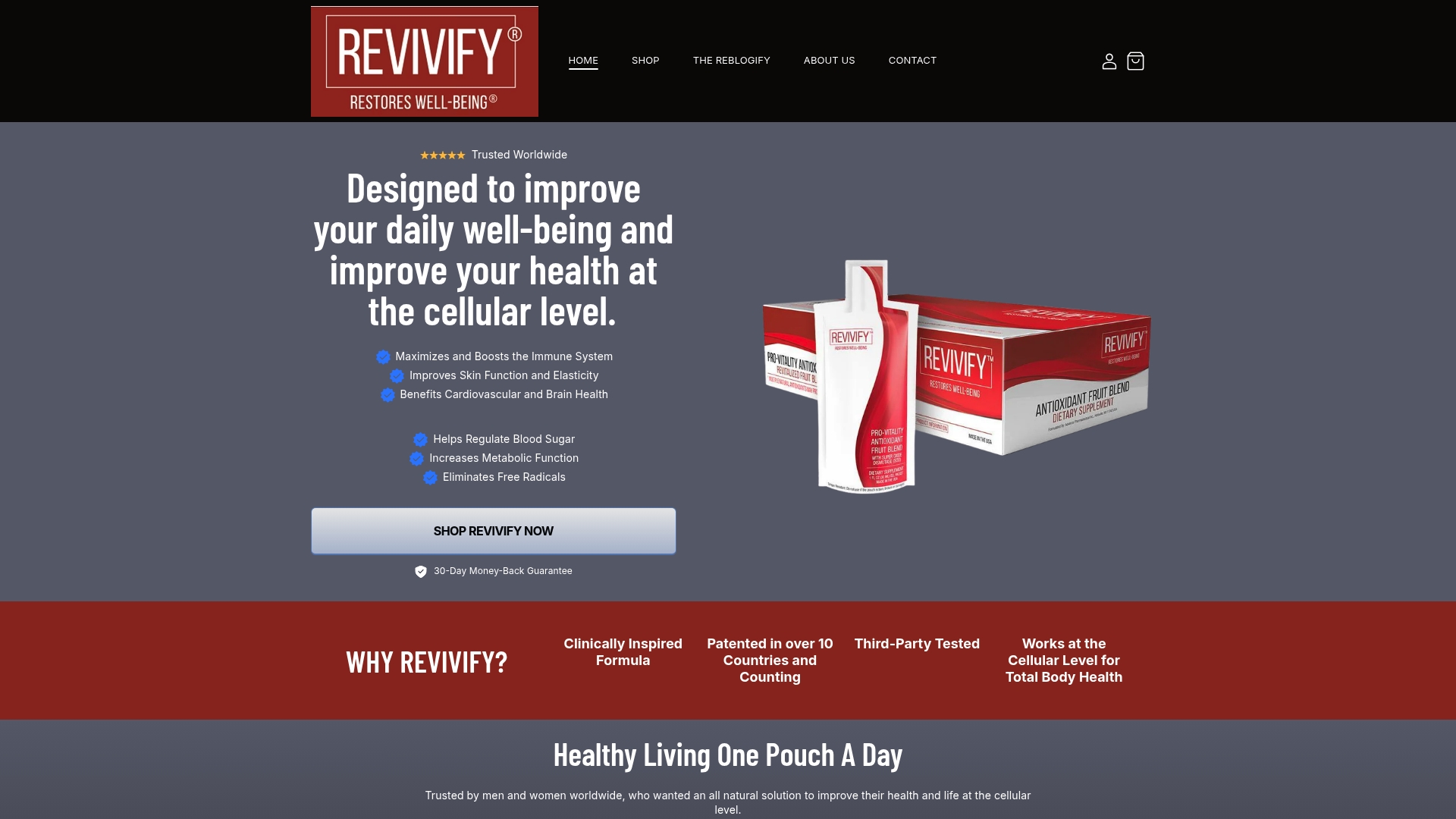
This kind of combined approach reflects the immunometabolic strategy researchers increasingly recommend over single-agent antioxidant scavenging… The formula is third-party tested and plant-based. As with any supplement, talk to your clinician before starting, especially if you take prescription medication or manage a chronic condition; this is general information, not personalized medical advice.
If you want to see how the ingredients fit together and whether it makes sense for your situation, visit the Tryrevivify product page to review the full formula and current subscription options, backed by a risk-free guarantee.
Sources
- Free Radicals: How They Affect Your Body - Cleveland Clinic
- Interdependence between oxidative stress and inflammation - PMC
- Free Radicals: Properties, Sources, Targets, and Their Implication in Various Diseases - PMC
This article is general information, not a substitute for advice from a qualified doctor. Consult a qualified healthcare professional about your own circumstances before acting on anything here.