

Free Radicals and Blood Sugar: What You Need to Know
The free radicals blood sugar connection is defined as the biochemical relationship in which excess reactive oxygen species (ROS) impair insulin signaling, damage pancreatic beta-cells, and drive blood sugar dysregulation. Clinically, this relationship is called oxidative stress, and it sits at the center of how diabetes progresses and worsens over time. Research shows that diabetic patients carry significantly lower SOD activity than healthy individuals, meaning their cells are less equipped to neutralize the free radicals that high blood sugar constantly generates. That imbalance is not a side effect of diabetes. It is one of its engines.
What is the free radicals blood sugar connection?
Free radicals are unstable molecules that carry an unpaired electron. They form constantly during normal metabolism, and your body expects them. The problem starts when they accumulate faster than your antioxidant defenses can clear them. At that point, oxidative stress begins, and glucose regulation takes the hit.
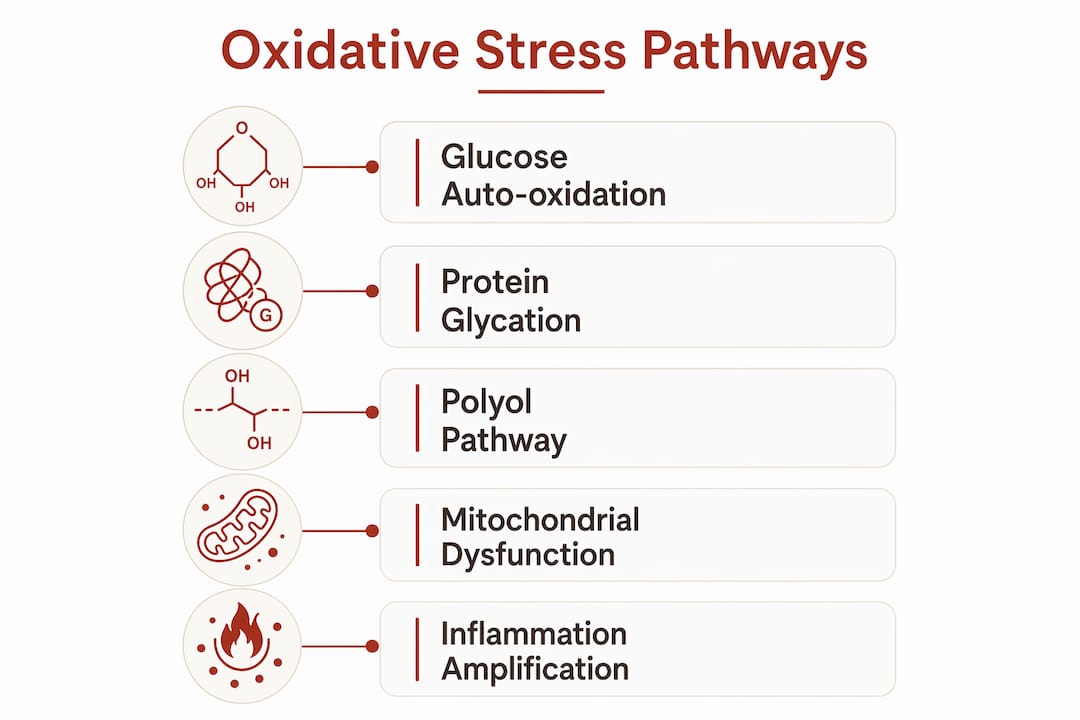
Chronic high blood sugar accelerates free radical production through four well-documented pathways. Hyperglycemia drives ROS generation via glucose auto-oxidation, advanced glycation end-product (AGE) formation, the polyol pathway, and protein kinase C (PKC) activation. Each pathway floods cells with superoxide and hydroxyl radicals, the two most damaging ROS species. That flood overwhelms the body’s natural antioxidant systems, including superoxide dismutase (SOD), catalase, and glutathione.

| Free radical source | Pathway | Primary ROS produced |
|---|---|---|
| Glucose auto-oxidation | Direct oxidation of glucose | Superoxide, hydrogen peroxide |
| AGE formation | Protein glycation | Superoxide, hydroxyl radical |
| Polyol pathway | Sorbitol accumulation | NADH-driven superoxide |
| PKC activation | Diacylglycerol signaling | Superoxide via NADPH oxidase |
The table above shows that high blood sugar does not produce one type of oxidative threat. It produces several simultaneously. That is why oxidative stress and blood sugar are so tightly linked, and why controlling glucose alone does not always stop the cellular damage.
Key free radical types involved in this process include:
- Superoxide radical: The first ROS produced in mitochondria during glucose metabolism
- Hydroxyl radical: The most reactive and damaging species, formed from superoxide via the Fenton reaction
- Hydrogen peroxide: A less reactive intermediate that can generate hydroxyl radicals
- Peroxynitrite: Forms when superoxide reacts with nitric oxide, impairing vascular function
How do free radicals affect blood sugar regulation and insulin function?
Free radicals do not just damage cells passively. They actively disrupt the molecular machinery that keeps blood sugar in check. Excess ROS inhibit insulin signaling pathways and block GLUT4 transporters, the proteins that move glucose from the bloodstream into muscle and fat cells. When GLUT4 function drops, blood sugar stays elevated even when insulin is present.
The inflammation angle makes this worse. NF-κB mediates ROS signaling, regulates glycolysis, and amplifies insulin resistance by triggering inflammatory cytokines. Think of NF-κB as an alarm system that ROS trips repeatedly. Each alarm triggers more inflammation, which further blocks insulin’s ability to work. The result is a self-reinforcing loop.
ROS also inactivate key glycolytic enzymes, including glucokinase, glyceraldehyde 3-phosphate dehydrogenase, phosphofructokinase-1, and pyruvate kinase. These enzymes are the workhorses of glucose metabolism. When they go offline, the body loses its ability to process glucose efficiently, and blood sugar climbs further.
Pancreatic beta-cells face a particular threat. Beta-cells carry low levels of SOD and catalase, leaving them with minimal protection against oxidative attack. Even modest spikes in blood sugar can cause meaningful damage to these cells. Over time, that damage reduces insulin output, which raises blood sugar further, which generates more ROS. This cycle is one of the core mechanisms behind type 2 diabetes progression.
Pro Tip: ROS are not purely destructive. At low concentrations, they act as signaling molecules that support healthy cell function. The goal is not to eliminate them entirely but to keep them within a range your antioxidant defenses can manage. Oversupplementing with antioxidants can actually blunt beneficial ROS signaling, so balance matters as much as quantity.
Key ways free radicals impair blood sugar control:
- Blocking GLUT4 glucose transporters in muscle cells
- Activating NF-κB, which drives inflammatory insulin resistance
- Inactivating glycolytic enzymes that process glucose
- Damaging beta-cell DNA and triggering apoptosis (cell death)
- Reducing insulin gene expression in the pancreas
What health consequences follow from oxidative stress in diabetes?
Oxidative stress does not stay confined to blood sugar numbers. It spreads through the vascular system and peripheral tissues, causing the complications most people associate with advanced diabetes. Oxidative stress impairs nitric oxide bioavailability, stimulates inflammation, accelerates beta-cell apoptosis, and causes direct tissue damage. Nitric oxide keeps blood vessels relaxed and open. When free radicals destroy it, vessels stiffen and narrow, raising cardiovascular risk.
Lipid peroxidation levels more than double in diabetic patients compared to healthy individuals. That number reflects how aggressively ROS attack cell membranes throughout the body. Elevated lipid peroxidation is a measurable marker of how much oxidative damage is accumulating, and it correlates directly with complication severity.
The types of oxidative stress in diabetes connect to a wide range of tissue-level consequences. The table below maps the major diabetic complications to their oxidative mechanisms.
| Complication | Primary oxidative mechanism |
|---|---|
| Diabetic neuropathy | ROS damage to nerve myelin and axonal membranes |
| Diabetic nephropathy | Glomerular oxidative injury and fibrosis |
| Diabetic retinopathy | Peroxynitrite damage to retinal capillaries |
| Cardiovascular disease | Impaired nitric oxide, vascular inflammation |
| Beta-cell exhaustion | Apoptosis from sustained ROS exposure |
Each complication in this table represents a point where free radicals trigger cardiac damage and peripheral tissue failure. The shared root cause is the same: oxidative stress that outpaces the body’s ability to repair itself.
How can antioxidants and lifestyle changes reduce oxidative damage?
The body’s first line of defense against ROS is its own antioxidant enzyme system. SOD converts superoxide into hydrogen peroxide, catalase breaks hydrogen peroxide into water, and glutathione neutralizes a broad range of reactive species. In diabetes, all three systems are suppressed. Antioxidant therapies that restore redox balance protect beta-cells and improve glycemic control by scavenging excess ROS.
Emerging therapeutic strategies target the Nrf2 pathway, a master regulator of antioxidant gene expression. Activating Nrf2 upregulates SOD, catalase, and glutathione production simultaneously. Nano-antioxidants represent another frontier, delivering antioxidant compounds directly to mitochondria where most ROS originate. Understanding the role of antioxidants in herbal healing adds another layer to this picture, as plant-derived compounds like quercetin and resveratrol activate Nrf2 signaling naturally.
Lifestyle factors carry significant weight in managing metabolic oxidative stress. Regular aerobic exercise increases endogenous SOD and catalase activity. A diet rich in polyphenols, vitamins C and E, and selenium supports the antioxidant enzyme network. Smoking dramatically increases ROS burden and should be avoided entirely by anyone managing blood sugar. Chronic psychological stress elevates cortisol, which suppresses antioxidant defenses and raises glucose.
Practical strategies to reduce oxidative damage:
- Dietary antioxidants: Prioritize berries, leafy greens, nuts, and green tea for polyphenol content
- Regular exercise: Moderate aerobic activity three to five times per week upregulates endogenous antioxidant enzymes
- Sleep quality: Poor sleep increases ROS production and impairs glucose regulation overnight
- Stress management: Mindfulness and breathing practices lower cortisol and reduce oxidative burden
- Avoid smoking: Tobacco smoke is one of the highest external sources of free radicals
Pro Tip: Antioxidants work better in combination than alone. Vitamin C regenerates vitamin E after it neutralizes a free radical, and glutathione recycles both. Taking a single antioxidant in isolation misses the network effect. Look for formulas that support the full antioxidant relay, not just one player.
Key Takeaways
Oxidative stress is not a byproduct of diabetes. It is a primary driver of insulin resistance, beta-cell loss, and the vascular complications that define the disease’s most serious outcomes.
| Point | Details |
|---|---|
| Free radicals impair insulin | ROS block GLUT4 transporters and inactivate glycolytic enzymes, raising blood sugar directly. |
| Beta-cells are highly vulnerable | Low SOD and catalase in beta-cells make them the first tissue to suffer from oxidative damage. |
| Complications share one root | Neuropathy, nephropathy, retinopathy, and cardiovascular disease all trace back to ROS-driven tissue injury. |
| Antioxidant systems can be supported | SOD, catalase, and glutathione activity can be restored through diet, exercise, and targeted supplementation. |
| Balance matters more than elimination | ROS serve normal signaling roles; the goal is restoring redox balance, not removing all free radicals. |
Why I think most people are managing diabetes with one hand tied behind their back
Most conversations about blood sugar focus entirely on glucose numbers, carbohydrate intake, and medication. Those things matter. But they address the symptom, not the full mechanism. After spending years reading the research on oxidative stress and blood sugar regulation, I am convinced that ignoring ROS is like trying to put out a fire while leaving the gas on.
The evidence is clear: managing oxidative stress complements blood sugar control and protects cellular function over time. The complications people fear most, nerve damage, kidney failure, vision loss, are not inevitable. They are largely the result of sustained oxidative damage that went unaddressed while everyone focused on the glucose meter.
The uncomfortable truth is that antioxidant therapy in clinical settings is still underdeveloped. Most standard diabetes care does not include a structured plan for reducing oxidative burden. That gap is where lifestyle and targeted supplementation can make a real difference. You do not need to wait for clinical protocols to catch up. You can start supporting your antioxidant defenses now, through food, movement, and evidence-backed supplements, while working with your healthcare provider on the glucose side. Both levers matter.
— Larry
Tryrevivify and the oxidative stress side of blood sugar health
If the research above resonates with you, Tryrevivify was built with exactly this problem in mind. Its patented formula combines superoxide dismutase, the frontline antioxidant enzyme your body uses to neutralize superoxide radicals, with prebiotic fiber to support cellular health from the inside out.

SOD is the first runner in the antioxidant relay. Without it, the rest of the system struggles to keep up. Tryrevivify delivers SOD in a form designed for daily use, targeting the oxidative imbalance that drives blood sugar complications at the cellular level. If you are serious about supporting your antioxidant defenses, Tryrevivify gives you a science-grounded starting point. Pair it with the lifestyle strategies covered here, and you address both sides of the equation.
FAQ
What is the free radicals blood sugar connection?
Free radicals, specifically reactive oxygen species, impair insulin signaling and damage pancreatic beta-cells, causing blood sugar to rise and stay elevated. This relationship is called oxidative stress, and it is a central mechanism in type 2 diabetes progression.
How do free radicals worsen insulin resistance?
ROS block GLUT4 glucose transporters, activate NF-κB inflammatory pathways, and inactivate glycolytic enzymes, all of which reduce insulin effectiveness and raise blood glucose levels.
Why are pancreatic beta-cells so vulnerable to oxidative damage?
Beta-cells carry naturally low levels of SOD and catalase, leaving them with limited protection against ROS. Even minor blood sugar fluctuations can cause cumulative oxidative damage that reduces insulin output over time.
Can antioxidants improve blood sugar control?
Antioxidant therapies that restore redox balance, including SOD support, Nrf2 activators, and dietary polyphenols, protect beta-cells and improve glycemic control by neutralizing excess ROS.
What lifestyle changes reduce oxidative stress in diabetes?
Regular aerobic exercise, a polyphenol-rich diet, quality sleep, stress reduction, and avoiding smoking all lower ROS burden and support the body’s endogenous antioxidant enzyme systems.