

Gut Dysbiosis Explained: What It Means for Your Health
Gut dysbiosis is defined as a disruption of the gut microbial ecosystem involving the loss of beneficial microbes, overgrowth of harmful species, and reduced microbial diversity. The clinical term for this condition is “intestinal dysbiosis,” and it sits at the center of a growing body of research linking gut microbiome imbalance to conditions ranging from inflammatory bowel disease and obesity to type 2 diabetes and neuropsychiatric disorders. Your gut microbiome supports digestion, trains your immune system, and maintains the gut barrier that keeps harmful substances out of your bloodstream. When that ecosystem falls out of balance, the consequences reach far beyond your digestive tract.
What is gut dysbiosis explained in plain terms?
Gut dysbiosis is a disruption of the gut microbial ecosystem with loss of beneficial microbes, overgrowth of harmful species, and reduced diversity impairing gut barrier integrity and immune function. Think of your microbiome as a rainforest. A healthy rainforest has thousands of species keeping each other in check. Remove too many of the foundational species and the whole system destabilizes. The same logic applies to your gut.
Microbial diversity is the cornerstone of a resilient microbiome. A diverse community of bacteria, fungi, and other microorganisms produces short-chain fatty acids, regulates inflammation, and crowds out pathogens through a mechanism called colonization resistance. When diversity drops, that defense collapses. Harmful species fill the gap, produce inflammatory compounds, and weaken the gut lining. The result is a cascade of effects that functional gastroenterology now recognizes as a driver of chronic disease.

Dysbiosis is not a single disease with a single cause. It is a pattern. That distinction matters because it shapes how you recognize it, how clinicians assess it, and how you address it.
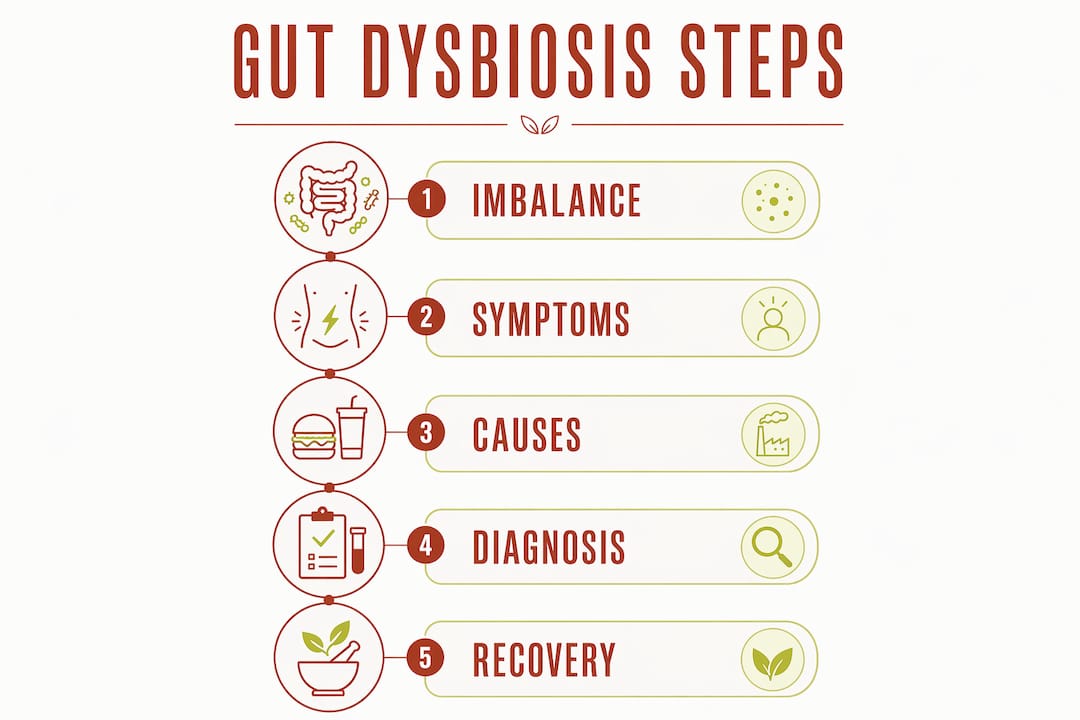
What are the common symptoms and signs of gut dysbiosis?
Recognizing gut dysbiosis symptoms starts with the digestive system, but the signs rarely stop there. The hallmark digestive symptoms include:
- Bloating and excess gas, especially after meals
- Irregular bowel movements, including both constipation and diarrhea
- Abdominal cramping or discomfort
- Food sensitivities that seem to worsen over time
- Nausea without a clear cause
Beyond digestion, dysbiosis symptoms commonly extend to fatigue, brain fog, skin conditions like eczema and rosacea, and mood disturbances including anxiety and low mood. These systemic effects reflect the microbiome’s role in immune regulation and gut-brain signaling. When the gut ecosystem is disrupted, the ripple effects are body-wide.
The critical caveat is that none of these symptoms are specific to dysbiosis. Bloating and fatigue overlap with dozens of other conditions, from thyroid dysfunction to celiac disease. Symptoms alone cannot confirm a dysbiosis diagnosis. Red flags like rectal bleeding, unexplained weight loss, or iron-deficiency anemia require immediate conventional medical evaluation, not a functional gut protocol.
Pro Tip: If you experience red flag symptoms alongside digestive complaints, seek specialist referral before pursuing any gut restoration program. Clinical context always takes priority over symptom pattern matching.
What causes gut dysbiosis and how do lifestyle factors drive it?
The main drivers of gut dysbiosis include antibiotic use, diets high in ultra-processed foods, chronic stress, and exposure to environmental pollutants like micro and nanoplastics, all of which compromise colonization resistance. Each of these factors disrupts the microbial ecosystem through a different mechanism, but the outcome is consistent: reduced diversity and a shift toward inflammatory species.
The most significant modifiable causes include:
- Antibiotic use: Broad-spectrum antibiotics wipe out beneficial bacteria alongside pathogens. A single course can alter microbial composition for months.
- Ultra-processed diet: Diets low in fiber starve beneficial bacteria. Without fermentable fiber, short-chain fatty acid production drops and the gut lining weakens.
- Chronic stress: Psychological and physical stress alter gut motility, immune signaling, and microbial composition through the gut-brain axis.
- Environmental pollutants: Pesticides and micro/nanoplastics act as reservoirs for toxins, triggering oxidative stress, inflammation, and increased intestinal permeability.
The Mediterranean diet stands out as the most studied dietary pattern for promoting microbial balance, a state researchers call eubiosis. It delivers the fiber diversity, polyphenols, and healthy fats that beneficial bacteria need to thrive. The contrast with a Western diet high in refined carbohydrates and saturated fat is stark. Diet is the single most modifiable lever you have over your microbiome.
How is gut dysbiosis diagnosed and understood in clinical practice?
Dysbiosis is a descriptive pattern, not a formal diagnosis. Clinical experts state that dysbiosis should be investigated through symptoms and clinical history rather than microbiome scores alone, because no single “normal” microbiome baseline exists across individuals. This is one of the most misunderstood aspects of gut health.
| Diagnostic approach | What it assesses | Clinical purpose |
|---|---|---|
| Symptom and history review | Digestive complaints, diet, medications, stress | First-line clinical evaluation |
| Stool microbial profiling | Bacterial species composition and diversity | Identifies patterns, not definitive diagnoses |
| Inflammation markers (calprotectin) | Gut lining inflammation | Distinguishes functional from inflammatory disease |
| Digestion markers (elastase, fat) | Pancreatic function and fat absorption | Rules out malabsorption conditions |
| Red flag screening | Weight loss, bleeding, anemia | Triggers specialist referral |
Microbiome testing has expanded rapidly, but its clinical utility remains limited by individual variability. Treating based on test results rather than symptoms and lifestyle is a common pitfall known as “test-chasing.” A microbiome sequencing report that shows low Lactobacillus counts means very little without knowing the person’s diet, stress levels, and symptom history.
Pro Tip: Use stool testing as one data point within a full clinical picture. A skilled clinician interprets results alongside your symptoms, diet history, and medication use. Numbers without context mislead more than they inform.
What practical strategies help restore gut microbiome balance?
The most structured framework for restoring microbial balance is the Remove-Replace-Reinoculate-Repair model used in functional medicine. Each step targets a different layer of the problem.
-
Remove triggers. Eliminate unnecessary antibiotics, ultra-processed foods, and identified dietary irritants. Reduce chronic stressors where possible. This step stops the ongoing damage before restoration can begin.
-
Replace digestive support. Restore adequate stomach acid, digestive enzymes, and bile flow if deficient. Digestion must function properly for beneficial bacteria to receive the substrates they need.
-
Reinoculate beneficial microbes. Increase dietary fiber from diverse plant sources, fermented foods like yogurt, kefir, and sauerkraut, and targeted probiotic strains where clinically indicated. The goal is to feed and restore native microbial networks, not just add bacteria from a capsule.
-
Repair the gut lining. Support intestinal barrier integrity through nutrients like zinc, glutamine, and polyphenols. Gut lining repair is the step most people skip, yet it is where long-term resilience is built.
Microbiome restoration takes months, not days. Recovery requires removing triggers, improving diet, managing stress, and supporting gut barrier repair over an extended period. Expecting results in two weeks sets you up for frustration. The microbiome is an ecosystem, and ecosystems recover on their own timeline.
Stress management is not optional in this process. Chronic stress directly alters gut motility and microbial composition through the hypothalamic-pituitary-adrenal axis. Practices like consistent sleep, moderate exercise, and mindfulness each contribute measurably to microbiome stability. Natural approaches to herbal gut support can also complement dietary changes during the restoration phase.
Pro Tip: Focus on fiber diversity rather than fiber quantity alone. Eating 30 different plant foods per week feeds a broader range of microbial species than eating large amounts of one or two fiber sources.
How does gut dysbiosis affect overall health beyond digestion?
Dysbiosis drives systemic disease through four core mechanisms: reduced short-chain fatty acid production, increased intestinal permeability (commonly called “leaky gut”), immune dysregulation, and disrupted gut-brain communication. Understanding these mechanisms explains why gut dysbiosis affects conditions that seem completely unrelated to digestion.
| Systemic condition | Microbiome mechanism involved |
|---|---|
| Inflammatory bowel disease | Immune dysregulation, barrier breakdown, reduced microbial diversity |
| Obesity and type 2 diabetes | Altered energy harvest, endotoxemia, insulin resistance signaling |
| Cardiovascular disease | Trimethylamine N-oxide production, systemic inflammation |
| Neuropsychiatric disorders | Disrupted gut-brain axis, altered neurotransmitter precursor production |
| Skin conditions (eczema, rosacea) | Systemic inflammation, immune sensitization |
Increased intestinal permeability allows bacterial fragments called lipopolysaccharides to enter the bloodstream. This triggers a state of low-grade systemic inflammation called endotoxemia. Over time, chronic endotoxemia contributes to insulin resistance, atherosclerosis, and neuroinflammation. The gut is not just a digestive organ. It is a central regulator of systemic immune tone.
The gut-brain axis is particularly significant. The vagus nerve, enteric nervous system, and microbial metabolites all carry signals between the gut and the brain. Dysbiosis alters serotonin precursor availability, GABA signaling, and inflammatory cytokine levels, each of which influences mood, cognition, and stress response. Gut bacteria diversity directly shapes these pathways, which is why restoring microbial balance has measurable effects on mental health outcomes.
Key Takeaways
Gut dysbiosis is a microbial ecosystem disruption that drives both digestive and systemic disease through reduced diversity, barrier breakdown, and immune dysregulation, and it requires a structured, lifestyle-integrated approach to reverse.
| Point | Details |
|---|---|
| Dysbiosis is a pattern, not a diagnosis | Assess it through symptoms and clinical history, not microbiome scores alone. |
| Symptoms are non-specific | Bloating, fatigue, and brain fog overlap with many conditions; red flags need urgent evaluation. |
| Diet is the primary lever | A fiber-diverse, Mediterranean-style diet is the most evidence-based way to restore microbial balance. |
| Restoration takes months | The Remove-Replace-Reinoculate-Repair framework works, but requires sustained commitment over time. |
| Systemic effects are real | Dysbiosis links to metabolic, cardiovascular, neuropsychiatric, and skin conditions through defined mechanisms. |
Why I think we’re still getting dysbiosis wrong
The term “dysbiosis” gets used as if it explains everything and nothing at the same time. I’ve seen people walk into conversations about their health armed with a microbiome test report, convinced they’ve found the root cause of every symptom they’ve ever had. That’s not how this works.
The microbiome’s individuality means clinical decisions should rely more on symptoms and clinical history than standardized diversity scores. Two people can have nearly identical microbiome profiles and completely different health outcomes. The ecosystem is too complex and too personal for a single number to capture.
What actually works is less exciting than a test result. It’s consistent dietary fiber, stress reduction, adequate sleep, and patience. The people who restore their gut health are the ones who treat it as a long-term project, not a problem to solve with a supplement stack in 30 days. Work with a clinician who reads your whole picture, not just your sequencing report.
— Larry
Gut health support that goes deeper than diet alone
Addressing dysbiosis through diet and lifestyle is the foundation. But cellular health plays a role that most gut health conversations overlook.
Tryrevivify combines superoxide dismutase and prebiotic fiber in a patented daily formula designed to fight free radicals and reduce oxidative stress at the cellular level. Oxidative stress is one of the mechanisms that worsens intestinal permeability and drives the inflammation that sustains dysbiosis. By supporting your body’s antioxidant defenses alongside prebiotic fiber for your microbiome, Tryrevivify addresses gut health from two angles simultaneously. If you’re working to restore your gut ecosystem, explore Tryrevivify’s approach as part of a complete, evidence-informed strategy.
FAQ
What is gut dysbiosis in simple terms?
Gut dysbiosis is an imbalance in the gut microbiome where harmful bacteria outnumber beneficial ones and microbial diversity drops. This disrupts digestion, immune function, and the gut barrier.
What are the most common signs of gut dysbiosis?
The most common signs include bloating, gas, irregular bowel movements, fatigue, brain fog, and skin issues like eczema. These symptoms are non-specific and overlap with other conditions, so clinical evaluation is necessary.
What causes dysbiosis to develop?
The main causes are antibiotic use, diets high in ultra-processed foods, chronic stress, and exposure to environmental pollutants like micro and nanoplastics, all of which reduce microbial diversity and colonization resistance.
How long does it take to treat gut dysbiosis?
Microbiome restoration is a gradual process that takes months rather than days. It requires removing triggers, improving diet, managing stress, and supporting gut lining repair consistently over time.
Can gut dysbiosis affect mental health?
Yes. Dysbiosis disrupts the gut-brain axis by altering neurotransmitter precursor production and increasing inflammatory signaling, which links to mood disturbances, anxiety, and cognitive symptoms like brain fog.