

Gut Microbiome Insulin Sensitivity Link Explained
The gut microbiome is a direct regulator of insulin sensitivity, operating through microbial composition, metabolite signaling, and immune activation. Researchers now recognize this relationship, formally called the gut-metabolic axis, as a central driver of type 2 diabetes risk. Key bacterial species like Akkermansia muciniphila and Faecalibacterium prausnitzii produce metabolites that control how well your cells respond to insulin. The gut microbiome insulin sensitivity link is not theoretical. Clinical trials confirm it, and understanding it gives you a real path toward better metabolic health.
How does gut microbiome composition affect insulin sensitivity?
Your gut bacteria do not just digest food. They actively shape how your body handles glucose and responds to insulin. The composition of your gut flora determines whether your metabolic environment is protective or inflammatory.
Beneficial bacteria like Faecalibacterium prausnitzii and Roseburia produce butyrate, a short-chain fatty acid that feeds gut lining cells and reduces inflammation. When these species decline, gut barrier integrity weakens and systemic inflammation rises. Type 2 diabetes is consistently associated with reduced populations of these butyrate producers alongside elevated pro-inflammatory species, and this shift correlates with higher HbA1c and inflammatory markers like CRP and IL-6.

The gut barrier and metabolic endotoxemia
A compromised gut lining is one of the most damaging consequences of microbial imbalance, a state called dysbiosis. Increased intestinal permeability allows lipopolysaccharide (LPS) to leak from the gut into the bloodstream. LPS is a fragment of bacterial cell walls, and when it enters circulation, it triggers an inflammatory cascade that directly blocks insulin receptor signaling. This process, known as metabolic endotoxemia, sustains insulin resistance over time.
The gut-metabolic axis links dysbiosis to insulin resistance through inflammatory signaling that disrupts insulin receptor substrates and glucose transport. Specifically, chronic low-grade inflammation causes serine phosphorylation of IRS-1, which shuts down the PI3K/Akt/GLUT4 pathway your cells need to absorb glucose. Think of this pathway as the door insulin knocks on to let glucose inside. When inflammation jams that door, blood sugar stays elevated regardless of how much insulin your pancreas produces.
| Bacterial group | Effect on insulin sensitivity |
|---|---|
| Faecalibacterium prausnitzii | Produces butyrate; reduces gut inflammation |
| Akkermansia muciniphila | Strengthens gut lining; improves glucose tolerance |
| Roseburia | Generates SCFAs; supports insulin signaling |
| Pro-inflammatory species (elevated in T2D) | Increase LPS translocation; disrupt insulin pathways |
Pro Tip: Eating a diverse range of plant foods, including legumes, oats, and leafy greens, feeds butyrate-producing bacteria and supports gut barrier health. Diversity in your diet directly builds diversity in your microbiome.
You can read more about how gut bacteria diversity shapes your metabolic risk in depth.
What microbial metabolites link gut bacteria to insulin regulation?
Gut bacteria do not influence insulin directly. They do it through chemical messengers called metabolites. These molecules travel from your gut to your tissues and organs, where they activate receptors and trigger hormonal responses.
Short-chain fatty acids (SCFAs) are the most studied of these messengers. SCFAs activate G-protein-coupled receptors GPR41 and GPR43, enhance mitochondrial function, and stimulate GLP-1 release from gut cells. GLP-1 is an incretin hormone that amplifies insulin secretion after meals. When SCFA levels fall, as they do in type 2 diabetes, these signaling pathways weaken and gut barrier integrity suffers further.
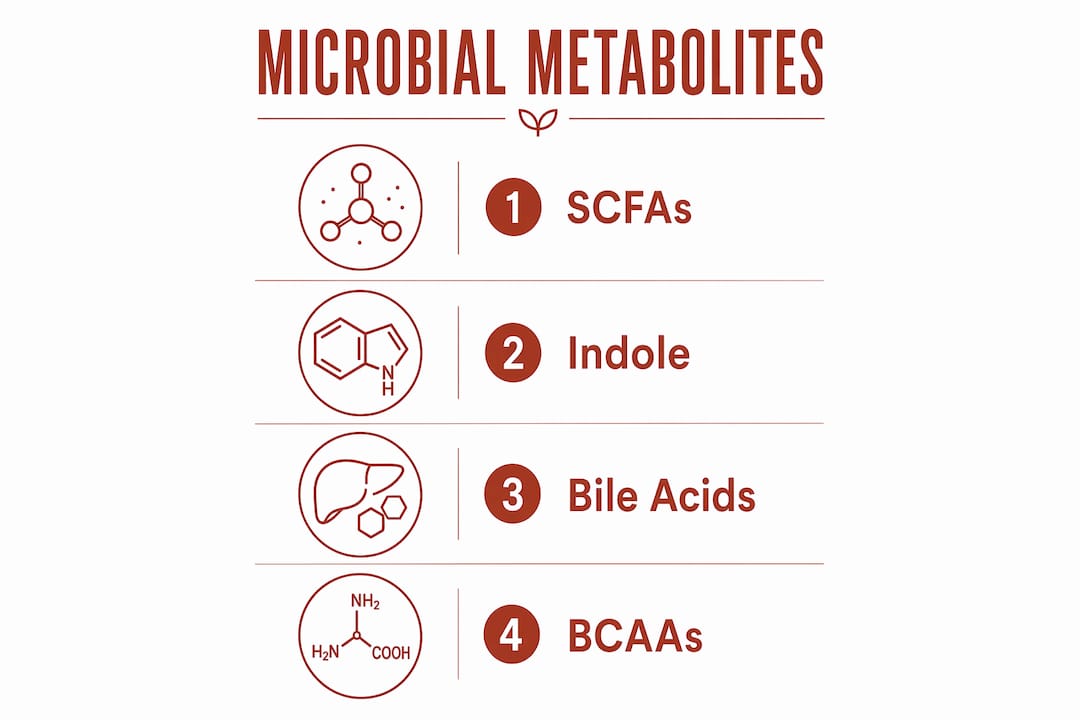
Indole is another metabolite worth knowing. It is produced when gut bacteria break down the amino acid tryptophan. Indole stimulates GLP-1 secretion in a dose-dependent manner and improves insulin sensitivity and glucose tolerance in animal models. In laboratory studies, indole treatment produced a 2.93-fold increase in GLP-1 secretion. That is a substantial hormonal shift driven entirely by a bacterial byproduct.
Bile acids and branched-chain amino acids (BCAAs) also play a role. Gut bacteria transform primary bile acids into secondary forms that activate receptors regulating glucose metabolism. Elevated BCAAs, which occur when certain gut bacteria overproduce them, are a recognized marker of insulin resistance. Microbial metabolites function as signaling molecules that modulate GLP-1 secretion and insulinotropic effects, making dysbiotic metabolite profiles a key target for restoring metabolic flexibility.
Pro Tip: Fermented foods like plain yogurt, kefir, and kimchi introduce live bacteria that can shift your metabolite profile toward more SCFA and indole production. Even small daily servings add up over weeks.
For a closer look at how prebiotic fiber supports this metabolite production, the clinical evidence is worth reviewing.
How do lifestyle factors shape the gut-insulin connection?
Diet, exercise, and medication all reshape your gut microbiome, and that reshaping feeds back into your insulin response. This is not a one-way street. Lifestyle factors like diet and exercise reshape the gut microbiome at the same time they improve insulin sensitivity, creating a positive feedback loop. Improve one, and the other follows.
Here is how the major lifestyle factors work:
-
High-fiber diets increase populations of SCFA-producing bacteria like Faecalibacterium prausnitzii and Roseburia. More fiber means more butyrate, which means a stronger gut barrier and less inflammatory LPS leakage into the bloodstream.
-
Regular exercise increases microbial diversity and raises the abundance of Akkermansia muciniphila. Even moderate aerobic activity, such as brisk walking for 30 minutes most days, produces measurable shifts in gut flora within weeks.
-
Metformin, the most widely prescribed type 2 diabetes medication, partly works through the gut. It increases Akkermansia muciniphila populations and alters bile acid metabolism, effects that contribute to its glucose-lowering action beyond direct liver suppression.
-
GLP-1 receptor agonists have a bidirectional relationship with the gut microbiome. These therapies can increase beneficial SCFA producers, which then enhance endogenous GLP-1 secretion. The medication and the microbiome reinforce each other’s effects. For those exploring GLP-1 based metabolic treatments, understanding this gut connection adds important context.
-
Processed food and excess sugar reduce microbial diversity rapidly. Even short-term dietary shifts toward ultra-processed foods measurably lower butyrate-producing species within days.
What is the future of personalized microbiome approaches for insulin health?
Personalized microbiome medicine is moving from research labs into clinical practice. The core principle is straightforward: your gut composition predicts how well you will respond to a given intervention, and that prediction should guide treatment.
Clinical response to microbiome-targeted therapies varies significantly between individuals. Patient stratification based on individual microbial composition improves treatment outcomes. A probiotic that works well for one person may do nothing for another, depending on their baseline bacterial populations.
The most compelling clinical example involves Akkermansia muciniphila supplementation. Three months of daily pasteurized Akkermansia muciniphila supplementation improved hepatic insulin sensitivity by 12% in prediabetic adults who had low baseline levels of this bacterium. The improvement was measured using the HOMA-S index at a significance level of p = 0.05. Critically, the benefit appeared specifically in people who started with low Akkermansia counts. Those with adequate baseline levels saw less response. Metabolic improvements from microbiome interventions often depend on baseline bacterial levels, which is exactly why personalized diagnostics matter.
Emerging areas include:
- Microbiome profiling before treatment to identify which bacterial deficits are present
- Targeted prebiotic formulas designed to feed specific bacterial populations rather than the microbiome broadly
- Combination approaches pairing dietary fiber with specific probiotic strains for synergistic effects
- Personalized nutrition platforms that match dietary recommendations to individual gut composition. Services like personalized nutrition programs are beginning to incorporate gut microbiome data into metabolic health planning.
The challenge ahead is standardizing microbiome testing and making it accessible. Right now, most clinical gut tests vary in methodology, making it hard to compare results across labs or build universal treatment protocols.
Key Takeaways
The gut microbiome regulates insulin sensitivity through microbial composition, SCFA and indole metabolite production, gut barrier integrity, and inflammatory signaling, all of which are modifiable through diet, exercise, and targeted supplementation.
| Point | Details |
|---|---|
| Microbial composition matters | Low butyrate producers like Faecalibacterium prausnitzii correlate with higher HbA1c and insulin resistance. |
| Metabolites drive the mechanism | SCFAs and indole activate GLP-1 secretion and insulin signaling receptors directly. |
| Gut barrier integrity is critical | LPS leakage from a damaged gut lining triggers the inflammation that blocks insulin receptor function. |
| Lifestyle creates a feedback loop | Diet and exercise improve both gut microbiome composition and insulin sensitivity simultaneously. |
| Personalization predicts success | Baseline gut composition determines how well you respond to probiotics and prebiotic interventions. |
What I have learned from watching the gut-insulin research evolve
The science here has moved faster than most people realize. Five years ago, the gut microbiome was still considered a peripheral factor in metabolic health. Now it sits at the center of how researchers explain insulin resistance in people who eat reasonably well and exercise but still struggle with blood sugar.
What strikes me most is the specificity. This is not a vague “gut health is good for you” story. The mechanisms are concrete. A 12% improvement in hepatic insulin sensitivity from a single bacterial strain, measured by a validated index, is a meaningful clinical signal. That kind of specificity changes how you should think about supplements and diet.
The part most people miss is the baseline dependency. You cannot just take a probiotic and expect results without knowing your starting point. The Akkermansia data makes this painfully clear. If your levels are already adequate, supplementing may do very little. If they are depleted, the same supplement produces a measurable metabolic shift. That is not a flaw in the research. That is the research telling you something important about personalization.
My honest advice: before spending money on microbiome supplements, focus first on dietary fiber. High-fiber foods are the most consistent, evidence-backed way to shift your gut flora toward SCFA producers. Exercise comes second. Both are free, and both work through the same pathways that expensive interventions target. Supplements can add value on top of that foundation, but they cannot replace it.
— Larry
How Tryrevivify supports your gut and metabolic health
Understanding the gut-insulin connection is one thing. Supporting it daily is another.

Tryrevivify combines prebiotic fiber with superoxide dismutase in a patented daily formula designed to support your body at the cellular level. Prebiotic fiber feeds the SCFA-producing bacteria that strengthen your gut barrier and support insulin signaling. Superoxide dismutase targets the oxidative stress that compounds metabolic inflammation. If you want to learn more about how gut bacteria affect blood sugar and how targeted supplementation fits into that picture, Tryrevivify’s resource library covers the clinical evidence in plain language. Visit Tryrevivify to see how the formula works and whether it fits your health goals.
FAQ
What is the gut microbiome insulin sensitivity link?
The gut microbiome regulates insulin sensitivity through microbial metabolites like SCFAs and indole, gut barrier integrity, and inflammatory signaling. Dysbiosis, an imbalance in gut bacteria, triggers inflammation that directly blocks insulin receptor function.
Which gut bacteria most affect insulin sensitivity?
Faecalibacterium prausnitzii, Roseburia, and Akkermansia muciniphila are the most studied beneficial species. Their decline correlates with reduced butyrate production, increased gut permeability, and higher insulin resistance markers like HbA1c.
Can improving gut health reverse insulin resistance?
Improving gut health through high-fiber diets, exercise, and targeted supplementation can meaningfully improve insulin sensitivity. Clinical trials show that restoring Akkermansia muciniphila levels improved hepatic insulin sensitivity by 12% in prediabetic adults with low baseline counts.
How does diet affect the gut-insulin connection?
High-fiber diets increase SCFA-producing bacteria, which strengthen the gut barrier and stimulate GLP-1 secretion. Processed foods and excess sugar rapidly reduce microbial diversity and lower butyrate-producing species within days.
Does metformin work through the gut microbiome?
Metformin partly lowers blood glucose by increasing Akkermansia muciniphila populations and altering bile acid metabolism in the gut. These microbiome-mediated effects contribute to its glucose-lowering action alongside its direct effect on the liver.