

How to Improve Your Gut Microbiome with Prebiotics
You can spend a small fortune on probiotic supplements and still wonder why your digestion feels off, your energy drags, and your stomach protests after meals. The missing piece for most people is not more bacteria in a capsule. It is the food those bacteria need to survive. Learning how to improve gut microbiome with prebiotics is one of the most evidence-backed, practical steps you can take for lasting digestive health. This guide covers the science, the strategy, and the specific habits that actually move the needle.
Table of Contents
- Key takeaways
- How to improve gut microbiome with prebiotics: the basics
- Getting your diet and lifestyle ready for prebiotics
- A step-by-step guide to adding prebiotic foods
- Tracking progress and troubleshooting setbacks
- My honest take on prebiotics and gut health
- Support your gut health with Tryrevivify
- FAQ
Key takeaways
| Point | Details |
|---|---|
| Prebiotics feed your bacteria | Prebiotic fibers act as fuel for beneficial gut bacteria, making them more effective than probiotics alone. |
| Dietary diversity matters most | No single prebiotic food nourishes all bacterial species, so eating a wide variety is the real goal. |
| Go slow to avoid discomfort | Increasing prebiotic intake gradually over several weeks reduces gas and bloating significantly. |
| Lifestyle amplifies results | Sleep, exercise, and stress management all directly shape your gut microbiome alongside diet. |
| Whole foods beat supplements | Fiber-rich and fermented foods combined outperform supplements for building a thriving gut ecosystem. |
How to improve gut microbiome with prebiotics: the basics
Think of your gut microbiome as a living community of trillions of bacteria, fungi, and other microorganisms that live in your digestive tract. They influence everything from how you absorb nutrients to how your immune system responds to threats. When that community is well-fed and diverse, the downstream effects on your health are significant.
Prebiotics are specific types of dietary fiber that your body cannot digest on its own. Instead, they pass through to your colon where beneficial bacteria ferment them for energy. That fermentation process produces short-chain fatty acids, particularly butyrate, which nourish the cells lining your gut wall and help reduce inflammation.
This is where the prebiotics vs probiotics distinction matters. Probiotics introduce live bacteria into your gut. Prebiotics feed the bacteria already living there. Both have value, but without adequate prebiotic fiber, even the best probiotic supplement has limited staying power. Think of probiotics as new residents and prebiotics as the food supply that determines whether those residents thrive or leave.
The most studied prebiotic fibers include:
- Inulin found in chicory root, garlic, and onions
- Fructooligosaccharides (FOS) found in bananas, asparagus, and leeks
- Galactooligosaccharides (GOS) found in legumes and certain dairy products
- Resistant starch found in cooked and cooled potatoes, green bananas, and oats
Each of these fibers selectively feeds different bacterial species, which is why dietary diversity is crucial for a balanced microbiome. You cannot get the full picture from a single source.
Pro Tip: If you are new to prebiotic-rich foods, start with cooked leeks or ripe bananas. They contain moderate amounts of FOS with a gentler fermentation profile than raw garlic or onions.
Getting your diet and lifestyle ready for prebiotics
Before you overhaul your grocery list, it helps to understand the baseline your gut needs to work with. Most Americans fall short of the recommended 25 to 35 grams of daily fiber for optimal gut bacteria health. The average intake hovers around 15 grams. That gap is not just a number. It represents a chronically underfed microbiome.
Dietary diversity is the other half of the equation. Different beneficial bacteria species prefer different prebiotic substrates. Eating only one or two high-fiber foods creates a microbiome that favors a narrow range of bacterial strains. Rotating your sources across the week gives more species a chance to thrive.
The table below shows a practical framework for building fiber diversity into your weekly diet:
| Food category | Key prebiotic fiber | Target frequency |
|---|---|---|
| Garlic and onions | Inulin, FOS | 4 to 5 times per week |
| Legumes (lentils, chickpeas) | GOS, resistant starch | 3 to 4 times per week |
| Cooked and cooled grains | Resistant starch | 3 to 4 times per week |
| Asparagus, leeks | Inulin, FOS | 2 to 3 times per week |
| Unripe or just-ripe bananas | FOS | Daily if tolerated |
Lifestyle factors shape your microbiome just as powerfully as food. Experts recommend 150 minutes of moderate exercise per week and 7 to 9 hours of sleep nightly to support gut microbiome health. Exercise increases microbial diversity independently of diet. Sleep deprivation, on the other hand, disrupts the gut-brain axis and can shift your microbiome toward inflammatory bacterial profiles within days.
Stress is another underappreciated factor. Chronic stress alters gut motility, reduces mucus production, and changes which bacterial species dominate. Practices like diaphragmatic breathing before meals can meaningfully reduce digestive discomfort and support a more favorable gut environment.
Pro Tip: Tracking your fiber intake for just three days using a free food logging app often reveals surprising gaps. Most people discover they are getting far less fiber than they assumed, especially on days when vegetables are skipped at lunch.
A step-by-step guide to adding prebiotic foods
The single biggest mistake people make when they decide to improve digestive health through diet is going all in too fast. Doubling your fiber intake overnight triggers significant gas and bloating because your gut bacteria produce gases as they ferment prebiotic fiber. That reaction is normal, but it is also avoidable with a smarter approach.
Here is a gradual four-week protocol that works for most people:
- Week 1: Add one small serving of a prebiotic food to one meal per day. A half cup of cooked lentils or a sliced banana works well. Stay consistent but do not add more yet.
- Week 2: Increase to two servings per day across two different food categories. Pair a legume at lunch with cooked and cooled rice at dinner, for example.
- Week 3: Introduce a third prebiotic source, ideally from the allium family such as garlic or onions cooked into a sauce or soup. Cooking reduces their intensity while preserving most of the prebiotic fiber.
- Week 4: Aim for 20 to 25 grams of total fiber daily from diverse sources. Assess how your digestion feels and adjust from there.
Preparation methods that boost prebiotic potency
How you prepare food changes its prebiotic value significantly. Boiling and chilling potatoes increases their resistant starch content through a process called retrogradation, where starch molecules reorganize into a form that resists digestion. Cold potato salad, leftover rice, and overnight oats all deliver more resistant starch than their freshly cooked counterparts.

Cooking also matters for alliums. Raw garlic is potent but hard on sensitive guts. Lightly sautéed garlic retains most of its inulin content while being far gentler on digestion. Roasting onions until soft is another approach that preserves prebiotic fiber while reducing the compounds that cause discomfort.
Combining prebiotics with probiotics and other habits
Pairing prebiotic-rich foods with fermented foods amplifies the benefit. A meal of lentil soup with a side of plain yogurt, or a grain bowl topped with kimchi, gives your gut both the fuel and the live cultures to work with. This combination approach reflects what research consistently shows: whole foods combined outperform isolated supplements for building a resilient gut ecosystem.
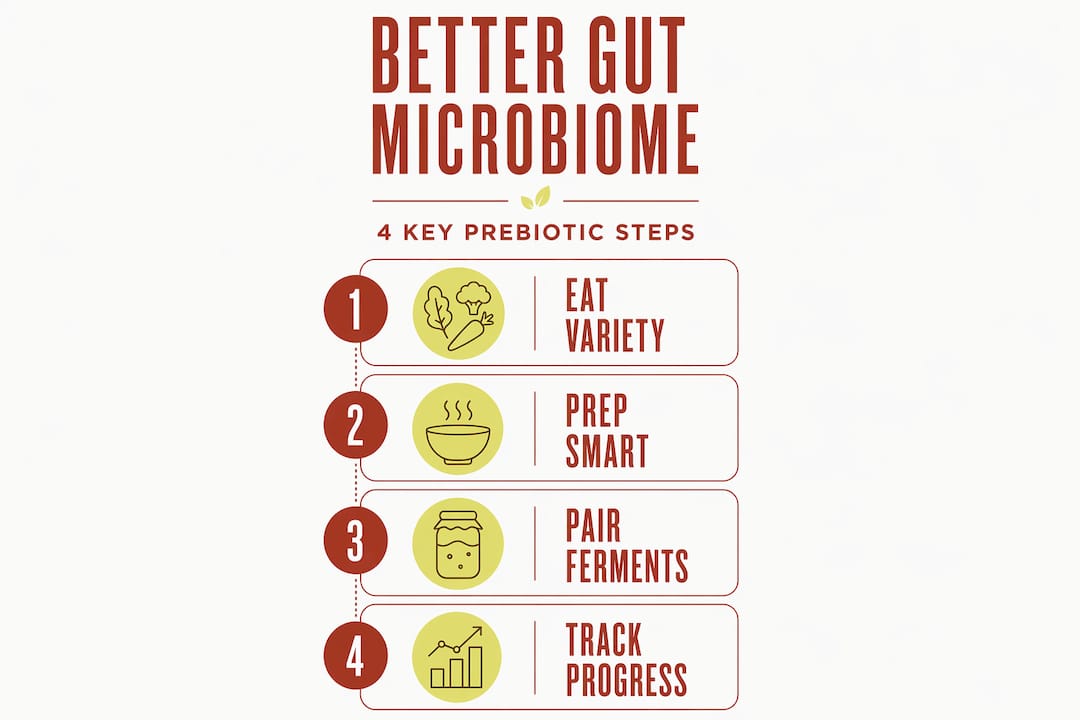
You can also support your gut between meals. Staying well-hydrated helps fiber move through your digestive tract efficiently. Limiting ultra-processed foods reduces exposure to emulsifiers and artificial sweeteners that have been shown to disrupt microbial balance.
Tracking progress and troubleshooting setbacks
Knowing what to expect keeps you from abandoning a strategy that is actually working. The first two to four weeks of increasing prebiotic intake often bring temporary gas and bloating. This is your microbiome adapting. Symptoms typically decrease after two to four weeks as your bacterial communities shift to handle the new fuel load.
Signs that your gut microbiome is genuinely improving include:
- More regular, predictable bowel movements with less straining
- Reduced bloating after meals compared to your baseline
- Improved energy levels in the mid-afternoon, when gut-derived metabolites influence energy metabolism
- Less food sensitivity and fewer digestive flare-ups after eating
- Better mood stability, since gut bacteria produce a significant portion of your body’s serotonin
The timeline for meaningful microbial adaptation varies. Most people notice digestive improvements within three to six weeks of consistent dietary changes. Broader effects on energy and mood can take eight to twelve weeks.
One important reality: prebiotic responses are highly individual. Your starting microbiome composition, your genetics, and your history with antibiotics all shape how quickly and dramatically you respond. If you have followed a gradual protocol for six weeks and still experience significant discomfort, that is a signal worth discussing with a gastroenterologist or registered dietitian.
“Maintaining a healthy gut is a lifestyle commitment. Diet, sleep, stress management, and avoiding processed foods all play a role. No single supplement or food fixes it alone.”
My honest take on prebiotics and gut health
I have spent a lot of time reviewing the research on gut health, and the pattern I keep seeing is this: people want a shortcut, and the supplement industry is happy to sell them one. The truth is less exciting but far more useful.
In my experience, the readers who see the most lasting improvement are the ones who treat dietary diversity as the actual goal, not a means to an end. They are not hunting for the one prebiotic superfood that will fix everything. They are rotating legumes, experimenting with fermented foods, and paying attention to how their body responds week to week. That iterative approach is what the science on dietary diversity actually supports.
I also think the lifestyle piece gets dismissed too quickly. When someone tells me their gut health is not improving despite a clean diet, the first questions I ask are about sleep and stress. Chronic stress and poor sleep can undo weeks of careful dietary work. The gut-brain axis is real, and it runs in both directions.
The other thing I would push back on is the idea that discomfort in the first few weeks means the approach is wrong. It usually means it is working. Your bacteria are shifting. That process is not always comfortable. Patience and a gradual ramp-up are not just polite suggestions. They are the difference between a strategy that sticks and one you abandon after ten days.
Start simple. Stay consistent. Expect the process to take months, not weeks. That framing alone changes everything.
— Larry
Support your gut health with Tryrevivify
You have the dietary framework. Now consider what happens at the cellular level while your microbiome rebuilds. At Tryrevivify, we have built a supplement that works alongside a prebiotic-rich diet rather than replacing it. Revivify combines prebiotic fiber with superoxide dismutase, an enzyme that neutralizes free radicals at the cellular level, in a patented formula designed to support your body’s overall health from the inside out.

The Revivify 30-Day Supply is a practical starting point for anyone building a healthy gut diet plan and wanting cellular-level antioxidant support at the same time. It is not a replacement for the dietary work outlined in this article. It is a complement to it. Visit Tryrevivify to learn more about how the formula works and whether it fits your health goals.
FAQ
What are the best prebiotic foods for gut health?
The most effective prebiotic foods include garlic, onions, leeks, asparagus, lentils, chickpeas, unripe bananas, and cooked and cooled potatoes or rice. Rotating across these categories feeds a broader range of beneficial bacterial species.
How long does it take to improve your gut microbiome with prebiotics?
Most people notice digestive improvements within three to six weeks of consistent dietary changes. Broader effects on energy and mood typically take eight to twelve weeks, depending on your starting microbiome composition.
What is the difference between prebiotics and probiotics?
Probiotics are live bacteria you consume through food or supplements. Prebiotics are non-digestible fibers that feed the bacteria already living in your gut. Both support gut health, but prebiotics provide the fuel that determines whether beneficial bacteria survive and multiply.
How much fiber do you need daily for a healthy gut?
The recommended daily fiber intake for optimal gut bacteria health is 25 to 35 grams. Most Americans consume roughly half that amount, which leaves the microbiome chronically underfed.
Can prebiotics cause side effects?
Yes, especially when you increase intake too quickly. Gas and bloating are common in the first two to four weeks as your gut bacteria adapt to the new fermentation load. Starting with small amounts and increasing gradually over four weeks minimizes these effects significantly.