

8 Weeks' Evidence: Which Lactobacillus Strains Cut Cold Symptom Days
Certain Lactobacillus strains, taken consistently for weeks, have been shown in randomized human trials to shift immune markers and reduce cold-symptom days. That effect is real but narrow: it depends on the specific strain, holds up only with steady daily use, and comes with genuine caution for people who are immunocompromised or critically ill. What follows breaks down which strains have evidence, how they work, and how to use one safely.
TL;DR:
- Only a few Lactobacillus strains have strong evidence supporting their role in reducing cold-symptom days after at least six to eight weeks of daily use.
- The effectiveness depends heavily on identifying the specific strain listed on the label, as benefits are strain-specific and not guaranteed by genus alone.
- Benefits, such as fewer days sick or improved vaccine response, are modest and primarily supported by randomized, controlled trials, not general immune boost claims.
- Safety concerns are minimal for healthy individuals but increase significantly for immunocompromised or hospitalized people, especially with inactivated or live strains.
- For best results, choose probiotic products with clearly listed strains, confirm CFU counts at the time of use, and consider pairing with prebiotics for added support.
Table of Contents
- What Is Lactobacillus Immune Support, and Which Strains Have Human Evidence?
- How Does Lactobacillus Actually Change Immune Function?
- What Do Clinical Trials Actually Show About Immune Outcomes?
- Who Should Avoid Probiotics, and What Are the Real Risks?
- How Should You Actually Take Lactobacillus for Immune Support?
- Fermented Foods or a Supplement: Which One Actually Helps Your Immune Response?
- What Should You Check Before Buying, and What to Ask Your Doctor
- How Revivify Approaches Lactobacillus and Immune Support
- What’s the Realistic Takeaway Here?
- A Practical Next Step If You’re Considering Lactobacillus
- Sources
What Is Lactobacillus Immune Support, and Which Strains Have Human Evidence?
Not every Lactobacillus product on a shelf has been tested in people. That distinction matters more than almost anything else in this category, because “probiotic” as a label covers dozens of species and hundreds of strains, and immune effects documented in one strain do not transfer to another just because they share a genus name. Cleveland Clinic makes this point directly: probiotic benefits are strain-specific, not a genus-wide guarantee.
A handful of Lactobacillus strains have accumulated enough human trial data to say something specific about what they do:
- Lactobacillus helveticus GCL1815 (heat-sterilized form): tested in a 2024 randomized, double-blind, placebo-controlled trial in healthy adults ages 20 to 64, where 8 weeks of daily intake reduced cumulative cold-symptom days compared with placebo, according to the MDPI-published trial.
- Lactobacillus rhamnosus GG: one of the most studied probiotic strains overall, with trials examining respiratory infection frequency and duration in both children and adults, generally over multi-week courses.
- Lactobacillus casei strains: studied for effects on natural killer cell activity and mild upper respiratory symptom scores in otherwise healthy populations.
- Lactobacillus reuteri strains: examined for modulation of inflammatory cytokines and, in some pediatric populations, for reducing daycare-related infection frequency.
- Lactobacillus paracasei: investigated for effects on nasal and throat symptom severity during cold season, typically in adult cohorts over several weeks.
Notice the pattern: none of these trials tested a single dose and measured next-day effects. Every one of them ran for weeks, and every one of them measured a specific, narrow outcome, such as symptom-days or infection frequency, rather than a vague notion of “boosted immunity.”
The evidence quality varies by strain, too. Some of this work is randomized and double-blind, the gold standard for filtering out placebo effect and researcher bias. Other studies are smaller pilot trials or observational cohorts that generate a hypothesis rather than confirm one. The heat-sterilized L. helveticus GCL1815 trial sits at the stronger end: randomized, placebo-controlled, and run over a full 8-week course rather than a few days.
A key figure worth sitting with: in that 8-week trial, the measured outcome was cumulative cold-symptom days, not “immunity” as an abstraction. That is a subtle but important shift. Researchers were not asking whether the immune system got “stronger” in some general sense. They were asking whether people who took the strain daily spent fewer days feeling sick, and the answer, in that population, was yes.
This is why strain identity should be the first thing you check on a label, not the last. A bottle that lists “Lactobacillus blend” without genus, species, and strain designation (the full name looks something like Lactobacillus helveticus GCL1815, with the letters and numbers at the end identifying the specific strain) tells you almost nothing about what it has been tested to do. Reviews of the gut microbiome literature on Lactobacillus consistently flag this strain dependency as the single biggest source of confusion for consumers trying to compare products.
If you want a mental shortcut: think of Lactobacillus the way you’d think of antibiotics. Nobody asks for “an antibiotic” without specifying which one, because penicillin and ciprofloxacin do very different jobs. Lactobacillus strains deserve the same specificity, even though the marketing rarely offers it.
How Does Lactobacillus Actually Change Immune Function?
The mechanisms are where this stops sounding like marketing and starts sounding like biology. Lactobacillus strains do not “boost” immunity in some undifferentiated way. They interact with specific structures and signaling pathways in your gut, and those interactions ripple outward.
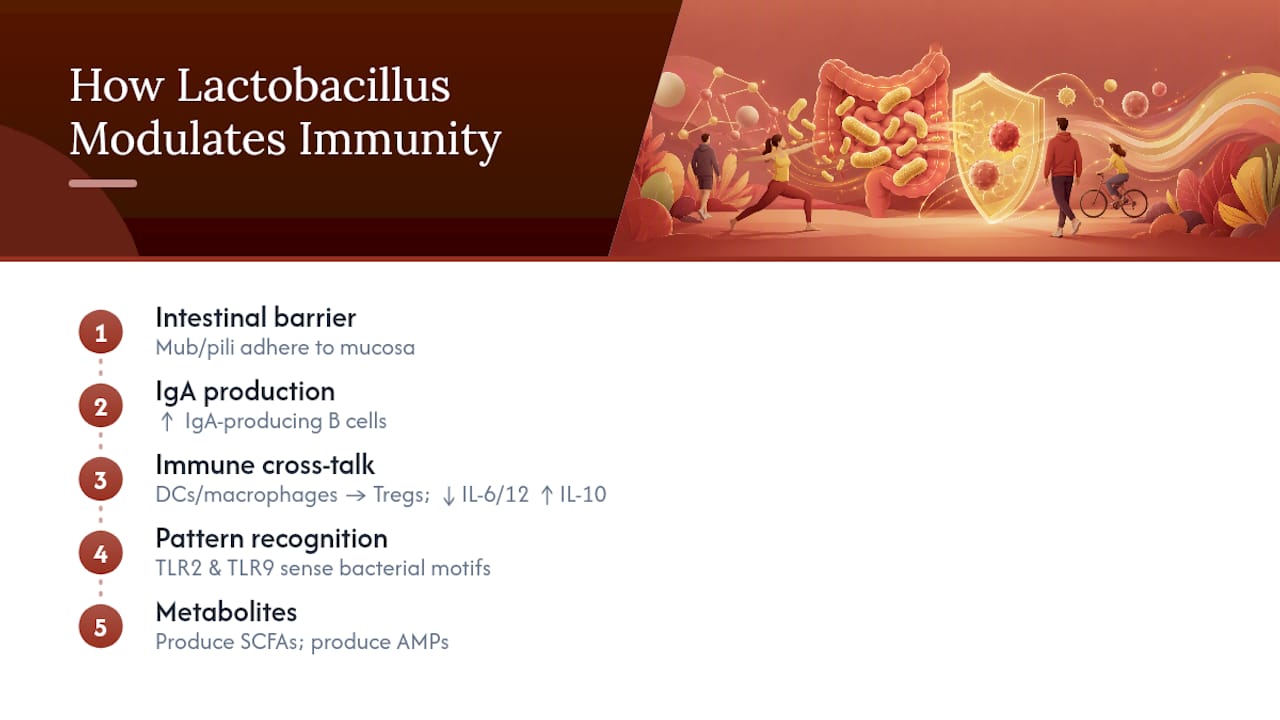
Start at the barrier. Your intestinal lining is not passive plumbing. It’s a mucosal immune organ, coated in mucus and studded with tight junctions between cells that control what gets through. Certain Lactobacillus strains adhere to this lining using surface molecules called mucus-binding proteins (often abbreviated Mub) and, in some species, pili, hairlike appendages that grip epithelial cells. That physical attachment matters because it positions the bacteria to communicate directly with the immune tissue embedded just beneath the gut lining, called gut-associated lymphoid tissue.
Then look at antibody production. One of the most consistent findings across mechanistic research is that Lactobacillus strains can stimulate the production of secretory Immunoglobulin A, or IgA, the antibody that patrols mucosal surfaces in the gut, respiratory tract, and elsewhere. A 2023 review in Cells walks through this in detail: Lactobacillus exposure can increase the population of IgA-producing B cells, giving the mucosal immune system more frontline antibody coverage without ramping up systemic inflammation.
Immune cell cross-talk is the next layer. Dendritic cells and macrophages, the sentinels that sample the gut environment and decide how the immune system should respond, pick up signals from Lactobacillus cell-wall components. Depending on the strain, this can push the immune response toward a more regulated, tolerant state. That happens partly through induction of regulatory T cells, or Tregs, which act like a dimmer switch on inflammation rather than an on/off toggle. The same review describes shifts in cytokine profiles: some strains dial down IL-6 and IL-12 (pro-inflammatory signals) while nudging up IL-10 (an anti-inflammatory one).
Pattern recognition receptors do the initial sensing. Toll-like receptors, particularly TLR2 and TLR9, sit on immune cells and recognize specific molecular patterns on bacterial surfaces. When Lactobacillus components bind these receptors, they trigger downstream signaling cascades that shape how aggressively or calmly the immune system responds to a threat. This is genuinely elegant: the same receptor family that detects pathogens also detects beneficial bacteria, and the difference in response depends on which molecular patterns are present and in what context.
Metabolites extend the effect beyond direct contact. Lactobacillus strains ferment dietary fiber into short-chain fatty acids (SCFAs), produce antimicrobial peptides called bacteriocins that can suppress competing pathogens, and generate exopolysaccharides, sugar-based molecules that can themselves interact with immune receptors. SCFAs in particular feed the cells lining your colon and appear to support the kind of measured, regulated inflammatory tone that keeps the gut barrier intact.
The gut-lung and gut-systemic axes explain effects far from the intestine. This is the part people find counterintuitive: how does a bacterium living in your colon affect a cold you catch through your nose? The Frontiers review on Lactobacillus and immune modulation lays out the gut-lung axis, in which immune cells trained or activated in gut-associated lymphoid tissue circulate and influence immune readiness at distant mucosal sites, including the respiratory tract. It’s less like the gut sending a memo to the lungs and more like the same trained security team getting reassigned across a building.
Pro Tip: If a supplement label makes vague claims about “boosting immunity” without naming a specific mechanism or citing the strain studied for it, treat that as a red flag rather than reassurance. Legitimate strain research almost always points to a specific pathway, whether that’s IgA induction, cytokine shifts, or a named clinical endpoint.
None of this means every strain does all of the above. A given Lactobacillus strain might be a strong IgA inducer but have little documented effect on cytokine balance, or vice versa. That is precisely why the differences between Lactobacillus and Bifidobacterium, and between individual strains within Lactobacillus itself, carry real weight rather than being a technicality for researchers to argue over.
What Do Clinical Trials Actually Show About Immune Outcomes?
Trial results cluster into three tiers of confidence, and confusing them is where a lot of “immune boosting” hype gets manufactured. Strongest evidence: reduced upper respiratory symptom burden. The clearest, most replicated finding is that specific strains, taken daily for a defined stretch, reduce the number of days people spend with cold symptoms.
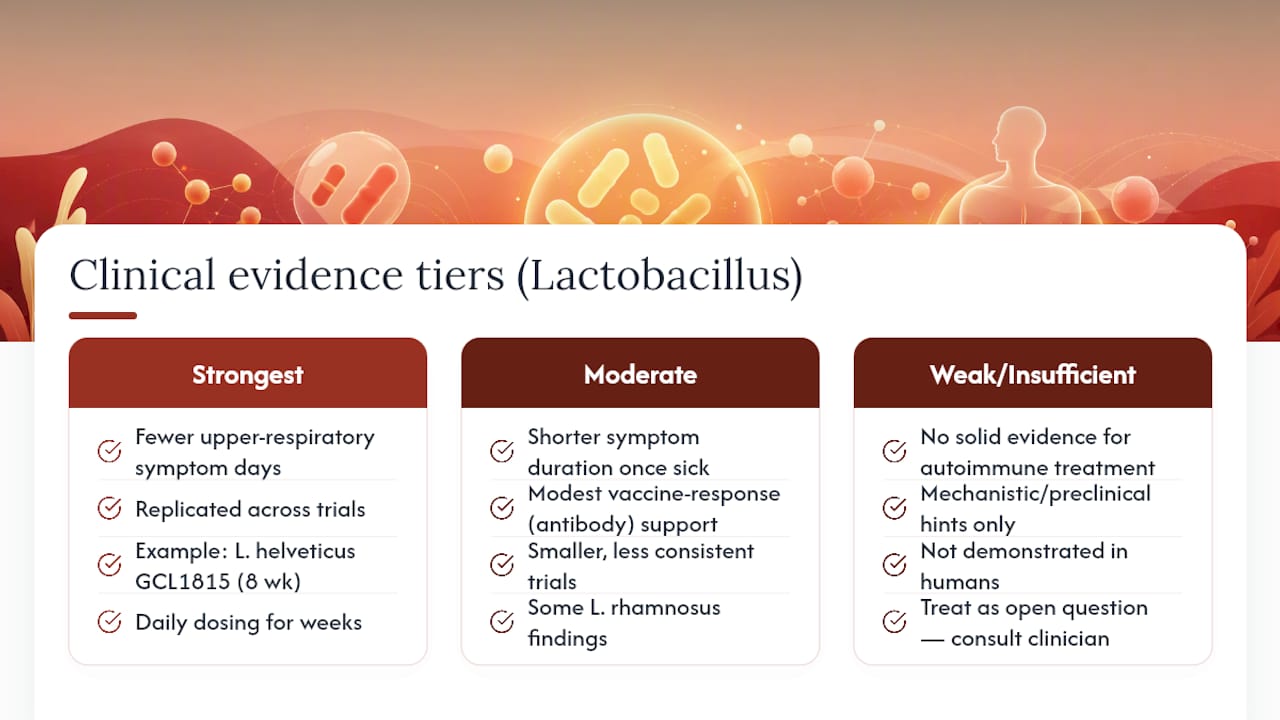
The 2024 randomized, double-blind, placebo-controlled trial on heat-sterilized L. helveticus GCL1815 is the sharpest example available. Healthy adults ages 20 to 64 took the strain daily for 8 weeks. The group receiving the active strain showed a significant reduction in cumulative cold-symptom days compared with the placebo group. That’s a specific, measurable, and clinically meaningful outcome: fewer days feeling sick, not a self-reported sense of wellness.
Moderate evidence: shortened symptom duration and vaccine response support. A second tier of findings deals with symptom duration once an infection starts, and with how strongly the body responds to vaccination. Some strains, including certain Lactobacillus rhamnosus formulations, have shown modest improvements in how quickly cold symptoms resolve once they begin. Separately, several small trials have measured antibody titers following vaccination in people taking a probiotic strain versus placebo, with some showing a modestly enhanced response. This evidence is real but thinner: sample sizes tend to be smaller, and results are less consistently replicated across independent research groups than the symptom-day findings.
Weak or insufficient evidence: autoimmune disease treatment. Here’s where the science draws a hard line that marketing often ignores. There is no solid clinical trial evidence that Lactobacillus supplementation treats or meaningfully alters the course of autoimmune conditions like rheumatoid arthritis, lupus, or type 1 diabetes in humans. Some preclinical and mechanistic work suggests plausible pathways, Treg induction being the most cited, but plausible mechanism is not the same as demonstrated clinical benefit. Anyone with an autoimmune condition considering probiotics for that specific purpose should treat this as an open question, not a settled one, and raise it directly with their clinician.
A pattern worth naming explicitly: trial durations in this space run 6 to 12 weeks, not days. The MDPI trial ran 8 weeks. This is consistent across the field: immune-related changes from probiotic use show up after sustained, consistent dosing, not after a single capsule or a few days of use. Any product or claim promising rapid, short-term “immune boosting” is not reflecting how this evidence actually works.
What the strongest data shows, in one line: a specific heat-sterilized strain, taken daily for 8 weeks, produced a statistically significant drop in cumulative cold-symptom days in a controlled, randomized trial of healthy adults.
Why does the distinction between prevention and treatment matter so much here? Because the trial designs that produced positive results were almost universally preventive and population-level. They measured whether regular use, sustained across a cold season or a defined trial window, shifted the odds and severity of common upper respiratory symptoms in a generally healthy group. That is a fundamentally different question from asking whether a probiotic can treat an active, established disease. Confusing the two is the single most common misreading of this research.
Who Should Avoid Probiotics, and What Are the Real Risks?
For healthy adults, Lactobacillus supplementation carries a low risk profile. That’s the baseline, and it’s worth stating plainly before getting into the exceptions, because the exceptions get outsized attention relative to how rarely they apply.
Cleveland Clinic’s guidance is direct on this: probiotics are generally safe for healthy people, but unsupervised use is not advisable for anyone who is immunocompromised, critically ill, or hospitalized with a central line in place. Harvard Health echoes this, noting that while probiotics can help generally healthy people, they are not universally recommended, and older adults or anyone with underlying health vulnerabilities should loop in a clinician before starting.
The documented, though rare, adverse events include:
- Bacteremia (bacteria entering the bloodstream), reported in isolated cases involving Lactobacillus species, almost exclusively in severely compromised patients.
- Endocarditis (infection of the heart’s inner lining), an even rarer but documented complication in case reports involving patients with significant preexisting risk factors.
- Risk factors identified across case reviews of Lactobacillus-associated infections include neutropenia (dangerously low white blood cell counts), recent organ transplant, recent hospitalization, and severe chronic illness.
- Central venous catheters appear repeatedly as a risk factor, since they offer a direct route for bacteria to bypass normal barrier defenses.
These events are uncommon enough that they don’t show up in trials of healthy adults, which is exactly why the safety conversation splits so cleanly along the healthy-versus-vulnerable line. If you’re a generally healthy adult without a suppressed immune system, recent major surgery, or an indwelling medical device, the practical risk from a well-manufactured Lactobacillus product is low. If any of those factors apply to you, that calculation changes.
Pro Tip: If you’re on immunosuppressant medication, recovering from a transplant, or dealing with a compromised immune system for any reason, talk to your clinician before starting a Lactobacillus product, even one marketed as “gentle” or “food-based.” The infection risk isn’t about the marketing claims on the bottle; it’s about your immune system’s current capacity to handle any live bacterial exposure.
Practical safeguards worth building into your routine: choose products that have undergone third-party testing for identity and contamination, watch for any signs of systemic infection (fever, chills, unusual fatigue) after starting a new probiotic and stop use if they appear, and never substitute a probiotic supplement for medical treatment of an active infection or diagnosed condition.
How Should You Actually Take Lactobacillus for Immune Support?
Form matters more than most labels let on. Trials use two broad categories of Lactobacillus preparation, and they are not interchangeable.
Live (viable) strains are the traditional probiotic format: bacteria that remain alive through manufacturing, storage, and ideally through your digestive tract. Heat-killed (heat-sterilized) preparations, by contrast, use bacterial cells that have been deliberately inactivated. This might sound counterintuitive, since “probiotic” traditionally implies live organisms, but the 2024 trial on L. helveticus GCL1815 specifically used a heat-sterilized preparation and still showed a significant reduction in cold-symptom days. The immune-modulating components in that case appear to come from cell-wall structures and metabolites that survive inactivation, not from the bacteria colonizing your gut alive.
That distinction has real practical implications. Heat-killed preparations tend to have more stable shelf lives and simpler storage requirements, since there’s no living population to keep alive. Live-strain products are more sensitive to heat, moisture, and time, which is why viability at the point of consumption, not just at manufacture, is the number that actually matters.
On dosing and duration, here’s what trial-backed use generally looks like:
- CFU ranges: trials generating positive results typically use products delivering billions of colony-forming units (CFU) per dose, though the exact figure is strain-specific and listed on the individual study’s protocol rather than a single universal number.
- Course length: the strongest data comes from 8-week continuous daily use; other trials in this space run anywhere from 6 to 12 weeks.
- Consistency: daily dosing without gaps is the pattern across every trial with a positive outcome. Sporadic use has not been the tested protocol in any of the strongest studies.
A 2024 review of randomized trials and meta-analyses on probiotics makes a point that deserves more attention than it gets: CFU count on the label at time of manufacture is not the same as CFU count at the time you actually swallow the product. Heat exposure during shipping, extended time on a shelf, or storage past the expiration date can all reduce viable count well below what’s printed on the label. Checking whether a brand states “CFU at time of use” or “CFU at expiry” rather than “CFU at manufacture” tells you a lot about how seriously that company treats product transparency.
Storage basics worth following: keep refrigerated products refrigerated, check expiration dates before every new bottle, and avoid leaving capsules in a hot car or direct sunlight, both of which accelerate potency loss in live-strain products.
One more format worth knowing: synbiotics, which pair a probiotic strain with a prebiotic fiber source in the same product. The rationale is straightforward. Prebiotic fiber feeds the beneficial bacteria already present and can help support the strain you’re introducing, giving it a better environment to do its work rather than leaving it to compete for resources alone.
Fermented Foods or a Supplement: Which One Actually Helps Your Immune Response?
Fermented foods and targeted supplements solve different problems, and the honest answer is that they’re not really competing for the same job. Fermented foods, think yogurt with live cultures, kefir, sauerkraut, kimchi, and miso, deliver a variable mix of bacterial strains, generally in modest and inconsistent quantities. That variability is both their strength and their limitation.
The strength: fermented foods integrate easily into a daily diet, carry additional nutritional benefits beyond bacterial content (protein in yogurt, vitamin K2 in some fermented soy products), and don’t require remembering to take a capsule. The limitation: you rarely know which specific strains are present in meaningful quantities, and CFU counts vary batch to batch, brand to brand, and even jar to jar of the same product line. If a clinical outcome, like the 8-week reduction in cold-symptom days from the L. helveticus GCL1815 trial, depends on a specific, standardized strain and dose, no fermented food on a grocery shelf can reliably replicate that.
This is where a targeted supplement earns its place. When you want the specific outcome demonstrated in a trial, strain-identified, dose-standardized products are the only way to approximate what that trial actually tested. A jar of sauerkraut, however good for general gut health, isn’t delivering a known quantity of Lactobacillus helveticus GCL1815.
Practical guidance for combining the two approaches:
- Use fermented foods as a general dietary habit that supports overall microbiome diversity and gut health.
- Use a strain-specific supplement when you’re targeting a documented outcome, like reduced cold-symptom days, that requires a known dose of a known strain.
- Track how you feel over the trial-relevant window (6 to 8 weeks minimum) rather than expecting to notice a difference within days.
- Don’t assume more is better. Stacking multiple fermented foods and a supplement doesn’t necessarily multiply benefits, and it complicates figuring out what’s actually working if you do notice a change.
Both approaches support the same underlying gut health and immunity connection, just through different levels of precision.
What Should You Check Before Buying, and What to Ask Your Doctor
Selecting a Lactobacillus product without a checklist is how people end up with a “probiotic blend” that has never been studied for anything specific. Run through this before buying:
- Confirm strain identity. The label should list genus, species, and strain designation (for example, Lactobacillus helveticus GCL1815), not just “Lactobacillus blend” or a generic species name.
- Look for human trial evidence tied to that exact strain. A strain with a published randomized controlled trial behind it, like the ones covered earlier, carries far more weight than one backed only by lab or animal data.
- Check CFU at time of use, not just at manufacture. Reputable brands disclose viability near the expiration date, not only on the day the product left the factory.
- Review manufacturing quality signals. Third-party testing for identity, potency, and contaminants is a meaningful marker of a company willing to be checked.
- Note storage requirements. Whether it needs refrigeration or is shelf-stable affects how reliably it holds its labeled potency at home.
Bring these conversation points to your clinician, especially if you have any underlying health condition: your current immune status, any medications you’re taking (particularly immunosuppressants), what monitoring makes sense while you try a new strain, and a realistic timeframe for expecting any measurable effect, generally 6 to 8 weeks at minimum.
Pro Tip: Treat vague label language as a warning sign rather than reassurance. “Proprietary blend” with no listed strain, or claims like “supercharges your immune system overnight,” are both red flags. Legitimate strain-specific research never promises immediate results, because the trials themselves never measured immediate results.
How Revivify Approaches Lactobacillus and Immune Support
Revivify built its formula around a straightforward premise: cellular health and immune resilience depend on more than one lever. The product combines superoxide dismutase, an antioxidant enzyme that helps manage free radical activity at the cellular level, with prebiotic fiber and Lactobacillus, pairing gut-focused probiotic support with a broader approach to oxidative stress.
That combination reflects the mechanistic reality covered earlier in this piece: gut bacteria interact with immune cells partly through metabolites and barrier support, and pairing a probiotic strain with prebiotic fiber follows the same synbiotic logic that shows up in the clinical literature. If you want to see how Revivify frames the distinction between Lactobacillus and Bifidobacterium or how antioxidant enzymes support immune-related cellular defense, those resources go deeper into each mechanism individually.
Worth being direct about: this article has not presented product-level trial data specific to Revivify’s formulation. The strain-specific human trials discussed throughout, including the 8-week L. helveticus study, involved other researchers’ formulations, not Revivify’s own product. Anyone evaluating Revivify for immune support should review the product page directly for current formulation details and third-party testing information, and should still bring questions to a healthcare provider if they have an underlying health condition.
What’s the Realistic Takeaway Here?
Here’s what the evidence actually supports, stripped of hype: specific Lactobacillus strains, taken consistently for 6 to 8 weeks or longer, produce modest but measurable effects on immune-related outcomes, mainly fewer cold-symptom days and some support for vaccine response. That’s a real finding, but it’s also a bounded one. It does not mean Lactobacillus prevents every infection, treats autoimmune disease, or works meaningfully after a few days of use.
What frustrates me about how this category gets marketed is the gap between what the trials measured and what the label promises. A study measuring cumulative cold-symptom days over 8 weeks in healthy adults is not the same claim as “boosts your immune system,” yet that’s the leap nearly every product makes. Readers deserve the narrower, truer version.
The practical move this week: if you’re considering a Lactobacillus product, check the label for a named strain, not a blend, and commit to at least six weeks before judging whether it did anything. Pair that with the fundamentals that actually move the needle regardless of probiotic use: adequate sleep, a fiber-rich diet, and staying current on vaccinations, including your broader nutrient intake for immune cellular defense. If you have any condition that compromises your immune system, loop in your clinician before you start, not after you notice something’s wrong.
— Larry
A Practical Next Step If You’re Considering Lactobacillus
Choosing a single-strain probiotic in isolation means solving only one piece of the immune puzzle, since oxidative stress and gut support work together rather than separately. Tryrevivify built its gel-based daily formula around that overlap: superoxide dismutase to help manage free radical activity, prebiotic fiber to feed beneficial bacteria, and Lactobacillus in the same daily dose, so you’re not juggling a probiotic capsule, a separate antioxidant supplement, and a prebiotic powder on three different schedules.
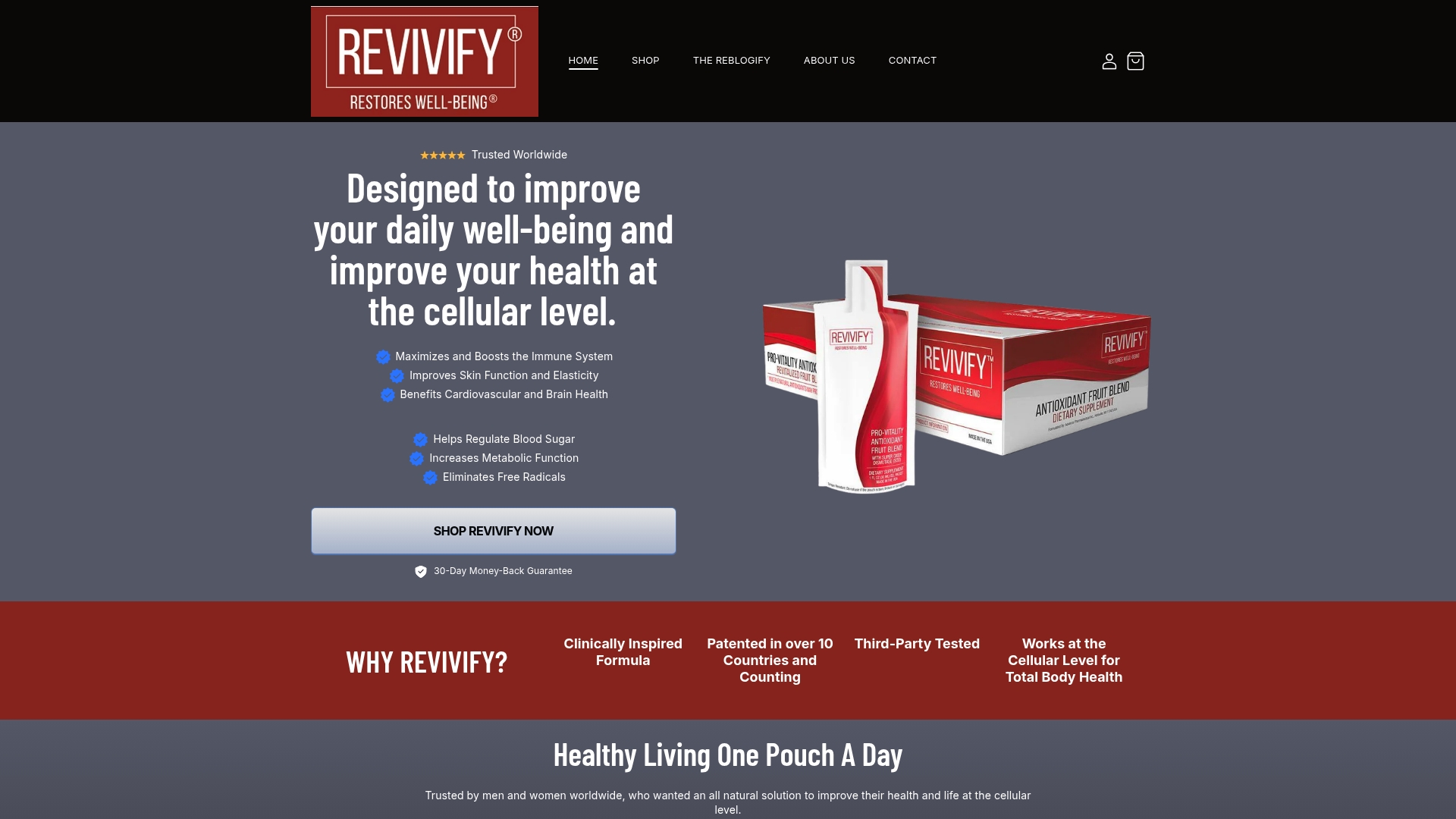
That matters most if you’ve read this far and found the checklist above daunting, strain names, CFU counts, storage rules, third-party testing. The formula folds several of those considerations into one plant-based, third-party tested product, with options for subscription pricing if daily use fits your routine. If you have an existing health condition or take immunosuppressant medication, talk to your clinician before starting, exactly as the safety guidance above recommends for any probiotic-containing product.
If you want to see the current formulation details and third-party test results, visit the Revivify product page to review what’s actually in the gel and whether it fits your daily routine.
This article is general information, not a substitute for advice from a qualified doctor. Consult a qualified healthcare professional about your own circumstances before acting on anything here.
Sources
- Effects of Heat-Sterilized Lactobacillus helveticus GCL1815 on Common Cold Symptoms: A Randomized Controlled Trial (MDPI 2024)
- Probiotics mechanism of action on immune cells and beneficial effects on human health — Cells (PMC 2023)
- Probiotics: What They Are, Benefits & Side Effects — Cleveland Clinic
- Gut microbiome and human health: Exploring how the probiotic genus Lactobacillus modulate immune responses — Frontiers (2022)
- Can gut bacteria improve your health? — Harvard Health