

Lower CRP Naturally in 8–12 Weeks With Diet First, Supplements Later
Yes, mild-to-moderate CRP elevations often respond to sustained diet and lifestyle changes, and you don’t need a prescription to start. The three levers with the most evidence behind them are an anti-inflammatory dietary pattern, gradual loss of excess body fat, and a small number of targeted supplements, discussed with a clinician. One caveat first: rule out an acute infection or other medical cause before assuming lifestyle is the whole story.
TL;DR:
- A Mediterranean-style diet, weight loss, and targeted supplements can significantly lower CRP levels within weeks, especially in those with elevated baseline inflammation.
- CRP can respond quickly to dietary shifts, with studies showing reductions of nearly 1.2 mg/L within seven days after adopting anti-inflammatory foods like leafy greens and fatty fish.
- Lifestyle factors such as consistent sleep of over seven hours, daily stress reduction, and smoking cessation are equally crucial for lowering CRP, often with effects comparable to diet changes.
- Exercise primarily reduces CRP by promoting fat loss, with losing around 10 kg capable of lowering inflammation markers by over a full point, provided exercise isn’t performed immediately before testing.
- Supplements like omega-3 fatty acids, vitamin C, and alpha-lipoic acid show trial-supported benefits in specific cases but should be used based on lab patterns and under clinician supervision.
Table of Contents
- Quick Evidence-Backed Actions You Can Start This Week
- What the Research Says About Diet Patterns and CRP
- Supplements With Real Trial Data Behind Them
- How Exercise and Weight Loss Change Your CRP Number
- Sleep, Stress, and Smoking: The Levers People Skip
- Testing Your CRP: What to Know Before and After You Change Habits
- When to See a Clinician and Red Flags to Watch For
- Why the Diet-First Approach Gets Undersold
- Where Revivify Fits Into an Anti-Inflammatory Routine
- Sources
- FAQ
Quick Evidence-Backed Actions You Can Start This Week
You don’t need to wait for a research degree to start moving your CRP in the right direction. The changes with the fastest, best-documented payoff are the ones you can start today, before you’ve read a single more paragraph of this article.
Start with what you eat and how you move, then layer in sleep and stress once those habits stick:
- Swap refined grains and processed meats for a Mediterranean-style plate: olive oil, legumes, fatty fish, and vegetables at most meals.
- Add movement in small doses. A 20-minute walk after dinner counts, and it beats a single grueling weekend workout for consistency.
- If you’re carrying excess weight, aim for a modest calorie deficit paired with protein at each meal and two strength sessions a week. Fat loss is one of the more reliable CRP levers available to you.
- Protect seven-plus hours of sleep and build in ten minutes of deliberate stress reduction daily, whether that’s breathing exercises or a short walk outside.
- If you smoke, quitting is one of the highest-leverage moves on this entire list. Alcohol should stay moderate rather than eliminated or maxed out.
Before adding any supplement, treat diet and activity as your foundation, not an afterthought you’ll get to later. Our guide on reducing chronic inflammation naturally walks through a fuller sequence of steps if you want to build a longer-term plan instead of a weekly checklist.
Pro Tip: Schedule your blood draw for a normal week. If you’ve had a hard workout, a cold, or dental work in the past few days, your CRP reading won’t reflect your baseline. Wait it out and test on a routine day.
What the Research Says About Diet Patterns and CRP
Whole dietary patterns beat single foods when it comes to lowering CRP, and the effect sizes are large enough to matter. A systematic review and meta-analysis found that plant-based dietary patterns reduced CRP concentration by about −1.13 mg/L compared with omnivorous diets, though the researchers flagged low certainty and real variation across the trials they pooled. That’s not a small number when you consider that many people with mild elevation sit only a few points above the healthy range.
The Mediterranean pattern earns its reputation the same way: olive oil, fish, legumes, nuts, and vegetables supply polyphenols and omega-3 fatty acids that appear to blunt the inflammatory signaling behind elevated CRP. Fiber matters too, partly by feeding the gut bacteria that influence systemic inflammation, and partly by slowing the blood sugar spikes that keep inflammatory pathways switched on.
What surprised researchers more was how fast a diet shift can move the needle. A small community study on the LIFE diet (Low Inflammatory Foods Everyday) found that participants following the pattern saw CRP fall by an average of 0.47 mg/L in just seven days, while a smoothie-based version of the same diet dropped CRP by 1.2 mg/L in the same window. Both changes were statistically significant despite the short timeframe, which tells you inflammation markers can respond faster than most people expect once beta-carotene and dark green leafy vegetable intake goes up.
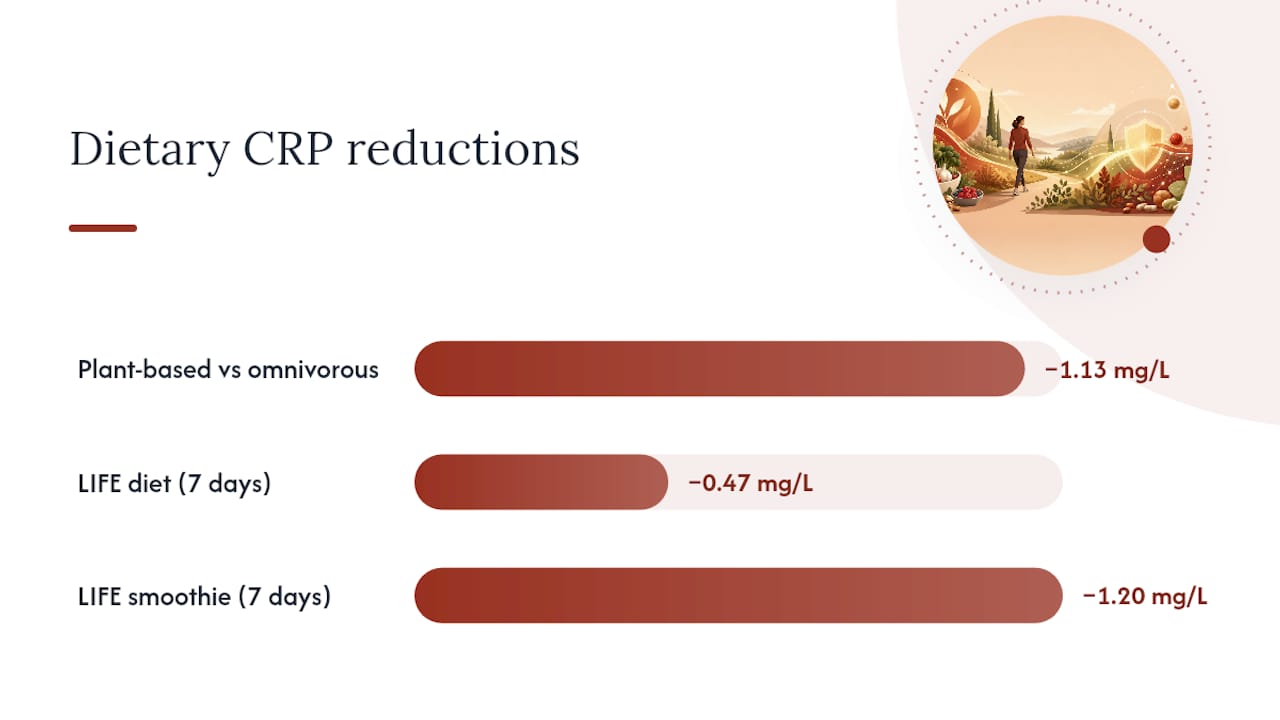
That LIFE smoothie detail points to a practical trick worth borrowing: liquefying leafy greens (blending, not juicing away the fiber) appears to improve carotenoid absorption compared with eating the same vegetables whole. If you’ve been choking down a side salad out of duty rather than appetite, a spinach and berry smoothie might do more for your inflammatory markers with less friction.
Here’s a simple way to translate the research into your actual kitchen:
- Breakfast: Swap sugary cereal for oats with berries and walnuts, or a leafy green smoothie with a source of healthy fat.
- Lunch: Build a bowl around legumes, olive oil, and a rainbow of vegetables instead of a sandwich on refined bread.
- Dinner: Aim for fatty fish (salmon, sardines, mackerel) at least twice a week for EPA and DHA.
- Snacks: Nuts and fresh fruit instead of packaged, processed options.
Alcohol’s relationship with CRP is more nuanced than the diet advice above. Heavy drinking clearly raises inflammatory markers, but some observational data links very light, occasional intake to neutral or even mildly favorable inflammatory profiles, likely confounded by lifestyle factors that cluster with moderate drinkers. The practical takeaway isn’t permission to drink for your health. It’s that moderation, not extremes in either direction, is the reasonable target. For more on the mechanisms behind food-based inflammation control, our breakdown of polyphenols and their effect on CRP digs into the plant compounds doing much of this work.
Supplements With Real Trial Data Behind Them
Supplements are not a shortcut around diet, but a handful have genuine trial evidence for lowering CRP when used in the right context and at the right dose. Here’s what the research actually supports, not what a bottle label implies.
- Omega-3 fatty acids (EPA+DHA): Trial doses typically range from 1 to 4 grams daily, and the benefit shows up most clearly in people with high triglycerides or metabolic syndrome, less so in metabolically healthy people. A separate analysis of supplement use found fish oil associated with a 16% reduction in hs-CRP.
- Vitamin C: Trials using doses of 500 mg per day or higher reported CRP reductions in certain cohorts, particularly among smokers with elevated baseline inflammation.
- Alpha-lipoic acid (ALA): A dose of exactly 600 mg produced significant CRP reductions in trials, while both higher and lower doses failed to show the same effect. Dosing precision matters more here than with most supplements.
- Curcumin: Some studies used doses in the 500 to 1,000 mg range, with meta-analyses noting a possible CRP-lowering effect, though formulation and bioavailability vary widely between products.
- Probiotics, synbiotics, and zinc: Meta-analyses have flagged these as potential CRP reducers, generally as part of a combined approach rather than standalone fixes.
Glucosamine and chondroitin also showed up in supplement research with associations to hs-CRP reduction, with estimated percentage reductions reported in one observational study, though that data comes from an observational association rather than a controlled trial designed specifically to test inflammation outcomes.
The most useful supplement strategy isn’t “take everything that might help.” It’s targeting supplements to your actual lab patterns, using omega-3 when triglycerides run high, vitamin D only when you’re actually deficient, and testing one variable at a time so you know what’s working.
None of these are risk-free additions. Omega-3 and vitamin C can interact with anticoagulants and antiplatelet medications, and high-dose supplementation isn’t advisable if you have certain liver or kidney conditions. Talk to your clinician before adding anything, especially if you’re on blood thinners or managing a chronic condition. Our review of supplements for chronic inflammation goes deeper into how these options stack up against each other, and the recovery supplement research at CP-1 offers another angle on dosing and evidence quality worth reading if you want a second source before you buy anything.
How Exercise and Weight Loss Change Your CRP Number
Exercise lowers CRP mainly by driving fat loss and improving metabolic fitness, not through some direct anti-inflammatory switch you flip by breaking a sweat. Meta-analytic reviews consistently show that regular physical activity reduces CRP on average, and the effect grows larger in people who actually lose body fat during the intervention, not just those who exercise without changing composition.
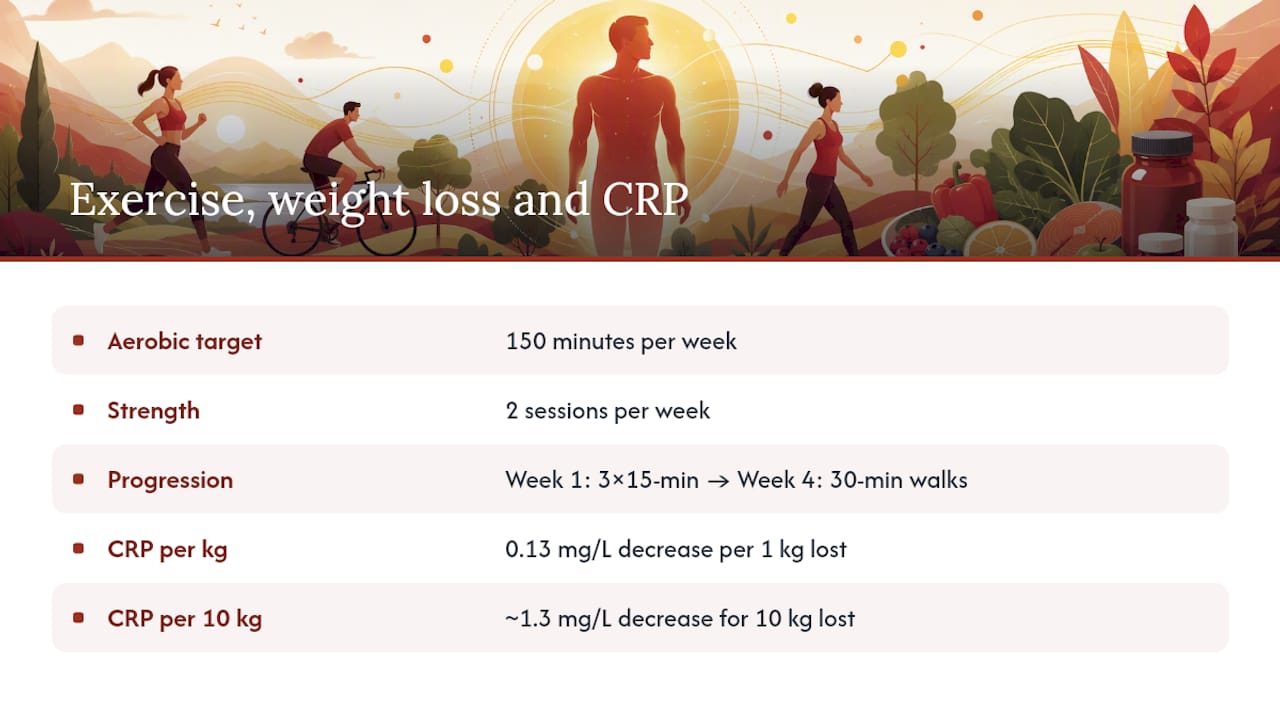
Realistic targets align with standard US physical activity guidance: 150 minutes of moderate aerobic activity per week, plus two strength training sessions. If you’re starting from zero, that might mean three 15-minute walks the first week, building toward 30-minute sessions by week four, with bodyweight strength work added once walking feels easy.
The weight connection has a number attached to it worth knowing: research indicates an average CRP decrease of about 0.13 mg/L for every 1 kilogram of body weight lost. Losing 10 kg (about 22 pounds) could plausibly shave over a full point off your CRP reading, though individual response varies with starting weight, fat distribution, and how the weight comes off.
One practical warning: don’t schedule a hard workout the day before a CRP blood draw. Strenuous exercise can transiently spike CRP for a day or two afterward, which means a great training week could accidentally make your numbers look worse than your real baseline.
Sleep, Stress, and Smoking: The Levers People Skip
Diet and exercise get most of the attention, but sleep, stress, and smoking status move CRP just as directly, and they’re often easier to change than a full dietary overhaul.
Short-term sleep loss raises CRP measurably, and the fix is unglamorous: aim for at least seven hours a night on a consistent schedule rather than chasing an occasional long weekend catch-up sleep. Irregular sleep timing seems to matter almost as much as total hours.
Stress reduction doesn’t require a silent retreat. Brief daily practices, 10 to 20 minutes of breathing exercises, meditation, or simply a walk without your phone, have been associated with reduced inflammatory markers over time, and longer structured programs show even more consistent effects.
Smoking cessation carries one of the strongest associations with lower CRP of any lifestyle change on this list. If you smoke, that’s arguably a higher-leverage move than any supplement or diet tweak discussed above. Evidence-based cessation supports, nicotine replacement, prescription aids, or structured counseling, all improve your odds versus quitting cold with willpower alone.
- Protect seven-plus hours of sleep on a consistent schedule.
- Build in a daily 10 to 20-minute stress-reduction practice.
- Treat smoking cessation as a priority intervention, not a someday goal.
- Address chronic infection sources, including untreated dental infections, since these can quietly keep CRP elevated regardless of what else you’re doing right.
Testing Your CRP: What to Know Before and After You Change Habits
Standard CRP tests and high-sensitivity CRP (hs-CRP) tests measure the same protein, but hs-CRP is calibrated to detect the lower-level elevations relevant to cardiovascular and metabolic risk, which is what most natural-intervention tracking relies on. A reading above 10 mg/L usually signals an acute process, like infection or injury, rather than the low-grade inflammation diet and lifestyle changes are meant to address.
If your baseline reading was stable and not taken during illness, retest after 8 to 12 weeks of one major sustained change. If your original test happened while you were sick, wait 2 to 3 weeks after full recovery before drawing conclusions from the number.
A few confounders trip people up regularly:
- Recent infection, even a mild cold, can elevate CRP for a couple of weeks afterward.
- Strenuous exercise in the 48 to 72 hours before your blood draw can push the number up temporarily.
- Recent dental work or vaccination are common transient causes people forget to mention to their doctor.
Pairing your CRP test with A1c, a lipid panel, 25-OH vitamin D, and triglycerides helps identify what’s actually driving your number, rather than treating CRP as an isolated mystery.
When to See a Clinician and Red Flags to Watch For
CRP is a marker, not a diagnosis, and a single elevated reading doesn’t tell you what’s causing it. Persistent high or very high values, especially anything above 10 mg/L, warrant a clinical evaluation rather than another round of diet tweaks.
Certain symptoms should move you toward your doctor’s office faster than any home protocol: unexplained fever, chest pain, severe or worsening fatigue, joint swelling, unintentional weight loss, or GI symptoms that won’t resolve. These can point to conditions well beyond what diet and exercise are built to address.
It’s also worth knowing that prescription therapies, statins being the best-studied example, have the strongest trial evidence for lowering CRP in select high-risk groups, particularly people with existing cardiovascular risk factors. That’s a clinical decision, not a self-directed one, and it underscores why natural strategies work best alongside your doctor’s input rather than in place of it.
Why the Diet-First Approach Gets Undersold
Most coverage of high CRP jumps straight to supplements, because a bottle is easier to sell than a sustained change to how you eat and sleep. That ordering is backward. The research keeps pointing the same direction: whole dietary patterns and weight change produce the largest, most consistently reproducible CRP reductions, while individual supplements produce modest effects that depend heavily on who’s taking them and why.
The overlooked nuance is timing expectations correctly. People start a new regimen, test CRP after two weeks, see a modest or unchanged number, and conclude nothing is working. The LIFE diet data shows CRP can move within days under the right conditions, but a stable, meaningful shift for most people takes the full 8 to 12 weeks the research actually supports. Quitting early is the most common way people sabotage a plan that was working.
The other place people go wrong is treating supplements as a category instead of a targeted tool. Omega-3 does the most for someone with high triglycerides. Vitamin C shows its clearest benefit in smokers with elevated baseline inflammation. Taking five supplements at once because each showed some effect in some study means you’ll never know what’s actually helping, or whether anything is at all.
Educational resources, including breakdowns of antioxidant foods that reduce inflammation and the biology behind low-grade chronic inflammation, exist to help readers understand the mechanism, not just the recommendation. A daily supplement built around antioxidant support can be a reasonable piece of an anti-inflammatory routine, but it’s a piece, not the plan. Talk with your clinician before adding anything new, especially if you’re managing another condition or taking medication.
— Larry
Where Revivify Fits Into an Anti-Inflammatory Routine
If you’ve read this far, you already know the real work happens in your kitchen, your sleep schedule, and your weekly step count. A daily supplement can support that work without replacing it, and that’s the role Revivify is built for.
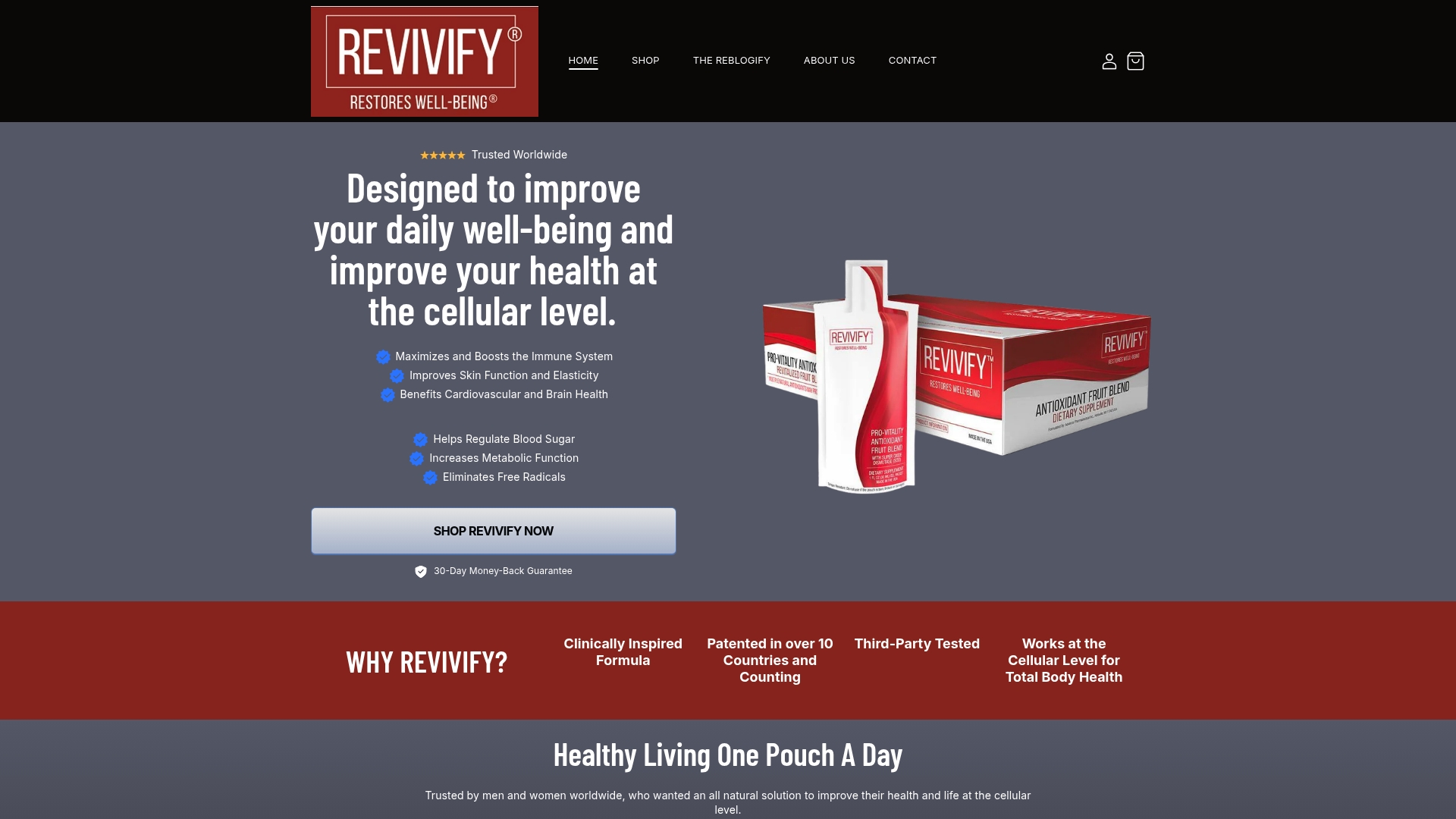
A supplement combining superoxide dismutase and prebiotic fiber in a single patented formula is designed to fight free radicals and reduce oxidation at the cellular level, working alongside the diet and lifestyle changes covered throughout this article rather than substituting for them. Some are plant-based, third-party tested gel supplements, which can matter for those struggling with hard-to-swallow capsules or inconsistent absorption from other products. Because such supplements are meant to complement an anti-inflammatory dietary pattern, not replace one, they fit naturally into the kind of plan this article has walked through: Mediterranean-style eating, regular movement, and lab-guided supplement choices. If you’re on medication or managing a chronic condition, check with your clinician before adding it to your routine, the same advice that applies to every supplement mentioned above. If you want to see the full ingredient list and current subscription options, visit the Revivify product page to review the details before you decide.
This article is general information, not a substitute for advice from a qualified doctor. Consult a qualified healthcare professional about your own circumstances before acting on anything here.
Sources
- Association between supplement use and inflammation markers (2012)
- Alpha-lipoic acid and CRP effects; weight-loss correlation
- Once-Daily Low Inflammatory Foods Everyday (LIFE diet) and CRP reductions
- Vitamin C treatment reduces elevated C-reactive protein (2008)
- Effect of plant-based dietary patterns on C-reactive protein (systematic review and meta-analysis)
FAQ
How do you get rid of chronic inflammation in the body?
Sustained changes to diet (Mediterranean or plant-forward patterns), regular exercise, weight management, adequate sleep, and stress reduction address the root drivers of chronic inflammation better than any single fix, with meaningful changes typically showing up over 8 to 12 weeks.
Can CRP levels go back to normal?
Yes, mild-to-moderate CRP elevations often normalize with sustained diet and lifestyle changes, and some interventions like the LIFE diet showed measurable CRP reductions within seven days, though lasting change usually takes longer.
How can I reduce neuroinflammation?
The same anti-inflammatory levers that lower systemic CRP, omega-3 intake, a plant-forward diet, regular exercise, and quality sleep, are the primary evidence-based tools for supporting brain-related inflammation, since systemic and neuroinflammation share overlapping pathways.
How can I reduce my CRP levels at home?
Start with the highest-leverage home changes: shift toward a Mediterranean-style diet, add regular walking or strength training, prioritize seven-plus hours of sleep, and discuss targeted supplements like omega-3 or vitamin C with your clinician if lab patterns support them.
When should I retest my CRP after making changes?
Retest after 8 to 12 weeks if you’re changing one major variable and your baseline wasn’t affected by illness; if your original test coincided with sickness, wait 2 to 3 weeks after recovery before testing again.