

Metabolic Oxidative Stress: Causes, Effects, and Solutions
Metabolic oxidative stress is defined as a pathological imbalance where chronic excess production of reactive oxygen species (ROS) and reactive nitrogen species (RNS) overwhelms the body’s antioxidant defenses, damaging DNA, proteins, and lipids at the cellular level. This condition sits at the root of metabolic syndrome, type 2 diabetes, and cardiovascular disease. Understanding what is metabolic oxidative stress matters because it explains why conditions like obesity and insulin resistance are not just lifestyle problems. They are cellular ones. Researchers now distinguish between oxidative eustress, the healthy, low-level ROS signaling your cells need, and oxidative distress, the chronic overload that breaks things down.
What is metabolic oxidative stress and why does it happen?
Metabolic oxidative stress occurs when your body’s production of ROS and RNS outpaces its ability to neutralize them. Think of your antioxidant system as a fire brigade. At normal ROS levels, the brigade keeps up easily. When metabolic dysfunction, obesity, or chronic disease floods the system with excess free radicals, the brigade gets overwhelmed and cellular damage spreads.
ROS are natural byproducts of energy metabolism. Your mitochondria produce them constantly as they convert food into ATP. At low concentrations, ROS act as signaling molecules that regulate cell growth, immune responses, and gene expression. The problem begins when production becomes chronic and excessive, a state researchers call oxidative distress.

Several factors drive this imbalance. Obesity triggers hyper-metabolism in fat cells, flooding mitochondria with excess fuel and generating more ROS than antioxidant enzymes like superoxide dismutase (SOD) and glutathione peroxidase can handle. Hyperglycemia compounds this by pushing glucose through metabolic pathways that generate additional free radicals. External stressors including pollution, radiation, and lifestyle factors can also spike ROS production temporarily, adding to the cumulative burden.
The metabolic stress definition, in clinical terms, is not just about feeling tired or stressed. It describes a measurable biochemical state where oxidative damage products accumulate in tissues and blood, signaling that cellular repair systems are losing the battle.
How do ROS and RNS damage your cells?
Molecular oxygen forms several ROS including superoxide radicals and hydroxyl radicals, each with different reactivity levels and biological effects. RNS include nitric oxide and the highly reactive peroxynitrite. These molecules differ in how aggressively they attack cellular structures.
Here is what excess ROS and RNS actually do inside your cells:
- Lipid peroxidation: Free radicals attack the fatty acids in cell membranes, creating a chain reaction that degrades membrane integrity and produces toxic byproducts like malondialdehyde (MDA).
- Protein oxidation: ROS modify amino acid side chains and introduce carbonyl groups into proteins, impairing enzyme function and structural proteins.
- DNA damage: Hydroxyl radicals attack DNA bases, producing lesions like 8-oxo-2’-deoxyguanosine (8-oxodG), a marker strongly associated with cancer and accelerated aging.
- Mitochondrial dysfunction: Damaged mitochondrial DNA reduces energy production efficiency, creating a feedback loop that generates even more ROS.
The distinction between oxidative eustress and oxidative distress is critical here. ROS serve as essential switches in metabolic signaling. Wiping them out entirely would be as harmful as letting them run unchecked. This is why many antioxidant supplement trials have failed. They suppressed ROS indiscriminately rather than restoring balance.
Pro Tip: If you are evaluating antioxidant supplements, look for products that support your body’s own antioxidant enzyme systems rather than simply flooding your system with external antioxidants. Supporting SOD activity, for example, works with your biology rather than against it.
What is an oxidative stress biomarker and how is it measured?
Direct ROS measurement is impossible due to their short half-lives. A superoxide radical exists for microseconds. By the time a blood sample reaches a lab, the ROS itself is long gone. Clinicians instead measure the stable damage products ROS leave behind.
The most clinically validated oxidative stress biomarkers fall into three categories:
| Biomarker | What It Measures | Clinical Significance |
|---|---|---|
| Malondialdehyde (MDA) | Lipid peroxidation end product | Elevated in cardiovascular disease, diabetes |
| Protein carbonyls | Oxidized protein residues | Marker of chronic oxidative protein damage |
| 8-oxodG | Oxidized DNA base | Associated with cancer risk and aging |
| SOD activity | Antioxidant enzyme capacity | Low levels indicate depleted defenses |
| Glutathione peroxidase | Antioxidant enzyme capacity | Reflects cellular redox buffering ability |
Accurate oxidative stress assessment requires multiple biomarkers because no single test captures the full picture. A patient could have elevated MDA but normal protein carbonyls, pointing to lipid-specific damage rather than systemic oxidative overload. Relying on one marker alone produces clinically unreliable results.
Emerging precision redox medicine approaches now use personalized analytical panels to map each patient’s unique oxidant-antioxidant balance. This moves the field beyond generic recommendations and toward targeted interventions based on individual redox profiles.
Pro Tip: Ask your doctor about a comprehensive oxidative stress panel rather than a single marker test. Combining MDA, protein carbonyls, and antioxidant enzyme activity gives a far more accurate picture of your cellular redox state.
How does oxidative stress drive metabolic syndrome and heart disease?
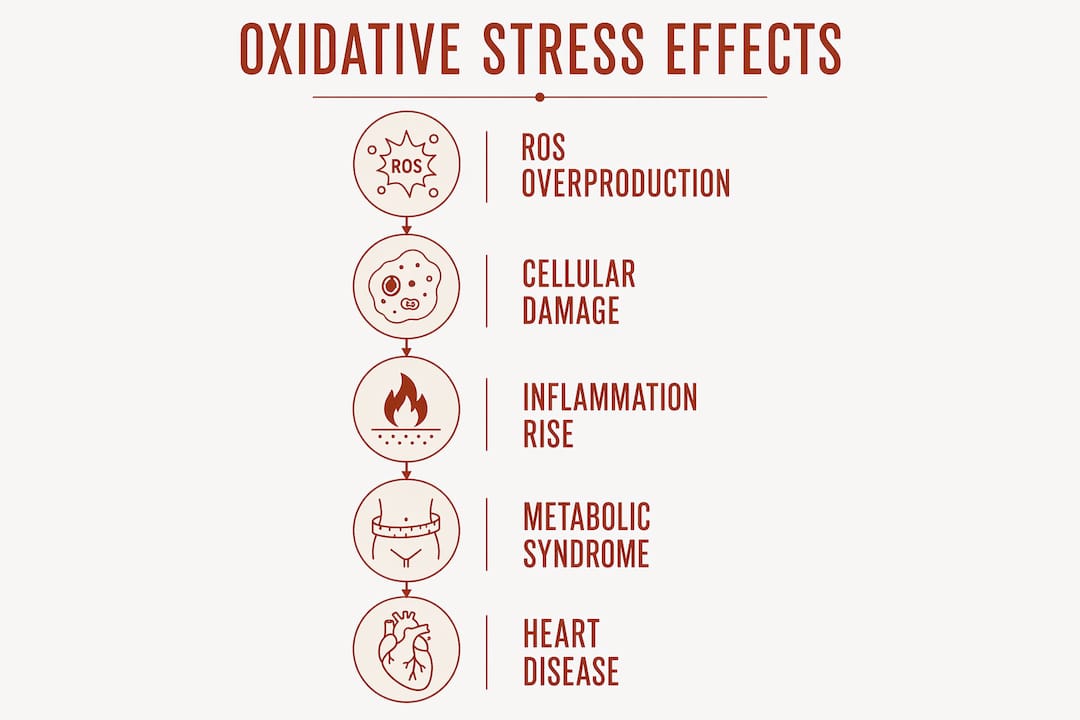
The connection between oxidative stress and metabolic disease is not theoretical. It is mechanistic and well-documented. Obesity and hyperglycemia induce mitochondrial hyper-metabolism, exhausting antioxidant systems and creating a state of chronic cellular damage that accelerates disease progression.
Here is how the cascade unfolds in metabolic syndrome:
- Adipocyte dysfunction: Enlarged fat cells in obesity produce excess ROS and inflammatory cytokines, impairing the release of adiponectin, a hormone that normally supports insulin sensitivity and antioxidant defenses.
- Insulin signaling disruption: ROS directly oxidize and inactivate key proteins in the insulin signaling pathway, including insulin receptor substrate proteins, making cells resistant to insulin’s effects.
- Chronic inflammation: Oxidative stress activates NF-kB, a master regulator of inflammation, creating a feedback loop where inflammation generates more ROS and ROS drive more inflammation.
- Endothelial dysfunction: In blood vessels, excess ROS reduce nitric oxide bioavailability, impairing vasodilation and setting the stage for atherosclerosis.
What is cardiovascular oxidative stress, specifically? It is the manifestation of this same ROS imbalance within the heart and vascular system. Oxidative stress is a major prognostic indicator for myocardial infarction and atherosclerosis, with systemic inflammation and obesity both accelerating the depletion of antioxidant defenses. The connection between oxidative stress and stroke risk follows the same vascular pathway.
“Oxidative stress does not just accompany metabolic disease. In many cases, it precedes and drives it, making redox balance a primary target for prevention, not just treatment.”
The signs of metabolic stress at the cellular level, including elevated MDA, reduced SOD activity, and increased protein carbonyls, often appear before clinical symptoms like elevated blood sugar or high blood pressure become obvious. This is why understanding oxidative stress in diabetes at the mechanistic level matters for early intervention.
How to reduce oxidative stress through lifestyle and clinical strategies
Reducing metabolic oxidative stress requires a targeted approach, not a blanket antioxidant strategy. The goal is to restore balance between ROS production and antioxidant capacity, not eliminate ROS entirely.
- Prioritize dietary antioxidants from whole foods. Polyphenols from berries, flavonoids from green tea, and carotenoids from vegetables support endogenous antioxidant enzyme systems without suppressing ROS signaling. These compounds upregulate Nrf2, a transcription factor that activates SOD, glutathione peroxidase, and catalase production.
- Exercise consistently but avoid chronic overtraining. Moderate aerobic exercise temporarily increases ROS, which triggers adaptive upregulation of antioxidant enzymes. This is oxidative eustress working in your favor. Chronic overtraining without recovery, however, tips the balance toward oxidative distress.
- Manage body weight and blood glucose. Since obesity and hyperglycemia are primary drivers of mitochondrial ROS overproduction, weight management and glycemic control directly reduce the oxidative load on your cells.
- Minimize environmental ROS triggers. Reducing exposure to air pollution, tobacco smoke, and excessive UV radiation limits external ROS inputs that compound metabolic sources.
- Consider targeted antioxidant enzyme support. Rather than flooding your system with vitamin C or vitamin E megadoses, supporting your body’s own SOD and glutathione systems addresses the root enzymatic deficiency. Reducing oxidative stress through enzyme support also benefits immune function, since immune cells rely on controlled ROS bursts to fight pathogens.
Personalized redox stratification represents the frontier of this field. Rather than recommending the same supplement stack to everyone, precision redox medicine tailors interventions to each person’s measured oxidant-antioxidant profile. This approach is already being applied in research settings and is moving toward clinical practice.
Pro Tip: Avoid taking high-dose synthetic antioxidant supplements without testing your actual oxidative stress biomarkers first. Supplementing when your antioxidant levels are already adequate can disrupt the ROS signaling your cells depend on.
Key takeaways
Metabolic oxidative stress is a measurable cellular imbalance that drives metabolic syndrome, type 2 diabetes, and cardiovascular disease by damaging DNA, proteins, and lipids through chronic ROS and RNS excess.
| Point | Details |
|---|---|
| Core definition | Metabolic oxidative stress is chronic ROS and RNS excess that overwhelms antioxidant defenses and damages cells. |
| ROS dual role | Physiological ROS (oxidative eustress) support signaling; only chronic excess (oxidative distress) causes disease. |
| Biomarker assessment | MDA, protein carbonyls, 8-oxodG, and antioxidant enzyme activity together provide reliable redox evaluation. |
| Cardiovascular link | Oxidative stress is a primary driver of endothelial dysfunction, atherosclerosis, and myocardial infarction risk. |
| Management strategy | Restore redox balance through diet, exercise, and enzyme support rather than indiscriminate ROS suppression. |
Why the “just take antioxidants” advice misses the point
The most common mistake I see people make when they learn about oxidative stress is reaching for the highest-dose antioxidant supplement they can find. I understand the instinct. If free radicals are the problem, more antioxidants must be the solution. The biology does not work that way.
ROS are not simply villains. They are messengers. Your immune cells use controlled ROS bursts to destroy pathogens. Your muscle cells use ROS signals to adapt to exercise. Your insulin-signaling pathways depend on precise redox cues to function. When you flood your system with indiscriminate antioxidants, you do not just neutralize the bad ROS. You disrupt the good ones too. This is why large clinical trials of high-dose vitamin E and beta-carotene supplementation have repeatedly failed to reduce cardiovascular disease risk and in some cases increased harm.
What actually works is supporting your body’s own antioxidant enzyme systems, the SOD, glutathione peroxidase, and catalase networks that evolved to manage redox balance with precision. These enzymes do not suppress ROS. They regulate them. That distinction is everything.
The future of managing oxidative stress is personalized. Precision redox medicine will eventually let clinicians map your specific oxidant-antioxidant profile and prescribe targeted interventions. Until that becomes routine, the most rational approach is to reduce the drivers of excess ROS production, support endogenous enzyme systems, and avoid the trap of thinking more antioxidants always means better health.
— Larry
Support your cellular health with Tryrevivify
Understanding oxidative stress is the first step. Taking targeted action is the next one.
Tryrevivify is built around exactly the kind of enzyme-focused antioxidant support this article describes. The patented formula combines superoxide dismutase, the front-line antioxidant enzyme your cells use to neutralize superoxide radicals, with prebiotic fiber to support overall cellular health from the inside out. This is not a generic antioxidant megadose. It is a targeted approach to supporting your body’s own redox defense systems. If you are ready to take a science-backed step toward better cellular health, explore the REVIVIFY® 30-Day Supply and see what daily SOD support can do for you.
FAQ
What is metabolic oxidative stress in simple terms?
Metabolic oxidative stress is a cellular imbalance where your body produces more reactive oxygen and nitrogen species than its antioxidant systems can neutralize, causing damage to DNA, proteins, and cell membranes that drives metabolic diseases.
What are the main signs of metabolic stress at the cellular level?
Elevated blood markers like malondialdehyde (MDA), reduced superoxide dismutase activity, and increased protein carbonyls are the primary measurable signs, often appearing before clinical symptoms like high blood sugar become obvious.
What causes oxidative stress to become chronic?
Obesity, hyperglycemia, chronic inflammation, poor diet, and environmental exposures like pollution and tobacco smoke are the primary drivers, with mitochondrial ROS overproduction in metabolic dysfunction being the central mechanism.
Can you reduce oxidative stress with diet alone?
Diet plays a significant role. Whole-food polyphenols and flavonoids upregulate endogenous antioxidant enzymes through the Nrf2 pathway, but diet works best when combined with regular exercise, weight management, and reduced environmental ROS exposure.
Why do many antioxidant supplements fail to reduce disease risk?
Indiscriminate ROS suppression disrupts the physiological signaling functions that ROS serve, explaining why high-dose vitamin E and beta-carotene trials have repeatedly failed to show cardiovascular benefit and sometimes caused harm.