

5 Natural Prebiotic Foods That Pack 100–240 mg/g
Onions, garlic, leeks, chicory root, and dandelion greens carry the highest measured prebiotic content of any common foods, followed closely by Jerusalem artichoke, oats, bananas, asparagus, and flaxseed. The rule that matters more than any single food: choose whole foods first, since supplements are optional adjuncts, not replacements. A research-backed top-five with actual measured amounts follows below, along with practical ways to work these foods into meals you already eat.
TL;DR:
- Dandelion greens, garlic, onions, leeks, and Jerusalem artichoke provide the highest measured prebiotic fiber, with amounts often reaching 100 to 240 mg per gram.
- Raw preparation and gradual introduction help prevent digestive discomfort like bloating when increasing prebiotic food intake.
- The effectiveness of prebiotics depends on their fermentability into beneficial short-chain fatty acids, which varies by fiber type and food processing.
- Supplements combining prebiotic fiber and antioxidants like superoxide dismutase can fill gaps on days when whole foods are unavailable or insufficient.
- Prioritizing high-density prebiotic foods over simply increasing overall fiber intake maximizes gut health benefits.
Table of Contents
- Best Natural Prebiotics Foods to Eat Regularly
- What Prebiotics Actually Do Inside Your Gut
- The Foods With the Highest Measured Prebiotic Levels
- Simple Ways to Work More Prebiotics Into Your Meals
- Who Should Introduce Prebiotic Foods Slowly
- A Note From Revivify’s Health Writer
- Why the “Eat More Fiber” Advice Misses the Point
- A Daily Supplement Can Round Out What Your Meals Miss
- Where This Information Comes From
- Sources
- FAQ
Best Natural Prebiotics Foods to Eat Regularly
Not every fiber-rich food carries the same prebiotic punch, and knowing which ones do makes grocery shopping a lot more strategic. Here are the plant-based prebiotic sources worth building meals around, ordered roughly by how much impact they deliver per typical serving.
- Onions contain fructans, a form of fructo-oligosaccharide that ferments efficiently in the colon. Raw onion in a salad or salsa delivers more of this fiber intact than a long-simmered soup.
- Garlic packs a concentrated dose of inulin and FOS into a tiny volume. A crushed clove stirred into dressing or hummus adds prebiotic fiber without changing a recipe’s texture.
- Leeks work like a milder cousin of onion and garlic, with fructans throughout the white and light green parts. Sauté them lightly to soften the sulfur bite while keeping most of the fiber.
- Chicory root is the most concentrated natural inulin source most people can buy, often sold as a coffee substitute or fiber additive. A teaspoon of chicory root powder in coffee is an easy daily habit.
- Jerusalem artichoke (sunchoke) rivals chicory root for inulin density. Roasted with olive oil, it develops a nutty flavor that makes the fiber content almost incidental.
- Dandelion greens are a genuinely underused green, bitter but loaded with inulin. Toss young leaves into a salad with something acidic like lemon or vinegar to balance the bitterness.
- Oats supply beta-glucan and resistant starch, especially when cooked and then cooled. Overnight oats made the night before actually increase the resistant starch content by morning.
- Bananas offer more prebiotic value the less ripe they are, since unripe bananas carry more resistant starch. A slightly green banana in a smoothie changes the fiber profile more than a spotted, overripe one.
- Asparagus contains inulin concentrated in the stalk. Light steaming or roasting preserves more fiber structure than boiling.
- Flaxseed provides both soluble fiber and lignans that feed beneficial bacteria. Ground flaxseed, not whole, is what your gut can actually access.
- Jicama is a crunchy root vegetable high in inulin, often eaten raw as a low-calorie snack. Cut into sticks, it works like a fibrous alternative to chips.
- Yacon is a South American tuber with one of the highest natural inulin concentrations available, usually sold as syrup or dried slices.
- Barley brings beta-glucan similar to oats, with a chewier texture suited to soups and grain bowls.
- Apples deliver pectin, a soluble fiber that ferments into short-chain fatty acids. Leaving the skin on preserves more of that fiber than peeling.
- Seaweed contains unique polysaccharides like alginate that some gut bacteria ferment differently than land-plant fibers, adding variety most Western diets lack entirely.
What Prebiotics Actually Do Inside Your Gut
Prebiotics are specific plant fibers, like fructo-oligosaccharides (FOS) and galacto-oligosaccharides (GOS), that survive digestion in your stomach and small intestine intact. They reach the colon still whole, where resident bacteria ferment them.
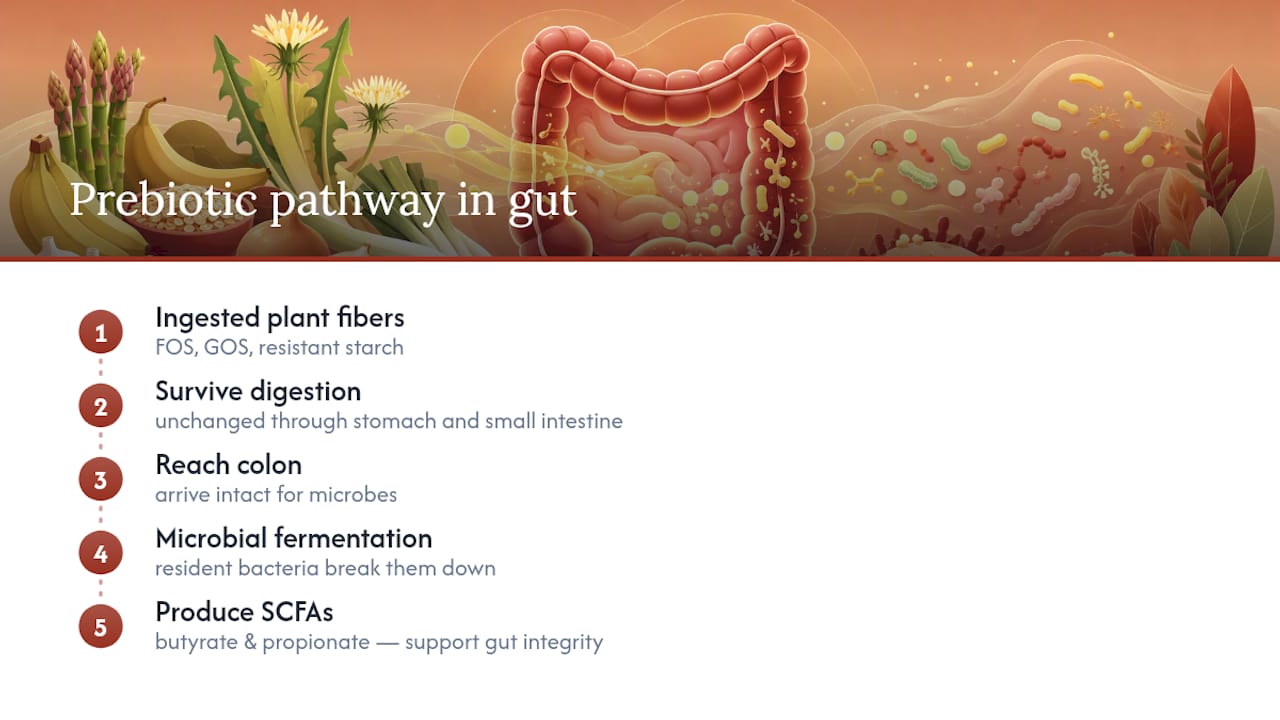
That fermentation process is the entire point. Gut microbes break down FOS, GOS, and resistant starch into short-chain fatty acids, including butyrate and propionate, compounds tied to gut lining integrity and broader metabolic signaling, according to a peer-reviewed review of prebiotic mechanisms. Not every fiber qualifies as a prebiotic. The defining trait is selective fermentation that shifts bacterial populations toward beneficial species rather than feeding bacteria indiscriminately.
The Foods With the Highest Measured Prebiotic Levels
A 2023 literature-based analysis summarized by the American Society for Nutrition identified five foods with the greatest measured prebiotic content: dandelion greens, Jerusalem artichoke, garlic, leeks, and onions, each measuring roughly 100 to 240 milligrams of prebiotic fiber per gram. That range dwarfs most other common foods, which typically land closer to 50 to 60 milligrams per gram.
| Food category | Measured prebiotic content |
|---|---|
| Dandelion greens, Jerusalem artichoke, garlic, leeks, onions | ~100 to 240 mg/g |
| Certain bran cereals, asparagus, cowpeas, creamed onions | ~50 to 60 mg/g |
Treat these numbers as a relative scale for prioritizing groceries, not a daily dosage target. No official recommended prebiotic intake exists, so the practical takeaway is simple: foods in the top tier deliver more fiber per bite, which matters if you’re working with limited appetite or a small plate.
Simple Ways to Work More Prebiotics Into Your Meals
Small, repeatable swaps beat an overhaul you abandon after a week. Try these:
- Make overnight oats with a sliced banana and a tablespoon of ground flaxseed for a resistant-starch and lignan combination in one bowl.
- Whisk raw garlic into olive oil and vinegar for a dressing that keeps the inulin intact.
- Roast Jerusalem artichokes at 400°F until caramelized to mellow their sweetness.
- Toss young dandelion greens with lemon juice to cut the bitterness while keeping the fiber raw.
- Cut jicama into sticks for a crunchy, low-effort snack.
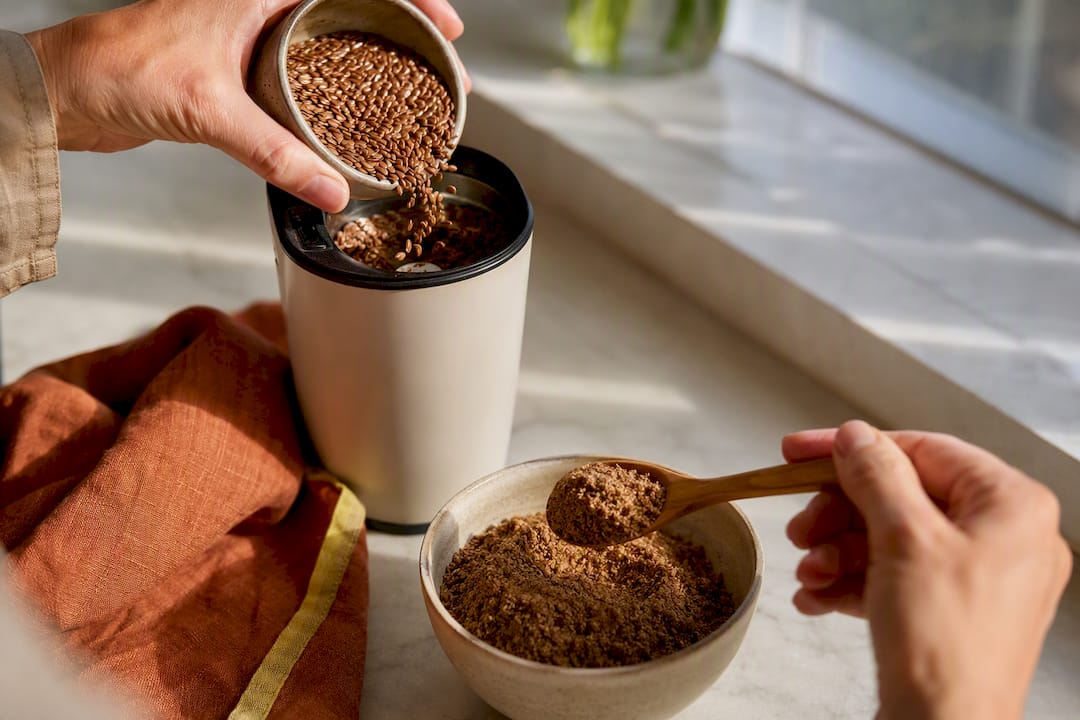
Raw preparation generally preserves more prebiotic fiber structure, since heat can break down some of these compounds during cooking. Cooking still has its place when raw versions are too harsh on your stomach or simply unpalatable. Grind flaxseed fresh and refrigerate it, since whole seeds pass through mostly undigested and ground flax turns rancid quickly at room temperature.
Pro Tip: Buy flaxseed whole and grind small batches in a coffee grinder weekly. This keeps the oils from oxidizing while still giving you fresh, digestible fiber every day.
Who Should Introduce Prebiotic Foods Slowly
Gas and bloating are the most common side effects, and they happen because gut bacteria produce gas as a byproduct of fermenting these fibers. That’s a normal digestive response, not a sign something is wrong, but it can feel uncomfortable if you go from low-fiber to high-fiber overnight.
People with irritable bowel syndrome or known FODMAP sensitivity need a more careful approach, since onions, garlic, and wheat-based prebiotics sit on the high-FODMAP list and can trigger real symptoms, as explained in detail at How Food Impacts Mental Health - MindShift Psychological Center. Monash University’s clinical guidance recommends reintroducing these foods gradually under a dietitian’s direction rather than eliminating them outright.
- Start with small servings, roughly a tablespoon or two of a new prebiotic food.
- Spread intake across the day instead of loading it into one meal.
- Pair prebiotic foods with probiotic foods like yogurt or kefir to ease the transition.
- See a clinician if bloating turns into persistent pain, diarrhea, or unexplained weight loss.
A Note From Revivify’s Health Writer
I focus on gut microbiome research and how prebiotic fiber translates into everyday food choices, which is what this guide is built around. Everything above reflects a food-first philosophy: whole foods first, with a daily supplement like Revivify’s superoxide dismutase and prebiotic fiber blend serving as an adjunct, not a substitute, for real produce on your plate.
Why the “Eat More Fiber” Advice Misses the Point
Most nutrition advice treats fiber as one big undifferentiated category, and that’s where it fails people trying to actually improve their gut health. Telling someone to “eat more fiber” is like telling someone to “get more exercise” without saying whether that means walking or deadlifting. The American Society for Nutrition’s measured data makes the distinction concrete: dandelion greens and onions carry roughly four times the prebiotic density of a typical bran cereal, yet both get filed under the same “high fiber” label on a nutrition app.
What actually moves the needle is prioritizing the handful of foods with genuinely high measured content, onions, garlic, leeks, chicory root, and Jerusalem artichoke chief among them, rather than assuming a salad automatically covers your bases. The conventional wisdom also glosses over ramp-up speed. Sensitive digesters who dump raw garlic and dandelion greens into their diet overnight usually quit within a week because of bloating, when a slower introduction would have worked. Prioritize the top-tier foods, go slow, and treat a supplement as backup, not a shortcut.
— Larry
A Daily Supplement Can Round Out What Your Meals Miss
Even a genuinely food-first eater has days when garlic, onions, or dandelion greens just don’t make it onto the plate. That’s the gap a daily supplement is built to fill, and it’s why some health-conscious adults pair their meals with a consistent, measured dose rather than hoping their week averages out.

A supplement combining superoxide dismutase and prebiotic fiber in a single daily gel provides a steady fiber source on the days your grocery list falls short. If you’ve read this far because you’re serious about gut health, check out Revivify’s daily formula and see whether it fits into your routine as the adjunct it’s designed to be.
Where This Information Comes From
- American Society for Nutrition: measured prebiotic amounts across the top five foods.
- PMC peer-reviewed review: prebiotic definitions and fermentation mechanisms.
- Children’s Hospital of Philadelphia: food-first clinical guidance.
- Mayo Clinic Health System: pairing prebiotics with probiotics.
- Healthline’s prebiotic food list: additional serving ideas.
Sources
- Scientists name top five foods rich in prebiotics
- Prebiotics: Definition, Types, Sources, Mechanisms, and Clinical Applications
- Food as Medicine: Prebiotic Foods | Children’s Hospital of Philadelphia
- Gut health: prebiotics and probiotics - Mayo Clinic Health System
FAQ
What food is highest in prebiotics?
Dandelion greens carry the highest measured prebiotic content among common foods, followed closely by Jerusalem artichoke, garlic, leeks, and onions, each in the 100 to 240 mg/g range.
What is the most gut-healing food?
No single food heals the gut on its own, but foods pairing prebiotic fiber with fermentation, like oats, garlic, and onions, support beneficial bacteria that produce gut-protective short-chain fatty acids.
What are signs you need more prebiotics?
Irregular digestion, frequent bloating unrelated to specific trigger foods, and low intake of fruits, vegetables, and whole grains are common indicators that your fiber and prebiotic intake could use attention.
Are eggs a prebiotic?
No, eggs contain no fiber and provide no prebiotic value. Prebiotics come exclusively from plant-based fibers that resist digestion, such as those in onions, garlic, and oats.
Should I take a supplement instead of eating prebiotic foods?
Whole foods should come first since they offer richer overall nutrition, but a daily prebiotic fiber blend supplement can serve as a convenient adjunct on days when meals fall short.