

Oxidative Burden and Tissue Damage Explained
Oxidative burden is defined as the condition where reactive oxygen species (ROS) production exceeds the body’s antioxidant clearance capacity, causing direct molecular damage to DNA, proteins, and lipids. Scientists call this state oxidative stress, and it sits at the root of aging, chronic inflammation, and dozens of diseases. ROS are continuously produced even during normal metabolism, which means this is not a problem reserved for smokers or people exposed to pollution. Every cell in your body generates ROS as a byproduct of making energy, and when your defenses fall behind, tissue damage accumulates silently. Understanding how oxidative burden tissue damage explained through biochemistry translates into real health consequences is the first step toward doing something about it.
What causes oxidative burden and how does it disrupt redox balance?
Oxidative stress is a redox imbalance where ROS production surpasses antioxidant clearance, leading to biomolecule oxidation and impaired cellular function. The body produces ROS through several overlapping routes, and knowing them helps you understand why this problem is so pervasive.
The primary sources of ROS include:
- Mitochondrial metabolism: The electron transport chain leaks electrons onto oxygen molecules, generating superoxide radicals as a constant byproduct of energy production.
- NADPH oxidases: Enzyme complexes in immune and vascular cells deliberately produce ROS for signaling and pathogen defense.
- External exposures: Cigarette smoke, UV radiation, air pollution, and certain medications all accelerate ROS generation beyond baseline levels.
- Inflammation: Activated immune cells release oxidants as weapons against pathogens, but those same oxidants reach surrounding tissue.
Not all ROS activity is harmful. At low, controlled levels, ROS act as signaling molecules that regulate cell growth, immune responses, and stress adaptation. Dose and time-dependent ROS production distinguishes oxidative “eustress,” which drives adaptive signaling, from “distress,” which causes irreversible damage. The tipping point is antioxidant buffer saturation. Once your enzymatic defenses, primarily superoxide dismutase (SOD), catalase, and glutathione peroxidase, cannot keep pace with ROS flux, the balance shifts toward pathological inflammation and tissue injury.
Pro Tip: Reducing internal ROS drivers like chronic inflammation and poor sleep quality matters more than simply adding antioxidant supplements. Addressing the source of excess ROS production is the more direct path to restoring redox balance.
How does oxidative damage occur at the molecular level?
Once ROS overwhelm antioxidant defenses, they attack three categories of biological molecules: lipids, proteins, and DNA. Each type of damage has distinct mechanisms and consequences for tissue function.
| Molecule | Damage mechanism | Key byproducts | Consequence |
|---|---|---|---|
| Lipids | Hydroxyl radicals initiate chain reactions in cell membranes | Malondialdehyde (MDA), 4-HNE | Membrane disruption, protein adduct formation |
| Proteins | Oxidation of amino acid side chains | Carbonyl groups, cross-linked aggregates | Loss of enzyme function, structural collapse |
| DNA | Direct radical attack on nucleotide bases | 8-oxo-dG, strand breaks | Mutations, impaired replication, cancer risk |
Lipid peroxidation involves hydroxyl radicals initiating chain reactions that produce reactive aldehydes, which then covalently bind to proteins and link ROS activity to sustained tissue damage long after the initial oxidative event. This is the aldehyde spillover problem. Byproducts like MDA and 4-hydroxynonenal (4-HNE) do not simply disappear when ROS levels normalize. They form stable adducts on proteins that challenge tissue repair mechanisms and contribute to chronic dysfunction.
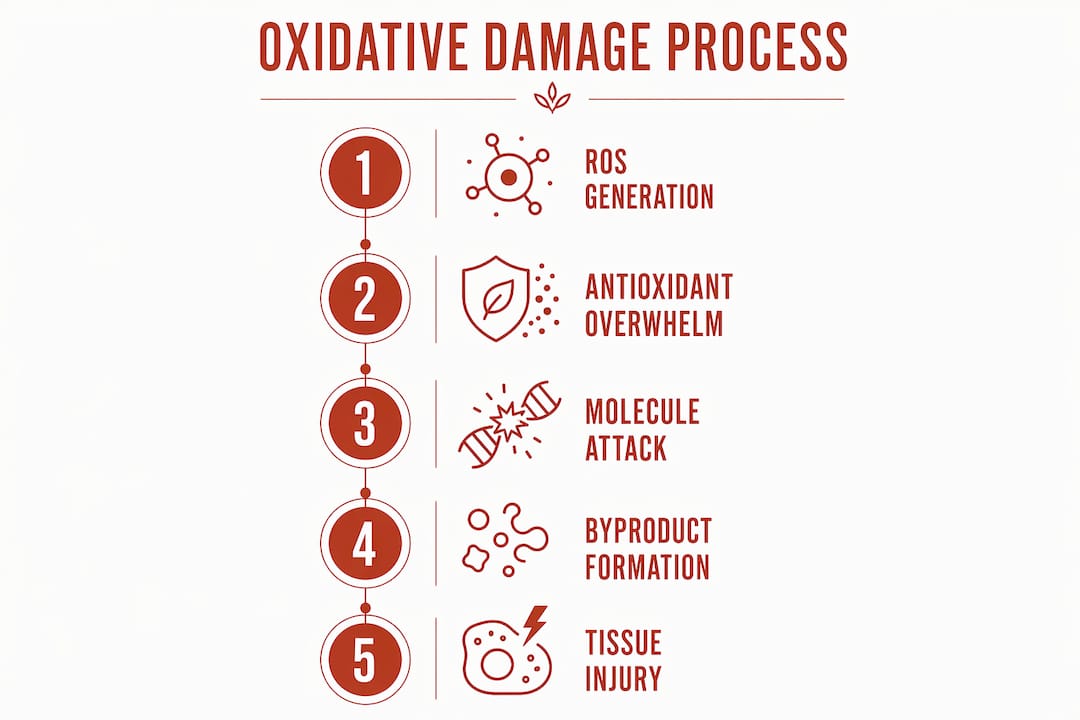
Protein oxidation is equally disruptive. Carbonylation, the addition of carbonyl groups to amino acid side chains, marks proteins for degradation. When the proteasome system cannot clear carbonylated proteins fast enough, aggregates form and accumulate inside cells. This is a hallmark of neurodegenerative conditions including Alzheimer’s disease and Parkinson’s disease.
DNA oxidation creates a third category of lasting harm. The oxidized nucleotide 8-oxo-deoxyguanosine (8-oxo-dG) is one of the most studied biomarkers of oxidative DNA damage. If DNA repair enzymes fail to correct these lesions before replication, mutations become permanent. Activated immune cells produce oxidants like hypochlorous acid (HOCl) that react with DNA, proteins, and lipids during chronic inflammation, compounding the molecular damage already caused by metabolic ROS.
Pro Tip: Reactive aldehyde byproducts from lipid peroxidation can persist in tissue for hours to days after ROS levels return to normal. This means measuring ROS directly often underestimates the actual extent of oxidative tissue injury.
What are the effects of oxidative burden on tissue function and health?
The consequences of sustained oxidative stress and tissue injury extend well beyond individual damaged molecules. They cascade into cellular dysfunction, organ-level impairment, and systemic disease.
At the cellular level, oxidative damage disrupts mitochondrial function, reduces ATP output, and triggers inflammatory signaling cascades. Cells under persistent oxidative stress shift resources away from normal function toward damage control, which degrades tissue performance over time. Overwhelming ROS damage accumulates over time through two interconnected axes: macromolecular damage and erosion of regenerative capacity. This dual mechanism explains why aging tissues lose both structural integrity and the ability to repair themselves.
The effects of oxidative burden on specific disease categories are well documented:
- Cardiovascular disease: Oxidized LDL cholesterol drives atherosclerotic plaque formation. HOCl from immune cells accelerates arterial wall damage.
- Neurodegenerative disease: The brain’s high oxygen consumption and lipid-rich composition make it especially vulnerable. Oxidative damage to neurons contributes to Alzheimer’s, Parkinson’s, and ALS progression.
- Cancer: DNA mutations from oxidative damage, combined with impaired repair mechanisms, create conditions for malignant transformation.
- Metabolic disease: Oxidative stress disrupts insulin signaling and contributes to oxidative stress in diabetes through multiple pathways.
Measuring the effects of oxidative burden requires indirect methods because ROS themselves are too short-lived to quantify reliably in clinical settings. Oxidative burden measurement relies on quantifiable damage products, including DNA adducts, lipid peroxidation markers, and protein carbonyls, rather than direct ROS levels. These biomarkers provide practical insight into tissue injury severity, though assay cutoffs vary by disease context.
How do antioxidant defenses protect against oxidative damage?
Your body runs a layered antioxidant defense system that operates more like a relay team than a single goalkeeper. Each layer handles a specific type of ROS at a specific stage of the oxidative cascade.
- Superoxide dismutase (SOD): The first responder. SOD converts superoxide radicals into hydrogen peroxide, a less reactive intermediate. Think of SOD as the first runner in a relay, converting a dangerous molecule into something the next enzyme can handle. Tryrevivify’s patented formula centers on this enzyme because it acts before damage propagates. Learn more about SOD heart protection and its broader tissue benefits.
- Catalase: Breaks down hydrogen peroxide into water and oxygen, completing the neutralization sequence SOD started.
- Glutathione peroxidase: Handles lipid hydroperoxides and hydrogen peroxide using glutathione as a cofactor, protecting membranes from peroxidation chain reactions.
- Peroxiredoxins: A family of enzymes that reduce peroxides and regulate hydrogen peroxide signaling thresholds.
Cellular antioxidant systems function as a throughput filter, converting highly reactive radicals into manageable intermediates to prevent propagation of damage. This sequential conversion is critical. Skipping a step, or having insufficient enzyme activity at any stage, allows reactive intermediates to escape and attack nearby molecules.
Non-enzymatic antioxidants, including vitamin C, vitamin E, and polyphenols from plant foods, complement the enzymatic system by directly scavenging radicals and regenerating oxidized enzymatic cofactors. However, the relationship between supplementation and protection is not straightforward. Antioxidant supplementation is not always beneficial. Some antioxidants act as pro-oxidants depending on the cellular redox environment and the presence of transition metals like iron and copper. Effectiveness depends more on redox conditions than antioxidant presence alone.
Pro Tip: High-dose isolated antioxidant supplements can interfere with beneficial ROS signaling, including the adaptive responses triggered by exercise. Supporting your enzymatic antioxidant system, rather than flooding cells with exogenous antioxidants, is a more targeted approach.
What practical steps can you take to manage oxidative burden?
Managing oxidative damage prevention requires addressing both the sources of excess ROS and the capacity of your defenses. No single intervention covers both sides of that equation.
Practical steps that address the full picture include:
- Eat a polyphenol-rich diet. Berries, leafy greens, olive oil, and green tea supply non-enzymatic antioxidants and plant compounds that support redox signaling without overwhelming it.
- Reduce environmental ROS exposure. Cigarette smoke, chronic UV exposure without protection, and heavy air pollution all accelerate ROS production beyond what metabolism generates alone.
- Manage inflammation actively. Oxidative stress causes inflammation and inflammation generates more ROS. Breaking this cycle requires addressing inflammatory drivers including poor sleep, sedentary behavior, and processed food consumption.
- Support mitochondrial health. Regular aerobic exercise improves mitochondrial efficiency and upregulates endogenous antioxidant enzyme expression, including SOD and catalase.
- Monitor relevant biomarkers. Markers like high-sensitivity CRP, oxidized LDL, and urinary 8-oxo-dG give you measurable data on oxidative burden. Work with a healthcare provider to interpret them in context.
- Consider targeted supplementation. Supplements designed to support enzymatic antioxidant capacity, rather than simply delivering isolated vitamins, offer a more precise approach to redox management.
Focusing on reducing ROS flux drivers like inflammation and mitochondrial dysfunction provides a more effective strategy than relying on external antioxidant intake alone. This is the principle that guides how Tryrevivify approaches cellular support.
Key takeaways
Oxidative burden causes tissue damage when ROS production overwhelms antioxidant defenses, triggering molecular injury to lipids, proteins, and DNA that drives inflammation, aging, and chronic disease.
| Point | Details |
|---|---|
| ROS imbalance drives damage | When antioxidant capacity is saturated, ROS attack lipids, proteins, and DNA with lasting consequences. |
| Aldehyde byproducts persist | Lipid peroxidation products like MDA and 4-HNE continue damaging tissue even after ROS levels normalize. |
| Enzymatic defenses are layered | SOD, catalase, and glutathione peroxidase work sequentially to neutralize ROS before damage propagates. |
| Supplementation requires context | Some antioxidants become pro-oxidants in specific redox environments, making targeted support more effective than high-dose isolated vitamins. |
| Biomarkers beat direct ROS measurement | Damage adducts in DNA, lipids, and proteins provide more clinically useful data than measuring ROS directly. |
Why I think the “just take antioxidants” narrative misses the point
Most health content treats oxidative stress as a simple deficit problem. You have too many free radicals, so you add antioxidants and the problem goes away. After years of reading the research and watching how people actually respond to supplementation, I find that framing genuinely misleading.
ROS are not purely toxic. They are signaling molecules that your immune system, cardiovascular system, and even your muscles depend on for normal function. The research is clear that antioxidant buffering saturation and the magnitude and duration of ROS flux determine whether you get adaptive signaling or irreversible damage. That distinction matters enormously for how you approach this problem.
What I find more useful is thinking about oxidative burden as a systems issue. Your mitochondria, your immune activity, your diet, your sleep, and your exposure to environmental stressors all feed into the same redox equation. Addressing one input while ignoring the others produces limited results. The people who manage oxidative stress most effectively are the ones who treat it as a whole-system problem, not a supplement gap.
I also think the persistence of oxidative damage byproducts deserves more attention. Most people assume that once inflammation calms down, the damage stops. But reactive aldehydes from lipid peroxidation sustain tissue dysfunction even after ROS levels decline. That biochemical footprint is why chronic disease progresses even during apparent remission periods. Understanding that changes how you think about long-term prevention.
— Larry
Support your cellular defenses with Tryrevivify
At Tryrevivify, we built our supplement around the enzyme that sits at the front line of oxidative defense: superoxide dismutase. SOD is the first responder that converts superoxide radicals into manageable intermediates before damage can propagate through your tissue. Our patented formula pairs SOD with prebiotic fiber to support both enzymatic antioxidant activity and the gut environment that influences systemic inflammation. This is not a generic antioxidant blend. It is a targeted approach to supporting the enzymatic layer of your redox defense system, designed for people who want to address oxidative burden at the cellular level. If you are ready to take a more precise approach to cellular health, explore the Tryrevivify 30-day supply and see how it fits into your health strategy.
FAQ
What is oxidative burden in simple terms?
Oxidative burden is the cumulative load of reactive oxygen species that exceeds your body’s antioxidant capacity, resulting in molecular damage to cells and tissues. It is the biological equivalent of rust forming faster than it can be removed.
How does oxidative damage occur in the body?
Excessive ROS directly oxidize DNA, proteins, and lipids through specific chemical reactions including lipid peroxidation chain reactions, protein carbonylation, and nucleotide base oxidation. These reactions impair cellular function and contribute to disease progression.
Can oxidative stress be measured clinically?
Yes. Clinicians measure oxidative damage through biomarkers including urinary 8-oxo-dG for DNA damage, malondialdehyde for lipid peroxidation, and protein carbonyl levels, rather than measuring ROS directly since ROS are too short-lived for reliable clinical quantification.
Are antioxidant supplements always helpful for oxidative stress?
Not always. Some antioxidants act as pro-oxidants in specific cellular environments, particularly when redox-active metals like iron are present. Targeted enzymatic support is generally more reliable than high-dose isolated antioxidant supplementation.
What diseases are linked to chronic oxidative burden?
Cardiovascular disease, Alzheimer’s disease, Parkinson’s disease, cancer, and type 2 diabetes all have well-documented links to chronic oxidative stress. You can explore oxidative stress inflammation symptoms to identify early signs that your oxidative load may be elevated.