

Oxidative Stress Gut Lining Repair: Your 2026 Guide
Oxidative stress gut lining repair is defined as the process of restoring antioxidant balance, rebuilding tight junction proteins, and supporting beneficial gut microbiota to heal the intestinal barrier after reactive oxygen species (ROS) damage. When ROS overwhelm your body’s natural defenses, including enzymes like superoxide dismutase (SOD) and glutathione peroxidase (GPx), the intestinal lining breaks down and inflammation follows. The result is a gut that leaks, triggers immune responses, and drives systemic disease. Understanding how this damage happens, and how to reverse it, is the foundation of lasting digestive health.
How oxidative stress damages the gut lining
Oxidative stress in the gut starts at the molecular level. ROS attack the lipids, proteins, and DNA of intestinal epithelial cells, the thin layer of cells that lines your gut and controls what passes into your bloodstream. When these cells are damaged, the entire barrier weakens.
The most visible consequence is the breakdown of tight junction proteins. Proteins like ZO-1 and Occludin act as the “mortar” between epithelial cells. Tight junction downregulation increases intestinal permeability, a condition commonly called “leaky gut,” which allows bacteria and toxins to enter circulation and trigger widespread inflammation.
The damage does not stop there. Here is how the cycle compounds:
- ROS overwhelm antioxidant enzymes. SOD, catalase (CAT), and GPx become depleted, leaving cells unprotected.
- Lipid peroxidation damages cell membranes. This destabilizes epithelial cells and accelerates their death.
- Immune cells flood the area. The immune response generates even more ROS, worsening the original damage.
- Ferroptosis begins. This is iron-dependent cell death triggered by ROS accumulation. It destroys epithelial cells and deepens barrier breakdown.
- Inflammation becomes self-sustaining. The cycle of ROS, immune activation, and cell death keeps repeating without intervention.
This feedback loop is why digestive inflammation can feel impossible to resolve. The common digestive oxidative stress causes range from poor diet and chronic stress to antibiotic overuse, and each one feeds this same destructive cycle.
What biological pathways drive gut lining repair?
Repairing the gut lining requires activating specific molecular pathways, not just flooding your system with antioxidants. Two targets matter most: the Nrf2 pathway and tight junction protein restoration.

The Nrf2 pathway is your body’s master antioxidant switch. When activated, Nrf2 moves into the cell nucleus and turns on genes that produce protective enzymes, including heme oxygenase-1 (HO-1). This gene expression response is far more powerful than any single antioxidant supplement because it amplifies your body’s own defenses. Restoring ZO-1 and Occludin alongside Nrf2 activation rebuilds the physical barrier that ROS tore down.
The gut microbiome plays an equally critical role. Here is what the research shows about microbiome contributions to repair:
- Probiotics induce antioxidant enzymes. Specific strains activate SOD and GPx, lower oxidative stress markers like malondialdehyde (MDA), and restore short-chain fatty acid (SCFA) production.
- SCFAs fuel epithelial repair. Butyrate, a key SCFA, feeds colonocytes and supports tight junction reassembly.
- Prebiotics shift microbial metabolism. The prebiotic 2′-fucosyllactose activates the AHR pathway by boosting Lactobacillus abundance and producing protective metabolites like indole-3-acetic acid and melatonin.
- Tryptophan metabolites strengthen the mucosal barrier. These compounds signal through the aryl hydrocarbon receptor (AHR) to reduce oxidative injury and reinforce the epithelium.
The table below summarizes the key repair targets and their functions:
| Repair Target | Function | Primary Activator |
|---|---|---|
| Nrf2 pathway | Upregulates antioxidant gene expression | Polyphenols, probiotics |
| ZO-1 and Occludin | Rebuilds tight junction integrity | SCFAs, probiotic strains |
| SOD and GPx enzymes | Neutralizes ROS directly | Probiotic induction, dietary minerals |
| AHR pathway | Strengthens mucosal barrier | 2′-fucosyllactose, tryptophan metabolites |
| Ferroptosis inhibition | Prevents iron-dependent cell death | Microbiome metabolites, antioxidants |
The gut microbiota produces metabolites including SCFAs and tryptophan derivatives that regulate host redox signaling and epithelial integrity. This makes microbiome support a non-negotiable part of any repair strategy.
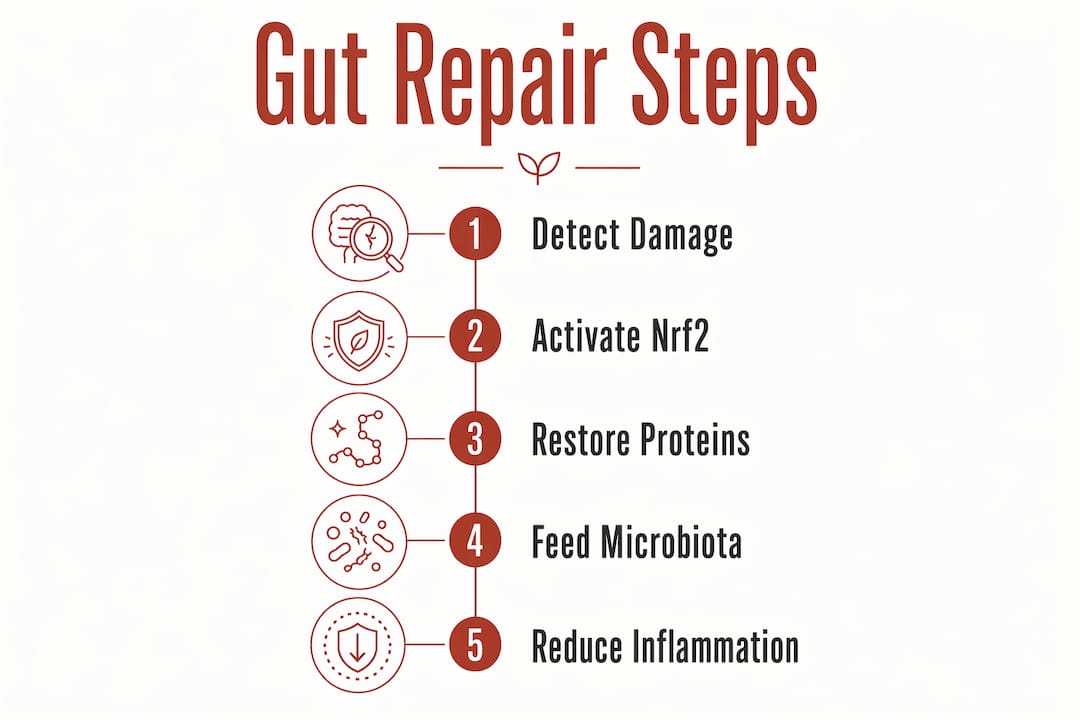
Practical steps to repair gut inflammation and restore the barrier
Repairing your gut lining from oxidative damage requires a layered approach. Diet, targeted supplements, and lifestyle changes each address a different part of the problem.
-
Eat polyphenol-rich foods daily. Berries, green tea, dark leafy greens, and extra-virgin olive oil all activate the Nrf2 pathway. These foods do not just deliver antioxidants. They signal your cells to produce their own.
-
Add fermented foods or probiotic supplements. Yogurt, kefir, kimchi, and sauerkraut introduce beneficial strains that induce SOD and GPx. When choosing a probiotic supplement, look for clinically studied strains with documented effects on tight junction proteins.
-
Prioritize prebiotic fiber. Foods like garlic, onions, leeks, and chicory root feed the bacteria that produce SCFAs. Prebiotic fiber is the fuel your microbiome needs to generate the metabolites that rebuild your epithelium.
-
Choose gut-confined antioxidant supplements. Systemic oral antioxidants often fail to deliver sufficient protection to the gut lining. Supplements that remain in the intestinal lumen neutralize ROS where the damage actually occurs, without interfering with the ROS signals your cells need for normal function.
-
Reduce pro-inflammatory inputs. Processed foods, alcohol, and chronic sleep deprivation all increase ROS production. Addressing these inputs is not optional. Anti-inflammatory strategies must accompany antioxidant therapies to break the ROS-inflammation cycle.
-
Support inflammation management systemically. For people dealing with autoimmune-related gut inflammation, inflammation management strategies that address the broader immune response can complement gut-specific repair work.
Pro Tip: Pair your probiotic supplement with a prebiotic fiber source at the same meal. The fiber feeds the probiotic bacteria immediately, improving their survival and colonization in your gut.
Common challenges when repairing the gut from oxidative damage
The biggest mistake people make is treating gut repair as a simple antioxidant deficiency. It is not. Redox biology is more nuanced than that.
Low-to-moderate ROS levels serve as signaling molecules for cell differentiation and immune defense. The goal of therapy is to restore redox balance, not to eliminate ROS entirely. Flooding your system with high-dose antioxidant supplements can actually suppress the ROS signals your immune cells need to function. This is why targeted, gut-confined delivery matters more than raw antioxidant dose.
Several other setbacks derail progress:
- Relying on systemic supplements alone. Most standard antioxidant pills absorb into the bloodstream before reaching the gut lining. They improve blood markers but do little for local ROS accumulation in the intestinal lumen.
- Ignoring inflammation while treating oxidative stress. ROS and inflammation feed each other. Treating one without the other leaves the cycle intact.
- Inconsistent dietary habits. The microbiome responds to what you eat within 24–72 hours. Sporadic healthy eating does not sustain the microbial shifts needed for lasting repair.
- Skipping professional guidance for serious conditions. Conditions like Crohn’s disease, ulcerative colitis, and irritable bowel syndrome involve oxidative stress but require medical supervision alongside lifestyle changes.
Pro Tip: Track your symptoms in a simple daily log for two to four weeks after starting any new dietary or supplement protocol. Patterns in bloating, stool consistency, and energy levels tell you whether your microbiome is responding before any lab test will.
You can learn more about combating oxidative stress and inflammation through targeted dietary and lifestyle strategies that address both sides of the ROS-inflammation loop.
Key Takeaways
Repairing the gut lining from oxidative stress requires activating Nrf2 signaling, restoring tight junction proteins, and supporting the microbiome to produce the metabolites that rebuild the intestinal barrier.
| Point | Details |
|---|---|
| Oxidative stress breaks the barrier | ROS deplete SOD and GPx, degrade ZO-1 and Occludin, and trigger ferroptosis in epithelial cells. |
| Nrf2 activation is the repair switch | Polyphenols and probiotics activate Nrf2, which upregulates antioxidant gene expression far beyond single supplements. |
| Microbiome metabolites rebuild the epithelium | SCFAs and tryptophan derivatives from beneficial bacteria directly support tight junction reassembly and mucosal defense. |
| Gut-confined delivery outperforms systemic supplements | Antioxidants that stay in the intestinal lumen neutralize ROS locally without disrupting essential intracellular signaling. |
| Balance, not elimination, is the goal | Restoring redox balance preserves the ROS signals needed for immune defense while stopping the damage cycle. |
What I’ve learned about gut-centered antioxidant strategies
I have spent years looking at how people approach gut health, and the pattern is consistent. Most people reach for a probiotic or a vitamin C supplement, feel modest improvement, and then plateau. The reason is almost always the same: they are treating the symptom, not the system.
The research on ferroptosis changed how I think about this. The idea that ROS can trigger iron-dependent cell death, which then worsens oxidative stress, which then triggers more ferroptosis, explains why so many people feel stuck in a cycle of flares and partial recovery. Breaking that loop requires both antioxidant support and microbiome intervention simultaneously. Neither works as well alone.
The other thing I have come to believe strongly is that delivery mechanism matters more than dose. A high-dose antioxidant that absorbs in the small intestine before it reaches the colon does almost nothing for the gut lining. Gut-confined formulations, ones that stay in the lumen and work locally, are a fundamentally different category of intervention. That distinction rarely gets explained clearly, and people end up spending money on supplements that miss the target entirely.
My practical advice: build the microbiome foundation first with diet, then layer in targeted supplementation. Gradual, consistent changes produce more durable results than aggressive short-term protocols. And if you have a diagnosed inflammatory bowel condition, work with a gastroenterologist. These strategies complement medical care. They do not replace it.
— Larry
How Tryrevivify supports cellular and gut health restoration
If you are serious about addressing oxidative damage at the gut level, the formulation behind your supplement matters as much as the ingredients on the label.
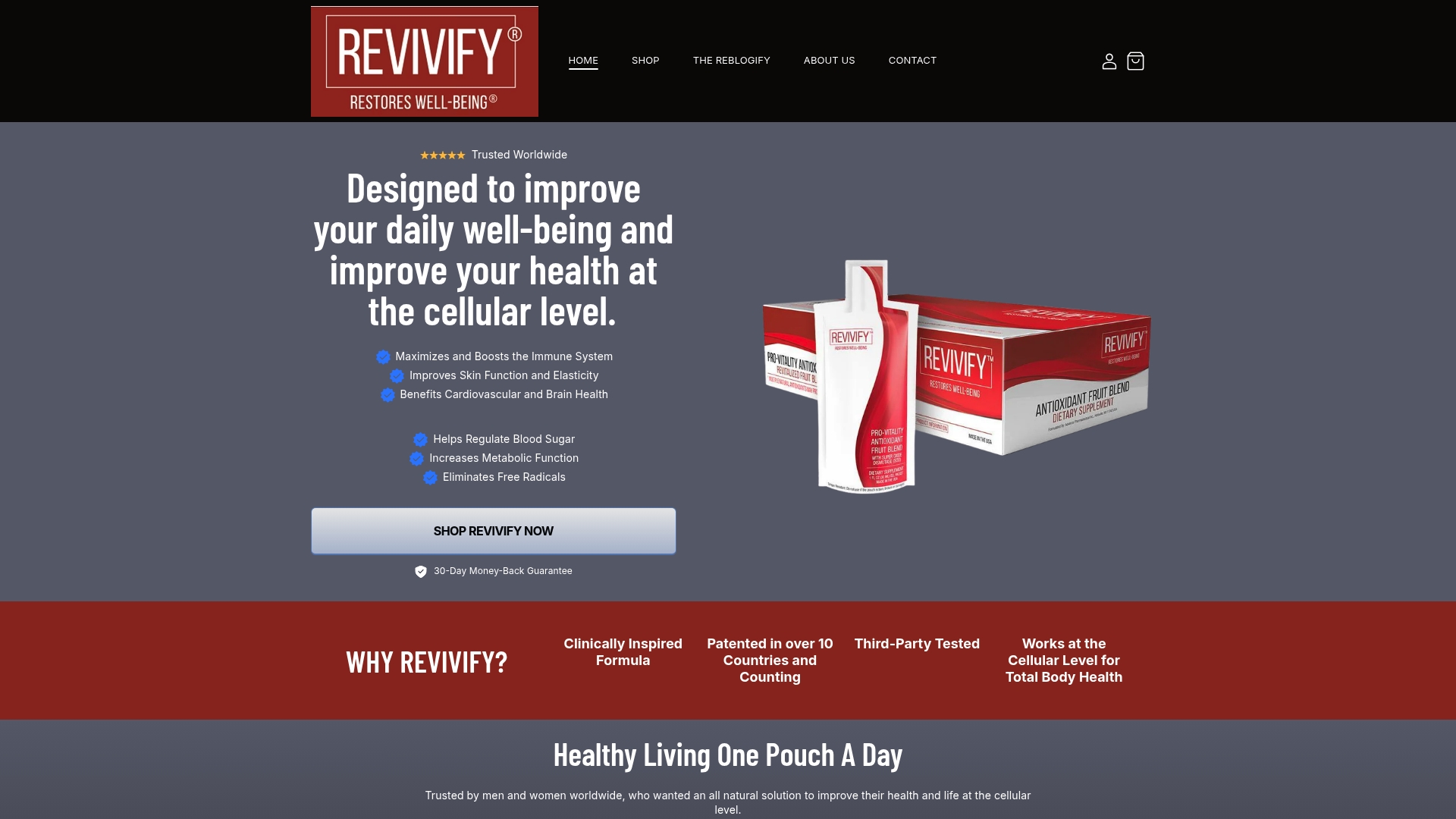
Tryrevivify’s Revivify® 30-Day Supply combines superoxide dismutase (SOD), the primary enzyme your gut uses to neutralize ROS, with prebiotic fiber in a patented formula. SOD targets free radicals directly at the cellular level. The prebiotic fiber feeds the beneficial bacteria that produce SCFAs and support tight junction repair. This combination addresses both the antioxidant enzyme deficit and the microbiome support gap that standard supplements miss. For people working to rebuild their gut lining from oxidative damage, Tryrevivify offers a formulation built around the science of gut-confined antioxidant delivery.
FAQ
What is oxidative stress gut lining repair?
Oxidative stress gut lining repair is the process of restoring antioxidant enzyme activity, rebuilding tight junction proteins like ZO-1 and Occludin, and supporting the gut microbiome to heal the intestinal barrier after ROS-induced damage.
How does oxidative stress damage the gut lining?
ROS deplete protective enzymes like SOD and GPx, degrade tight junction proteins, and trigger ferroptosis, a form of iron-dependent cell death that destroys epithelial cells and increases intestinal permeability.
What are the best supplements for gut lining repair?
Gut-confined antioxidant supplements that remain in the intestinal lumen are more effective than systemic oral antioxidants, which often absorb before reaching the gut lining. Probiotic strains that induce SOD and GPx, paired with prebiotic fiber, are the most clinically supported combination.
Can diet alone repair a damaged gut lining?
Diet is the foundation of gut lining repair. Polyphenol-rich foods activate Nrf2 signaling, and prebiotic fibers fuel SCFA production. For significant oxidative damage, targeted supplementation and professional guidance accelerate recovery beyond what diet achieves alone.
Is it safe to take antioxidant supplements for gut repair?
High-dose systemic antioxidants carry risks because low-to-moderate ROS levels are necessary for immune signaling and cell differentiation. Gut-confined formulations that restore redox balance without eliminating ROS entirely are the safer and more effective approach.