

Polyphenols and Inflammation: Diet Cuts Odds of High CRP by 18–48%
Yes, polyphenol-rich foods and well-formulated supplements are associated with lower systemic inflammation, and they act directly on core inflammatory pathways rather than just soaking up free radicals. The evidence-backed move is to build your plate around polyphenol-dense foods first, adding a supplement only if your diet consistently falls short. If you manage a chronic condition or take blood thinners, talk to your clinician before adding concentrated extracts.
TL;DR:
- Consistent intake of polyphenol-rich foods such as berries, tea, and olive oil is associated with significant reductions in inflammation markers like CRP and GlycA.
- Supplements can enhance polyphenol intake but often have poor bioavailability, making formulation and dosing crucial for effectiveness, especially for compounds like resveratrol and curcumin.
- The anti-inflammatory action of polyphenols involves multiple mechanisms, including blocking inflammatory pathways, inhibiting enzyme activity, boosting antioxidant defenses, and shifting immune cell behavior.
- High-dose supplements may pose risks for people on blood thinners or medications affecting liver enzymes, underscoring the importance of consulting healthcare professionals before use.
- Building a varied, food-based diet takes precedence, with supplements serving as targeted adjuncts when dietary gaps or health conditions warrant.
Table of Contents
- How Polyphenols Lower Inflammation at the Cellular Level
- What Human Studies Say About Polyphenols and Inflammation
- Top Polyphenol-Rich Foods and How to Work Them Into Your Day
- Supplements and Bioavailability: When They Actually Help
- Safety, Drug Interactions, and Who Should Talk to a Clinician First
- A Realistic Daily Plan for Using Polyphenols to Manage Inflammation
- Who’s Behind This Guide
- Can Polyphenol Supplements Cause Side Effects Beyond General Safety Concerns?
- Flavonoids vs. Phenolic Acids vs. Stilbenes vs. Lignans: Which Work Best?
- Is It Safe to Rely on Polyphenols Long Term for Chronic Inflammation?
- The Editorial Take: Stop Treating Polyphenols Like a Magic Bullet or a Myth
- A Practical Next Step With Revivify
- Sources
- FAQ
How Polyphenols Lower Inflammation at the Cellular Level
Polyphenols do not just mop up loose free radicals like a chemical sponge. They intervene directly in the signaling machinery that turns inflammation on and keeps it running, which is a more precise and more interesting story than the “antioxidant” label usually gets credit for.
The central player is a protein complex called NF-κB, often described as the master switch for inflammation. When a cell senses stress, whether from a pathogen, a toxin, or oxidative damage, NF-κB moves into the nucleus and switches on genes for inflammatory cytokines like IL-6 and TNF-α. Mechanistic research on polyphenols shows that compounds like quercetin, EGCG, and curcumin block this activation step, essentially keeping the switch from flipping in the first place. The same review documents parallel effects on MAPK signaling, another pathway that amplifies inflammatory gene expression once triggered.
A second mechanism runs through the arachidonic acid cascade, the same pathway targeted by ibuprofen and other NSAIDs. Polyphenols inhibit the enzymes COX, LOX, and PLA2, which reduces production of prostaglandins and leukotrienes, the molecules responsible for swelling, pain, and fever. This is not a subtle side effect. It is one of the reasons certain polyphenol-rich compounds get studied as adjuncts alongside conventional anti-inflammatory drugs.
Third, polyphenols work on the antioxidant defense system itself, not just by acting as antioxidants but by upregulating the enzymes your body already makes to handle oxidative stress: superoxide dismutase (SOD), catalase, and glutathione peroxidase. At the same time, they inhibit enzymes like NADPH oxidase (NOX) and xanthine oxidase that generate reactive oxygen species in the first place. Think of it as adjusting both ends of a see-saw: less oxidative stress produced, more capacity to clear what remains.
The fourth mechanism is the one most people never hear about: immune cell polarization. Macrophages, the immune system’s cleanup crew, come in two broad flavors. M1 macrophages drive inflammation; M2 macrophages resolve it and support tissue repair. Research on dietary polyphenols and immune-cell differentiation indicates that certain polyphenols push macrophages toward the M2, pro-resolution phenotype. That is a meaningfully different action than antioxidant scavenging. It suggests polyphenols actively reshape the immune environment rather than simply defending against damage after it happens.
Here is the short version of how the pathways stack up:
- NF-κB and MAPK modulation: reduces production of IL-6 and TNF-α at the transcription stage.
- COX/LOX/PLA2 inhibition: lowers prostaglandin and leukotriene output, similar in direction to NSAID action.
- Antioxidant enzyme upregulation: boosts SOD, catalase, and glutathione peroxidase while suppressing ROS-generating enzymes like NOX and xanthine oxidase.
- Immune polarization: shifts macrophages from the inflammatory M1 state toward the resolving M2 state.
- Gut microbiome conversion: bacteria in the colon convert many polyphenols into smaller, more bioactive metabolites that circulate systemically.
That last point deserves its own sentence. A 2024 review on polyphenols in health and food processing notes that your microbiome is not a passive bystander in all this; it is often the actual manufacturer of the compounds doing the anti-inflammatory work. A polyphenol that never gets absorbed intact may still matter, once gut bacteria break it down into something your bloodstream can use.
What Human Studies Say About Polyphenols and Inflammation
Lab mechanisms are one thing. Whether they translate into measurable changes in real people is the question that actually matters, and here the picture is encouraging, if more modest than headlines suggest.
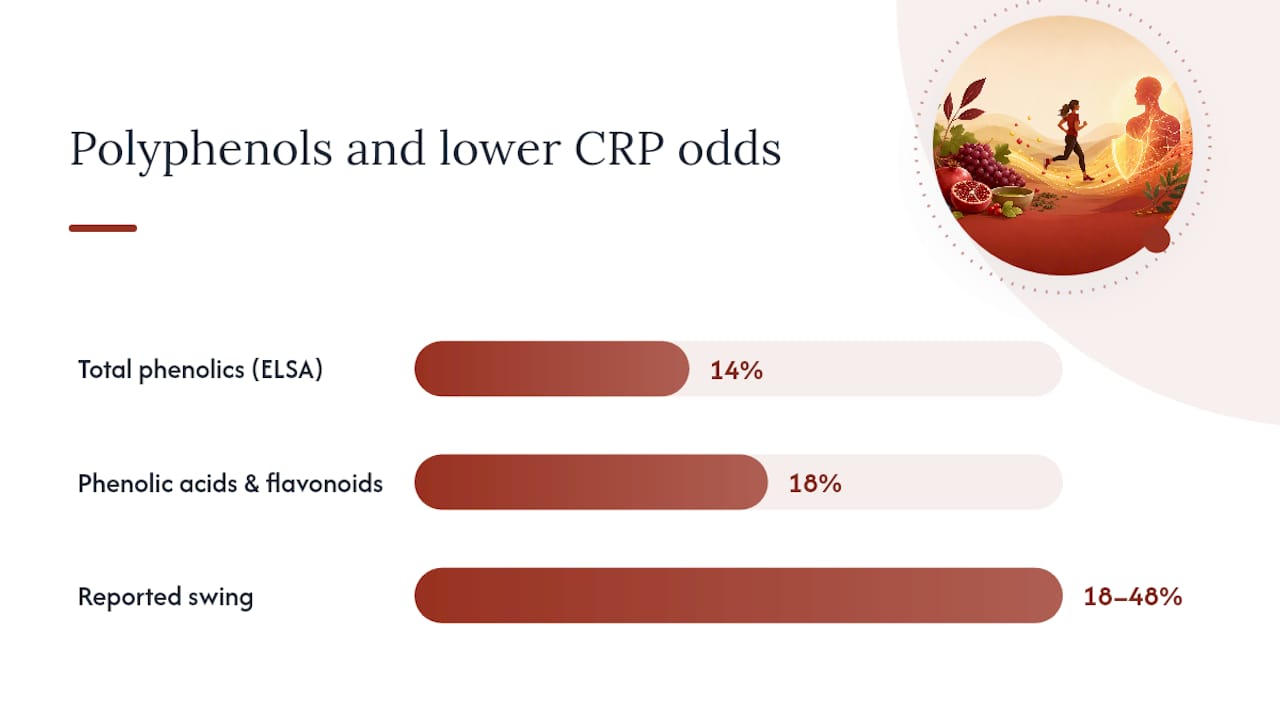
The ELSA-Brasil cohort, a large Brazilian population study, gives us some of the clearest numbers available on this topic.
By the numbers: Participants in the highest tertile of total phenolic intake had 14% lower odds of elevated C-reactive protein (hs-CRP) compared to those with the lowest intake. Those with the highest intake of phenolic acids and flavonoids specifically showed 18% lower odds of elevated hs-CRP. For GlycA, a newer marker of systemic inflammation that some researchers consider more stable than CRP, higher intake of certain phenolic classes was linked to lower odds of elevated levels.
Those are not small ranges. An 18% to 48% swing in odds for a chronic-inflammation marker, tied purely to dietary intake, is the kind of association that justifies taking food-based polyphenol intake seriously rather than treating it as a wellness footnote.
The Airwave cohort study, conducted in a large occupational health population, adds independent support. Researchers found inverse associations between polyphenol intake and both CRP and fibrinogen, another inflammatory and clotting-related marker. The effects held on a per-serving basis, meaning each additional cup of tea or coffee tracked with incrementally lower average inflammation markers.
Randomized controlled trials tell a messier story, and that mess is worth being honest about rather than glossing over:
- Some resveratrol and curcumin trials show meaningful improvement in inflammatory symptoms, particularly in conditions like osteoarthritis and metabolic syndrome.
- Other trials using similar compounds find no significant change in blood biomarkers, even when participants report feeling better.
- A review of oxidative stress and polyphenol research attributes much of this inconsistency to differences in dose, formulation, trial length, and which biomarker researchers chose to measure.
That heterogeneity is not a reason to dismiss the evidence. It is a reason to calibrate expectations. Population-level cohort data consistently point in one direction, toward lower inflammation with higher polyphenol intake, but individual response varies with baseline inflammation, gut microbiome composition, genetics, and how bioavailable the specific compound is in your body. Two people eating the same berries can end up with different blood-marker outcomes, and that variability is exactly why diet-first strategies work better as a long game than a two-week experiment.
Top Polyphenol-Rich Foods and How to Work Them Into Your Day
Some polyphenol sources punch far above their weight, and knowing which ones matters more than obsessing over exact milligram counts.
- Dark berries (blueberries, blackberries, chokeberries) carry some of the highest anthocyanin concentrations of any common food. A single cup covers a meaningful daily dose.
- Green and black tea deliver catechins and theaflavins respectively. One to three cups a day is the range most cohort studies associate with measurable benefit.
- Coffee is an underrated polyphenol source, rich in chlorogenic acids. Regular coffee drinkers in the Airwave cohort showed some of the clearest per-serving associations with lower CRP.
- Dark chocolate at 70% cocoa or higher provides flavanols at a dose that milk chocolate simply cannot match. About 1.5 ounces is a reasonable daily serving.
- Nuts, especially walnuts and pecans, add ellagitannins and other phenolic acids alongside healthy fats that may improve absorption.
- Extra-virgin olive oil contains oleocanthal, a compound with a COX-inhibiting action that researchers have compared, structurally, to ibuprofen.
- Red grapes and red wine in moderation supply resveratrol and other stilbenes, though whole grapes avoid the tradeoffs that come with alcohol.
- Turmeric and ginger bring curcumin and gingerol into the mix, both studied extensively for anti-inflammatory action.
- Legumes and colorful vegetables (red onions, purple cabbage, artichokes) round out a polyphenol-dense plate without requiring any special shopping trip.
A few practical notes on preserving what you buy:
- Heavy boiling and prolonged high heat degrade many polyphenols, so steaming or light sautéing beats extended cooking.
- Whole and minimally processed foods retain more polyphenol content than juiced or heavily refined versions of the same ingredient.
- Pairing polyphenol-rich foods with a source of fat, like olive oil on vegetables, can support absorption of certain compounds.
For a full week-one checklist, add one serving of dark berries daily, swap your afternoon soda for green tea, use olive oil as your primary cooking fat, and finish two dinners a week with a curry or turmeric-based dish. Our complete list of polyphenol-rich foods by category breaks these down further if you want more variety.
Supplements and Bioavailability: When They Actually Help
Here is the uncomfortable truth about polyphenol supplements: many of the compounds people take have notoriously poor baseline bioavailability. Curcumin, in its raw form, is absorbed so poorly that a meaningful fraction simply passes through the digestive tract unused. That single fact explains a lot of the inconsistency in supplement research.
Formulation research on polyphenol bioavailability outlines several strategies manufacturers use to work around this problem. Phytosome technology binds the polyphenol to a phospholipid carrier, similar to how the compound would travel in food. Liposomal encapsulation wraps it in a fat-based shell that survives stomach acid better. Co-administration with black pepper extract or other enzyme inhibitors slows the liver’s breakdown of the compound, extending how long it stays active in circulation. None of these approaches is a silver bullet, but each one meaningfully changes how much of the active compound reaches your bloodstream compared to a plain powder capsule.
The most commonly supplemented polyphenols, and their evidence caveats, look like this:
- Resveratrol: promising anti-inflammatory signals in some trials, but absorption without a delivery system is limited.
- Curcumin: strong preclinical and mechanistic support; clinical results vary heavily by formulation and standardized curcuminoid content.
- EGCG (from green tea extract): well-studied for cardiovascular and metabolic markers; high doses in supplement form warrant caution, discussed further below.
- Quercetin: decent evidence for anti-inflammatory action, often combined with vitamin C or bromelain to support absorption.
Pro Tip: When comparing supplement labels, look for a standardized extract percentage (not just “curcumin” but “95% curcuminoids”), a named bioavailability strategy, and evidence of third-party testing. A label that only lists a plant name with no standardization or testing disclosure tells you almost nothing about what you are actually getting.
If your diet already includes daily tea, berries, and olive oil, a supplement may add little. If you have a diagnosed inflammatory condition, a diet that consistently misses these food groups, or a clinician-identified need, a well-formulated supplement becomes a reasonable next step, ideally one that combines polyphenols with complementary support systems, like antioxidant enzyme pathways, rather than an isolated compound taken at random doses. Our guide to supplements for chronic inflammation covers formulation criteria in more depth.
Safety, Drug Interactions, and Who Should Talk to a Clinician First
Polyphenols are generally well tolerated at food-level doses, but concentrated supplements are a different category, and treating them casually is a mistake.
The interaction that comes up most often involves blood thinners. High-dose green tea extract, resveratrol, and several other polyphenol supplements can have mild antiplatelet or anticoagulant effects. Combined with warfarin or other prescription blood thinners, this can meaningfully raise bleeding risk. Anyone on anticoagulant or antiplatelet medication should get a pharmacist or physician’s input before starting a concentrated extract, not after.
A few other groups need extra caution:
- People on blood-pressure medications, since some polyphenols have mild hypotensive effects that can stack with prescription drugs.
- Anyone taking medications metabolized through the liver’s CYP enzyme pathways, since certain polyphenols can slow or speed up how those drugs clear the body.
- Pregnant or breastfeeding individuals, where high-dose extracts have not been studied enough to establish clear safety margins.
- Immunocompromised patients and anyone undergoing chemotherapy, since some polyphenols interact with treatment protocols in ways that are still being actively studied.
At high doses, some concentrated extracts, particularly green tea catechins, have been linked to rare cases of liver enzyme elevation. This is uncommon but well enough documented that it belongs in any honest safety discussion, rather than tucked away as a footnote. Standard GI upset (bloating, mild nausea) is the more common complaint at high doses of most polyphenol supplements.
A sensible safety checklist: get baseline liver enzyme labs before starting a high-dose extract if you plan to stay on it long term, track any new symptoms for the first few weeks, and always disclose supplement use to your prescribing physician, even when the bottle says “natural.”
A Realistic Daily Plan for Using Polyphenols to Manage Inflammation
Start with food, not a pill. That is not a slogan; it is the order the evidence actually supports.
- Build a baseline diet. Aim for at least one serving each of berries, tea or coffee, and a healthy fat source like olive oil or nuts, daily. Add turmeric or ginger to two or three meals a week.
- Assess the gap honestly. If you are consistently missing these food groups, or managing a diagnosed inflammatory condition, that is the point to consider a supplement, not before.
- Choose a formulation with evidence behind it. Look for standardized extract content, a named bioavailability strategy, and third-party testing, exactly as covered above.
- Give it 8 to 12 weeks before judging results. Biomarker shifts like CRP or GlycA changes are typically measured on that timeline in cohort and trial data, not days.
- Track something concrete. A simple symptom diary (joint stiffness, energy, digestion) works for most people. If you want harder data, ask your clinician about periodic hs-CRP testing to see whether your changes are moving the needle.
Pro Tip: Do not judge a dietary change by how you feel after three days. Inflammation markers move on the timescale of weeks, and expecting overnight results is the most common reason people abandon a strategy that would have worked if they had stuck with it.
This flow mirrors how the oxidative stress management approach works more broadly: diet first, targeted support second, consistent monitoring throughout. It is not glamorous, but it is what the cohort data actually supports.
Who’s Behind This Guide
This article was written by Larry, drawing on peer-reviewed cohort research and mechanistic reviews rather than marketing claims.
This piece is published by Tryrevivify, maker of Revivify, a daily supplement gel combining superoxide dismutase, prebiotic fiber, polyphenols, and lactobacillus in a patented formula designed to support cellular health.
The formula pairs superoxide dismutase with prebiotic fiber and polyphenols based on the concept that antioxidant enzyme support and polyphenol intake work on complementary pathways: one clears reactive oxygen species directly, the other modulates the signaling cascades that produce inflammation in the first place.
That mechanistic overlap is worth being precise about. SOD is an enzyme your body already produces to neutralize superoxide radicals, and the polyphenol mechanisms described earlier in this article, NF-κB modulation, COX/LOX inhibition, antioxidant enzyme upregulation, work through related but distinct routes. Combining them in one formulation is a reasonable design logic, not a guarantee of a specific clinical outcome. Readers evaluating any supplement should apply the same label criteria covered in the bioavailability section above.
Can Polyphenol Supplements Cause Side Effects Beyond General Safety Concerns?
Beyond the drug-interaction and liver-enzyme concerns already covered, a few side effects show up specifically in polyphenol research that general “supplement safety” advice tends to miss. High-dose tannin-rich extracts, found in some grape seed and green tea products, can reduce iron absorption when taken with meals, a real concern for anyone with anemia or heavy menstrual cycles. Concentrated flavonoid supplements have also been associated with mild headaches in a subset of users, likely tied to their vasoactive properties, the same mechanism that gives some polyphenols mild blood-pressure lowering effects.
Isoflavone-type polyphenols, found in soy-derived supplements, carry a separate consideration: their weak estrogenic activity means people with hormone-sensitive conditions should discuss use with an oncologist or endocrinologist first, rather than assuming “plant-based” means automatically neutral. Quercetin at high supplemental doses has occasionally been linked to kidney stress in people with existing renal impairment, a caveat rarely mentioned outside specialist literature.
None of this means polyphenols are risky at food-level intake, they are not. But concentrated, isolated extracts behave differently in the body than the same compound eaten inside a strawberry or a cup of tea, and that distinction is exactly why formulation and dose matter as much as the ingredient name on the label.
Flavonoids vs. Phenolic Acids vs. Stilbenes vs. Lignans: Which Work Best?
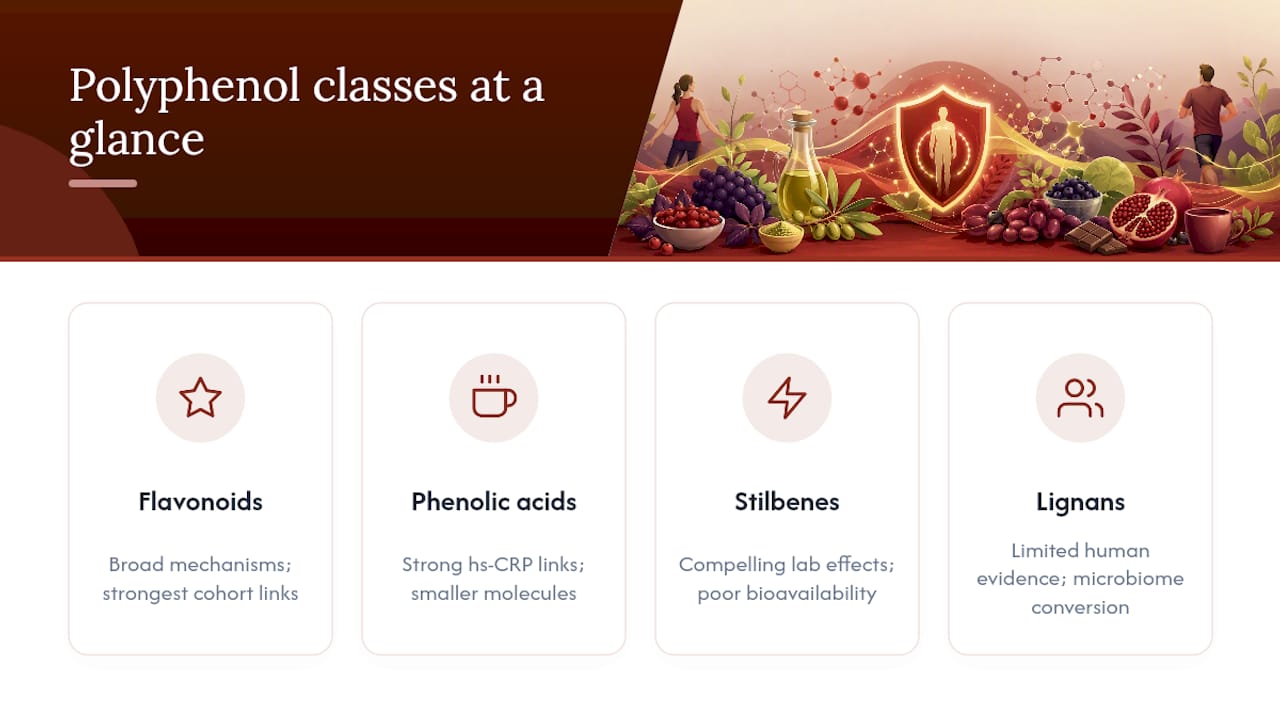
Not all polyphenol classes pull the same anti-inflammatory weight, and lumping them together under one umbrella obscures useful differences.
Flavonoids, the largest and most studied class, include quercetin, catechins, and anthocyanins. They show the broadest mechanistic action across NF-κB inhibition, COX/LOX suppression, and antioxidant enzyme upregulation, which is likely why they dominate the cohort data linking intake to lower CRP and GlycA.
Phenolic acids, including chlorogenic acid from coffee and ferulic acid from whole grains, showed some of the strongest associations with reduced hs-CRP odds in the ELSA-Brasil cohort. Their smaller molecular structure may support easier absorption than some larger flavonoid compounds.
Stilbenes, resveratrol being the best known, have compelling laboratory-level anti-inflammatory mechanisms but face the steepest bioavailability hurdles of any class, which is part of why clinical trial results have been so inconsistent.
Lignans, found in flaxseed and sesame seeds, have the thinnest human inflammation-marker evidence of the four classes, though their gut-microbiome conversion into enterolignans is an active area of research.
The practical takeaway: no single class is the definitive winner. A diet that includes multiple classes, tea for flavonoids, coffee for phenolic acids, grapes for stilbenes, flaxseed for lignans, covers more mechanistic ground than concentrating on one.
Is It Safe to Rely on Polyphenols Long Term for Chronic Inflammation?
Polyphenol intake through food is one of the few anti-inflammatory strategies with genuine long-term sustainability, because it does not rely on escalating doses or carry the tolerance issues seen with some pharmaceutical anti-inflammatories. Cohort studies like ELSA-Brasil and Airwave measure habitual, years-long dietary patterns, not short bursts of intake, which is itself evidence that consistent, moderate polyphenol consumption holds up over time rather than producing a short-lived effect that fades.
That said, “long term” cuts both ways. The same studies that show benefit at food-level, varied intake have not run multi-year trials on high-dose, single-compound supplementation. Nobody has good long-term safety data on, say, five years of daily high-dose resveratrol extract, because that research simply does not exist yet at scale. This is the honest gap in the evidence, and it is the strongest argument for keeping food as the foundation and treating supplements as a targeted addition rather than a permanent high-dose regimen.
The sustainable version of this strategy looks boring: rotate your polyphenol sources across seasons and food groups, keep supplement use time-limited and reviewed with a clinician, and treat inflammation management as an ongoing dietary pattern rather than a fixed protocol you set once and never revisit.
The Editorial Take: Stop Treating Polyphenols Like a Magic Bullet or a Myth
The conventional wisdom on polyphenols splits into two unhelpful camps: people who treat berries and green tea like miracle cures, and skeptics who dismiss the whole category because a few resveratrol trials came back mixed. Both miss what the cohort data actually shows.
The real story is unglamorous and, frankly, more useful. Polyphenols produce modest, consistent, population-level reductions in inflammatory markers when eaten regularly across food groups. That is not nothing. An 18% to 48% reduction in odds of elevated GlycA is a meaningful number for something you control three times a day at the dinner table.
Where I think most advice goes wrong is treating supplements as an equivalent substitute for food, rather than a targeted tool for a specific gap. Bioavailability is the deciding factor nobody markets honestly. If you take one thing from this article, prioritize dietary variety across polyphenol classes first, and treat any supplement decision as a conversation with your clinician, not an impulse purchase.
— Larry
A Practical Next Step With Revivify
Diet gets you most of the way there, but building a plate with berries, tea, olive oil, and turmeric every single day is harder in practice than it sounds on a checklist. Revivify was built for the gap between what a well-informed diet should include and what most people actually manage on a Tuesday morning.
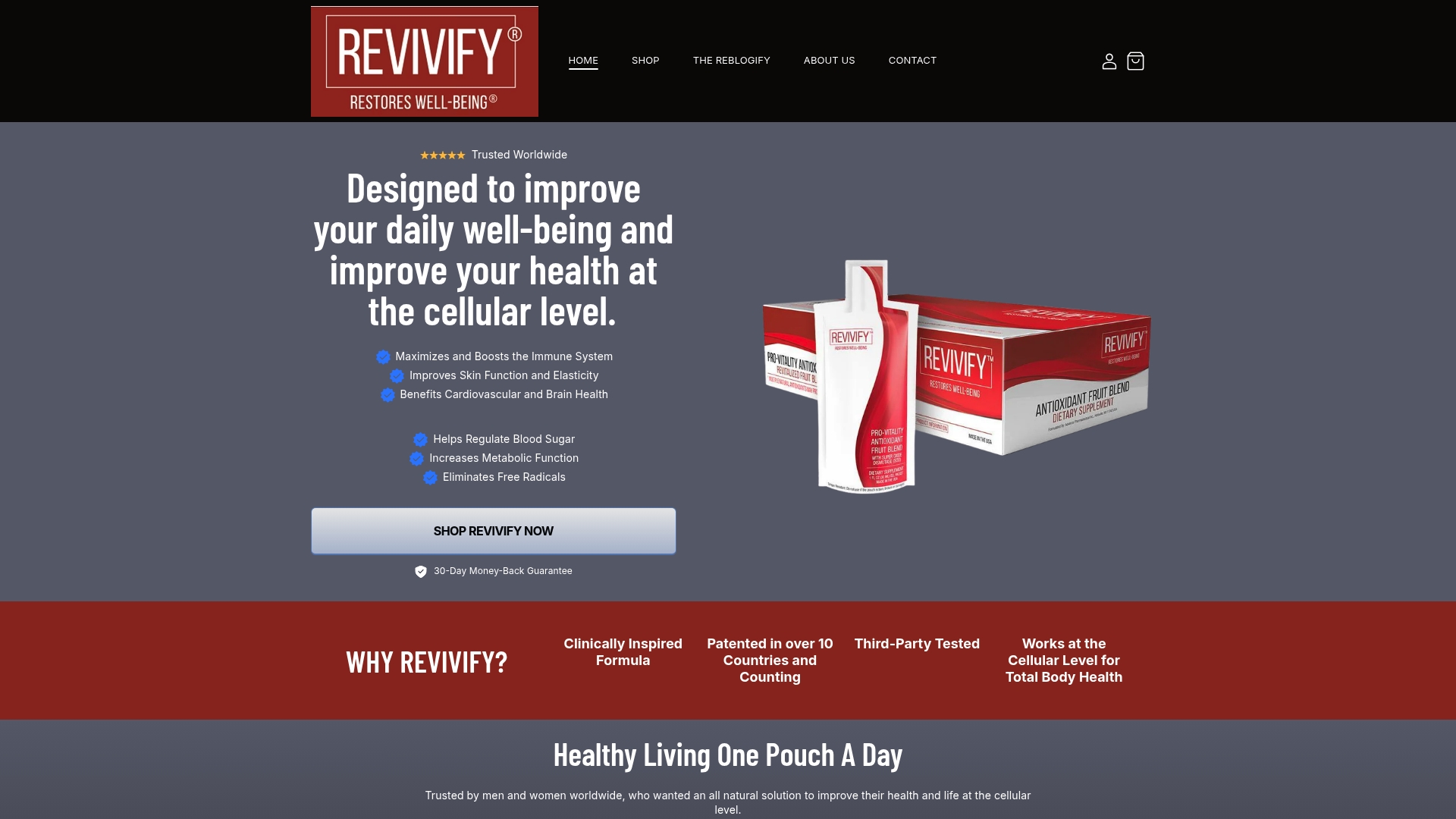
The gel formula combines superoxide dismutase, prebiotic fiber, polyphenols, and lactobacillus in one daily serving, targeting antioxidant enzyme support and inflammatory pathway modulation, without requiring separate supplements. It is plant-based, third-party tested, and offered with a risk-free guarantee.
If your current diet leans light on polyphenol-rich foods, or you simply want consistent daily support alongside the food-first steps outlined above, visit Revivify’s product page to see current subscription options and start with a single order.
This article is general information, not a substitute for advice from a qualified doctor. Consult a qualified healthcare professional about your own circumstances before acting on anything here.
Sources
The claims in this article draw on a specific set of peer-reviewed and mechanistic sources, in case you want to dig deeper yourself:
- The Immunomodulatory and Anti-Inflammatory Role of Polyphenols
- Polyphenols in health and food processing: antibacterial, anti-inflammatory, and antioxidant insights
FAQ
Who should not take polyphenol supplements?
People on blood thinners or blood-pressure medication, pregnant or breastfeeding individuals, and anyone undergoing chemotherapy should consult a clinician before starting concentrated polyphenol extracts, since interactions and unstudied risks are more likely in these groups.
What is the worst food for inflammation?
Highly processed foods loaded with refined sugar and industrial seed oils, think sugary sodas, fried fast food, and packaged pastries, tend to promote inflammation most consistently, largely because they displace polyphenol-rich whole foods and directly activate inflammatory pathways like NF-κB.
What food is highest in polyphenols?
Dark berries, cloves, and other concentrated spices rank among the highest polyphenol sources by weight, though for practical daily intake, tea, coffee, dark chocolate, and extra-virgin olive oil offer some of the easiest ways to hit meaningful amounts.
What drink has the most polyphenols?
Green and black tea are consistently among the highest polyphenol-content beverages studied in cohort research, with coffee close behind; both show measurable inverse associations with CRP in large population studies like the Airwave cohort.
Do polyphenols really reduce inflammation, or is this overstated?
Human cohort data, including the ELSA-Brasil and Airwave studies, show real associations between higher polyphenol intake and lower inflammatory markers, though the effect is modest and works best as part of a consistent dietary pattern rather than a one-time fix.