

8–12 Weeks to Visible Skin Benefits With Polyphenols, for US Routines
Yes: well-formulated polyphenols, whether taken orally or applied topically, produce measurable skin protecting and appearance benefits in human studies. Randomized and open-label trials link them to improved pigmentation, radiance, elasticity, and biomarkers like NQO1. The route matters less than the formulation and the consistency with which you use it.
TL;DR:
- Oral polyphenols like glucoraphanin and curcumin can induce protective enzymes within days, but visible skin improvements typically take 8 to 12 weeks of consistent use.
- Topical green tea catechins, especially EGCG, effectively reduce UV-induced DNA damage and inflammation when formulated with stabilization technologies like nanoencapsulation.
- Formulation quality, bioavailability, and sustained daily use are more important than dose size for achieving skin benefits from polyphenols.
- Combining oral and topical polyphenols enhances photoprotection by addressing systemic oxidative stress and localized UV damage.
- Drinking black tea remains the top source of dietary polyphenols, but supplementing with well-formulated products provides more targeted skin benefits.
Table of Contents
- Biological mechanisms: antioxidant action, signaling modulation, and collagen protection
- Human trials: what oral polyphenol supplements have shown
- Topical polyphenols: human and ex vivo evidence plus formulation challenges
- How polyphenols protect against photodamage and reduce visible aging
- Evidence for polyphenols in specific skin disorders
- Side effects, interactions, and dosing cautions for polyphenols
- Author and publisher perspective and transparency
- What the research actually supports, and what it does not
- Where REVIVIFY® fits into an evidence-based routine
- Sources
- FAQ
Biological mechanisms: antioxidant action, signaling modulation, and collagen protection
Polyphenols get filed under “antioxidants” so often that the label starts to feel like the whole story. It isn’t. Direct free radical scavenging happens, but it is a short-lived event: a molecule neutralizes an unstable oxygen species and the job is done. The more durable benefit comes from something slower and more structural: polyphenols switch on your skin’s own defense systems.
The best-documented of these switches is the Nrf2-ARE pathway. When activated, Nrf2 moves into the cell nucleus and turns on genes that produce your body’s own antioxidant enzymes, the kind that keep working long after a single dose has cleared. At the same time, several polyphenols dial down NF-κB and MAPK signaling, two pathways that drive much of the low-grade inflammation behind dull, reactive, prematurely aged skin.
This dual action explains the pattern researchers keep finding: less inflammatory cytokine activity alongside stronger enzymatic defense. A mechanistic review on polyphenols in skin disorders documents Nrf2 activation, NF-κB and MAPK inhibition, and direct interaction with extracellular matrix proteins that helps stabilize collagen.
- Nrf2 activation induces cytoprotective enzymes that neutralize oxidative stress on an ongoing basis, not just at the moment of exposure.
- NF-κB and MAPK inhibition reduces the inflammatory cytokines, including IL-1β and TNF-α, associated with redness, sensitivity, and collagen breakdown.
- MMP suppression limits the enzymes that chew through collagen and elastin, a mechanism tied to preserved skin elasticity.
- Collagen cross-linking occurs when certain polyphenols bond with matrix proteins, adding structural resistance to enzymatic degradation.
A randomized trial found that oral glucoraphanin and curcumin induced NQO1, a key cytoprotective enzyme, by 3.1 to 3.6-fold in human skin biopsies within just 8 days, one of the clearest demonstrations that oral supplementation can directly modulate protective enzyme activity in skin tissue.
None of this happens instantly for topical products, though. Polyphenols tend to be large, water-soluble molecules that do not cross the skin’s outer barrier easily. Molecular weight, charge, and stability under light and oxygen all determine how much of a topical dose actually reaches living cells, which is why formulation quality can matter as much as the ingredient itself.
Human trials: what oral polyphenol supplements have shown
The clinical literature on oral polyphenols is more substantial than most people expect, and it is where the strongest, most consistent effects show up.
A 12-week open clinical study of a mixed antioxidant supplement is one of the better-documented examples. Researchers tracked minimal erythema dose, radiance, moisture, and elasticity in participants over three months, and the results were notable across every measured outcome.
- Skin radiance improved significantly, one of the larger effect sizes reported in this body of research.
- Elasticity gains ranged noticeably depending on measurement, depending on whether gross or net elasticity was measured.
- Skin moisture rose noticeably, alongside a measurable increase in minimal erythema dose, a marker of improved sun tolerance.
Other trials add texture to this picture with different compounds. Apple polyphenol studies using doses in the 300 to 600 mg per day range report skin improvements without a clean dose-response curve, meaning more is not automatically better. Pine bark extract, typically dosed between 40 and 100 mg daily, shows a similar pattern in the literature: benefits appear, but they do not scale neatly with quantity. The glucoraphanin and curcumin trial mentioned earlier, using 450 mg and 1000 mg respectively, showed enzyme induction within days rather than weeks, suggesting some biochemical effects begin quickly even if visible skin changes take longer.
A trial combining glucoraphanin and curcumin found NQO1 gene induction of up to 3.6-fold in skin tissue after only 8 days, evidence that the mechanism behind oral polyphenol benefits can activate well before outward improvements become visible.
Reviewers looking across these trials keep landing on the same theme: consistency and bioavailability tend to predict outcomes better than raw dose size. A well-absorbed 300 mg dose taken daily for 12 weeks may outperform a larger dose taken sporadically, largely because Nrf2 induction and cytokine suppression depend on sustained exposure rather than a single spike.
What is consistent across trials: elasticity, moisture, and radiance improvements appear repeatedly, usually somewhere in the 8 to 12-week window. What remains mixed or under-studied: long-term outcomes beyond three months, comparative head-to-head trials between specific polyphenol sources, and how results vary by age or baseline skin condition. If you are trying a supplement for skin benefits, give it the full 12 weeks before judging it, and treat any product promising results in days with some skepticism.

Topical polyphenols: human and ex vivo evidence plus formulation challenges
Topical application puts polyphenols directly where UV damage and inflammation happen, and the evidence for this route is strong for a specific group of compounds: green and white tea catechins, EGCG in particular.
Human and ex vivo studies consistently show that green tea polyphenols reduce UV-induced DNA damage, measured as cyclopyrimidine dimers, and calm the inflammatory response that follows sun exposure. A long-standing body of research on green tea photoprotection documents reduced erythema and lower inflammatory marker activity in both topical and oral applications, making it one of the better-studied polyphenol classes for skin defense.
Getting these molecules to work topically is a formulation problem more than a biology problem, though. Polyphenols oxidize readily when exposed to light, heat, and air, which degrades their activity before they ever reach the skin. Many are also poorly soluble in the oil-based vehicles common in skincare, limiting how much penetrates past the stratum corneum.
- Nanoencapsulation and liposomal delivery protect sensitive polyphenols from oxidation while improving their ability to cross the skin barrier.
- Penetration enhancers temporarily loosen the skin’s outer barrier, letting larger polyphenol molecules reach living tissue.
- Stabilized formulations, often using opaque or airless packaging, preserve potency that would otherwise degrade within weeks of opening.
Pro Tip: Store topical antioxidant products away from direct sunlight and reseal them tightly. An oxidized polyphenol serum loses much of its protective value before it ever touches your skin.
Combining oral and topical polyphenols has a reasonable evidence basis, particularly for photoprotection: oral intake supports systemic antioxidant capacity while topical application concentrates specific compounds like EGCG at the surface, where UV damage originates. Topical use makes the most sense for targeted photoprotection and localized inflammation, while oral supplementation suits broader, whole-body oxidative stress support.
How polyphenols protect against photodamage and reduce visible aging
Photoprotection is where polyphenol research is most consistent, and the mechanism explains why. UV exposure generates a cascade of oxidative stress, DNA damage, and inflammatory signaling, and polyphenols interrupt multiple points in that cascade rather than blocking UV rays outright.
Research indicates that the primary photoprotective benefit comes from modulating NF-κB and MAPK signaling, the same pathways responsible for the inflammation and DNA damage that follow sun exposure, rather than from any inherent ability to absorb UV light. That distinction matters for how you use these compounds: they support your skin’s response to UV stress, they do not filter it.
- Reduced UV-induced oxidative stress shows up as lower markers of cellular damage in both animal and human tissue studies.
- Decreased DNA photodamage appears as fewer cyclopyrimidine dimers in skin exposed to UV after polyphenol pretreatment.
- Preserved immune signaling helps skin maintain its normal inflammatory response rather than becoming chronically reactive.
In the 12-week mixed antioxidant trial, minimal erythema dose rose alongside noticeable elasticity gains, a pairing that suggests photoprotection and structural skin improvement often move together rather than as separate, unrelated effects.
None of this replaces sunscreen. Polyphenols reduce the downstream damage from UV exposure and support skin’s resilience over time, but they do not block UV rays the way a mineral or chemical filter does. Treat them as a layer that works underneath your sunscreen, supporting the skin’s own defenses, not a substitute for one.

Evidence for polyphenols in specific skin disorders
Beyond general aging and sun protection, polyphenols show up in research on several named skin conditions, though the strength of evidence varies considerably by condition.
Vitiligo has some of the more interesting signals. Ginkgo biloba, rich in flavonoid polyphenols, has been studied for its potential to slow depigmentation progression and support repigmentation in some patients, likely tied to its antioxidant and anti-inflammatory activity rather than any direct pigment-restoring mechanism.
Atopic dermatitis and other inflammatory skin conditions have weaker human data. Carnosol and other rosemary-derived polyphenols show anti-inflammatory activity in animal and preclinical models, but controlled human trials in this specific area remain limited. That gap matters: promising lab results do not always translate cleanly to clinical outcomes.
Hyperpigmentation and melasma have somewhat more clinical signal. Grape seed extract and related polyphenols appear in trials addressing melasma and chloasma, with researchers pointing to antioxidant and anti-inflammatory mechanisms as the likely drivers of any improvement in pigment evenness.
- Vitiligo: Ginkgo biloba shows preliminary evidence for slowing progression, based on its antioxidant profile.
- Atopic dermatitis: Rosemary-derived polyphenols like carnosol show anti-inflammatory promise in preclinical models, with limited human confirmation so far.
- Hyperpigmentation: Grape seed extract has trial signals for melasma and chloasma, tied to antioxidant activity.
If you are managing a diagnosed skin condition rather than general aging, treat polyphenols as a possible adjunct, never a primary treatment, and loop in a dermatologist for anything moderate to severe. The research base for these specific conditions is still developing, and self-treating a diagnosed disorder without professional guidance carries real risk.
Side effects, interactions, and dosing cautions for polyphenols
Polyphenols have a good safety profile at the doses used in most human trials, but “good” is not the same as “risk-free,” and a few groups need to pay closer attention.
Mild gastrointestinal discomfort, including bloating or nausea, is the most commonly reported adverse event at typical supplement doses. At much higher, pharmacologic-range doses, more serious effects become possible, including liver stress in rare cases, which is part of why staying within trial-established dose ranges matters more than chasing a bigger number.
- Pregnancy and breastfeeding warrant caution, since most trials exclude these populations and safety data is limited.
- Liver disease raises the stakes for any concentrated antioxidant supplement, since the liver processes much of what you take orally.
- Blood thinners can interact with certain polyphenols, some of which affect platelet function or CYP enzyme activity involved in drug metabolism.
Quality control is not a minor detail here. Third-party testing verifies that a product actually contains what its label claims, at the concentration claimed, free of contaminants, something that matters more with plant-derived extracts than with simpler, single-molecule supplements.
If you are scheduled for surgery, most surgeons recommend stopping antioxidant and herbal supplements roughly one to two weeks beforehand, since some affect clotting or interact with anesthesia. The same caution applies if your doctor starts you on a new prescription with known interaction risks: check with them before continuing any polyphenol regimen.
Author and publisher perspective and transparency
I write about the intersection of nutrition science and skin health, focusing on what human trials actually show rather than what supplement marketing implies. Every mechanism and figure in this article traces back to a named clinical trial or peer-reviewed review, linked at the point it is used.
Revivify, the publisher of this article, makes specific claims about its own formula: a patented combination of superoxide dismutase and prebiotic fiber, positioned by the company as a cellular-level health product with global patent coverage. Those are the company’s own claims about its product, not independent findings from the trials cited above, and readers should treat them as distinct from the third-party research this article draws on.
What the research actually supports, and what it does not
The honest read on polyphenols and skin is that the evidence is real but narrower than the marketing around it. Trials consistently show measurable gains in radiance, elasticity, moisture, and sun tolerance, usually within 8 to 12 weeks, and the mechanisms behind those gains (Nrf2 induction, NF-κB suppression, enzyme activation) are well documented. That is a solid foundation.
What gets oversold is the idea that any single “superfood” polyphenol source will transform your skin fast. The data points the other way: consistency and formulation quality predict results better than dose size or exotic sourcing. A daily habit built around tea, berries, and a well-formulated supplement, sustained for months rather than days, outperforms sporadic high-dose attempts every time the research measures it.
If you take one thing from this article, take this: pick a polyphenol source with actual trial data behind it, use it every day, and judge it on a 12-week timeline. Everything else is secondary.
— Larry
Where REVIVIFY® fits into an evidence-based routine
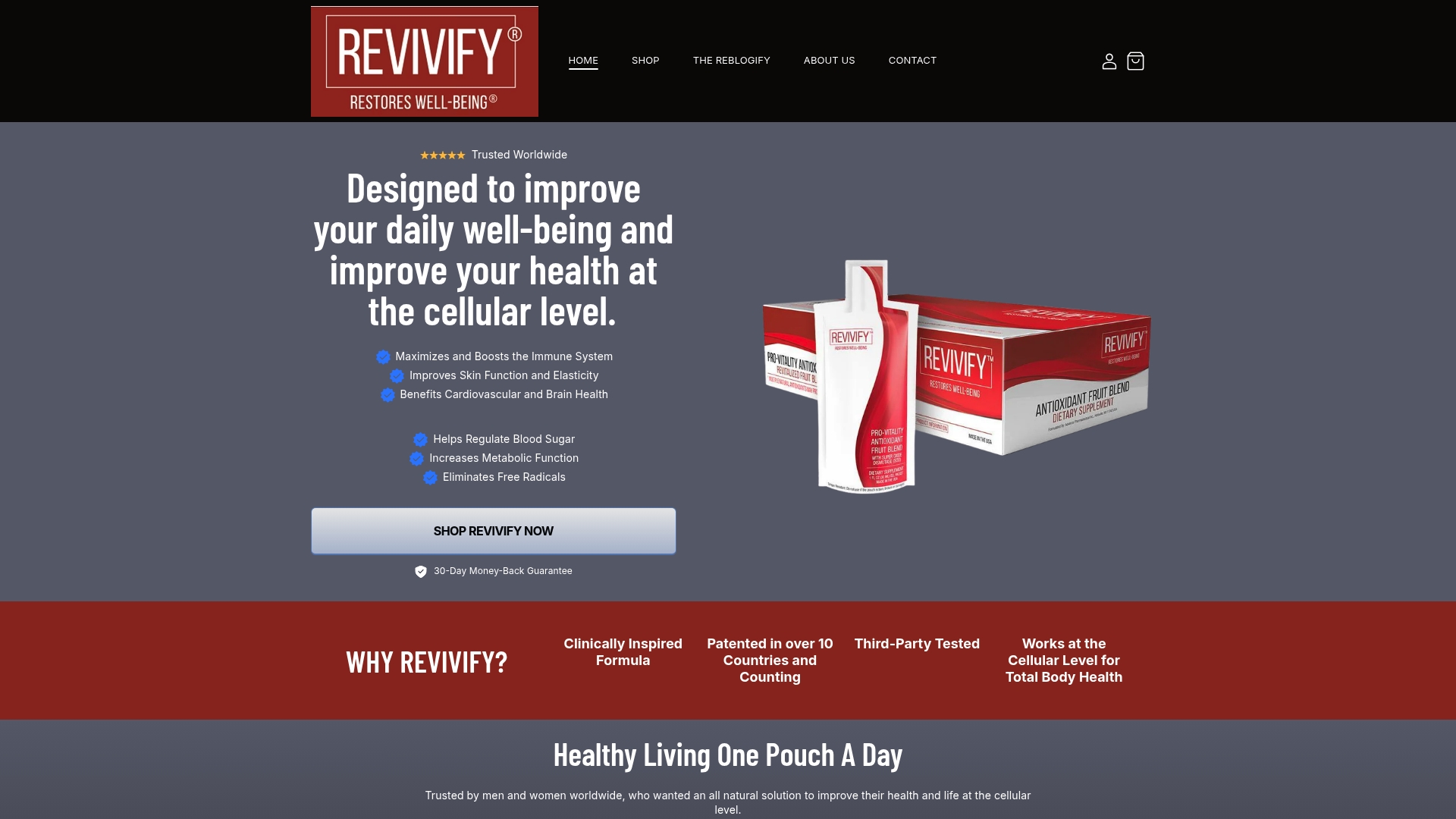
If you are convinced by the mechanisms above but want a simpler way to build daily polyphenol and antioxidant support into your routine, REVIVIFY® is worth a look. The formula combines superoxide dismutase, an antioxidant enzyme central to the pathways described earlier, with prebiotic fiber that supports the gut-skin axis, plus polyphenol-containing ingredients and lactobacillus in a single daily gel.
- Superoxide dismutase support aligns with the enzymatic defense mechanisms discussed throughout this article, rather than relying on one-time radical scavenging.
- Prebiotic fiber supports gut health, which has a documented connection to systemic inflammation and, by extension, skin condition.
- A gel format is designed for daily consistency, the factor trials repeatedly show matters more than dose size alone.
We are not claiming REVIVIFY® replicates the specific trial outcomes cited above, since those studies tested their own named extracts at their own doses. What we can say is that the formula is built around the same categories of ingredient the research points to. If that approach fits the routine you are building, the REVIVIFY® 30-Day Supply is available with subscription options and a risk-free guarantee.
FAQ
What are the negative side effects of polyphenols?
Most people tolerate polyphenols well, with mild gastrointestinal discomfort like bloating being the most commonly reported issue at typical supplement doses. At much higher, pharmacologic-range doses, rare risks including liver stress become possible, which is why staying within trial-established dosing matters, especially for anyone pregnant, breastfeeding, managing liver disease, or taking blood thinners.
What has the highest source of polyphenols?
Tea, particularly black tea, is the largest contributor to flavonoid intake among adults in national dietary surveys, with black tea alone accounting for the majority of total flavonoid consumption. Cocoa, berries, grapes, citrus, and onions also contribute meaningfully to overall polyphenol intake.
What is the strongest antioxidant for skin?
There is no single strongest antioxidant for skin. Different polyphenols work through different mechanisms: green tea catechins like EGCG show strong evidence for photoprotection, while other compounds like apple polyphenols and pine bark extract show broader benefits for elasticity and moisture in oral trials.
What drink is highest in polyphenols?
Tea consistently ranks as the top dietary source of polyphenols in intake surveys, with black and green tea together accounting for the large majority of flavonoid consumption among tea drinkers. Cocoa-based drinks and, in moderation, red wine also carry meaningful polyphenol content.