

60% of Polyphenols Are Flavonoids, So Bioavailability Matters
Flavonoids are not a rival category to polyphenols. They’re a subgroup within them, accounting for roughly 60% of the polyphenols most people eat in a day. That distinction matters because bioavailability, not raw antioxidant potential, decides whether the compounds in your food or supplement actually do anything once they reach your bloodstream.
TL;DR:
- Flavonoids make up about 60% of daily polyphenol intake, but their health benefits depend heavily on how well your body absorbs them, not just their antioxidant capacity.
- Most polyphenols are poorly absorbed in the small intestine, with gut bacteria transforming them into smaller metabolites, which then undergo further processing in the liver before reaching tissues.
- Diet sources like tea, berries, citrus, cocoa, onions, and olive oil provide varying polyphenol levels, and eating a diverse range of these foods is more effective than focusing on any single “superfood.”
- High-dose polyphenol supplements can interact with medications and may require third-party testing, so consult a healthcare professional before use, especially when pregnant or managing health conditions.
- Evidence supports a link between flavonoid-rich diets and improved cardiovascular markers, but the clinical impact remains uncertain, and individual gut microbiota significantly influences absorption and benefits.
Table of Contents
- Polyphenols explained: the classification behind the confusion
- Where these compounds actually show up on your plate
- What the research says about health benefits and its limits
- Why your body absorbs less than you’d think
- How to judge safety before you add a supplement
- A straight answer on where the evidence actually stands
- Where a quality supplement fits alongside diet
- Sources
- FAQ
Polyphenols explained: the classification behind the confusion
Polyphenols are a large family of plant compounds built around phenolic rings, and researchers have cataloged more than 8,000 distinct structures so far. Beyond flavonoids, the polyphenol family includes phenolic acids, stilbenes, lignans, and tannins, each with its own chemistry and food sources.
Flavonoids are the largest branch of that family, sharing a common C6-C3-C6 carbon skeleton, three rings joined in a consistent pattern that chemists use to sort thousands of variations into subclasses. Think of the polyphenol family as a genus and flavonoids as its most populous species, with thousands of individual members still being identified.
- Flavonols: quercetin, concentrated in onions and kale.
- Flavan-3-ols: catechins, the dominant compounds in tea.
- Anthocyanins: the pigments that give berries their deep color.
- Flavanones: naringenin and hesperidin, found in citrus fruit.
- Isoflavones: genistein and daidzein, found mainly in soy.
- Proanthocyanidins: condensed tannins in cocoa and apples.
Where these compounds actually show up on your plate
You don’t need exotic ingredients to get a meaningful mix of polyphenols and flavonoids. Tea, coffee, cocoa, berries, citrus, red wine, onions, olive oil, nuts, and common spices all contribute, and the amounts vary widely by variety, growing conditions, and how the food is processed.
Tea is a useful benchmark because it’s been measured carefully. An 8-ounce serving of black tea provides about 176 milligrams of flavan-3-ols, while the same serving of green tea provides about 171 milligrams, though brewing time and leaf origin shift those numbers considerably. If you’re comparing beverage choices for their polyphenol content, this flavor guide comparing tea and coffee breaks down how preparation affects what ends up in the cup.
- Berries and citrus: concentrated sources of anthocyanins and flavanones.
- Cocoa and apples: rich in proanthocyanidins, though roasting and processing reduce content.
- Onions and kale: reliable everyday sources of flavonols.
- Olive oil and nuts: contribute phenolic acids and lignans alongside healthy fats.
Chasing a single “superfood” rarely beats eating a rotating variety of these groups. For a fuller breakdown by food category, our complete list of polyphenol-rich foods is worth a look.
What the research says about health benefits and its limits
Cohort studies consistently link higher flavonoid intake to better cardiometabolic markers, including improved endothelial function and lower cardiovascular risk in observational analyses. Some trials also report modest improvements in blood sugar regulation and cognitive measures in aging populations, though results are inconsistent across studies. Our earlier piece on polyphenols and inflammation covers how these compounds relate to measurable inflammatory markers in more depth.
The caveats matter as much as the findings. Observational studies can’t rule out confounding: people who eat more berries and drink more tea often have healthier habits overall, which muddies cause and effect. Randomized trials tend to be short, use varied doses and formulations, and rarely agree on which specific compound drove the outcome.
- Cohort signals: reduced cardiovascular disease risk and improved endothelial function are the most consistent findings.
- Trial limitations: short duration, inconsistent dosing, and formulation differences limit firm conclusions.
- Practical takeaway: build a polyphenol-rich diet first; consider supplements only when diet consistently falls short.
None of this amounts to proof that any single compound prevents disease. It’s a reasonable, evidence-supported case for eating more plants, not a prescription.
Why your body absorbs less than you’d think
Here’s the part most marketing skips: most polyphenols, flavonoids included, are poorly absorbed in the small intestine. A large share travels intact to the colon, where gut bacteria break them down into smaller metabolites that your body can actually take up, a process detailed in reviews of polyphenol bioavailability. What gets absorbed also undergoes phase II conjugation in the liver, which changes its structure again before it reaches your tissues.

This is where individual variability becomes the whole story. Your gut microbiota, genetics, age, and body composition all shape how much of a given compound you convert and absorb. Researchers now describe distinct “producer” and “non-producer” phenotypes, for example, people whose gut bacteria can convert certain compounds into urolithins or equol, and others whose bacteria simply can’t. A 2024 systematic review found this variability splits into two patterns: some people are simply high or low excretors of the same metabolites, while others fall into entirely different metabolic clusters based on their microbial makeup. Our post on how gut health affects nutrient absorption goes deeper into what shapes those differences.
Delivery format can also influence how much reaches circulation. Liposomal, gel-based, and nano-encapsulation technologies are designed to protect compounds through digestion and improve systemic exposure compared with standard capsules.
Pro Tip: Pair polyphenol-rich foods or supplements with a source of dietary fat, since several flavonoid subclasses absorb better alongside fat-soluble carriers.
How to judge safety before you add a supplement
Eating polyphenol-rich foods at normal dietary levels is well tolerated for most people. Concentrated supplements are a different question: high doses may interact with medications like warfarin or interfere with iron absorption, so caution and third-party testing become important once you move beyond food. Our article on antioxidant supplement side effects walks through specific interaction risks worth knowing before you start.
- Look for third-party testing with a published certificate of analysis.
- Choose products with transparent, clearly labeled dosing.
- Favor formulations backed by some clinical evidence, not just in vitro claims.
- Check for interactions with any medications you currently take.
- Start at a lower dose and monitor how you feel before increasing it.
If you’re pregnant, breastfeeding, managing a chronic condition, or taking prescription medication, loop in your clinician before adding any concentrated polyphenol supplement.
A straight answer on where the evidence actually stands

I’m Larry, and I cover polyphenols, antioxidants, and cellular health for the Revivify blog. My approach here is deliberately cautious: the human evidence on polyphenols is real but incomplete, and I’d rather undersell it than let a hopeful headline outrun what the studies actually show.
My honest read is that isolated antioxidant claims get oversold constantly, largely because in vitro results are easy to produce and hard for readers to verify against real-world outcomes. What’s underrated is bioavailability. Two people can eat identical diets and end up with very different circulating metabolites, which means the “best” polyphenol source is partly a function of your own gut microbiota, not just what’s on the label. If you take one thing from this piece, take that: food diversity beats chasing a single miracle compound, and any supplement you consider should earn its place with real testing, not just a compelling story.
— Larry
Where a quality supplement fits alongside diet
If your diet consistently falls short on polyphenol variety, or you and your clinician have decided a supplement makes sense, the formulation matters as much as the ingredient list. Revivify’s REVIVIFY® - 30-Day Supply combines superoxide dismutase, prebiotic fiber, and polyphenols in a patented formula built around cellular-level antioxidant support.
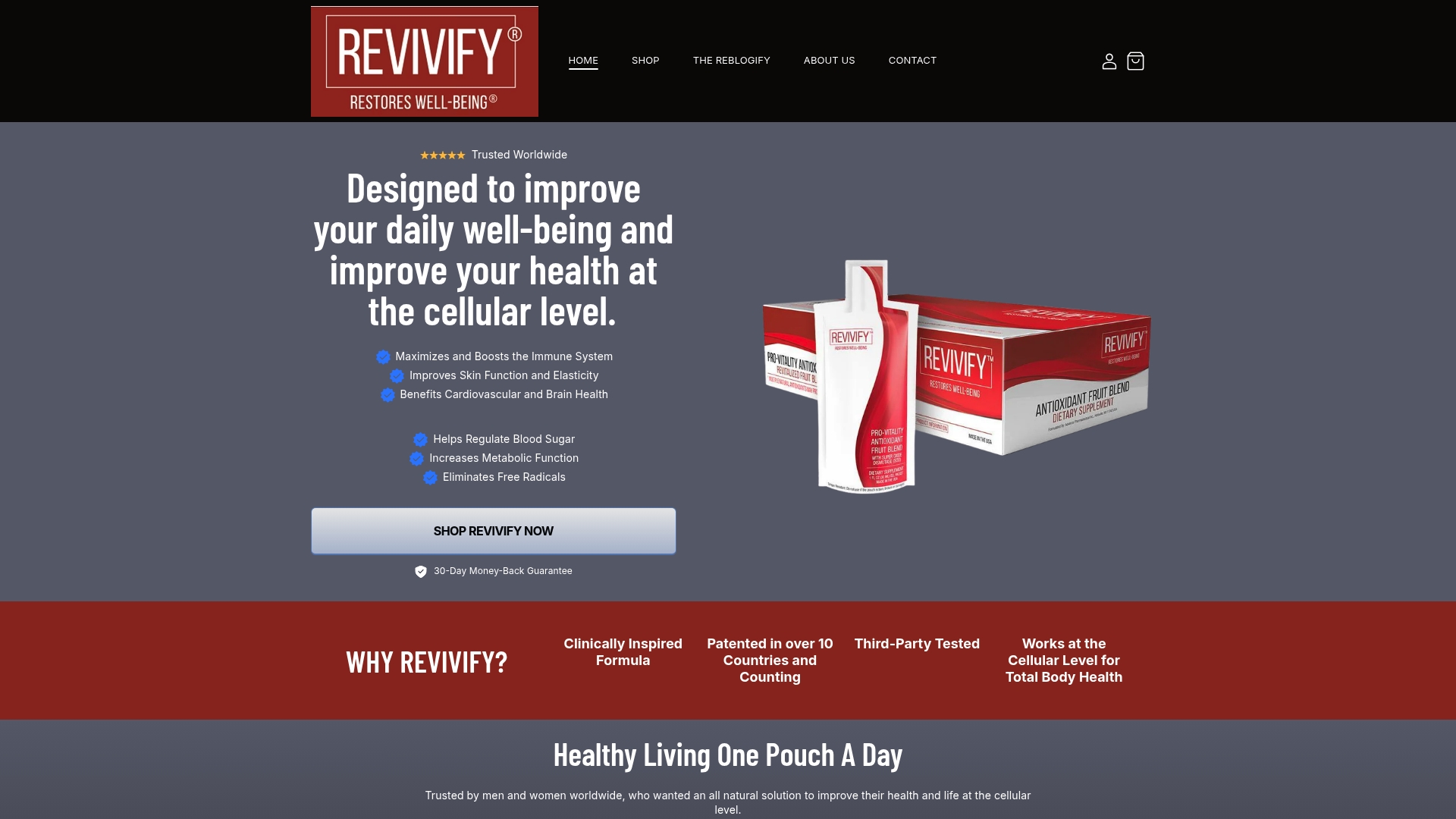
We built it as an adjunct, not a replacement, for a polyphenol-rich diet: something to consider once whole foods alone aren’t covering the gap. Before starting, check that any supplement you’re evaluating, including ours, publishes third-party testing results and talk with your clinician if you’re pregnant, breastfeeding, managing a chronic condition, or on prescription medication. You can review the current formula details and testing information on the product page.
Sources
For classification and the polyphenol-flavonoid relationship, the PMC review on polyphenol bioavailability is the clearest starting point. For food-by-food intake data, the USDA flavonoid database remains the standard reference. For metabolism and individual variability, the 2024 systematic review on inter-individual differences is worth reading in full.
This article is general information, not a substitute for advice from a qualified doctor. Consult a qualified healthcare professional about your own circumstances before acting on anything here.
- Polyphenols: From Classification to Therapeutic Potential and Bioavailability - PMC
FAQ
What food is highest in polyphenols?
Cloves, star anise, and certain dried herbs rank among the most concentrated sources by weight, though everyday contributors like black tea and green tea deliver meaningful amounts per serving. Berries, cocoa, and coffee also rank consistently high in food composition data.
Who should not take polyphenol supplements?
People on blood thinners like warfarin, those with iron absorption concerns, and anyone who is pregnant or breastfeeding should talk with a clinician first, since concentrated doses can interact with medications or nutrient absorption. Whole-food intake carries far less concern than high-dose supplements.
What drink is highest in polyphenols?
Brewed tea and coffee are among the most concentrated everyday sources, with black tea providing about 176 milligrams of flavan-3-ols per 8-ounce serving. Red wine and unsweetened cocoa beverages also contribute substantial amounts, though serving size and preparation change the totals.
What food is highest in flavonoids?
Onions, kale, berries, and citrus fruit are among the most reliable everyday flavonoid sources, each contributing a different subclass, flavonols, anthocyanins, or flavanones. Soy products stand out separately as the main dietary source of isoflavones.
Are polyphenols better than flavonoids for health benefits?
That framing doesn’t quite hold up, since flavonoids are simply the largest category within the broader polyphenol family rather than a competing option. The more useful question is which foods and formulations give you better absorption and evidence support, not which label sounds more impressive.