

Prebiotics vs Probiotics: Which to Choose for Gut Health
Prebiotics feed your existing gut bacteria; probiotics introduce new live microorganisms. For most healthy adults, the most practical starting point is a diverse, fiber-rich diet — that alone supports a thriving microbiome without a single supplement. Targeted probiotic supplements are worth considering for specific, clinically supported situations, such as preventing antibiotic-associated diarrhea or managing pouchitis, but research shows promise without proving universal benefit for all adults.
- Prebiotics benefit you when your diet is low in fiber-rich vegetables, legumes, and whole grains.
- Probiotics may help you after antibiotics, with certain digestive conditions, or when a clinician recommends a specific strain.
- Synbiotics (both together) may improve outcomes in targeted clinical scenarios — not as a general wellness habit.
- Safety flag: If you are pregnant, immunocompromised, or caring for a preterm infant, consult a clinician before starting any supplement.
The evidence is promising but not universal. Many studies are small, strain-specific, or short-term. This article reflects current scientific and clinical consensus, including guidance from the American Gastroenterological Association (AGA), the International Scientific Association for Probiotics and Prebiotics (ISAPP), Mayo Clinic, and Cedars-Sinai.
Key Takeaways
Prebiotics feed your existing gut bacteria through fermentation; probiotics introduce live organisms that may help in specific, strain-matched clinical situations — and for most healthy adults, a diverse diet covers the prebiotic side without any supplement.
| Point | Details |
|---|---|
| Prebiotics vs probiotics defined | Prebiotics feed resident gut bacteria; probiotics introduce live organisms with strain-specific effects. |
| Diet comes first | A diverse, fiber-rich diet supports gut microbes effectively for most healthy adults without supplements. |
| Probiotics are condition-specific | AGA guidance supports specific strains for antibiotic-associated diarrhea, pouchitis, and necrotizing enterocolitis — not general wellness. |
| Synbiotics combine both | Pairing a probiotic with a matching prebiotic substrate may improve outcomes in targeted clinical scenarios. |
| Safety matters for vulnerable groups | Pregnant individuals, preterm infants, and immunocompromised people should consult a clinician before starting any supplement. |
| Tryrevivify’s approach | Revivify includes prebiotic fiber in a third-party tested daily gel formula for adults managing dietary gaps in gut-supporting nutrients. |
Table of Contents
- What prebiotics are and how they actually work
- What probiotics are and why strain specificity matters
- How prebiotics and probiotics differ in practice
- The best food sources for prebiotics and probiotics
- What the research actually shows about benefits
- Safety, side effects, and who should be cautious
- What synbiotics are and when combining both makes sense
- Do you need supplements, and how do you choose one safely?
- How to tell if a prebiotic or probiotic is working
- The case for getting the basics right before chasing supplements
- Tryrevivify’s prebiotic-containing supplement: what to know
- Sources
What prebiotics are and how they actually work
Prebiotics are not microbes. They are compounds your body cannot fully digest that selectively feed beneficial bacteria already living in your gut. ISAPP defines them as “substrates selectively utilized by host microorganisms that confer a health benefit” — a precise definition that excludes most generic dietary fiber. Not every fiber qualifies. To count as a prebiotic, a compound must selectively stimulate specific beneficial microbes and carry documented evidence of a health benefit.
Common prebiotic compounds and their food sources include:
- Inulin — chicory root, Jerusalem artichoke, garlic
- Fructooligosaccharides (FOS) — onions, leeks, asparagus, bananas
- Galactooligosaccharides (GOS) — legumes, some dairy
- Resistant starch — cooked-and-cooled potatoes, green bananas, oats, lentils
The mechanism works like this: these compounds reach your colon largely intact, where resident bacteria ferment them and produce short-chain fatty acids (SCFAs) such as butyrate, propionate, and acetate. SCFAs nourish the gut lining, regulate immune signaling, and have been linked to metabolic effects including insulin sensitivity. The impact of any single prebiotic depends heavily on which microbes are already present in your gut and on your baseline diet.
Pro Tip: If your diet already includes a wide variety of high-fiber plant foods, adding a single prebiotic supplement may not meaningfully increase microbial diversity — the benefit is most pronounced when dietary fiber is genuinely lacking.
What probiotics are and why strain specificity matters
Probiotics are live microorganisms that, when consumed in adequate amounts, confer a health benefit on the host. The key phrase is “adequate amounts” — a product with too few viable organisms at the time of consumption is unlikely to do much. Most commercially available probiotics belong to two bacterial genera and one yeast:
- Lactobacillus — found in yogurt, kefir, some fermented vegetables; strains include L. rhamnosus GG and L. acidophilus
- Bifidobacterium — common in fermented dairy; strains include B. longum and B. infantis
- Saccharomyces boulardii — a yeast probiotic with evidence for antibiotic-associated diarrhea
Probiotic-rich foods include plain yogurt with live and active cultures, kefir, sauerkraut (unpasteurized), kimchi, tempeh, and miso. Supplement formats range from capsules and powders to liquids, with colony-forming units (CFUs) typically listed on the label.
Strain specificity is the detail most people overlook. Lactobacillus rhamnosus GG and Lactobacillus acidophilus are both Lactobacillus, but their clinical evidence profiles are entirely different. Choosing a probiotic by genus alone — the way most people shop — is roughly equivalent to choosing a medication by drug class without checking the active compound. For a deeper look at beneficial gut bacteria by type, the strain-level distinctions matter considerably.

How prebiotics and probiotics differ in practice
The functional difference comes down to what each one does and how long it lasts.
Mechanism:
- Probiotics introduce live organisms that may temporarily shift the microbial environment.
- Prebiotics change the substrate available to your existing microbes, selectively favoring certain populations.
Persistence:
- Most probiotic strains do not permanently colonize the gut. Their effects are often transient, lasting while the strain is consumed and tapering after you stop.
- Prebiotics alter the growth conditions in your colon, so their effect on resident bacteria continues as long as you keep eating them.
Practical scenario — after a course of antibiotics: Antibiotics can significantly reduce microbial diversity. A probiotic containing Lactobacillus rhamnosus GG or Saccharomyces boulardii may reduce the risk of antibiotic-associated diarrhea during and shortly after treatment. Prebiotic fiber, meanwhile, supports the recovery of resident bacteria by restoring the substrate they need to regrow. The two approaches address different parts of the same problem, which is why combining them makes sense in some post-antibiotic recovery plans. Understanding how the gut microbiome affects digestion helps clarify why both levers matter.
The best food sources for prebiotics and probiotics
Food is the most reliable delivery system for both. Whole-food sources come packaged with other nutrients and fiber types that supplements cannot replicate.
Prebiotic-rich foods:
- Onions, garlic, leeks, shallots
- Asparagus, Jerusalem artichoke
- Ripe and green bananas
- Oats, barley
- Lentils, chickpeas, black beans
- Cooked-and-cooled potatoes and rice (resistant starch)
Probiotic-rich foods:
- Plain yogurt with “live and active cultures” on the label
- Kefir (dairy or non-dairy)
- Unpasteurized sauerkraut and kimchi
- Tempeh and miso
- Some aged cheeses
Pro Tip: When buying fermented foods for their live cultures, check that the product has not been pasteurized after fermentation — heat kills the organisms. “Contains live and active cultures” on yogurt labels is a meaningful signal; “made with live cultures” on a cooked or shelf-stable product often is not.
One caution worth noting: prebiotic sodas and fiber-fortified ultra-processed foods can provide some fiber, but they are not equivalent to whole-food sources and may cause gas or bloating if you consume them in large amounts quickly. Whole foods remain the preferred source for feeding beneficial gut bacteria daily.

What the research actually shows about benefits
The honest summary: the evidence is promising in specific contexts and weak or absent in others. Comprehensive reviews of probiotics, prebiotics, and synbiotics consistently note that effects are strain-, substrate-, and context-specific. Treating either category as a universal gut health fix misreads the literature.
The AGA’s clinical guidance identifies a limited set of conditions where specific probiotics are supported by sufficient evidence:
| Condition | Evidence Strength | Guidance |
|---|---|---|
| Antibiotic-associated diarrhea / C. difficile prevention | Moderate | Certain strains suggested during antibiotic use |
| Necrotizing enterocolitis (preterm infants) | Moderate | Specific strain combinations recommended in some protocols |
| Pouchitis | Moderate | VSL#3 (now Visbiome) suggested for maintenance |
| IBS | Mixed | Strain-specific; no universal recommendation |
| General gut wellness | Weak | Diet-first approach preferred |
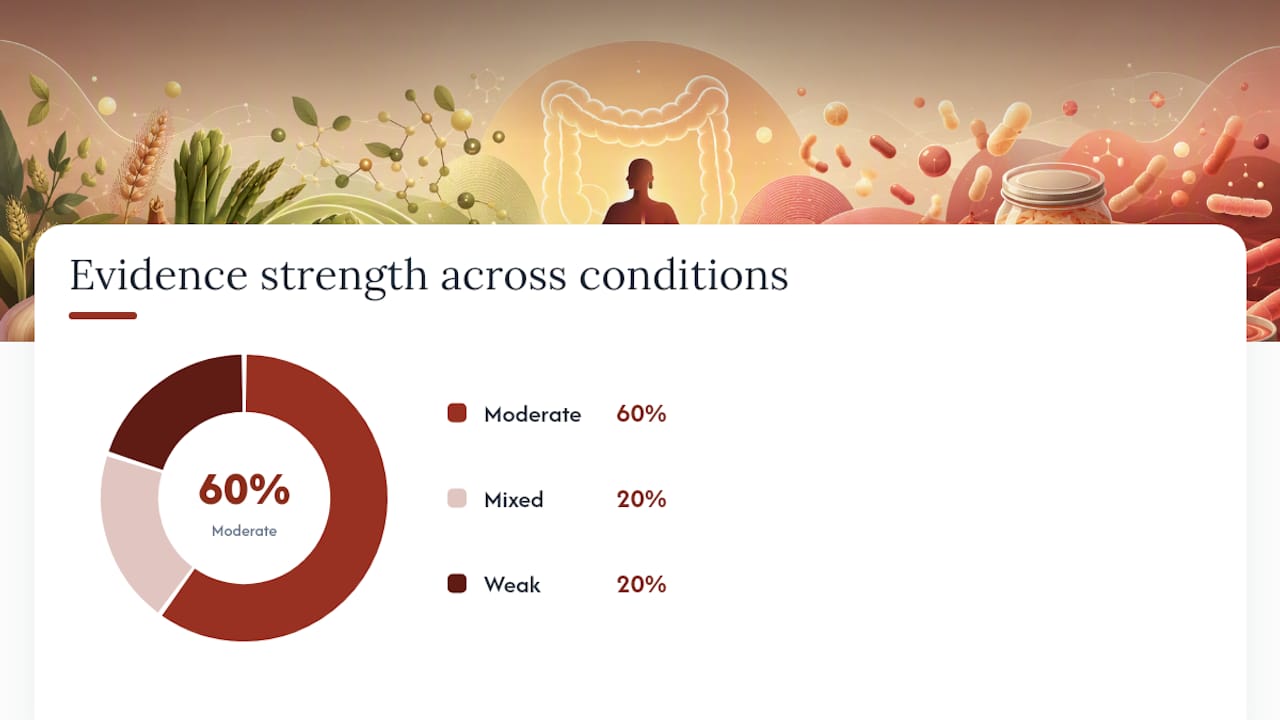
For prebiotics, diverse fiber intake supports gut bacteria diversity and is associated with better metabolic and immune outcomes, though the evidence for specific prebiotic supplements in clinical conditions is thinner than for probiotics in the conditions above.
Cedars-Sinai notes that the probiotics market was worth nearly $88 billion in 2023 — a figure that reflects consumer enthusiasm far outpacing the clinical evidence base. Popularity is not the same as proof.
Safety, side effects, and who should be cautious
For most healthy adults, both prebiotics and probiotics are well tolerated. The most common side effects are mild and temporary:
- Gas and bloating, especially when starting a high-fiber prebiotic or a new probiotic strain
- Loose stools or changes in bowel frequency in the first one to two weeks
- Rarely, digestive cramping when prebiotic intake increases sharply
Serious adverse events are uncommon in healthy adults but documented in vulnerable populations. The FDA does not regulate probiotic supplements the way it regulates drugs, so product quality, strain accuracy, and CFU counts at expiry vary widely. Third-party testing seals from organizations like NSF International or USP add a meaningful layer of verification.
Safety warning for vulnerable groups: Pregnant or nursing individuals, preterm infants, people who are immunocompromised, and anyone with a serious underlying illness should consult a clinician before starting any probiotic or prebiotic supplement. Live organisms in probiotic products carry a small but real risk of infection in people with compromised immune defenses. This is not a theoretical concern — case reports of bacteremia and fungemia in immunocompromised patients exist in the clinical literature. When in doubt, get personalized advice before starting.
What synbiotics are and when combining both makes sense
A synbiotic is a product or regimen that combines a probiotic with a prebiotic. ISAPP distinguishes two types: complementary synbiotics (where the prebiotic and probiotic each work independently) and synergistic synbiotics (where the prebiotic specifically supports the co-administered probiotic strain). The synergistic type is more targeted and harder to formulate correctly — the substrate must selectively fuel the specific strain being introduced.
Practical scenarios where combining prebiotics and probiotics may be useful:
- Post-antibiotic recovery, where a probiotic strain addresses acute dysbiosis and prebiotic fiber supports resident microbe regrowth
- Targeted therapeutic trials in IBS or inflammatory bowel conditions, under clinician guidance
- Supporting persistence of an introduced strain in the short term, where the matching prebiotic substrate may improve the strain’s function
The expectation should be ecosystem support, not guaranteed colonization. Most introduced strains do not take up permanent residence. Nutrient synergy between components matters here — pairing a strain with a substrate it can actually use is what separates a well-designed synbiotic from a product that simply combines two ingredients on the same label.
Do you need supplements, and how do you choose one safely?
For most healthy adults, a diverse fiber-rich diet is sufficient to support beneficial gut microbes. Supplements are most useful when targeted to a specific clinical problem or when dietary options are genuinely limited.
Decision steps:
- Assess your current diet — are you eating a variety of vegetables, legumes, whole grains, and fermented foods regularly?
- Try dietary changes for 4–8 weeks before reaching for a supplement.
- Identify a specific outcome you want to address (antibiotic-associated diarrhea, IBS symptoms, post-illness recovery).
- Consult a clinician, especially if you have an underlying condition or are in a vulnerable group.
- Trial a targeted supplement with a clear outcome measure for 2–12 weeks, depending on the goal.
What to look for on a supplement label:
- Strain-level identification (genus, species, and strain designation — e.g., Lactobacillus rhamnosus GG, not just “Lactobacillus”)
- CFU count guaranteed at expiry, not just at manufacture
- Clinical evidence specific to that strain and your intended outcome
- Storage instructions (some strains require refrigeration)
- Third-party testing seal (NSF, USP, or Informed Sport)
- Manufacturer transparency about sourcing and testing
For choosing a prebiotic supplement specifically, look for products that identify the prebiotic compound by name (inulin, GOS, FOS, resistant starch) and list the dose per serving clearly.
How to tell if a prebiotic or probiotic is working
Set a realistic timeline before you start. Most gut-related changes take weeks, not days, and the signals are subtle rather than dramatic.
Signs that suggest benefit:
- Improved stool consistency (firmer, more regular — Bristol Stool Scale types 3–4)
- Reduced bloating or gas after the initial adjustment period (usually one to two weeks)
- Fewer antibiotic-associated symptoms if you started a probiotic alongside antibiotics
- More regular bowel movements if irregularity was your starting point
What to track:
- A simple symptom diary noting stool frequency, consistency, and bloating on a daily basis
- Energy and sleep quality as secondary signals, though these are harder to attribute directly
Recommended trial durations:
- Antibiotic-associated diarrhea prevention: take the probiotic during and for one to two weeks after the antibiotic course
- IBS symptom management: allow 8–12 weeks before evaluating
- General digestive regularity: 4–6 weeks is a reasonable minimum
One important caveat: consumer microbiome testing kits can be interesting, but their clinical utility is limited. A single stool sample reflects one moment in a constantly shifting ecosystem, and the reference ranges most kits use are not standardized across labs. Use symptom tracking as your primary feedback tool, not a microbiome report.
The case for getting the basics right before chasing supplements
The prebiotics vs probiotics debate often gets framed as a product choice when it is really a diet question first. Most people asking which supplement to take would benefit more from adding a daily serving of lentils, oats, or fermented vegetables than from any capsule. The clinical evidence for specific probiotic strains in specific conditions is real and worth using — but it applies to a narrow set of situations, not to general wellness optimization.

What gets lost in the supplement conversation is that the microbiome is not a static target you fix once. It responds continuously to what you eat, how you sleep, whether you take antibiotics, and dozens of other variables. A probiotic taken for two weeks while the rest of the diet stays low in fiber is unlikely to produce lasting change. The substrate has to be there for the microbes to thrive — which is exactly why food-first guidance keeps appearing in every authoritative review, from the AGA to ISAPP to Mayo Clinic.
If you are in a vulnerable group, or managing a condition where specific probiotic strains have documented evidence, that is a conversation to have with a clinician who knows your history. Generic supplement advice, however well-intentioned, cannot substitute for that.
Tryrevivify’s prebiotic-containing supplement: what to know
At Tryrevivify, we publish this content to help you make informed decisions, and we want to be transparent: we also make a daily supplement that includes prebiotic fiber as a core ingredient. Revivify is a plant-based gel formula combining prebiotic fiber, superoxide dismutase, polyphenols, and lactobacillus, third-party tested and designed to support gut health, immune function, and cellular well-being as part of a daily routine.
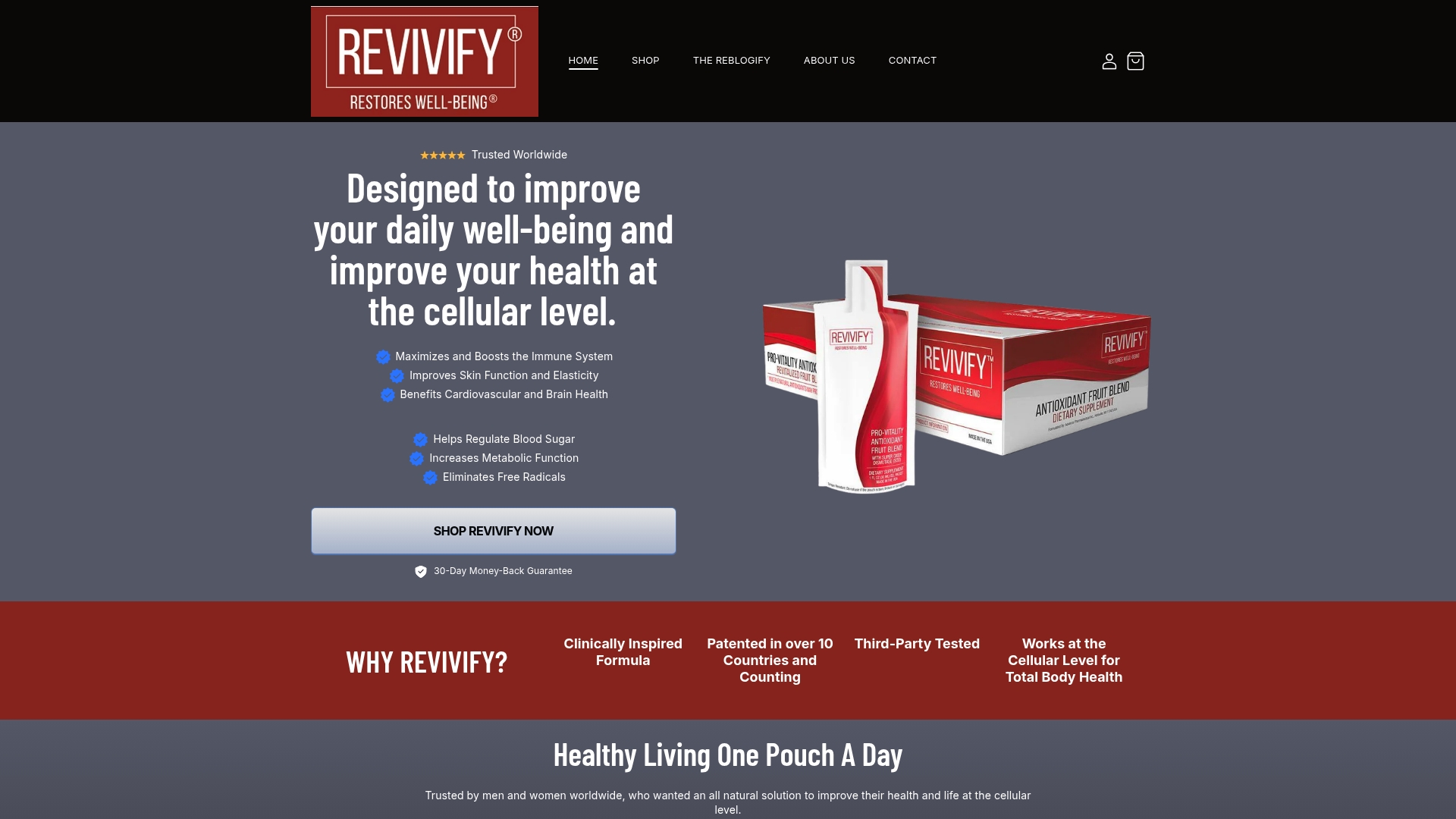
We are not claiming Revivify replaces a fiber-rich diet or that it treats any specific condition. What it does offer is a convenient, tested way to incorporate prebiotic fiber and complementary gut-supporting ingredients when dietary gaps exist. If you want to learn more about the formulation or see whether it fits your routine, visit the Revivify product page or speak with your clinician before starting. As with any supplement, personalized advice beats general recommendations every time.
Sources
- Probiotics and prebiotics: What you should know - Mayo Clinic
- A roundup of the ISAPP consensus definitions: probiotics, prebiotics, synbiotics, postbiotics and fermented foods - ISAPP
- Probiotics, prebiotics and synbiotics- a review - PMC
- Prebiotics and Probiotics - UC Davis Nutrition Department
This article is general information, not a substitute for advice from a qualified doctor. Consult a qualified healthcare professional about your own circumstances before acting on anything here.