

Probiotics for Acid Reflux: Which Strains Work in 8–12 Weeks
Probiotics can ease certain acid reflux and GERD symptoms for some people when used as an adjunct to standard care, not as a replacement for it. The benefit depends heavily on which strain you choose, how long you give it, and what symptom you’re tracking. Regurgitation and bloating tend to respond better than classic heartburn. If you have severe erosive disease or a compromised immune system, talk to your clinician before starting.
TL;DR:
- Probiotics may help reduce upper-GI symptoms like regurgitation and bloating, especially when taken for 8 to 12 weeks with specific strains.
- Strain-specific evidence shows Lactobacillus gasseri LG21 and Bifidobacterium species as most promising for reflux-related symptom relief.
- They are most effective for people already on PPIs with residual symptoms, post-antibiotic gut disturbance, or mixed reflux and dyspepsia, not for severe structural issues.
- Safety is generally good, but vulnerable groups should consult a clinician before starting, and timing with antibiotics is crucial for efficacy.
- Use products with clearly labeled strains, adequate CFU counts, and third-party testing to ensure evidence-based application.
Table of Contents
- What clinical studies and reviews say about probiotics for reflux
- Why probiotics might work for reflux: microbiome, motility, and mucosal effects
- Who is most likely to benefit, and who should avoid probiotics for reflux
- Which strains and formulations have human evidence for reflux or upper-GI symptoms
- Safety, side effects, and interactions worth knowing
- Choosing a product, dosing it right, and tracking real results
- Revivify resources and how our offering fits into this guidance
- If you want a vetted option: Revivify product overview
- A grounded take on probiotics and reflux
- Sources
- FAQ
What clinical studies and reviews say about probiotics for reflux
The research on probiotics and reflux is encouraging but far from settled. A systematic review published in Nutrients looked at 13 prospective studies covering 14 comparisons and found that 11 of those 14 reported a benefit for at least some upper-GI symptom. That sounds decisive until you notice the fine print: only 5 of the 14 comparisons were high-quality randomized controlled trials, and the strains, doses, and symptom measures varied so much across studies that pooling the results into one clean number would be misleading.
More recent work adds sharper detail. A randomized, double-blind trial of 120 GERD patients compared a multi-strain probiotic paired with the PPI rabeprazole against rabeprazole alone. After 12 weeks, the probiotic group saw a significantly greater reduction in Reflux Disease Questionnaire (RDQ) scores compared with placebo (P = 0.017). The trial also tracked the gut microbiome and metabolome, and found the probiotic arm had favorable shifts in bacteria linked to short-chain fatty acid (SCFA) and GABA production, giving the symptom improvement a plausible biological trail to follow rather than a mystery correlation.

Some 79% of comparisons in the Nutrients systematic review reported a probiotic benefit for upper-GI symptoms, though the authors caution that trial heterogeneity keeps this from being a firm, generalizable figure.
Reading across the literature, a few practical patterns emerge:
- Symptom improvements tend to be modest to moderate rather than dramatic, and they build gradually.
- Most meaningful changes show up between 8 and 12 weeks, not days.
- Regurgitation and postprandial discomfort often respond more consistently than heartburn itself.
- Trial quality varies enormously, so a single strain’s result rarely generalizes to a different product.
The honest summary: probiotics are not a proven cure for GERD, but a body of trial evidence, still uneven in quality, points to real symptom benefits for specific strains used the right way.
Why probiotics might work for reflux: microbiome, motility, and mucosal effects
Long-term acid suppression changes more than stomach pH. Proton pump inhibitors raise gastric pH for extended periods, and that shift lets bacteria that normally can’t survive stomach acid take up residence further down the gut. A review of PPI-induced gut dysbiosis describes how this altered environment can increase risks tied to bacterial overgrowth, including SIBO and, in more severe cases, Clostridioides difficile infection. Probiotics appear to partially counter this drift, nudging the microbial community back toward a more typical composition.
The mechanism likely runs through metabolites, not the bacteria themselves acting directly on the esophagus. Gut microbes produce short-chain fatty acids and GABA as byproducts of fermenting fiber, and these compounds are tied to gut motility and how sensitive the gut is to normal stretching and pressure. Slower motility and heightened visceral sensitivity are both part of the reflux and dyspepsia picture, so a metabolite shift that calms nerve signaling could plausibly ease symptoms even without changing how much acid reaches the esophagus. If you think of stomach acid as the fire and the microbiome as the terrain the fire crosses, probiotics work on the terrain rather than putting out the flame directly.
Strain identity matters here more than in most supplement categories:
- Some strains boost mucin production, thickening the protective layer that lines the gut.
- Others modulate pepsinogen activity, which may influence how aggressively the stomach’s proteolytic environment behaves.
- Certain strains have immunomodulatory effects that may lower local inflammation contributing to mucosal irritation.
Pro Tip: Think of probiotics as terrain management for your gut, not acid control. They work best alongside, not instead of, whatever is already managing your acid.
Who is most likely to benefit, and who should avoid probiotics for reflux
Not everyone with reflux is an equally good candidate for a probiotic trial. The people most likely to see a benefit share a few traits: they’re already on a PPI and dealing with residual symptoms, they recently finished a course of antibiotics and are experiencing GI disturbance, or their reflux comes bundled with gas, bloating, and dyspepsia rather than isolated heartburn.
- Long-term PPI users with lingering symptoms are the group most represented in trials, since much of the mechanistic rationale centers on countering PPI-driven dysbiosis.
- People with post-antibiotic GI upset often see the clearest, fastest response, because the disruption probiotics are addressing is more direct and recent.
- Readers with mixed symptoms, meaning reflux plus bloating or irregular digestion, tend to notice broader improvement than those with heartburn alone.
- Anyone with a hiatal hernia or severe erosive esophagitis should treat probiotics as a supporting player, not a fix, since these are mechanical or structural issues that a supplement cannot repair.
Certain groups should check with a clinician before starting any probiotic, reflux-related or not. That includes anyone who is immunosuppressed, has a central venous line, or has had recent major surgery. The PPI dysbiosis review and NIDDK’s GERD treatment guidance both frame probiotics as adjuncts within a broader treatment plan, never as a stand-alone answer to structural or severe disease.
Which strains and formulations have human evidence for reflux or upper-GI symptoms
Strain identity is the detail most people skip, and it’s the one that decides whether a product has any evidence behind it at all.
Lactobacillus gasseri LG21 appears in trials that reported reduced reflux frequency scores, typically over a several-week window rather than an overnight change. The systematic review summarizes this strain among those with the clearest single-strain signal for cutting down how often reflux episodes occurred.
Bifidobacterium bifidum YIT 10347 and Bifidobacterium animalis show up in studies tied to improved postprandial discomfort and reductions in RDQ scores. Bifidobacterium animalis specifically appears in the more recent multi-omics RCT, where its abundance shifted alongside the metabolome changes linked to symptom relief in the rabeprazole-plus-probiotic arm.
Bacillus clausii, sold commercially as Enterogermina, has a different kind of evidence base built around microbiome restoration rather than direct symptom trials. In vitro modeling using SHIME technology, a simulated gut environment, found that adding Bacillus clausii to a PPI-exposed system increased butyrate production and partially restored microbial diversity that PPI exposure had disrupted.
A few numbers help anchor expectations. Trial doses for these strains generally ranged from about 1 × 10^9 to more than 1 × 10^10 CFU, and the SHIME model testing Bacillus clausii used 6 × 10^9 CFU in its probiotic arm. CFU counts above 1 × 10^10 show up in several of the higher-dose trial arms summarized in the systematic review, a reminder that potency needs strain-specific context rather than a single universal target.
The catch with all of this: results from one strain don’t transfer to another, and a multi-strain blend isn’t automatically better just because it lists more organisms. If a product combines five strains but only one has trial data for reflux, you’re paying for four unknowns and one educated guess. Reading the label for the exact strain designation, not just the genus and species, is the difference between an evidence-informed choice and a shot in the dark.

Safety, side effects, and interactions worth knowing
Most people tolerate probiotics well, and the side effects that do show up are usually mild and temporary. Gas and bloating are the most common complaints, typically settling within the first week or two as your gut adjusts.
- Expect possible gas, bloating, or minor changes in stool consistency during the first week or so.
- Serious complications like bacteremia or fungemia are rare and occur almost exclusively in people who are already vulnerable.
- Vulnerable groups include those who are immunosuppressed, critically ill, have a central venous catheter, or have had recent gut surgery.
Timing matters more than most people realize. If you’re taking antibiotics, space your probiotic dose a couple of hours apart from the antibiotic to reduce the chance the antibiotic kills the probiotic organisms before they can establish. Our guide on probiotics after antibiotics walks through which strains hold up best and when to start. With antacids or PPIs, timing is less critical since the goal is often to counter the acid-suppression effect itself rather than survive an acidic environment, though taking the probiotic with food can improve organism survival through the stomach.
For a fuller rundown of what can go wrong and who should be cautious, our probiotics side effects checklist covers strain-specific risks in more depth.
Pro Tip: If you notice worsening symptoms, fever, or anything beyond mild gas within the first few days, stop and check in with a clinician rather than pushing through.
Choosing a product, dosing it right, and tracking real results
Turning the evidence into action means being deliberate about three things: what you buy, how long you commit, and how you measure whether it’s working.
Product selection checklist:
- Confirm the label lists a specific strain designation, not just a genus like “Lactobacillus,” since the evidence is strain-specific.
- Check the CFU count against ranges seen in trials, generally in the billions rather than millions.
- Favor products that disclose third-party testing for potency and contamination.
- Check storage requirements. Some strains need refrigeration to stay viable, and heat exposure during shipping can kill a meaningful fraction of the dose.
- Note whether the formulation is single-strain or multi-strain, and whether every listed strain has some supporting evidence or just one.
Give any probiotic a fair trial window before judging it. The trials showing meaningful benefit generally ran 8 to 12 weeks, so a week of use tells you very little.
- Track symptoms with a simple daily log or a structured tool like the RDQ, noting heartburn, regurgitation, and bloating separately.
- Set a decision point at 8 to 12 weeks: meaningful improvement in at least one symptom domain is a reasonable signal to continue.
- If nothing has shifted by that point, it’s reasonable to stop and reconsider rather than escalating dose or stacking multiple products.
For dose conversion questions, our CFU-to-capsule guide breaks down how lab doses translate to consumer products. If you’re managing a complex condition or taking multiple medications, a clinician-supervised trial is the safer starting point rather than self-directed experimentation.
Revivify resources and how our offering fits into this guidance
Some supplements combine antioxidant enzymes with prebiotic fiber, polyphenols, and lactobacillus to support gut health and cellular antioxidant defense together. We’ve written more on how prebiotics and probiotics complement each other for readers who want the fuller mechanism.
To be direct: Revivify is designed as daily adjunctive support, not a treatment for GERD and not a substitute for prescribed acid-suppression therapy. If reflux is a significant part of your health picture, the right first move is a conversation with your clinician, informed by the strain-specific evidence above. Our gut microbiome guide is a useful next stop if you want the background before that conversation.
If you want a vetted option: Revivify product overview
There are daily supplements that combine superoxide dismutase, prebiotic fiber, polyphenols, and lactobacillus in a gel format, designed to support digestion alongside broader cellular health rather than to treat reflux on its own.
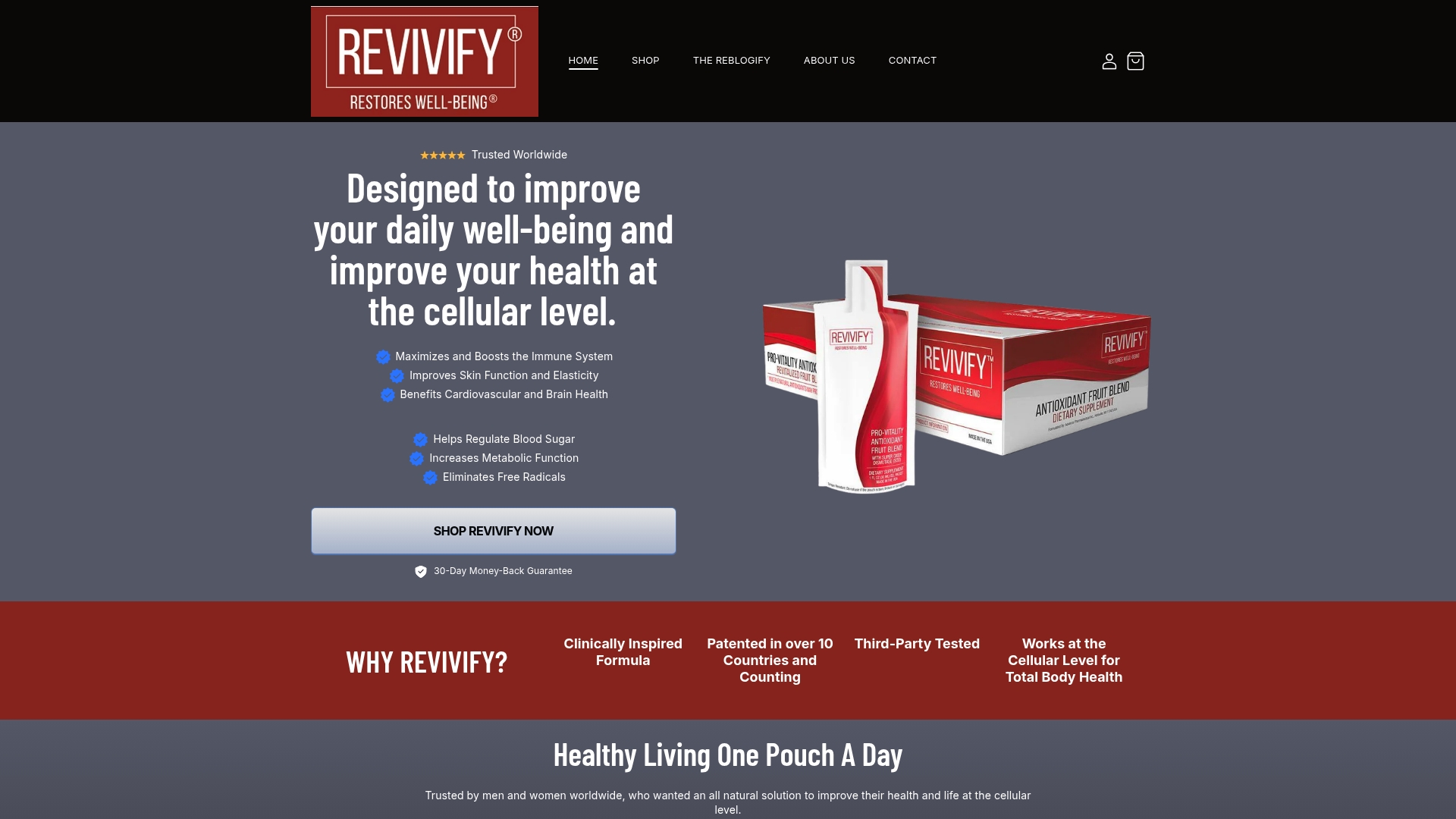
- The formula is intended as daily adjunctive support, not a replacement for prescribed GERD treatment.
- Availability may include one-time purchases and subscription options, sometimes with satisfaction guarantees.
- Stress plays a documented role in digestive symptoms, and readers looking at holistic management alongside probiotics may find Vivazen’s stress relief research a useful complement to gut-focused strategies.
Before starting, talk to your clinician if you’re managing GERD alongside other conditions or medications. You can see the full product details and subscription options on the REVIVIFY® - 30-Day Supply page.
A grounded take on probiotics and reflux
The honest position on probiotics for reflux sits between two extremes that dominate the conversation online. One camp treats them as a near-magical fix for GERD; the other dismisses them entirely because “the evidence isn’t perfect.” Both miss the point. The evidence is genuinely mixed in quality but consistently points in one direction for certain strains and certain symptoms, and that’s a meaningful signal worth acting on carefully.
What readers underestimate most is patience. The trials showing real benefit ran two to three months, not a week, and people who quit early are judging a strain before it had a chance to work. What they overestimate is the idea that any probiotic will do. Strain specificity is not a marketing detail. It’s the difference between using a product with a trial behind it and guessing.
If you try a probiotic for reflux, pick a strain with named evidence, commit to a real trial window, track more than one symptom, and keep your clinician in the loop, especially if you’re on a PPI or have a more complicated health history.
— Larry
Sources
- Gastroesophageal Reflux Disease and Probiotics: A Systematic Review
- Adjunctive probiotic therapy sustains symptom relief in gastroesophageal reflux disease through gut microbiome-metabolome remodeling
- Treatment for GER & GERD - NIDDK
FAQ
How long does it take for probiotics to help acid reflux?
Most trials showing meaningful symptom improvement ran 8 to 12 weeks, so it’s reasonable to give a probiotic that long before judging results. Shorter trials sometimes show partial improvement, but the multi-omics RCT found the clearest gains, a 36.51% greater reduction in RDQ scores, at the 12-week mark.
Do I need probiotics with nitrofurantoin?
There’s no established evidence that probiotics are required alongside nitrofurantoin specifically, and decisions about supplementing during antibiotic treatment should be made with your prescribing clinician. If you do take a probiotic during any antibiotic course, spacing the doses a couple of hours apart can help preserve the probiotic organisms, as covered in our guide on probiotics after antibiotics.
Is it okay to take probiotics if you have acid reflux?
For most people with typical reflux symptoms, probiotics are considered generally safe to try alongside standard treatment. People with severe erosive disease, immune compromise, or other significant health conditions should check with a clinician first, since NIDDK’s guidance frames supplements as something to discuss with a doctor rather than add unilaterally.
Should I take probiotics with minocycline?
As with other antibiotics, there’s no specific evidence requiring probiotics alongside minocycline, and any decision to combine them should go through your clinician. If you choose to take a probiotic during antibiotic treatment, separating the doses by a couple of hours is a reasonable general precaution to protect the probiotic strain’s viability.