

Strain Specific Safety: Probiotics Side Effects and a 4 Step Checklist
Most healthy adults tolerate probiotics well, but expect mild digestive symptoms like gas or bloating in the first week or two. Rare, serious infections such as bacteremia or fungemia have occurred, almost always in preterm infants, immunocompromised patients, or people who are critically ill. If you fall into one of those groups, talk to a clinician before starting. If you develop fever, chills, or other signs of systemic illness after starting a probiotic, stop it and seek medical care right away.
TL;DR:
- Most mild side effects like gas, bloating, and bowel changes occur within the first two weeks and typically resolve as the gut adjusts.
- High CFU probiotic supplements and supplements taken without gradual dosing can cause more pronounced digestive symptoms.
- Vulnerable populations such as preterm infants, immunocompromised individuals, and those with medical hardware face a serious infection risk from probiotics, requiring medical consultation beforehand.
- Testing, strain-specific labeling, and proper storage are crucial for safety and efficacy, with fermented foods being a lower-risk alternative.
- Starting probiotics within 48 hours of antibiotics can reduce diarrhea risk, provided doses are spaced by about two hours and doses are titrated gradually.
Table of Contents
- Common Probiotic Side Effects and When They Show Up
- Rare but Serious Infection Risks and Who Should Be Cautious
- Why Side Effects Happen: The Strain-Specific Reality
- Timing, Dosing, and Probiotics With Antibiotics
- How to Choose a Safer Probiotic Product
- What the Research Actually Shows About Probiotic Safety
- Your Practical Probiotic Safety Checklist
- A Publisher’s View on Balancing Benefits With Vigilance
- A Tested, Prebiotic-Paired Alternative Worth Discussing With Your Clinician
- Sources
- FAQ
Common Probiotic Side Effects and When They Show Up
Your gut microbiome is a crowded neighborhood, and introducing millions of new residents rarely goes unnoticed. Most people who start a probiotic supplement or lean harder into fermented foods notice something in the digestive department within the first few days. That’s not a malfunction. It’s your gut flora renegotiating territory.
The most frequently reported symptoms are:
- Gas and bloating, usually within the first 48 to 72 hours
- Mild abdominal cramping as bacterial populations shift
- Changes in bowel frequency, in either direction (looser stools or, less commonly, constipation)
- A metallic or altered taste, particularly with certain Lactobacillus strains
- Temporary changes in stool odor as fermentation byproducts increase
The Cleveland Clinic notes that these symptoms are typically mild and transient, often resolving on their own as your gut adjusts to the new microbial input. Think of it the way you’d think of starting a new exercise routine. The first week is sore. By week three, your body has recalibrated.
Dose and format matter more than people assume. Fermented foods like yogurt or kefir deliver a modest, gradual microbial load, which is part of why they tend to cause fewer complaints than high-potency capsules. Supplements marketed with high CFU counts per dose can overwhelm a gut that isn’t used to that volume, triggering more pronounced gas and bloating than a lower-dose product would.
A few adjustments usually solve the problem without abandoning the probiotic altogether:
- Start with a lower dose than the label suggests, and increase gradually over one to two weeks
- Take the supplement with food, which slows transit and reduces the concentrated bacterial load hitting your gut at once
- Split a single large dose into two smaller ones across the day
- Switch to a fermented-food source temporarily if capsules feel too aggressive
If symptoms haven’t eased after two to three weeks, the strain or dose probably isn’t a fit for you, not proof that probiotics as a category are the problem.
Rare but Serious Infection Risks and Who Should Be Cautious
Here’s the distinction that gets lost in most probiotic marketing: the mild gas-and-bloating experience most people have is not the same conversation as the rare, serious infection risk that exists for specific vulnerable populations. Both are real. They just don’t apply to the same people.
Documented case reports and clinical reviews describe bacteremia, fungemia, and endocarditis linked to probiotic use in susceptible patients. These aren’t common events, but they are severe when they happen, often involving bacteria or yeast translocating from the gut into the bloodstream in a host whose defenses can’t contain them.
The regulatory signal is unambiguous: NIH’s Office of Dietary Supplements warns that administering probiotics to preterm infants carries a risk of severe, potentially fatal infections, a concern the FDA has also raised in hospital settings.
The people who need to be careful share a few overlapping characteristics:
- Preterm infants, whose gut barrier and immune system are still developing
- Immunocompromised patients, including those on chemotherapy or high-dose steroids
- Anyone with a central venous catheter, which gives bacteria a direct route into the bloodstream
- Critically ill or ICU patients with disrupted gut barriers, where bacteria can translocate more easily
- Post-surgical patients, especially after gastrointestinal procedures
The common thread is a breach somewhere in the body’s normal containment system, whether that’s an immature gut lining, a compromised immune response, or literal medical hardware providing bacteria a shortcut past the defenses that would normally stop them. If you or someone you’re caring for falls into any of these categories, the right move is a conversation with a clinician before adding any probiotic, not a decision based on a supplement label.
Why Side Effects Happen: The Strain-Specific Reality
Side effects aren’t random. They trace back to specific biochemical activity, and understanding the mechanism explains why one Lactobacillus strain can behave completely differently from another wearing the same genus name on the label.
When probiotic bacteria ferment fiber and sugars in your gut, they produce gas, short-chain fatty acids, and in some cases D-lactate, a metabolite your liver processes less efficiently than the more common L-lactate. In most people this is a non-event. In people with short bowel syndrome or certain metabolic conditions, D-lactate accumulation can contribute to confusion or acidosis, which is one reason clinicians pay attention to strain-level metabolic profiles rather than treating “probiotic” as a single interchangeable category.
Some strains also produce biogenic amines, compounds like histamine and tyramine that can trigger flushing, headache, or digestive discomfort in sensitive individuals, particularly those with histamine intolerance.
There’s a second, less visible concern: horizontal gene transfer. Bacteria can swap genetic material, including genes for antibiotic resistance. Reviews of probiotic safety flag this as a reason genomic screening matters, since a probiotic strain carrying a mobile resistance gene could, in theory, pass that trait to other bacteria already living in your gut. Reputable manufacturers now run whole-genome sequencing specifically to rule this out before a strain reaches a bottle.
Immune activation is the third piece. Introducing a large, unfamiliar bacterial population can trigger a low-grade immune response in some people, occasionally showing up as mild allergic-type symptoms like skin flushing or itching, distinct from a true allergy to the supplement’s other ingredients.
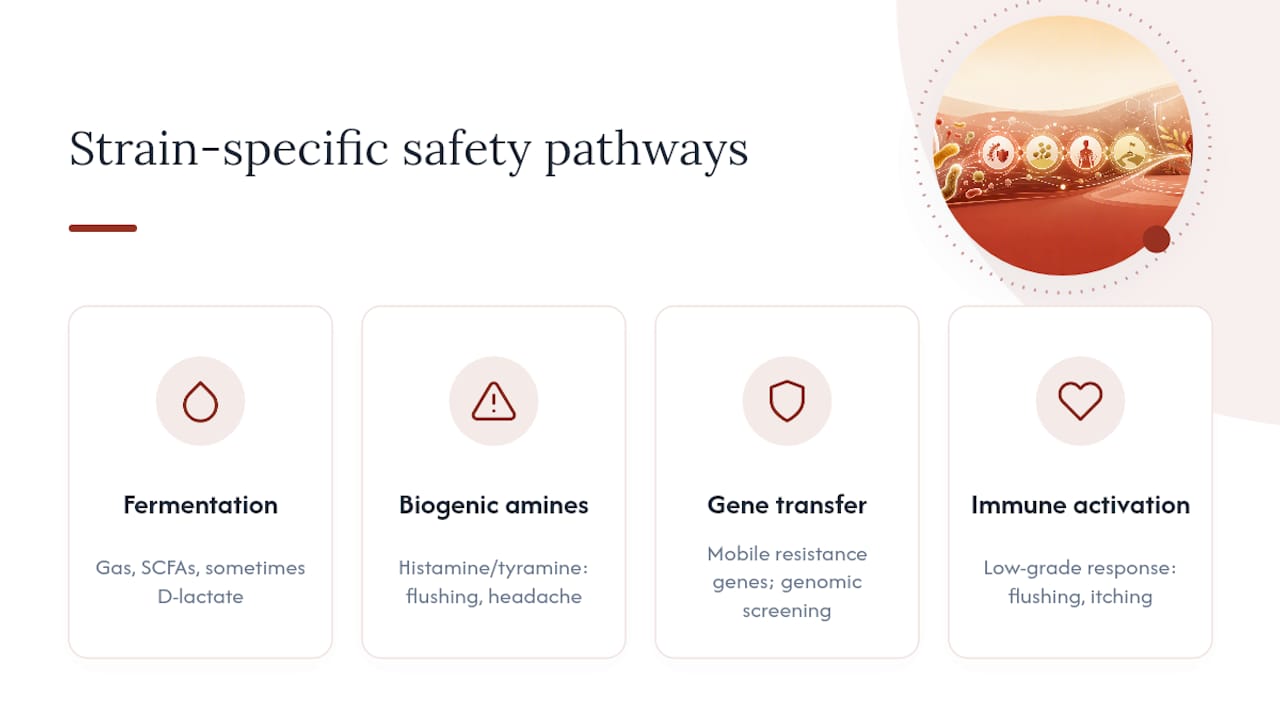
The takeaway that matters most here: comparing Lactobacillus vs. Bifidobacterium isn’t just academic trivia. These genera, and the individual strains within them, behave differently enough that lumping them together under one safety verdict misses the point entirely.
Timing, Dosing, and Probiotics With Antibiotics
Dose and timing change both how well a probiotic works and how many side effects you notice. Get this part right, and you avoid most of the unpleasant surprises.
Some evidence supports starting a probiotic within 48 hours of your first antibiotic dose specifically to reduce the risk of antibiotic-associated diarrhea, though the strength of that effect depends heavily on the strain used and the quality of the underlying trials. Not every probiotic on the shelf has been tested for this use, so a generic multi-strain capsule isn’t automatically interchangeable with the specific strains studied for antibiotic support.
Here’s a practical sequence for starting any new probiotic, whether or not antibiotics are part of the picture:
- Start low. Use half the labeled dose for the first three to five days.
- Observe for one to two weeks. Track digestive symptoms, energy, and any skin or mood changes.
- Titrate up gradually if you’re tolerating the lower dose, rather than jumping straight to the full label amount.
- Space it from antibiotics by two hours if you’re taking both, since some antibiotics can kill the probiotic strain before it has a chance to colonize.
- Check with a pharmacist if you’re on immunosuppressants, have a central line, or take medications with narrow therapeutic windows.
Pro Tip: If a high-CFU probiotic gives you noticeable bloating in the first few days, don’t assume you need to quit probiotics altogether. Try halving the dose for a week before deciding it isn’t for you. Many people who “can’t tolerate” probiotics just started at too high a dose.
Very high CFU counts are more likely to produce noticeable GI symptoms simply because there’s more fermentation activity happening at once. More is not automatically better here. Timing your probiotic routine around meals and consistent daily habits tends to matter more than chasing the highest number on the label.
How to Choose a Safer Probiotic Product
Quality control is where a lot of probiotic risk quietly lives, and it has nothing to do with the strain science and everything to do with manufacturing.
Look for third-party verification from organizations like USP, NSF, or ConsumerLab. These programs test whether a product actually contains what the label claims, at the potency claimed, free of contaminants. This matters more than it sounds: mislabeling and contamination events in the probiotic industry aren’t hypothetical, and a product with no independent verification is asking you to trust a label with no outside check on it.
A few concrete things worth checking before you buy:
- CFU count guaranteed at expiration, not just at time of manufacture (potency drops over shelf life)
- Strain-specific identification (genus, species, and strain code, not just “Lactobacillus blend”)
- A publicly available Certificate of Analysis (COA) showing what was actually tested
- Storage instructions that match how the product is sold (refrigerated strains sold at room temperature is a red flag)
- Manufacturer transparency about where and how the product is made
High-quality safety evaluation increasingly combines strain-level genomic screening with stability data across shelf life, which is a more rigorous standard than most consumer products advertise but the direction the category is heading.
Pro Tip: If you’re nervous about supplement quality, fermented foods like plain yogurt, kefir, or sauerkraut are a reasonable lower-risk entry point. You’re getting a modest, food-matrix dose of live cultures with far less room for the manufacturing variability that affects capsules.

For readers weighing whether a targeted supplement or a food-first approach fits better, French-language coverage of strain-specific probiotic products offers another lens on how consumers evaluate specific formulations before buying.
What the Research Actually Shows About Probiotic Safety
Strip away the marketing and the panic headlines, and the evidence lands in a more measured place than either extreme suggests.
A large-scale meta-analysis covering 622 randomized clinical trials found no statistically significant increase in total adverse events among people taking probiotics in general and mixed populations over the short term. That’s a meaningful reassurance for the average healthy adult wondering whether daily probiotic use carries hidden risk.
Pharmacovigilance data tells a more nuanced story. A FAERS-based analysis covering adverse event reports from 2005 through 2023 found that absolute report counts remained low overall, but identified consistent signals in gastrointestinal and hepatobiliary categories, plus an emerging and unexpected pattern of neuropsychiatric reports, including agitation and anxiety. Researchers connect this to ongoing questions about the gut-brain axis, where gut microbial activity appears to influence mood and neurological signaling in ways still being mapped.
Two limitations matter for how much weight to put on any of this. First, adverse event reporting for supplements is voluntary and inconsistent, so pharmacovigilance data almost certainly undercounts real-world reactions. Second, long-term safety data, meaning years rather than weeks of use, remains thin across the field, and few studies report outcomes at the individual strain level rather than lumping products together.
The practical implication follows directly from those gaps: general population risk looks low based on the RCT evidence, but that reassurance shrinks the moment you’re in a vulnerable group or using a poorly characterized product. Favor tested products, and proceed carefully rather than casually in anyone with a compromised immune system or gut barrier.
Your Practical Probiotic Safety Checklist
Reducing risk with probiotics comes down to four sequential steps. Skipping the first one is where most avoidable problems start.
- Review your health status first. Do you have a compromised immune system, a central line, inflammatory bowel disease, or a history of gut surgery? If yes, talk to a clinician before starting anything, regardless of how the product is marketed.
- Choose a tested product and start low. Pick something with third-party verification and strain-specific labeling, then begin at half the suggested dose for the first several days.
- Monitor daily for the first one to two weeks. Track digestion, skin, mood, and energy. Mild gas or bloating that improves is expected. Anything that worsens or introduces new symptoms deserves attention.
- Stop and seek care for warning signs. Fever, chills, confusion, or symptoms suggesting a systemic infection are not something to wait out.
| Symptom Type | Typical Timing | Action Needed |
|---|---|---|
| Gas, bloating, mild cramping | First 3 days | Continue, adjust dose if uncomfortable |
| Loose stools or mild constipation | First 1 to 2 weeks | Monitor, ensure adequate hydration |
| Persistent symptoms beyond 3 weeks | Ongoing | Reconsider strain or dose, consult a clinician |
| Fever, chills, confusion | Any time | Stop immediately, seek medical care |
A Publisher’s View on Balancing Benefits With Vigilance
The probiotic conversation suffers from two competing exaggerations: the claim that they’re harmless for everyone, and the fear that any live bacteria in a capsule is reckless. Neither holds up. What the evidence actually supports is something more useful: probiotics carry a favorable safety profile for healthy people, and a real, documented risk for a specific, identifiable minority.
That’s not a hedge. It’s the actual shape of the data. The right question isn’t “are probiotics safe,” it’s “am I in a group where this needs a clinician’s input first.” If you’re not, mild adjustment periods are the price of entry. If you are, that conversation isn’t optional. Readers who want to go deeper on strain differences and timing can find more on the Revivify blog.
— Larry
A Tested, Prebiotic-Paired Alternative Worth Discussing With Your Clinician
If the strain-by-strain uncertainty in probiotic supplements has you wanting a more transparent option, some supplements combine superoxide dismutase, an antioxidant enzyme, with prebiotic fiber, polyphenols, and lactobacillus in a plant-based gel format that may be third-party tested rather than sold on label claims alone.

Rather than positioning itself as a medical treatment, Revivify is framed as a daily wellness supplement you can bring up with your clinician alongside whatever probiotic strategy you’ve already settled on, particularly if digestive support, immune health, or cellular oxidative stress are on your radar. Some supplements are offered with a guarantee and subscription pricing, allowing users to try them without long-term commitment before knowing how their body responds. If you want to see the full ingredient breakdown and third-party testing details, visit the Tryrevivify landing page and decide whether it’s worth a conversation at your next checkup.
Sources
- Probiotics - Health Professional Fact Sheet | Office of Dietary Supplements (ODS)
- Risk and Safety of Probiotics (PMC article)
This article is general information, not a substitute for advice from a qualified doctor. Consult a qualified healthcare professional about your own circumstances before acting on anything here.
FAQ
Are Probiotics Safe for Most People to Take Daily?
Yes, for healthy adults, probiotics have an extensive history of apparent safety, though mild digestive side effects like gas and bloating are common in the first one to two weeks.
What Are the Most Common Probiotic Side Effects?
Gas, bloating, mild abdominal cramping, and temporary changes in bowel habits are the most frequently reported symptoms, and they usually resolve within a few weeks as your gut adjusts.
Can Probiotics Cause a Serious Infection?
Rarely, and almost exclusively in vulnerable populations such as preterm infants, immunocompromised patients, or people with central venous catheters, where documented cases of bacteremia and fungemia have occurred.
How Do I Know if I’m Having Probiotic Die Off Symptoms or a Bad Reaction?
Mild, gradually improving digestive symptoms in the first two weeks are typical of adjustment; fever, worsening symptoms, or signs of systemic illness are not normal and warrant stopping the product and contacting a clinician.
Should I Take Probiotics With Antibiotics?
Some evidence supports starting a probiotic within 48 hours of your first antibiotic dose to reduce antibiotic-associated diarrhea, but spacing the two doses by about two hours helps prevent the antibiotic from killing the probiotic strain.