

Reduce Oxidative Stress for Stronger Immune Function
Oxidative stress is defined as a chronic imbalance between reactive oxygen species (ROS) and the body’s antioxidant defenses, and it is one of the most well-documented drivers of immune dysfunction in aging adults. When this imbalance tips too far, your immune cells lose their ability to respond, coordinate, and recover. The good news is that you can reduce oxidative stress and restore immune function through targeted nutrition, lifestyle changes, and next-generation antioxidant therapies. This guide covers the science, the strategies, and the common mistakes that undermine progress.
How oxidative stress suppresses immune function
Oxidative stress impairs immunity through a specific chain of molecular events, not simply by causing generalized cellular damage. Understanding this chain is what separates effective intervention from guesswork.
Mitochondrial ROS (mtROS) sit at the center of the problem. When mitochondria produce excess ROS, the resulting redox imbalance triggers a cascade that shuts down immune activity rather than amplifying it. Specifically, excessive ROS upregulates PD-L1, a checkpoint protein that acts like a brake on the immune system, suppressing T-cell activation, dendritic cell signaling, and M1 macrophage activity. This is the same mechanism that many cancers exploit to evade immune detection.
The downstream effects on immune cells are measurable and serious:
- T-cell exhaustion: Chronic ROS exposure depletes T-cell metabolic fitness, reducing their ability to proliferate and mount targeted responses.
- Dendritic cell dysfunction: Oxidized lipids impair antigen presentation, meaning your immune system receives garbled signals about threats.
- Macrophage polarization shift: Oxidative stress pushes macrophages from the pro-inflammatory M1 state (which fights infection) toward the anti-inflammatory M2 state, weakening acute immune responses.
- Cytokine dysregulation: ROS activates the NF-κB and MAPK signaling pathways, flooding the body with pro-inflammatory cytokines like IL-6 and TNF-α, which accelerate tissue damage and chronic inflammation.
Here is the nuance most people miss: ROS are not purely harmful. Immune cells actually use controlled, localized ROS bursts to kill pathogens and coordinate signaling. The problem is chronic redox imbalance, not ROS itself. This distinction matters enormously when choosing how to intervene.
Pro Tip: If you are researching oxidative stress immune function effects, look for interventions that restore redox homeostasis rather than those that simply promise to “eliminate free radicals.” Eliminating all ROS would actually impair your immune system’s ability to function.
To understand how oxidative stress triggers inflammation at the cellular level, the NF-κB pathway is the most direct entry point.
Lifestyle and dietary strategies to reduce oxidative stress
The most evidence-supported approach to reducing oxidative stress for immune health starts with what you eat and how you live. No supplement replaces this foundation.
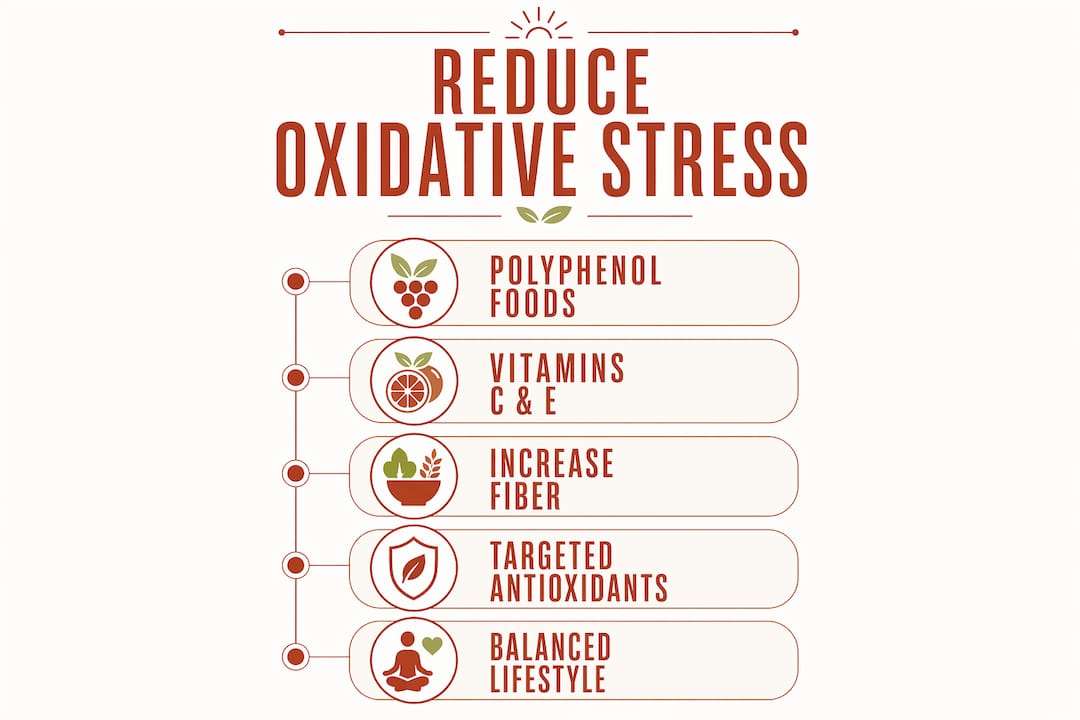
1. Adopt a polyphenol-rich dietary pattern. The Mediterranean and DASH diets consistently outperform standard Western diets in reducing systemic oxidative markers. Flavonoids reduce LDL oxidation and improve endothelial function, with moderate intake of polyphenol-rich foods like red wine, cocoa, and berries showing measurable reductions in postprandial oxidative stress. This matters because oxidative spikes after meals are a significant but underappreciated driver of chronic redox imbalance.
2. Prioritize vitamins C and E, and omega-3 fatty acids. Vitamin C regenerates oxidized vitamin E, creating a synergistic antioxidant cycle. Omega-3 fatty acids from sources like wild salmon, sardines, and flaxseed reduce the production of pro-inflammatory eicosanoids, lowering the oxidative burden on immune cells.

3. Increase dietary fiber intake. This is where gut health enters the picture. Dietary fiber promotes antioxidant release through microbial fermentation in the colon, generating short-chain fatty acids that support the intestinal barrier and reduce systemic oxidative stress. A compromised gut microbiome is a direct contributor to immune dysregulation, and most people addressing oxidative stress ignore this pathway entirely.
4. Exercise moderately and consistently. Moderate aerobic exercise, think 30 to 45 minutes of brisk walking or cycling four to five times per week, upregulates endogenous antioxidant enzymes including superoxide dismutase (SOD) and catalase. Intense, unrecovered training does the opposite, generating acute oxidative overload that suppresses immunity.
5. Manage sleep and psychological stress. Cortisol, the primary stress hormone, directly suppresses glutathione synthesis. Glutathione is the body’s master antioxidant and a primary determinant of immune coordination, supporting T-cell activation and macrophage function. Seven to nine hours of quality sleep per night is not optional for anyone serious about redox balance.
“The goal is not to live in a sterile antioxidant bubble. The goal is to give your immune system the metabolic resources it needs to regulate itself. Diet and sleep are the infrastructure. Supplements are the fine-tuning.”
For individuals managing chronic conditions, understanding oxidative stress in diabetes reveals how metabolic dysfunction compounds immune oxidative overload.
What are the best targeted antioxidant therapies?
Broad antioxidant supplementation, taking high-dose vitamin C or E in isolation, has largely failed to produce the immune benefits researchers expected. The reason is precision. These compounds scatter throughout the body without concentrating where oxidative damage is most acute: inside the mitochondria.
Mitochondria-targeted antioxidants represent a genuine advancement. Compounds like MitoQ and Nrf2 activators are engineered to accumulate inside mitochondria, restoring mitochondrial redox homeostasis without disrupting the physiological ROS signals that immune cells depend on. This is the difference between a scalpel and a sledgehammer.
Plant-derived extracts are also producing compelling clinical data. A 21-day intervention with Choerospondias axillaris (Lapsi) fruit extract reversed immunosuppression by improving the IgG2a/IgG1 antibody ratio, increasing immune cell counts, and reducing IL-6 and TNF-α through downregulation of the NF-κB and MAPK pathways. That is a specific, measurable immune restoration, not a vague wellness claim.
Grape pomace polyphenols offer another well-studied option. Red grape pomace strongly reduces MDA and NO, two key oxidative stress markers, while white grape pomace preserves IL-6 and IL-1β levels in cardiac ischemia models. These findings also connect to efforts to reduce oxidative stress heart health outcomes, since the same redox pathways that suppress immunity also damage the cardiovascular system.
| Antioxidant approach | Mechanism | Best evidence for | Limitation |
|---|---|---|---|
| MitoQ / Nrf2 activators | Mitochondria-targeted ROS reduction | Immune cell restoration, redox homeostasis | Emerging research; cost |
| Grape pomace polyphenols | Reduces MDA, NO, and inflammatory cytokines | Cardiovascular and immune oxidative markers | Bioavailability varies |
| Lapsi fruit extract | NF-κB/MAPK downregulation | Antibody ratio, cytokine normalization | Limited long-term data |
| High-dose vitamin C/E | Broad free radical scavenging | Acute deficiency correction | Disrupts physiological ROS signaling |
| Glutathione precursors (NAC) | Supports endogenous glutathione synthesis | T-cell function, macrophage activity | Requires consistent dosing |
Resveratrol deserves a specific mention because it works differently from most antioxidants. Rather than directly scavenging free radicals, resveratrol activates endogenous antioxidant pathways as a transcriptional regulator, essentially teaching your cells to produce more of their own defenses. This is the model the medical community increasingly favors: restoring the body’s glutathione synthesis capacity rather than flooding the system with external antioxidants.
Pro Tip: When evaluating any antioxidant supplement, ask whether it targets mitochondria specifically or simply circulates in the bloodstream. Mitochondria-targeted compounds consistently outperform broad antioxidants in immune-relevant outcomes. Look for the supplement stack for immune deficiency guide for a practical breakdown.
Common mistakes when trying to reduce oxidative stress
Most people make at least one of these errors, and some make all of them simultaneously.
- Treating all ROS as the enemy. Immune cells use controlled ROS bursts to kill bacteria and coordinate responses. Aggressively suppressing all ROS with high-dose antioxidants can blunt these responses, leaving you more vulnerable to infection, not less. The target is homeostasis, not elimination.
- Ignoring gut health. A leaky intestinal barrier floods the bloodstream with bacterial fragments that trigger systemic oxidative stress. No amount of supplementation compensates for a microbiome that is actively generating immune dysregulation. Prebiotic fiber and fermented foods are non-negotiable for anyone serious about redox balance.
- Supplementing without changing lifestyle. Supplements work at the margins of a solid foundation. If you are sleeping five hours a night, eating processed food, and managing chronic stress, no antioxidant compound will move the needle meaningfully on immune function.
- Using pro-oxidant doses of certain supplements. Iron, beta-carotene in smokers, and high-dose vitamin E have all demonstrated pro-oxidant effects at supplemental doses in specific populations. More is not always better, and context matters.
- Failing to track progress. Signs of improving redox balance include better energy, faster recovery from illness, reduced skin inflammation (oxidative stress skin conditions like eczema and psoriasis often improve as systemic ROS drops), and improved sleep quality. Tracking these markers gives you feedback that blood tests alone cannot capture.
Understanding what is skin barrier oxidative damage also matters here. Chronic systemic oxidative stress degrades the skin barrier by oxidizing lipids and proteins in the stratum corneum, which is the outermost skin layer. This is why people with high oxidative stress often notice accelerated skin aging and increased sensitivity alongside immune issues. Addressing redox balance systemically tends to improve both.
Key takeaways
Reducing oxidative stress restores immune function by correcting the redox imbalance that suppresses T-cells, dysregulates cytokines, and exhausts macrophages at the mitochondrial level.
| Point | Details |
|---|---|
| Redox homeostasis is the goal | Eliminating all ROS impairs immunity; restoring balance is what protects immune cells. |
| Diet is the foundation | Polyphenol-rich foods, fiber, and omega-3s reduce oxidative burden before supplements are needed. |
| Mitochondria-targeted therapies lead | MitoQ and Nrf2 activators outperform broad antioxidants by acting where ROS damage is highest. |
| Gut health drives systemic redox | A compromised microbiome generates oxidative stress that no supplement fully counteracts. |
| Track functional markers | Energy, skin condition, and illness recovery speed reflect redox improvements before lab tests do. |
Why I think most people are solving this problem backwards
I have spent years watching people approach oxidative stress management the same way. They read about free radicals, buy a high-dose antioxidant supplement, and expect results. When nothing changes, they assume the science is overhyped. The science is not overhyped. The approach is wrong.
The body is not a bucket that fills with free radicals until you pour in enough antioxidants to neutralize them. It is a self-regulating system with its own antioxidant machinery, centered on glutathione, SOD, and catalase. When that machinery is working, a moderate antioxidant-rich diet is sufficient. When it is broken, broad supplementation does not fix it. What fixes it is restoring the conditions under which the machinery can operate: adequate sleep, a functioning gut, manageable stress, and targeted support for mitochondrial function.
The shift I find most significant in current research is the move toward mitochondria-targeted interventions. Compounds that concentrate inside mitochondria and restore local redox balance without disrupting systemic ROS signaling represent a fundamentally different category of therapy. They are not just better antioxidants. They are precision tools for a precision problem. Understanding cellular heart health strategies reinforces this point: the same mitochondrial dysfunction that suppresses immunity also drives cardiovascular decline.
My honest recommendation is to start with the lifestyle foundation, add targeted plant extracts and prebiotic fiber, and then consider mitochondria-focused supplementation if systemic markers are not improving. That sequence works. Skipping to step three without building steps one and two is where most people waste time and money.
— Larry
Support your cells with Tryrevivify
At Tryrevivify, we built our formula around the same principle this article defends: your body needs targeted cellular support, not a generic antioxidant flood. Tryrevivify combines superoxide dismutase (SOD), the enzyme that neutralizes the most damaging form of ROS at the mitochondrial level, with prebiotic fiber that supports gut health and systemic redox balance. This patented combination addresses two of the most critical drivers of immune oxidative overload in a single daily supplement. If you are ready to support your immune function at the cellular level, explore the Tryrevivify 30-day supply and see what targeted antioxidant support actually looks like.
FAQ
What is oxidative stress and how does it affect immunity?
Oxidative stress is a cellular imbalance where reactive oxygen species exceed the body’s antioxidant defenses. It suppresses immune function by upregulating PD-L1, exhausting T-cells, and dysregulating cytokines like IL-6 and TNF-α.
How does oxidative stress suppress immunity at the cellular level?
Excess mitochondrial ROS triggers PD-L1 upregulation, which acts as a brake on T-cell activation and dendritic cell signaling, effectively disabling the immune system’s ability to mount targeted responses.
What foods best reduce oxidative stress for immune health?
Polyphenol-rich foods including berries, dark cocoa, olive oil, and red grapes are the most evidence-supported dietary sources. Dietary fiber also reduces systemic oxidative stress through microbial fermentation in the gut.
Can too many antioxidants actually harm immune function?
Yes. Indiscriminate elimination of ROS disrupts the controlled ROS bursts that immune cells use to kill pathogens and coordinate signaling. High-dose supplementation without clinical guidance can impair rather than support immunity.
What is photooxidative skin damage and how does it connect to immune health?
Photooxidative skin damage occurs when UV radiation generates ROS that oxidize skin lipids, proteins, and DNA, degrading the skin barrier and triggering local immune suppression. Systemic oxidative stress amplifies this damage, which is why reducing whole-body redox imbalance also benefits skin health.