

Clinician Alert: Injectables and Superoxide Dismutase Side Effects
Short answer: superoxide dismutase (SOD) supplements are usually well tolerated, with mild GI upset, headache, or dizziness being the most commonly reported issues. Serious reactions, including allergic responses and rare anaphylaxis, have historically been tied to injectable formulations, not oral supplements. Evidence remains limited, so people with pregnancy, cancer treatment, or autoimmune concerns should talk to a clinician before starting.
TL;DR:
- Oral SOD supplements are generally well tolerated, with mild gastrointestinal issues and headaches being the most common side effects reported.
- Injectable formulations have a higher risk of allergic reactions and hypersensitivity, mainly due to impurities and formulation issues.
- The stomach easily degrades oral SOD, which limits safety concerns, but it also reduces the enzyme’s effectiveness systemically.
- Pregnant, breastfeeding, cancer patients, or those with autoimmune or gluten sensitivities should consult a healthcare professional before use.
- Quality sourcing, third-party testing, and allergen labeling are critical factors to verify when choosing a safe SOD supplement.
Table of Contents
- Superoxide Dismutase Side Effects: What the Research Actually Reports
- Why Formulation and Route Change the Risk Picture
- Who Should Avoid SOD or Use Extra Caution?
- Interactions and Practical Precautions Worth Knowing
- How Side Effects Get Reported (and Why the Data Has Gaps)
- What Revivify Does and What to Check on Any SOD Label
- Cautious, Evidence-First Guidance
- Choosing a Safety-Minded SOD Supplement
- Sources
Superoxide Dismutase Side Effects: What the Research Actually Reports
Most published reports on SOD describe it as a supplement people tolerate reasonably well, but the picture is far from complete. WebMD’s supplement reference notes that digestive discomfort and headache top the list of mild complaints, while allergic reactions and rare, serious hypersensitivity events show up almost exclusively with parenteral (injected) forms.
Reported effects tend to fall into a few clear buckets:
- Mild and common: nausea, bloating, general GI upset, headache, and lightheadedness.
- Allergic: skin rash, swelling, or breathing difficulty, occasionally escalating to anaphylaxis with injectable SOD.
- Formulation-specific: injection-site pain and swelling with parenteral products; localized irritation with topical creams or gels.
Here’s the catch: none of the consumer-facing sources or clinical reviews offer a solid population-level frequency estimate for oral SOD supplements. What exists instead is a patchwork of case reports, small trials, and manufacturer-level safety monitoring. That gap matters more than it sounds. Without denominator data, you can’t distinguish between “rare but real” and “hasn’t been looked for yet.”
Why Formulation and Route Change the Risk Picture
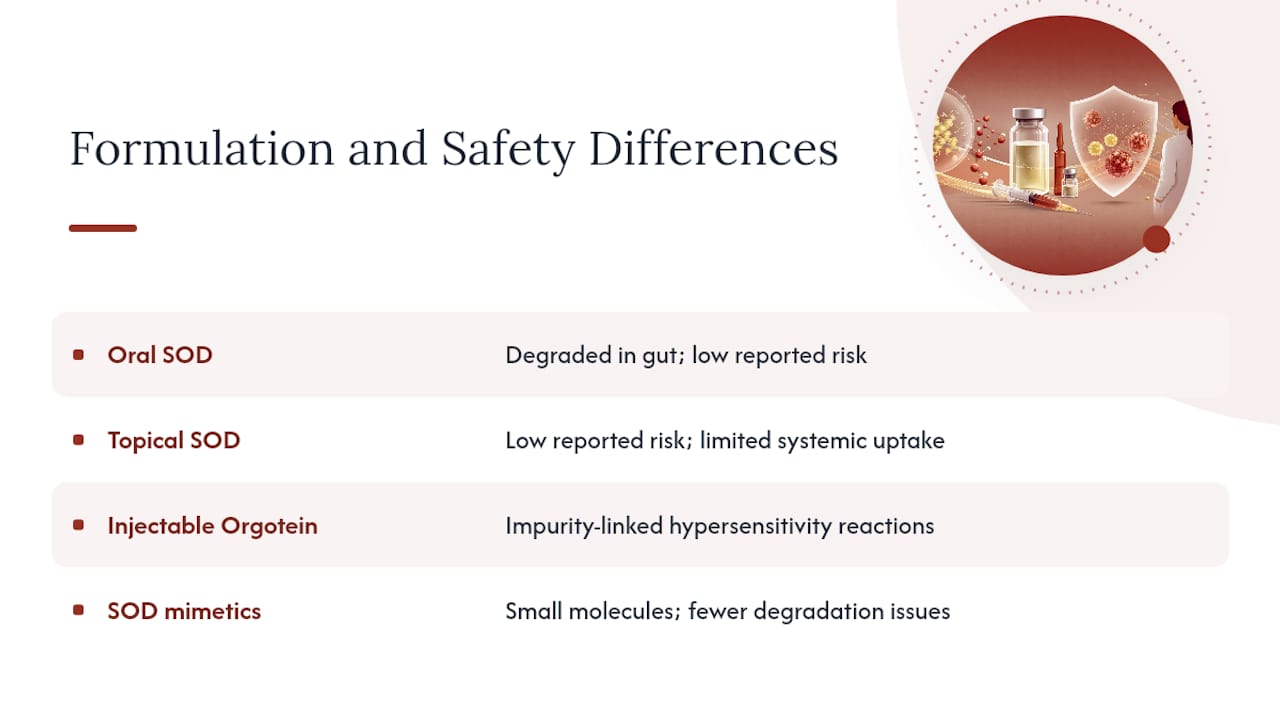
Think of SOD as a relay runner. It’s the first enzyme to intercept superoxide radicals before they damage a cell, but it can’t do that job if it never reaches the track. SOD is a protein, and proteins swallowed as pills are typically broken down in the stomach and intestines long before they reach systemic circulation. Memorial Sloan Kettering Cancer Center’s clinical summary confirms that oral SOD generally gets degraded during digestion, which is exactly why manufacturers lean on encapsulation or wheat-gliadin coatings to try to shield the enzyme until it’s absorbed.
That digestive reality actually works in favor of safety. Because so little intact SOD survives the gut, oral and topical products show comparatively low reported risk. Injectable SOD has a rougher history. Orgotein, an older injectable formulation, carried documented impurity problems that triggered hypersensitivity reactions, and clinical translation reviews describe those safety concerns as a major reason parenteral SOD fell out of favor in several markets.
Researchers have also shifted attention toward SOD mimetics, small molecules like avasopasem manganese (GC4419) that mimic the enzyme’s catalytic action without being a fragile protein. Early trials testing these mimetics for radiation-related side effects report different tolerability profiles than native SOD, generally with fewer degradation issues but their own distinct safety questions.
Pro Tip: If a product claims “clinically studied” SOD delivery, ask specifically whether that claim refers to the native enzyme or a mimetic. They are not interchangeable, and their safety data don’t transfer between them.
Who Should Avoid SOD or Use Extra Caution?
Some groups face higher uncertainty than others, and the caution isn’t theoretical. Here’s who should slow down before adding SOD to a routine:
- Pregnant or breastfeeding individuals. Drugs points out there isn’t enough safety data to recommend use during pregnancy or nursing, so avoidance or a direct conversation with an OB or pediatrician is the safer path.
- Anyone undergoing chemotherapy, radiotherapy, or scheduled surgery. Antioxidant supplements can theoretically interfere with treatments that rely on oxidative mechanisms, and healing after surgery involves its own oxidative processes. Disclosure to your full care team is non-optional here.
- People with autoimmune disease or on immunomodulating medications. The theoretical risk of altering immune signaling means this group needs medical oversight rather than guesswork, and our immune deficiency and antioxidant safety guide walks through those considerations in more depth.
- Anyone with wheat allergy, celiac disease, or sensitivity to animal-derived ingredients. Check the label for gliadin or wheat-based coatings and for bovine-sourced SOD, since RxList’s supplement profile flags animal-derived contamination as a real, if theoretical, concern.
Interactions and Practical Precautions Worth Knowing
Antioxidants and cancer treatment don’t always mix well on paper. Chemotherapy and radiation frequently work by generating oxidative stress that damages cancer cells, so flooding the body with antioxidant support could, in theory, blunt that mechanism. The same logic applies to surgical healing, which depends partly on a controlled inflammatory and oxidative response.
A few concrete steps make this manageable rather than paralyzing:
- Ask your prescribing clinician before combining SOD with chemotherapy, radiation, or planned surgery.
- Stop any supplement before a major procedure only on your surgeon’s specific instructions, not on a guess.
- Keep a current, written list of every supplement and medication, and bring it to every appointment.
- Flag anticoagulants or any medication affecting clotting, since interaction data here is thin and caution costs nothing.
- Report any serious or unexpected reaction through the FDA’s MedWatch program, which tracks adverse events tied to dietary supplements.
How Side Effects Get Reported (and Why the Data Has Gaps)
The evidence supporting SOD’s safety profile comes from a mix of animal studies, small human trials, historical case reports on injectable formulations, and review articles that synthesize what little exists. That’s a thinner foundation than most people assume when they see a supplement marketed with clinical-sounding language.
Part of the problem is structural. The FDA does not evaluate dietary supplements for safety and effectiveness before they reach store shelves the way it does prescription drugs. Adverse event tracking depends heavily on voluntary reporting, which almost certainly undercounts real incidents.
- Supplements are regulated under a lighter framework than pharmaceuticals, with no pre-market safety trials required.
- MedWatch reporting is voluntary, meaning mild or ambiguous reactions likely go unrecorded.
- The “antioxidant paradox” describes how antioxidants can help at moderate doses but potentially cause harm or blunt therapeutic oxidative processes at higher doses. This bell-shaped dose-response curve complicates any simple “more is better” thinking about SOD supplementation.
What Revivify Does and What to Check on Any SOD Label
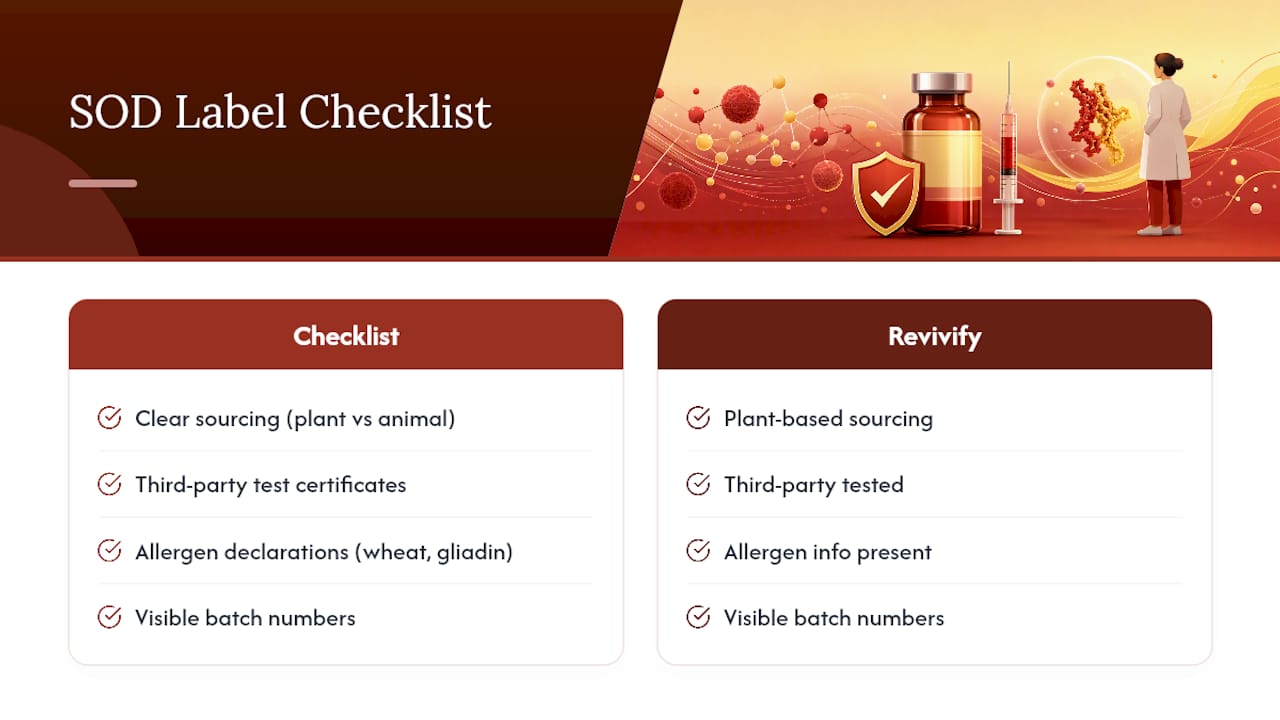
If you’re evaluating a SOD supplement, treat the label like a checklist, not marketing copy. Look for clear sourcing (plant versus animal-derived enzyme), third-party test certificates, allergen declarations covering wheat and gliadin, and visible batch numbers you could trace if something went wrong.
At Tryrevivify, our formula pairs a patented SOD and prebiotic fiber blend with plant-based sourcing, giving people concerned about animal-derived contamination, a concern RxList raises directly, a cleaner alternative to work from. The product is third-party tested and backed by a risk-free guarantee, and we publish that information rather than asking you to take our word for it.
None of this makes SOD a drug, and no supplement, ours included, is FDA-approved for treating disease. The safest approach is choosing manufacturers who make their sourcing and testing data easy to find, not just easy to claim. Our full guide to SOD supplement mechanisms covers delivery technology in more depth if you want the longer version.
Cautious, Evidence-First Guidance
Here’s where I land after working through the research: SOD is a reasonable option for low-risk adults who prioritize transparency and buy from manufacturers willing to show their testing data. It is not a reasonable option for someone mid-chemotherapy or in the first trimester who hasn’t talked to their doctor yet.
The industry’s biggest blind spot isn’t safety, it’s precision. Too many products get marketed with confidence the underlying trials don’t support. Bring the interaction questions from earlier sections to your next appointment, and let your clinician, not a product label, make the final call.
— Larry
Choosing a Safety-Minded SOD Supplement
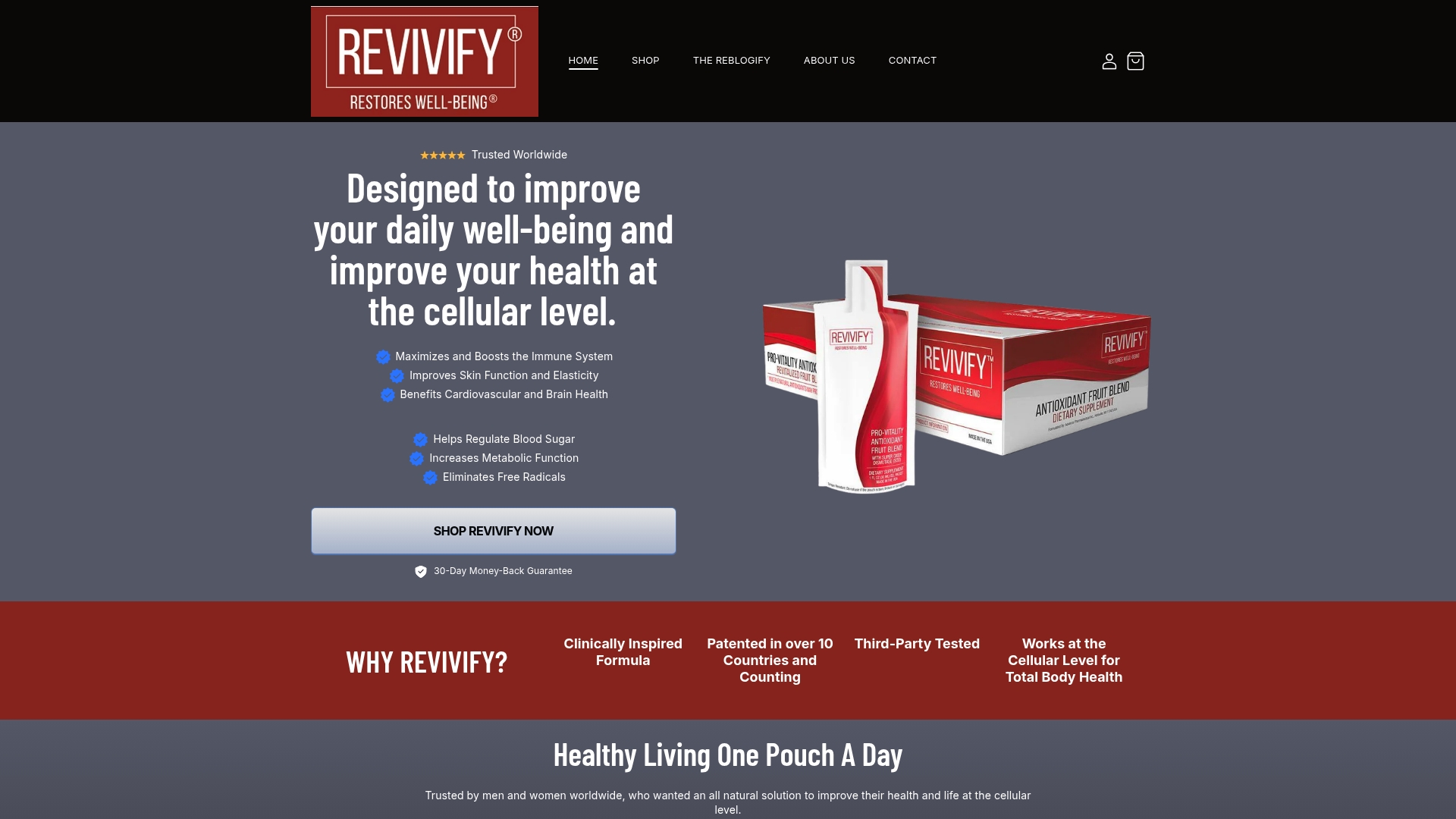
If you’ve decided SOD fits your routine, the real question becomes which product gives you the most transparency, not the boldest claims. Tryrevivify built its formula around that exact standard: plant-based SOD paired with prebiotic fiber, third-party tested, and backed by a risk-free guarantee so you’re not stuck with a product you can’t verify.
Formulation transparency isn’t a marketing checkbox. Independent guidance on formulation safety testing makes clear that impurity control and documented testing protocols are what separate a trustworthy supplement from a risky one, which is exactly the standard we hold our own formula to.
| Quick Check | What to Look For |
|---|---|
| Source | Plant-based vs. animal-derived enzyme |
| Testing | Third-party test certificate available |
| Allergens | Clear wheat/gliadin and animal-product labeling |
You can review Revivify’s full ingredient breakdown and test documentation at Tryrevivify before you decide whether it’s the right next step for your routine.
Sources
For anyone who wants to go straight to the primary material, start with WebMD’s SOD supplement page, Drugs, MSKCC’s integrative medicine summary, RxList’s supplement profile, and the PMC review on SOD’s clinical translation. Systematic reviews and clinical trials carry more weight than individual case reports, so weigh sources accordingly when you discuss them with your clinician.
This article is general information, not a substitute for advice from a qualified doctor. Consult a qualified healthcare professional about your own circumstances before acting on anything here.
- Superoxide Dismutase - Uses, Side Effects, and More (WebMD)
- Drugs
- Superoxide dismutase - Memorial Sloan Kettering Cancer Center
- Superoxide dismutase: Challenges, opportunities, and promises for clinical translation (PMC)
- Superoxide Dismutase: Health Benefits, Side Effects, Uses, Dose & Precautions (RxList)