

Why Form Matters More Than Dose for Supplement Bioavailability
Supplement bioavailability is the percentage of a nutrient that actually gets absorbed and put to use by your body, as opposed to what simply passes through. The single biggest lever you control is matching form to nutrient. Take fat-soluble vitamins like D, E, and K with a meal that contains fat, and choose the chemical form that your body converts most efficiently. Everything else, from timing to testing, builds on that one decision.
TL;DR:
- The chemical form of a nutrient, its matrix, and individual physiology critically influence supplement absorption, beyond just the dose listed on labels.
- Absorption variability depends on factors such as gut health, age, medication use, and whether nutrients are taken with fats or separated from inhibitors.
- Formulations like chelated minerals and calcifediol Vitamin D offer faster and more reliable serum level increases compared to traditional forms.
- High absorption does not always mean safer; excess fat-soluble vitamins or iron can accumulate and cause toxicity if not properly managed.
- Choosing supplements with third-party testing, clear active ingredients, and appropriate delivery systems maximizes bioavailability and minimizes risks.
Table of Contents
- What Supplement Bioavailability Actually Means
- How Do Scientists Measure Bioavailability?
- What Factors Determine How Well You Absorb Nutrients?
- Which Supplement Forms Absorb Best?
- How to Take Supplements for Maximum Absorption
- Real Examples: Vitamin D, Folate, Iron, and Vitamin C
- What Buyers Should Look for in a Well-Formulated Supplement
- Can More Absorption Ever Be a Problem?
- Why Formulation Science Gets Overlooked
- A Gel-Based Formula Built Around Absorption, Not Just Dosage
- Sources
What Supplement Bioavailability Actually Means
Bioavailability gets confused with two neighboring terms constantly, and the mix-up leads people to buy the wrong products for the wrong reasons. Think of it as a three-stage relay race. First, a nutrient has to break free from its capsule, tablet, or gel matrix, that’s bioaccessibility. Then it has to cross the intestinal wall into your bloodstream, that’s bioavailability. Finally, it has to actually do something once it’s inside a cell, that’s bioactivity. A supplement can nail one stage and fail the next.
Researchers describe this whole journey using the ADME framework: Absorption, Distribution, Metabolism, and Excretion. It’s borrowed from pharmacology, but it applies just as well to a magnesium capsule as it does to a prescription drug. A nutrient enters your gut (absorption), travels to tissues that need it (distribution), gets chemically altered by your liver or cells (metabolism), and eventually leaves your body (excretion). Break any link in that chain and the nutrient’s real-world value drops, no matter how much was in the bottle.
This is why a “high dose” claim on a label tells you almost nothing on its own. A 2025 peer-reviewed appraisal on vitamins C, B2, and B9 makes exactly this point: a dose that isn’t bioaccessible or bioactive can fail to produce any measurable benefit, regardless of how impressive the milligram count looks. Three variables decide where a given nutrient lands on that spectrum:
- Form: the chemical structure of the nutrient itself (chelated vs. inorganic, methylated vs. synthetic)
- Matrix: what else is in the capsule or gel, and how it interacts with digestive enzymes
- Host physiology: your gut health, age, medications, and genetics on the day you swallow it
Encouragingly, supplemented nutrients are generally at least as bioavailable as those found naturally in food, and often more so, because manufacturers can engineer around the barriers whole foods create. That’s the whole premise behind delivery-system innovation, which we’ll get into shortly.
How Do Scientists Measure Bioavailability?
Researchers rely on a handful of concrete markers, and understanding them helps you read supplement research without a pharmacology degree. The gold standard is Area Under the Curve (AUC), which plots how much of a nutrient shows up in your blood over time after you take it. A higher AUC generally means more of the dose made it into circulation. Cmax is the peak concentration reached, and it matters for nutrients where a spike, not just a slow trickle, drives the biological effect.
For everyday consumers, serum biomarkers are the more useful shorthand. These tests use blood levels as a stand-in for what’s happening at the cellular level:
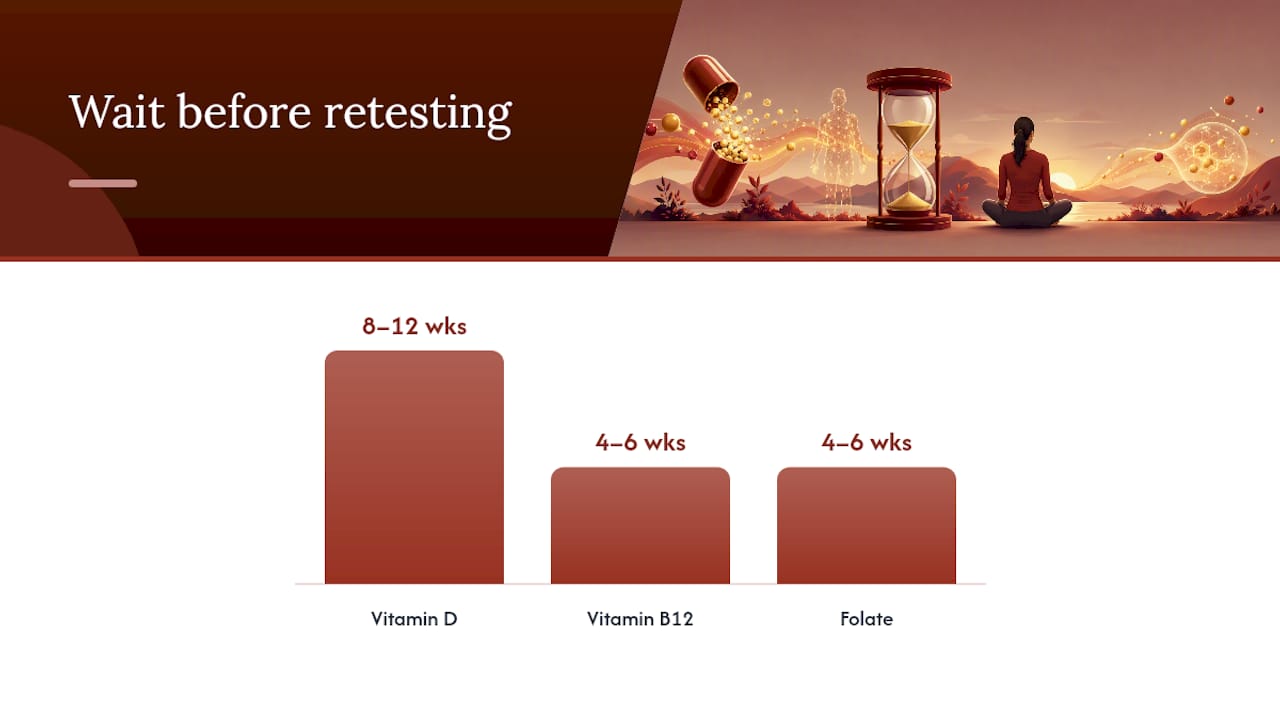
- 25(OH)D tracks vitamin D status and typically needs 8 to 12 weeks to fully stabilize after a dosing change
- Serum folate reflects short-term intake, while red blood cell folate shows longer-term status over the past few months
- Serum B12 is useful but imperfect, since it doesn’t always reflect what’s happening inside cells
Statistic Callout: Formulation science has real teeth here. Clinical comparisons show that calcifediol raises serum 25(OH)D faster and more reliably than standard vitamin D3 at equivalent doses, which is exactly why some doctors prescribe it for patients who need levels corrected quickly.
Outside the body, manufacturers rely on in vitro dissolution testing, essentially simulating stomach and intestinal conditions in a lab to see how quickly a tablet breaks apart and releases its contents. This method is used as a practical surrogate for real-world absorption in multivitamin and mineral products, and it’s one reason quality-focused brands publish dissolution data alongside their ingredient lists.
None of these measures work in isolation, though. A single small trial with a dozen participants can produce a flashy headline that doesn’t replicate. Absorption also varies by age, sex, baseline nutrient status, and even what someone ate that morning, so one study rarely settles a question.
What Factors Determine How Well You Absorb Nutrients?
Absorption isn’t a fixed number stamped on a bottle. It shifts based on who you are, what you’re taking it with, and what else is happening in your gut on a given day. Four categories drive nearly all the variation researchers document.
1. Host physiology. Your body’s own machinery sets the ceiling on absorption before formulation even enters the picture. Age reduces stomach acid production, which impairs the release of certain minerals from their bound forms. Pregnancy and lactation increase demand for iron, folate, and calcium while simultaneously altering how efficiently the gut pulls them in. Higher BMI changes the distribution of fat-soluble vitamins, since more of the nutrient gets sequestered in adipose tissue rather than circulating in usable form. Gut microbiome composition matters enormously too. The intestinal tract is regionally specialized, with different segments handling different nutrients, the duodenum for iron and calcium, the ileum for B12, and disruptions from dysbiosis, aging, or surgical resection can significantly impair uptake regardless of what you’re taking.
2. Formulation chemistry. Particle size, solubility, and salt form determine how easily a nutrient escapes its capsule and enters solution in your gut. Chelated minerals, bound to amino acids like glycine, tend to survive the digestive process better than inorganic salts, which is why bisglycinate forms of iron and magnesium often cause less GI upset. Excipients (the fillers, binders, and coatings in a tablet) can either help or hinder that release, depending on how the product was engineered.
3. Dietary context. What sits next to a nutrient in your gut can double its absorption or cut it in half. Fat-soluble vitamins A, D, E, and K need dietary fat present to form the micelles that carry them across the intestinal wall, take them on an empty stomach and you’re likely wasting a meaningful fraction of the dose. Vitamin C is a genuine enhancer for non-heme iron, boosting absorption when taken together. Phytates in whole grains and legumes, along with excess calcium, act as inhibitors that bind minerals and block their uptake.
4. Drug interactions. Certain medication classes interfere with absorption in ways many patients never get warned about. Proton pump inhibitors reduce stomach acid needed to liberate B12 and calcium from food and supplements. Bile acid sequestrants, prescribed for cholesterol, can block fat-soluble vitamin absorption entirely if timed incorrectly. Long courses of antibiotics disrupt the gut microbiota that helps synthesize and process certain B vitamins and vitamin K.
Pro Tip: If you’ve been taking a supplement consistently for three months and your blood work still shows deficiency, the problem usually isn’t the dose, it’s absorption. Ask your doctor about testing for celiac disease, low stomach acid, or small intestinal bacterial overgrowth before doubling up on pills.
A few warning signs suggest it’s time to get tested rather than guess: unexplained fatigue despite supplementation, persistent GI symptoms after starting a new product, or a history of bariatric surgery, Crohn’s disease, or celiac disease. Any of those can silently cut absorption regardless of what’s printed on the label. Understanding how gut health shapes nutrient absorption is often the missing piece people overlook when a supplement “isn’t working.”
Which Supplement Forms Absorb Best?
Walk down any supplement aisle and you’ll see the same nutrient sold in five different forms at five different price points. The differences aren’t always marketing fluff, but they aren’t always meaningful either.
Liposomal and lipid-based delivery encases a nutrient in a fat bubble designed to survive stomach acid and fuse directly with intestinal cell membranes. The concept has real physiological logic behind it, and lipid-based formulations and encapsulation are recognized strategies for improving bioavailability in the research literature. That said, evidence quality varies widely by nutrient and by brand, so a liposomal label alone isn’t proof of superior absorption without supporting data.
Chelated minerals versus inorganic salts show one of the more consistent differences in the supplement world. Mineral bound to an amino acid, like iron bisglycinate or magnesium glycinate, tends to cause less gastrointestinal distress than an inorganic salt like ferrous sulfate, largely because it bypasses some of the same absorption pathways that inhibitors interfere with.
Softgel and oil vehicles carry a counterintuitive risk. The assumption is that oil always helps fat-soluble nutrients absorb better, but that isn’t universally true. Excess oil in a softgel vehicle can compete for the same emulsification and micelle-formation process that the nutrient itself needs, meaning some lipophilic compounds like beta-carotene or vitamin E can end up less bioavailable, not more, depending on the vehicle’s composition.
Statistic Callout: Timed-release formulations deserve real scrutiny. Small clinical studies on vitamin C have found reduced absorption from some slow-release forms compared to standard tablets, likely because the delayed release misses the intestinal window where absorption transporters are most active. Other studies found no meaningful difference, so the evidence is genuinely mixed rather than settled in either direction.
Vitamer choice, the exact chemical form of a vitamin, is where the science gets most actionable:
- Vitamin D: calcifediol (25-hydroxyvitamin D) versus standard cholecalciferol (D3), with calcifediol showing faster, more reliable serum increases
- Folate: methylfolate versus folic acid, relevant for the meaningful percentage of people whose MTHFR gene variant limits their ability to convert folic acid into its active form
- Vitamin C: natural versus synthetic ascorbic acid, where the molecule itself is chemically identical, meaning the debate mostly comes down to delivery format rather than source
How to Take Supplements for Maximum Absorption
Getting more value out of every dose comes down to a handful of habits you can start applying today, paired with a sharper eye for what’s actually printed on the label.
- Take fat-soluble vitamins with a meal containing fat. Vitamins A, D, E, and K depend on dietary fat to form the micelles that ferry them across your intestinal wall.
- Split high doses of saturable nutrients. Minerals like calcium and iron use transporter proteins that can become overwhelmed at high single doses, so splitting a 1,000mg calcium target into two 500mg doses often absorbs better than one large dose.
- Separate absorption competitors by a few hours. Calcium and iron compete for the same transport pathways, so taking them at different times of day avoids one blocking the other.
- Read labels for the specific vitamer, not just the nutrient name. “Folate” printed generically could mean folic acid or methylfolate; the label should specify which.
- Look for third-party testing seals. Independent verification confirms the label’s claimed amounts match what’s actually in the product, which matters more than any absorption claim on the front of the bottle.
Pro Tip: If you switch to a new form of a nutrient, mark your calendar. Vitamin D takes 8 to 12 weeks to show a stable change in blood levels, while B12 and folate can shift within 4 to 6 weeks. Testing too early just tells you the old status, not the new trajectory.
Troubleshooting matters just as much as the initial setup. If you’re managing polypharmacy (multiple prescription medications), ask a pharmacist to review timing conflicts, particularly with proton pump inhibitors or bile acid sequestrants, both known to blunt absorption of specific nutrients. Persistent GI discomfort after starting a new supplement is worth mentioning to a doctor rather than pushing through, since it can signal either an intolerance to the delivery form or an underlying absorption problem that supplementation alone won’t fix. For more on the resources at play addressing nutrient absorption from the gut side, examining digestive support alongside supplement choice tends to produce better outcomes than adjusting dose alone.
Real Examples: Vitamin D, Folate, Iron, and Vitamin C
Abstract absorption science becomes a lot more useful once you see it play out in specific nutrients people actually take every day.
Vitamin D offers the clearest formulation story in the entire supplement category. Calcifediol raises serum 25(OH)D faster and more reliably than standard cholecalciferol at equivalent doses, a difference with real clinical weight for people with obesity or older adults, both groups shown to convert and store standard D3 less efficiently.
Folate splits along genetic lines more than most nutrients. Methylfolate can raise blood folate levels more quickly than folic acid in certain populations, largely because it skips a conversion step that some people’s genetics handle poorly. For women of childbearing age relying on folate to reduce neural tube defect risk, the practical implication is straightforward: if your body struggles to convert folic acid, the active form may reach protective levels faster.
- Heme iron (from animal sources) absorbs several times more efficiently than non-heme iron
- Pairing non-heme iron supplements with vitamin C measurably improves uptake
- Lower, split doses of iron reduce the GI side effects that cause many people to abandon supplementation altogether
Vitamin C rounds out the list with the least conclusive evidence. Slow-release and standard forms show mixed results across small trials, some finding lower absorption from timed-release capsules, others finding no meaningful difference at all. The safest takeaway for now is dosing consistency over brand-specific delivery claims.
What Buyers Should Look for in a Well-Formulated Supplement
At Revivify, we built our gel-based formula around a principle that runs through everything in this article: the ingredient matters less than what your body actually does with it. Our formula combines superoxide dismutase, an antioxidant enzyme, with prebiotic fiber, polyphenols, and lactobacillus, and the reasoning behind that combination ties directly back to gut health’s role in absorption.
Prebiotic fiber feeds beneficial gut bacteria, and a healthier microbiome environment is linked to better nutrient processing overall, since microbiome diversity plays a meaningful role in how efficiently your gut extracts and utilizes nutrients. Lactobacillus contributes to that same supportive gut environment. Polyphenols bring antioxidant activity that complements the enzymatic action of superoxide dismutase, working at the cellular level rather than simply passing through the digestive tract.
Whatever brand you choose, hold it to the same standard. Look for:
- Third-party testing confirming the label’s claimed amounts are accurate
- Clear active ingredient amounts, not vague blends hiding actual dosages behind proprietary formula names
- Stability or dissolution data, when a brand publishes it, showing the product breaks down and releases as intended
- Plant-based or allergen transparency, particularly relevant for anyone managing dietary restrictions alongside supplementation
A brand’s willingness to show its formulation reasoning, rather than hiding behind marketing language, is itself a meaningful signal worth weighing before you buy.
Can More Absorption Ever Be a Problem?
Better absorption is not automatically better for you, and this gets glossed over in most supplement marketing. Fat-soluble vitamins A, D, E, and K accumulate in fatty tissue rather than getting excreted like water-soluble nutrients, so pairing high doses with a delivery system engineered to maximize uptake raises real toxicity risk over time. Vitamin A toxicity, for instance, can cause liver damage, and it’s far more likely to happen when someone combines a high-absorption formulation with megadosing.
Iron carries a similar caution. Enhanced-absorption iron formulas paired with vitamin C can push more iron into circulation than someone without documented deficiency needs, and iron overload carries its own oxidative stress burden on tissues.
There’s also a less obvious mineral competition risk. Formulations engineered to maximize one mineral’s uptake, calcium, for instance, can inadvertently interfere with absorption of others taken at the same time, since several minerals share the same transport proteins in the intestinal wall.
The practical rule here is simple: absorption enhancement should be viewed as a tool for correcting documented deficiency or genuine physiological need, not a blanket upgrade to apply to every supplement in your cabinet. If you don’t have a deficiency, more absorption doesn’t necessarily give you more benefit, and it might just give you more to metabolize and excrete, or worse, more to store where it shouldn’t accumulate.
Why Formulation Science Gets Overlooked
The supplement industry has trained consumers to shop by milligram count, and that habit is arguably the single biggest waste of money in the category. The research here points somewhere else entirely: form, timing, and your own gut health determine how much of that dose ever becomes useful.
Conventional advice tends to stop at “take your vitamins,” when the more honest guidance is “take the right form, with the right food, at the right time, for your specific physiology.” That’s a harder message to sell on a label, which is probably why it’s underrepresented in marketing copy.
If there’s one priority worth acting on first, it’s this: stop chasing the highest dose on the shelf and start asking whether your gut can actually process what you’re taking. A well-fed microbiome and functioning digestion do more for absorption than most delivery-system upgrades ever will.
— Larry
A Gel-Based Formula Built Around Absorption, Not Just Dosage
If everything in this article convinced you that the delivery system matters as much as the ingredient list, a gel-based formula pairing superoxide dismutase with prebiotic fiber, polyphenols, and lactobacillus can support the gut environment where nutrient processing happens in the first place.
Tryrevivify suits anyone who has tried standard capsules or tablets and wondered whether the dose on the label matched what their body actually used. It’s plant-based, third-party tested, and backed by a risk-free guarantee, so you can evaluate it against your own blood work or how you feel without locking into a long commitment. If gut health and absorption efficiency are the pieces missing from your current supplement routine, start your subscription today and see how a formula built around cellular-level support compares.
This article is general information, not a substitute for advice from a qualified doctor. Consult a qualified healthcare professional about your own circumstances before acting on anything here.
Sources
- Micronutrient bioavailability: concepts, influencing factors, and strategies for improvement
- Physiology and pathophysiology of nutrient absorption (NCBI Bookshelf)
- Bioavailability of Nutrients: A Practical Approach to In Vitro Demonstration of the Availability of Nutrients in Multivitamin-Mineral Combination Products
- Supplemental forms — Linus Pauling Institute, vitamin C