

Supplement Stack for Immune Deficiency: 2026 Guide
Living with an immune deficiency means your body’s defense system needs more deliberate support than most. A well-designed supplement stack for immune deficiency can fill critical nutritional gaps, reduce your vulnerability to infection, and help your body function closer to its potential. But the supplement market is noisy, and choosing the wrong combination wastes money at best and causes real harm at worst. This guide cuts through that noise with a research-backed, step-by-step approach built specifically for people managing compromised immune health.
Table of Contents
- Key takeaways
- The best supplement stack for immune deficiency
- How to prepare before building your stack
- Building your stack step by step
- Safety pitfalls and what to watch for
- What to expect and how to measure progress
- My honest take on supplement stacking
- Support your immune health with Tryrevivify
- FAQ
Key takeaways
| Point | Details |
|---|---|
| D3 beats D2 for immunity | Vitamin D3 activates immune signaling pathways that D2 cannot; prioritize D3 in your stack. |
| Test before you supplement | Blood panels for vitamin D, B12, magnesium, and ferritin let you fill real gaps instead of guessing. |
| Timing changes everything | Fat-soluble vitamins absorb better with meals; taking them dry reduces their effectiveness significantly. |
| Quality certifications matter | Look for USP, NSF, or Informed Sport seals to avoid contaminants and mislabeled products. |
| Lifestyle is the foundation | No supplement stack works well without adequate sleep, nutrition, and regular movement underneath it. |
The best supplement stack for immune deficiency
Building an effective immune support stack starts with understanding which nutrients actually have credible evidence behind them. Not all supplements are equal, and the immune system is complex enough that throwing everything at it rarely works.
Vitamin D3
This is the single most important immune supplement for most people with deficiency. Vitamin D3 uniquely stimulates the type I interferon signaling system, a critical branch of innate immunity that D2 cannot activate. The UK government recommends 10 µg daily, but many people with diagnosed deficiency need supervised higher doses. If you are currently taking D2, consider talking to your doctor about switching.
Vitamin C and zinc
Vitamin C taken daily may shorten the duration of illness, but it works best as a preventive measure rather than a reactive one. Starting it after you are already sick produces much weaker results. Zinc is different: it is most effective when taken within the first 48 hours of symptom onset. Together, they cover different phases of immune response, which is why they are commonly paired in immune-boosting supplement combinations.
Selenium and magnesium
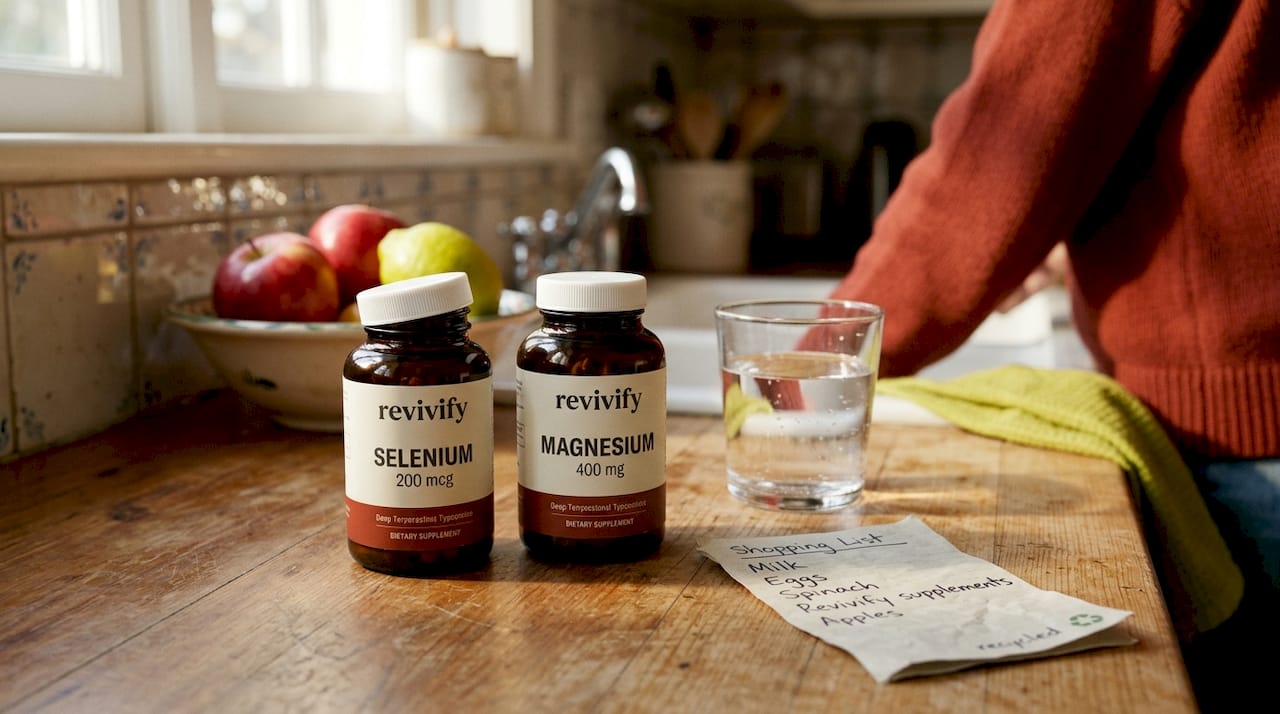
Selenium supports the production of glutathione peroxidase, one of the body’s primary antioxidant enzymes. Magnesium is involved in over 300 enzymatic reactions and is commonly low in populations alongside vitamin D and omega-3 fatty acids. Both are generally safe at standard doses and are strong candidates for any foundational immune deficiency supplement stack.
Herbal and botanical options
Certain botanicals carry real immunomodulatory evidence. Ashwagandha, rhodiola, and reishi mushrooms each show measurable effects on immune regulation, but they require careful dosing and periodic cycling rather than continuous daily use. Think of them as tools you rotate in, not permanent fixtures. Probiotics also deserve mention here. Probiotic diversity correlates with better immune outcomes, but if your immune system is significantly compromised, use them cautiously and with medical guidance. A healthy gut microbiome is one of the most underrated pillars of immune function.
Pro Tip: When evaluating any new immune support supplement, check whether it has been studied in immunocompromised populations specifically. Findings from healthy subjects do not always translate.
How to prepare before building your stack
Jumping straight into supplementation without preparation is one of the most common mistakes people make. A few targeted steps upfront will make your stack far more effective and much safer.
-
Audit your current diet. Write down what you eat for five to seven days and look for consistent gaps. Low fruit and vegetable intake usually signals low vitamin C and polyphenols. Minimal sun exposure or dairy suggests low vitamin D. This is not about perfection; it is about identifying where supplements can do the most work.
-
Get targeted blood work. Individualized blood testing for markers like 25(OH)D, ferritin, B12, and serum magnesium lets you build a stack around confirmed deficiencies rather than assumptions. This also gives you a baseline to measure against later.
-
Talk to your healthcare provider. This step is non-negotiable if you take prescription medications. Zinc can interfere with certain antibiotics. St. John’s Wort interacts with a wide range of drugs. Pharmacist consultation is recommended specifically because of these interaction risks, and your pharmacist often has more practical supplement knowledge than you might expect.
-
Lock in your lifestyle baseline. Foundational habits like balanced nutrition, sleep, exercise, and vaccinations are not optional additions to your immune health plan. They are the substrate that makes supplementation work. Supplements layered on top of poor sleep and a high-processed diet produce a fraction of their potential benefit. For a deeper look at how oxidative stress symptoms show up physically, that context can help you recognize what your body is signaling before you start.
Pro Tip: Ask your doctor to test your 25(OH)D level specifically. General vitamin D tests sometimes miss the most clinically relevant marker for immune function.
Building your stack step by step
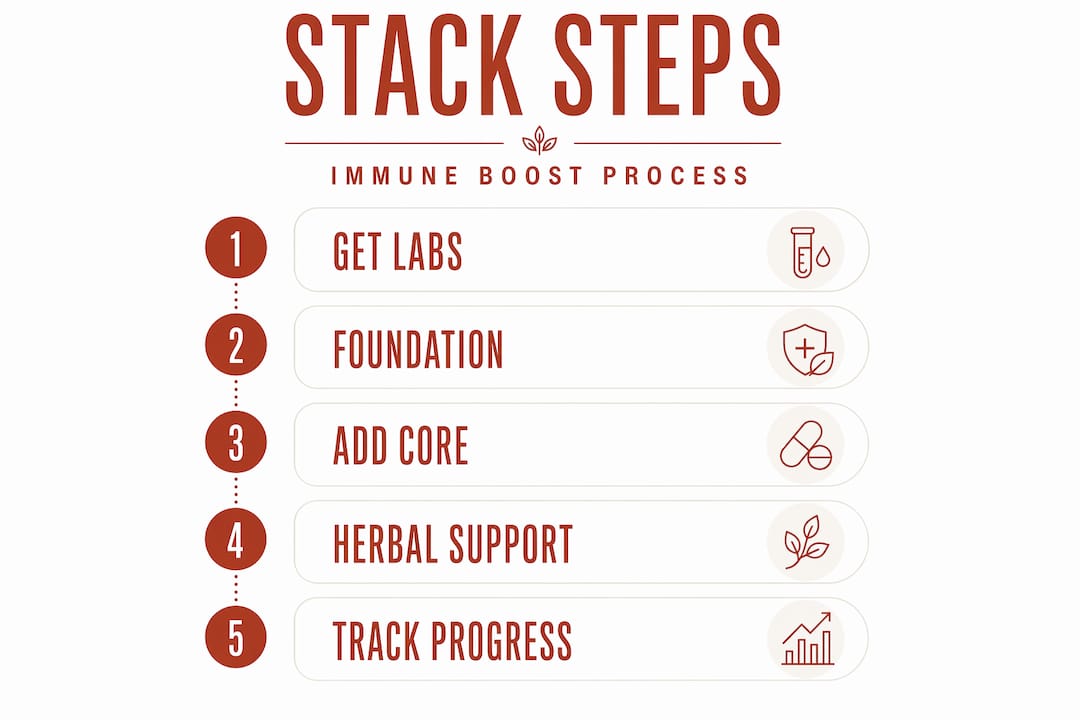
Once you have your lab results and your lifestyle foundation in place, you can construct your stack systematically. The table below shows a practical starting framework.
| Supplement | Daily dose range | Best timing | Notes |
|---|---|---|---|
| Vitamin D3 | 1,000–4,000 IU | With a fat-containing meal | Adjust based on 25(OH)D labs |
| Vitamin C | 500–1,000 mg | Morning with food | Split dose if GI sensitive |
| Zinc | 15–30 mg | With food | Do not exceed 40 mg long-term |
| Magnesium glycinate | 200–400 mg | Evening | Glycinate form is gentler on digestion |
| Omega-3 (EPA/DHA) | 1,000–2,000 mg | With largest meal | Improves fat-soluble vitamin absorption |
| Selenium | 55–200 mcg | Morning | Do not exceed 400 mcg daily |
Here is how to build this out in practice:
-
Start with your confirmed deficiencies. Do not add everything at once. Begin with the one or two supplements your blood work identified as most deficient. Give your body two to four weeks to adjust before adding more.
-
Layer in synergistic pairs. Vitamin D3 works better alongside vitamin K2, which helps direct calcium appropriately. Zinc and copper need to be balanced. High-dose zinc can cause copper deficiency, which ironically impairs the immune function you are trying to support. If you take more than 25 mg of zinc daily, add 1 to 2 mg of copper.
-
Time supplements around meals and your circadian rhythm. Fat-soluble vitamins like D, K, and E absorb significantly better when taken with a fat-containing meal. Magnesium in the evening supports both sleep and immune recovery. Energizing adaptogens like ashwagandha are better taken in the morning.
-
Track your response. Keep a simple log of your energy, infection frequency, and any side effects for the first 60 days. This gives you real data to bring to your next medical appointment and helps you identify what is working.
Safety pitfalls and what to watch for
The supplement industry has a regulatory gap that most people do not fully appreciate. Manufacturers are not required to prove their products are safe or effective before selling them. That means the label on a bottle is not always an accurate reflection of what is inside.
- Always look for third-party certification. Certifications from USP, NSF, or Informed Sport confirm that a product contains what it claims and has been tested for contaminants. The Department of Defense also publishes a supplement safety scorecard that is freely accessible and underused by the general public.
- Watch for toxicity thresholds. Fat-soluble vitamins accumulate in tissue. Excessive vitamin intake can cause toxicity with symptoms ranging from nausea and fatigue to organ damage in severe cases. This is not a theoretical risk; it happens most often with vitamin A and vitamin D when people self-dose without labs.
- Cycle botanical supplements. Herbs like reishi and ashwagandha are not designed for indefinite daily use. Most practitioners recommend six to eight weeks on, followed by a two to four week break.
- Know when to stop. If you develop new symptoms after adding a supplement, stop that supplement first and consult your provider. Do not assume symptoms are unrelated.
Supplements are not regulated like medications. Your due diligence on quality and dosing is not optional. It is the difference between a stack that helps and one that harms.
What to expect and how to measure progress
Managing expectations here is as important as choosing the right supplements. A well-constructed nutritional boost for your immune system does not produce overnight results. Most people notice meaningful changes in energy and infection frequency after eight to twelve weeks of consistent supplementation on top of a solid lifestyle foundation.
Signs that your stack is working include fewer and shorter illnesses, faster recovery when you do get sick, improved energy levels, and better sleep quality. These are not dramatic overnight shifts. They are gradual, cumulative changes that become clear when you compare your experience over months rather than weeks.
Pro Tip: Schedule a follow-up blood panel three to four months after starting your stack. Comparing your 25(OH)D and other markers to your baseline is the most objective way to know whether your supplementation is actually moving the needle.
Supplements support your immune system. They do not replace medical treatment for diagnosed immune conditions. If you are managing a specific immune disorder, your supplement stack should be one layer of a broader care plan developed with your physician. Understanding how chronic systemic inflammation interacts with immune function can also help you interpret what your body is experiencing as you make these changes.
My honest take on supplement stacking
I’ve spent years reading the research on immune supplementation, and the single biggest mistake I see is people treating supplement stacks like a checklist. Take these ten things and your immune system will be fixed. That is not how any of this works.
What I’ve learned is that personalization is everything. The person who needs 4,000 IU of D3 daily is not the same person who needs 1,000 IU. The person whose immune struggles stem from chronic sleep debt will not be saved by zinc. Generic stacks built on marketing logic rather than individual biology produce mediocre results at best.
I’ve also noticed that people dramatically underestimate how much the lifestyle foundation matters. I’ve seen individuals take an impressive array of immune deficiency supplements and still get sick constantly because they were sleeping five hours a night and eating poorly. The supplements were doing real work, but the foundation was actively undermining them.
My honest advice: start small, test your assumptions with labs, and treat your supplement stack as a living document you refine over time. The wellness pathways that produce lasting immune resilience are built on consistency and personalization, not on buying the most expensive stack you can find.
— Larry
Support your immune health with Tryrevivify
If you are serious about building an immune support stack grounded in cellular-level science, Tryrevivify offers something genuinely different. Revivify’s patented formula combines superoxide dismutase (SOD) with prebiotic fiber, targeting free radical damage and oxidative stress at the cellular level. SOD is the body’s primary antioxidant enzyme, and supporting its activity is one of the most direct ways to reduce the oxidative burden that compromises immune function.
Unlike single-nutrient supplements, Revivify works systemically, addressing the cellular environment that your entire immune stack depends on. You can explore the 30-day supply to see exactly what is in the formula and how it fits into a personalized immune health plan. For a broader look at available options, the vitamins and supplements collection is a practical starting point. As always, consult your healthcare provider before adding any new supplement to your regimen.
FAQ
What are the most important supplements for immune deficiency?
Vitamin D3, vitamin C, zinc, magnesium, and selenium form the core of most evidence-based immune deficiency supplement stacks. Your specific needs depend on confirmed deficiencies identified through blood testing.
How long does it take for an immune supplement stack to work?
Most people see measurable improvements in infection frequency and energy after eight to twelve weeks of consistent use. Results depend heavily on the quality of your lifestyle foundation alongside supplementation.
Is it safe to take multiple immune supplements at once?
Combining immune support supplements is generally safe when doses stay within established limits and you account for interactions. High-dose zinc, for example, requires balanced copper intake to avoid creating a new deficiency.
Do I need a doctor’s approval before starting a supplement stack?
You should consult a healthcare provider, especially if you take prescription medications. Certain supplements interact with common drugs, and a pharmacist or physician can identify those risks before they become a problem.
What certifications should I look for on supplement labels?
Look for USP, NSF International, or Informed Sport seals. These third-party certifications confirm that a product contains what the label claims and has been tested for contaminants and incorrect ingredients.