

Top Gut Microbiome Support Supplements 2026
For most healthy adults, a high-quality multi-strain probiotic paired with a daily prebiotic fiber dose is the single most defensible starting point for gut microbiome support in 2026. If you want one product that layers prebiotic fiber, Lactobacillus, polyphenols, and superoxide dismutase into a single daily gel, Revivify is the standout multi-benefit option on this list.
The table below gives you the quick-scan verdict. Detailed cards, clinical evidence, and buying criteria follow.
| Product / Category | Best For | Formulation Type | CFU / Units | Storage | 30-Day Cost Range | Third-Party Tested |
|---|---|---|---|---|---|---|
| Revivify | Daily maintenance, antioxidant + prebiotic support | Gel (prebiotic fiber, Lactobacillus, SOD, polyphenols) | Not CFU-primary | Shelf-stable | See site | Yes |
| Multi-strain probiotic | IBS, antibiotic recovery, everyday maintenance | Capsule / powder | 10–50B CFU | Varies | $20–$50 | Varies |
| Saccharomyces boulardii | Antibiotic-associated diarrhea prevention | Capsule (yeast) | 5–10B CFU | Shelf-stable | $15–$30 | Varies |
| Prebiotic fibers (inulin, FOS, GOS) | Increasing Bifidobacterium, stool consistency | Powder / capsule | Daily dose | Shelf-stable | $10–$30 | Varies |
| Psyllium husk | IBS-C, stool regularity | Powder / capsule | 5–10 g/day | Shelf-stable | $8–$20 | Varies |
| L-glutamine / zinc carnosine | Intestinal permeability, mucosal healing | Powder / capsule | Dose-dependent | Shelf-stable | $20–$40 | Varies |
| Digestive enzymes (Lactaid, Beano) | Lactose intolerance, gas from complex carbs | Tablet / chewable | Enzyme units | Shelf-stable | $10–$25 | Varies |
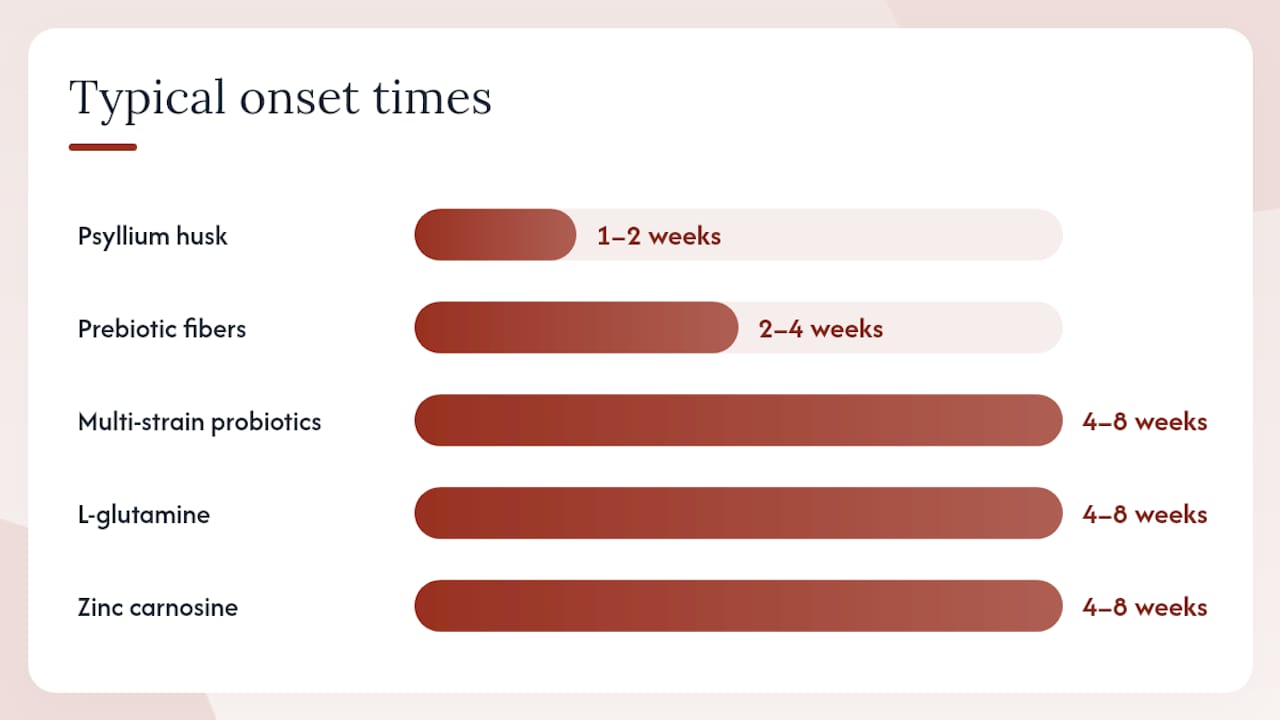
Timeline reality check: Most probiotic trials use 4–8 week windows to detect measurable symptom change. Psyllium husk and prebiotic fibers tend to act faster, often within 1–2 weeks. Do not judge a probiotic by week one.
Immediate red flags: If you are immunocompromised, pregnant, or managing a diagnosed GI condition, consult a clinician before starting any probiotic or prebiotic supplement. Live organisms carry real risks in immunocompromised individuals.
Table of Contents
- What are the top gut microbiome support supplements in 2026?
- How do you choose the right gut microbiome supplement?
- What does the science actually support in 2026?
- How we selected and rated these supplements
- Key Takeaways
- The case for going beyond a single-strain probiotic
- Revivify: a daily gut and cellular support option worth considering
- Useful sources
What are the top gut microbiome support supplements in 2026?
The products and categories below represent the best gut health supplements in 2026, ranked by clinical evidence, ingredient transparency, and practical usability. Each entry covers what it is, who it suits, and what the evidence actually says.
How do you choose the right gut microbiome supplement?
The single most useful question to ask is: what specific outcome am I trying to achieve? The answer determines the category before you ever look at a label.
Budget and value
Price per serving matters more than bottle price. A $60 bottle delivering 60 servings at an effective dose beats a $30 bottle with 15 servings at a sub-therapeutic dose. Subscription pricing typically reduces per-serving cost by 10–20% across most brands. One-time purchases make sense for a first trial; subscriptions make sense once you have confirmed tolerability.
Red flags to avoid
- Weight-loss claims attached to a probiotic with no supporting trial data
- No strain names disclosed beyond genus level
- No COA available on request or on the brand’s website
- CFU claims stated only at manufacture, not at expiry
- Unrealistically high CFU counts (200+ billion) without evidence that higher counts produce better outcomes for the stated use case
Pro Tip: Introduce one supplement at a time and allow at least four weeks before adding another. This makes it possible to attribute any change, positive or negative, to a specific product rather than guessing which one caused it.
Understanding how the gut microbiome affects digestion at a mechanistic level helps you match supplements to symptoms more precisely, rather than relying on marketing claims alone.
What does the science actually support in 2026?
Not all supplement categories carry equal evidence. The table below maps clinical support to each category so you can calibrate expectations before spending money.
| Supplement Category | Evidence Strength | Key Outcome(s) Supported | Typical Onset |
|---|---|---|---|
| Multi-strain probiotics | Strong | IBS symptom reduction, antibiotic-associated diarrhea | 4–8 weeks |
| Saccharomyces boulardii | Strong | Antibiotic-associated diarrhea prevention | During antibiotic course |
| Psyllium husk | Strong | IBS symptom improvement, stool consistency | 1–2 weeks |
| Prebiotic fibers (inulin, FOS, GOS) | Moderate–Strong | Bifidobacterium increase, stool outcomes | 2–4 weeks |
| L-glutamine | Moderate | Intestinal permeability, post-infectious IBS | 4–8 weeks |
| Zinc carnosine | Moderate | Mucosal healing, gut permeability | 4–8 weeks |
| Digestive enzymes (targeted) | Moderate | Lactose intolerance, gas from complex carbs | Immediate (per dose) |
| Broad-spectrum enzyme blends | Limited | No consistent benefit in healthy adults | N/A |
Multi-strain probiotics
The evidence base here is the broadest of any supplement category. Meta-analyses confirm measurable IBS symptom score reductions across multiple trials. The key variable is strain selection: clinical matching (pairing a studied strain to a specific goal) predicts benefit better than raw CFU count. Lactobacillus rhamnosus GG is among the most studied strains for general gut health; Bifidobacterium infantis 35624 has specific IBS data; S. boulardii is the go-to for antibiotic-associated diarrhea.
Saccharomyces boulardii
RCT and meta-analytic evidence consistently show S. boulardii reduces the risk of antibiotic-associated diarrhea. Its yeast biology means antibiotics leave it unaffected, which is the mechanism that makes it uniquely useful during an antibiotic course rather than after.
Psyllium husk
Meta-analytic data place psyllium among the fastest-acting and most consistently effective fiber interventions for IBS and stool consistency. The FDA’s recognition of its cholesterol-lowering benefit adds a secondary cardiovascular reason to use it. Onset within 1–2 weeks is realistic.
Prebiotic fibers
Systematic review data confirm that inulin, FOS, and GOS increase Bifidobacterium counts and improve stool outcomes when taken as daily supplements. The dose-response relationship is real: too little produces no measurable change; too much too fast produces gas and bloating. Slow titration from a small starting dose upward over 2–4 weeks is the practical protocol.
L-glutamine
RCT evidence supports L-glutamine for improving intestinal barrier markers and symptoms in post-infectious IBS at therapeutic doses. This is a targeted tool, not a general gut supplement. The evidence is strongest in populations with documented permeability issues rather than healthy adults.
Zinc carnosine
Clinical trial data, including pharmaceutical experience with polaprezinc in Japan, demonstrate mucosal benefits and reduced gut permeability in stressed populations. The mechanism is adhesion to mucosal surfaces, which distinguishes it from systemic anti-inflammatory approaches. Evidence strength is moderate; it works best as an adjunct to a probiotic protocol rather than a standalone.
Digestive enzymes
Lactaid and Beano are the clearest examples of targeted enzyme use that works. Broad-spectrum enzyme blends marketed for general digestion in healthy adults lack the same evidence base. Johns Hopkins Medicine is direct on this point: OTC enzyme supplements are mainly indicated for specific deficiencies, not routine digestive support in otherwise healthy people.
The gut-immunity connection is also worth understanding when evaluating immune-focused probiotic claims, since many products in this space make immune benefit claims that outrun their actual strain-level evidence.
How we selected and rated these supplements
Every product and category on this list passed through an evidence-first filter before inclusion. Here is the exact rubric used.
Key Takeaways
A high-quality multi-strain probiotic paired with daily prebiotic fiber remains the most evidence-consistent gut microbiome support strategy in 2026, with Revivify offering a uniquely formulated gel option that combines prebiotic fiber, Lactobacillus, polyphenols, and superoxide dismutase in a single daily dose.
| Point | Details |
|---|---|
| Start with a synbiotic approach | Pair a multi-strain probiotic (10–50 billion CFU of named strains) with a daily prebiotic fiber dose for the broadest evidence base. |
| Match the supplement to your goal | Use S. boulardii for antibiotic recovery, psyllium for IBS-C, and targeted enzymes only for specific food intolerances. |
| Allow 4–8 weeks per trial | Most probiotic trials use 4–8 week windows; judging a product before that window closes produces unreliable conclusions. |
| Verify label transparency | Confirm strain-level identity, CFU at expiry, and third-party COA before purchasing any probiotic product. |
| Tryrevivify’s Revivify | A gel combining prebiotic fiber, Lactobacillus, SOD, and polyphenols; third-party tested and available with a subscription and risk-free guarantee. |
The case for going beyond a single-strain probiotic
Most people shopping for gut supplements in 2026 are choosing between a multi-strain probiotic and whatever is on the shelf at their local pharmacy. That framing misses the more interesting question: what does your gut actually need right now, and does the product you are considering address that specific mechanism?
The evidence is clear that strain identity matters more than CFU count. A product with 100 billion CFU of an unstudied strain is less useful than one with 10 billion CFU of Lactobacillus rhamnosus GG or Bifidobacterium infantis 35624, both of which have human trial data behind them. The supplement industry has not always made this easy to verify, which is why third-party COA testing is not a nice-to-have but a basic quality threshold.
What I find genuinely underappreciated is the role of oxidative stress in gut function. The gut lining is one of the highest-turnover tissues in the body, and free radical activity contributes to mucosal degradation in ways that a probiotic alone does not address. That is the gap Revivify’s SOD-plus-prebiotic formula is designed to fill. It is not a replacement for a targeted probiotic when you have a specific clinical need, but for daily cellular and gut maintenance, the combination of antioxidant enzyme support with prebiotic fiber is a more complete approach than most single-category products offer.
One practical tip worth implementing immediately: if you are adding prebiotic fiber for the first time, start at 1 g per day and increase by 1 g every five days. The gas and bloating that cause most people to abandon prebiotics are dose-dependent and almost entirely avoidable with a slow ramp. Most products suggest a full serving from day one; that is a marketing decision, not a clinical one.
Revivify: a daily gut and cellular support option worth considering
If you have read through the evidence above and want a single daily product that covers prebiotic fiber, a Lactobacillus component, polyphenols, and superoxide dismutase in one formula, Revivify is built for exactly that purpose. Most gut supplements address one mechanism. Revivify addresses four simultaneously: feeding beneficial bacteria with prebiotic fiber, supporting the microbiome with Lactobacillus, reducing oxidative stress with SOD, and adding polyphenol-based anti-inflammatory support.
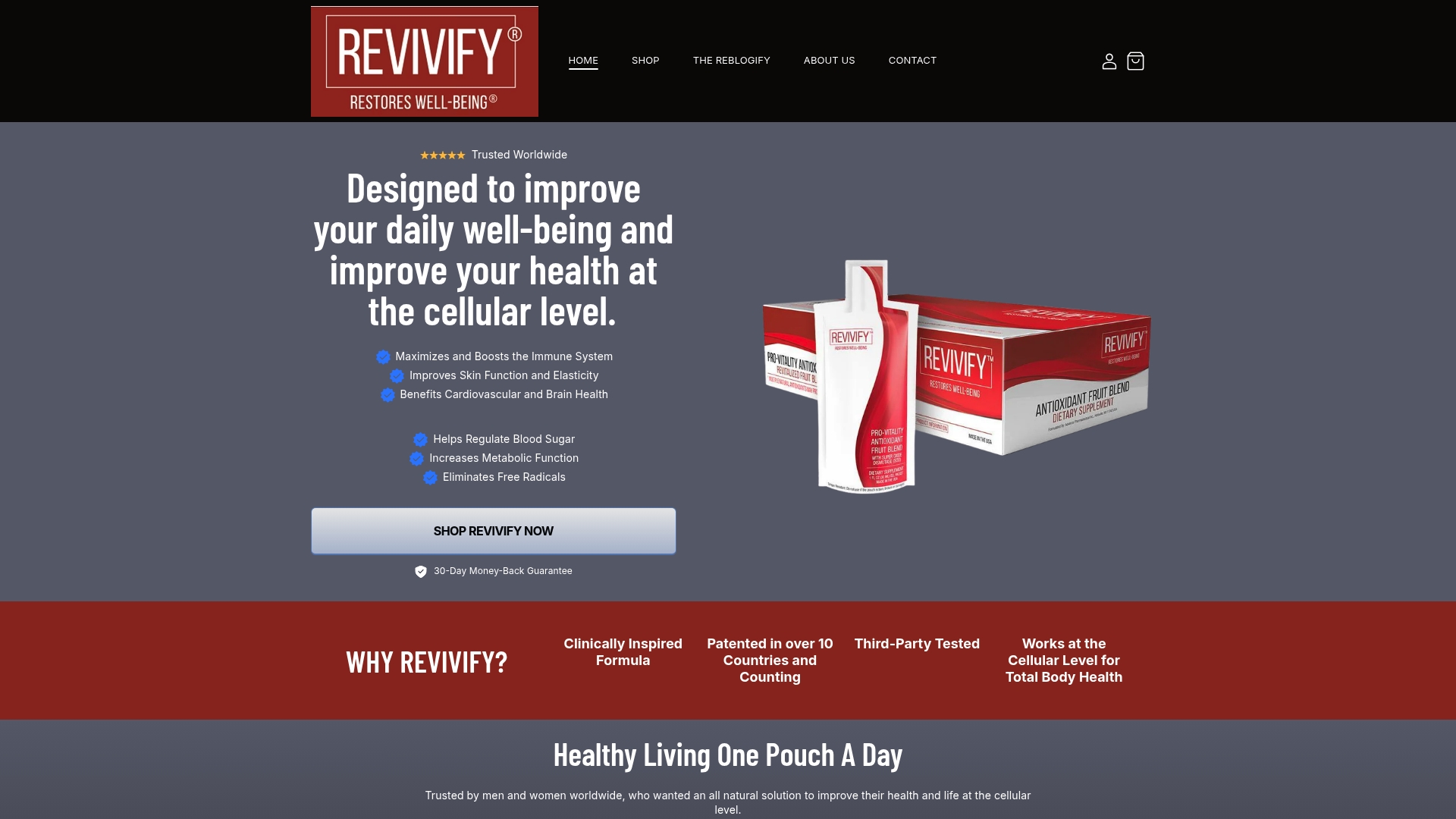
The gel form is a practical advantage. It increases surface contact with the gut lining compared to a compressed tablet, and the patented formula is third-party tested so you are not relying on label claims alone. Revivify is plant-based, shelf-stable, and available with a subscription option that reduces the per-serving cost, plus a risk-free guarantee if it is not the right fit.
For adults managing daily inflammation, blood sugar regulation, cardiovascular health, or digestive concerns alongside gut microbiome support, the multi-target approach is worth the investment over a single-strain capsule. Visit Tryrevivify to review the full ingredient profile, subscription options, and guarantee terms before your first order.
Useful sources
The claims in this article draw on the following primary studies and authoritative sources. Real COA links for specific products should be requested directly from the manufacturer.
- Digestive Enzymes and Digestive Enzyme Supplements | Johns Hopkins Medicine
- Digestive enzymes: How supplements like Lactaid and Beano can help with digestion - Harvard Health
- pmc.ncbi.nlm.nih.gov
- pubmed.ncbi.nlm.nih.gov
- pubmed.ncbi.nlm.nih.gov
- pubmed.ncbi.nlm.nih.gov
- pubmed.ncbi.nlm.nih.gov
- pubmed.ncbi.nlm.nih.gov
This article provides general educational information about gut microbiome support supplements. It is not a substitute for professional medical advice, diagnosis, or treatment. Consult a qualified clinician or registered dietitian for personal recommendations, especially if you have a diagnosed GI condition or are taking prescription medications.