

What Is Endothelial Oxidative Damage and Why It Matters
Endothelial oxidative damage is defined as a pathological redox imbalance where reactive oxygen and nitrogen species chronically overwhelm the body’s endogenous antioxidants, including superoxide dismutase, causing the blood vessel lining to malfunction. Clinicians call this state endothelial dysfunction, and it sits at the root of atherosclerosis, hypertension, and cardiovascular disease. The endothelium is a single-cell layer coating every blood vessel in your body. When oxidative stress in the endothelium tips out of control, that thin layer stops regulating blood flow, inflammation, and clotting the way it should. Understanding what is endothelial oxidative damage, and what drives it, is the first step toward protecting your vascular and metabolic health.
What is endothelial oxidative damage at the cellular level?
Endothelial oxidative damage begins when reactive oxygen species (ROS) production outpaces the cell’s ability to neutralize them. ROS are chemically unstable molecules that steal electrons from nearby structures, damaging proteins, lipids, and DNA inside endothelial cells. The most important ROS in this context is superoxide, a molecule that the enzyme superoxide dismutase (SOD) normally converts into the less harmful hydrogen peroxide. When SOD and other antioxidant defenses fall behind, superoxide accumulates and the damage accelerates.

The most consequential consequence of excess superoxide is what it does to nitric oxide. Nitric oxide acts as both a vasodilator and a primary antioxidant inside vessel walls. When superoxide reacts with nitric oxide, it forms peroxynitrite, a highly damaging molecule that attacks endothelial proteins and DNA. You can read more about this relationship in our deep dive on nitric oxide and oxidative stress. The loss of nitric oxide means blood vessels lose their ability to relax and dilate, which raises blood pressure and reduces circulation.
The ROS sources inside endothelial cells include several distinct enzyme systems:
- NADPH oxidases (NOX2 and NOX4): These are the primary ROS-generating enzymes in vessel walls, activated by metabolic stress and inflammation.
- Uncoupled eNOS: Under oxidative stress, the enzyme that normally produces nitric oxide (endothelial nitric oxide synthase) switches to producing superoxide instead, a process called uncoupling. This is a critical turning point.
- Xanthine oxidase: This enzyme generates superoxide during the breakdown of purines, particularly under conditions of ischemia or metabolic overload.
- Mitochondrial respiratory chain: ROS sources in endothelial cells include mitochondria, which leak electrons and produce superoxide as a byproduct of energy metabolism.
The result is a self-reinforcing cycle. Damaged endothelial cells produce more ROS via uncoupled eNOS and activated NOX enzymes, which causes further damage and accelerates vascular aging. Think of it like a fire that generates its own fuel. Once the cycle starts, it takes deliberate intervention to break it.
Pro Tip: If you are concerned about vascular health, ask your doctor specifically about oxidative stress biomarkers, not just standard cholesterol panels. Standard lipid tests often miss early endothelial dysfunction entirely.
What causes endothelial oxidative damage?
Chronic metabolic conditions are the primary drivers of endothelial cell damage. Diabetes, obesity, hypertension, and high cholesterol all activate the NOX2 and NOX4 enzyme systems in vessel walls, flooding the endothelium with superoxide. Each condition amplifies the others, which is why metabolic syndrome carries such a high cardiovascular risk.
Here is how the most common risk factors contribute:
- Hyperglycemia (high blood sugar): Excess glucose activates multiple ROS-generating pathways simultaneously, including protein kinase C and the polyol pathway. You can explore this further in our article on oxidative stress in diabetes.
- Hypertension: High mechanical pressure on vessel walls directly activates NADPH oxidases, increasing superoxide output.
- Obesity and metabolic syndrome: Adipose tissue releases pro-inflammatory cytokines that trigger endothelial ROS production and suppress antioxidant enzyme activity.
- High LDL cholesterol: Oxidized LDL particles directly damage endothelial cells and activate inflammatory signaling cascades.
- Chronic inflammation: The NLRP3 inflammasome, a protein complex activated by metabolic stress, amplifies both oxidative and inflammatory damage simultaneously.
Environmental and lifestyle factors also contribute. Cigarette smoke delivers exogenous ROS directly into the bloodstream. A sedentary lifestyle reduces the shear stress that normally stimulates nitric oxide production. A diet low in antioxidant nutrients depletes the endothelium’s natural defenses. These factors rarely act alone. They stack, and their combined effect on oxidative inflammatory damage is greater than the sum of their parts.
What are the clinical effects of endothelial oxidative damage?
Endothelial oxidative damage contributes directly to the progression of atherosclerosis, hypertension, stroke, and kidney disease. Oxidative DNA damage in endothelial cells accelerates vascular aging and drives cardiovascular-kidney-metabolic syndrome, a cluster of conditions that now affects a large portion of adults with chronic metabolic disease. The connection between endothelial dysfunction and stroke risk is particularly direct, as damaged vessel walls are more prone to plaque formation and rupture.
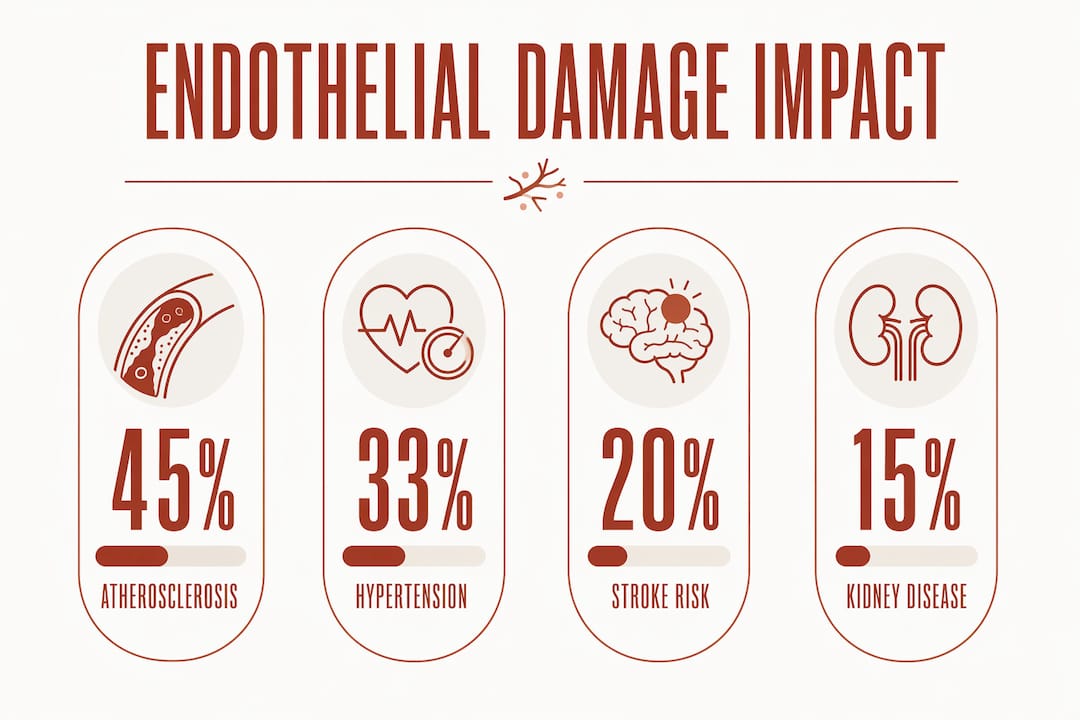
The challenge is that early endothelial oxidative stress is largely invisible on standard blood tests. A routine lipid panel does not measure endothelial function. By the time atherosclerosis appears on imaging, significant oxidative damage has already occurred over years. This is why specialized biomarkers matter.
| Biomarker | What it measures | Clinical significance |
|---|---|---|
| ADMA (asymmetric dimethylarginine) | Inhibitor of nitric oxide synthesis | Elevated levels signal reduced nitric oxide and early endothelial dysfunction |
| F2-isoprostanes | Lipid peroxidation products | Direct marker of oxidative stress in vessel walls |
| hs-CRP (high-sensitivity C-reactive protein) | Systemic inflammation | Reflects inflammatory activation linked to endothelial damage |
Biomarkers like ADMA, F2-isoprostanes, and hs-CRP detect endothelial oxidative stress far earlier than conventional lipid panels. That early detection window is where intervention has the greatest impact. Waiting for symptoms means waiting for disease that is already well established.
Pro Tip: Ask your cardiologist or internist about hs-CRP testing alongside your standard lipid panel. It costs little and adds meaningful information about your vascular inflammation status.
How can endothelial oxidative damage be prevented and managed?
Single-target treatments consistently underperform in endothelial oxidative damage because the condition involves interconnected oxidative, inflammatory, and metabolic pathways that must be addressed together. A statin alone reduces LDL but does not fully restore nitric oxide bioavailability. An antioxidant supplement alone cannot overcome the ROS output of uncoupled eNOS driven by uncontrolled diabetes. Effective management requires layered strategies.
Dietary and nutritional approaches form the foundation:
- Vitamin C: Antioxidant nutrients like vitamin C protect the vascular endothelium by reducing oxidative damage and increasing nitric oxide availability. Vitamin C also regenerates other antioxidants like vitamin E.
- Flavonoids: Found in berries, dark chocolate, and green tea, flavonoids activate endothelial nitric oxide synthase and suppress NADPH oxidase activity.
- N-acetyl L-cysteine (NAC): NAC is a well-studied antioxidant precursor that replenishes glutathione, one of the cell’s primary internal antioxidants. It is available as a dedicated supplement, such as NAC from Brainwellness, for those seeking targeted antioxidant support.
- Superoxide dismutase (SOD): SOD is the first responder in the antioxidant relay. Think of it as the lead runner who intercepts superoxide before it can react with nitric oxide. Supplementing with bioavailable SOD supports this critical first line of defense.
Lifestyle modifications are equally important. Aerobic exercise increases shear stress on vessel walls, which stimulates nitric oxide production and reduces ROS output. A Mediterranean-style diet rich in polyphenols and omega-3 fatty acids reduces systemic inflammation and supports antioxidant enzyme activity. Smoking cessation removes a direct source of exogenous ROS. Managing blood sugar, blood pressure, and body weight addresses the upstream metabolic drivers that activate NOX enzymes in the first place.
Emerging therapies include small molecule NOX inhibitors, stem cell-based endothelial repair, and gene therapy approaches targeting eNOS recoupling. These are still largely in clinical trial phases, but they represent the direction the field is moving. The practical takeaway for you right now is that the lifestyle and nutritional strategies above have strong evidence behind them and can begin working immediately.
Key Takeaways
Endothelial oxidative damage is a self-reinforcing cycle where excess reactive oxygen species deplete nitric oxide, trigger vascular inflammation, and accelerate cardiovascular disease, requiring multi-targeted intervention to break.
| Point | Details |
|---|---|
| Core definition | Endothelial oxidative damage is a redox imbalance where ROS overwhelm antioxidants like superoxide dismutase, causing vessel lining dysfunction. |
| Key biological mechanism | Superoxide reacts with nitric oxide to form peroxynitrite, destroying both the vasodilator and antioxidant functions of nitric oxide simultaneously. |
| Primary risk drivers | Diabetes, hypertension, obesity, and high LDL activate NOX2/NOX4 enzymes, flooding the endothelium with superoxide and accelerating damage. |
| Early detection gap | Standard lipid panels miss early endothelial oxidative stress. Biomarkers like ADMA, F2-isoprostanes, and hs-CRP provide a more complete picture. |
| Prevention strategy | Multi-targeted approaches combining antioxidant nutrition, aerobic exercise, and metabolic control outperform any single intervention. |
Why I think we underestimate how early this damage starts
Most people think of cardiovascular disease as something that develops in their 50s or 60s. The research tells a different story. Endothelial oxidative damage is an early initiator of atherosclerosis, not a late consequence. By the time a person receives a diagnosis of coronary artery disease, their endothelium has likely been under oxidative stress for a decade or more.
What frustrates me about the current clinical conversation is the gap between what the science shows and what actually gets measured. Doctors order lipid panels. They check blood pressure. They rarely order hs-CRP or ADMA unless a patient is already showing signs of cardiovascular disease. That is backwards. The biomarkers that detect early endothelial dysfunction are affordable and available. The barrier is awareness, not technology.
The other thing I want to push back on is the idea that antioxidant supplements alone solve this problem. They do not. Vitamin C and flavonoids help. SOD support helps. But if someone is still eating a high-glycemic diet, carrying excess visceral fat, and not exercising, no supplement closes that gap. The research on reducing oxidative stress is clear that lifestyle is the foundation, and supplementation builds on top of it. Not the other way around.
The good news is that the endothelium is remarkably responsive to the right conditions. Nitric oxide production can recover. Antioxidant enzyme activity can be restored. The window for meaningful intervention is wider than most people realize, but it requires acting before symptoms appear.
— Larry
Supporting your endothelial health with Tryrevivify
Endothelial oxidative damage is a cellular problem, and addressing it starts at the cellular level.
Tryrevivify is a daily supplement built around a patented combination of superoxide dismutase and prebiotic fiber. SOD is the body’s primary defense against superoxide, the exact molecule that depletes nitric oxide and triggers the vascular damage cycle described throughout this article. By supporting SOD activity and gut health simultaneously, Tryrevivify works at the root of the oxidative stress process rather than masking its effects. The 30-day supply makes it straightforward to start and assess how your body responds. For those serious about vascular and cellular health, Tryrevivify offers a science-grounded starting point.
FAQ
What is endothelial oxidative damage in simple terms?
Endothelial oxidative damage is what happens when harmful molecules called reactive oxygen species build up faster than your body can neutralize them, causing the thin lining of your blood vessels to stop working correctly. This dysfunction is a known early driver of heart disease, stroke, and hypertension.
How does oxidative damage affect nitric oxide?
Superoxide reacts with nitric oxide to form peroxynitrite, a damaging compound that destroys both the vasodilating and antioxidant functions of nitric oxide. This reaction is central to how oxidative stress drives vascular disease progression.
What are the early signs of endothelial oxidative stress?
Early endothelial oxidative stress often produces no obvious symptoms, which is why it is frequently missed. Elevated biomarkers like ADMA, F2-isoprostanes, and hs-CRP can signal damage before clinical disease appears.
Can diet and exercise reverse endothelial oxidative damage?
Aerobic exercise and an antioxidant-rich diet can meaningfully restore endothelial function by increasing nitric oxide production and reducing ROS output. These lifestyle changes work best when combined with control of underlying metabolic conditions like diabetes and hypertension.
What role does superoxide dismutase play in endothelial protection?
Superoxide dismutase is the primary enzyme that neutralizes superoxide before it can deplete nitric oxide. When SOD activity is insufficient, the superoxide-peroxynitrite cycle accelerates, making SOD support a key target in endothelial health strategies.