

When to Take Probiotics: Practical Timing and Routine
Take your probiotic at a time you can stick to every single day. For most non enteric coated strains, that means with or right before a meal that has some fat or protein in it, since food helps buffer stomach acid on the way down. Two rules matter more than the clock: pair your dose with food when your product calls for it, and take it at the same point in your day, every day. One caution up front: if you are on antibiotics, space the two doses apart by a couple of hours.
- Pick one anchor time (breakfast, bedtime) and keep it.
- Pair most strains with a meal containing fat or protein.
- Separate probiotics from antibiotic doses by at least two hours.
Key Takeaways
Consistency in daily timing, not a precise hour, determines whether a probiotic actually colonizes and delivers measurable digestive benefits.
| Point | Details |
|---|---|
| Consistency beats precision | Take your dose at the same daily anchor point rather than chasing an exact “best” hour. |
| Pair most strains with food | Fat or protein in a meal buffers stomach acid and improves survival for common strains. |
| Space antibiotics and probiotics | Separate doses by at least two hours, and continue probiotics for two weeks post-antibiotics. |
| Give it four to eight weeks | Track bloating, stool consistency, and side effects before judging results. |
| Know your risk group | Immunocompromised, hospitalized, or pregnant readers should consult a clinician first. |
Table of Contents
- How Probiotics Travel Through Your Digestive Tract
- Should You Take Probiotics With or Without Food?
- Morning or Night: Which Works Better for You?
- How Do You Take Probiotics With Antibiotics?
- Who Should Be Cautious About Taking Probiotics?
- How Long Until Probiotics Start Working?
- Building a Probiotic Routine You Will Actually Keep
- Frequently Asked Questions
- Sources
How Probiotics Travel Through Your Digestive Tract
Probiotic bacteria have one job before they can do anything useful: survive the trip. They travel from your stomach, through the small intestine, and into the colon, where most of the beneficial action, from crowding out unfriendly microbes to supporting regularity, actually happens. The stomach is the obstacle. Gastric acid sits at a pH low enough to kill a large share of unprotected bacteria before they ever reach the intestine.
Clinical guidance on probiotic timing notes that consistency matters more than hitting an exact hour, and that pairing a dose with a meal can improve survival for many strains as they move toward the colon.
Strain matters here more than most labels admit. A peer-reviewed review of probiotic research found that effects and survival rates vary widely by strain and by study, which is exactly why a single “best time” doesn’t exist for every product on the shelf.
Should You Take Probiotics With or Without Food?
For most common strains, taking your probiotic with or shortly after a meal, especially one with some fat or protein, generally improves how many organisms survive stomach acid and make it to your colon. Food raises stomach pH temporarily and slows gastric emptying, both of which buy your bacteria more time and a gentler environment.
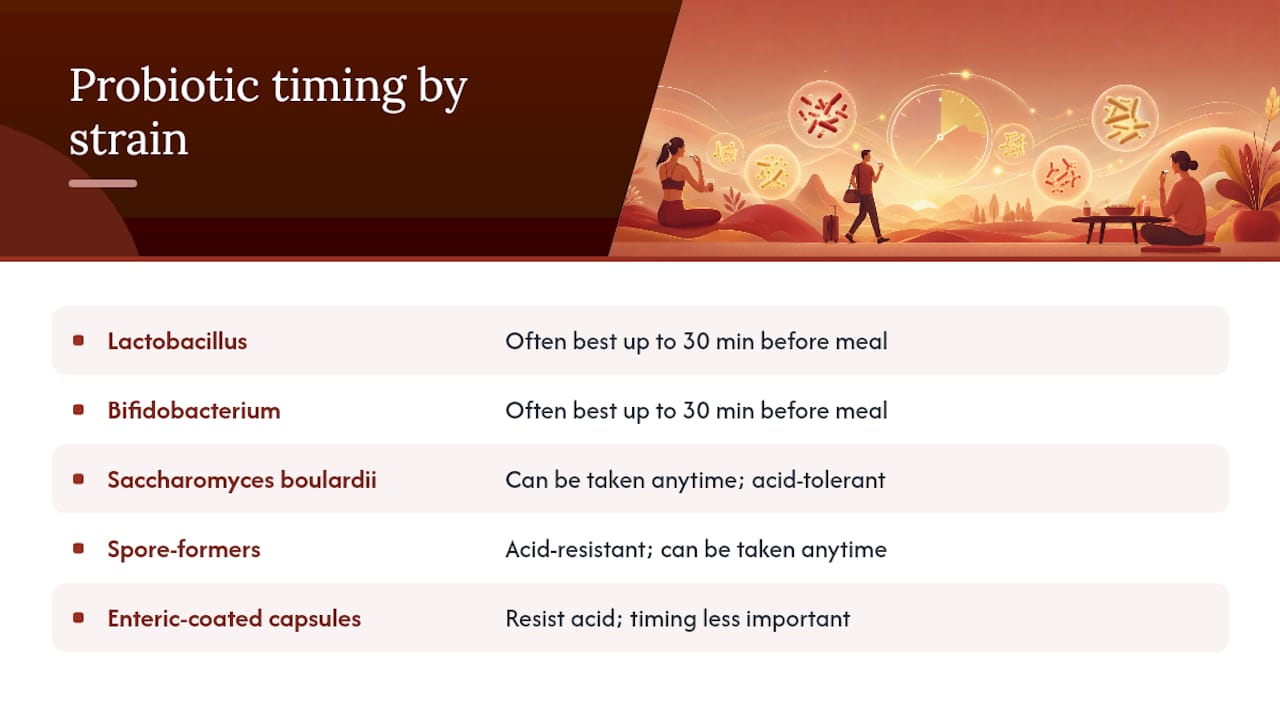
That rule bends by strain. Healthline’s review of probiotic timing notes that Lactobacillus and Bifidobacterium, the workhorses in most gut-health supplements, often do best taken up to 30 minutes before a meal, riding in ahead of the food itself. Saccharomyces boulardii, a yeast rather than a bacterium, is far more acid-tolerant and can be taken essentially anytime. Spore-forming strains behave similarly, since their protective coating survives acid exposure on its own.
A practical pairing: a serving of full-fat yogurt or a breakfast with eggs and avocado gives your probiotic the fat and protein it needs to travel safely. If your label mentions an enteric coating, that changes the math entirely. Coated capsules are engineered to resist acid regardless of what’s in your stomach, so check the packaging before you build a routine around meal timing.
Morning or Night: Which Works Better for You?
Either works, as long as you actually do it every day. The Cleveland Clinic’s guidance on probiotic timing points to a simple truth: sporadic use, taking a dose only a few times per week does far less for colonization than a consistent daily routine.
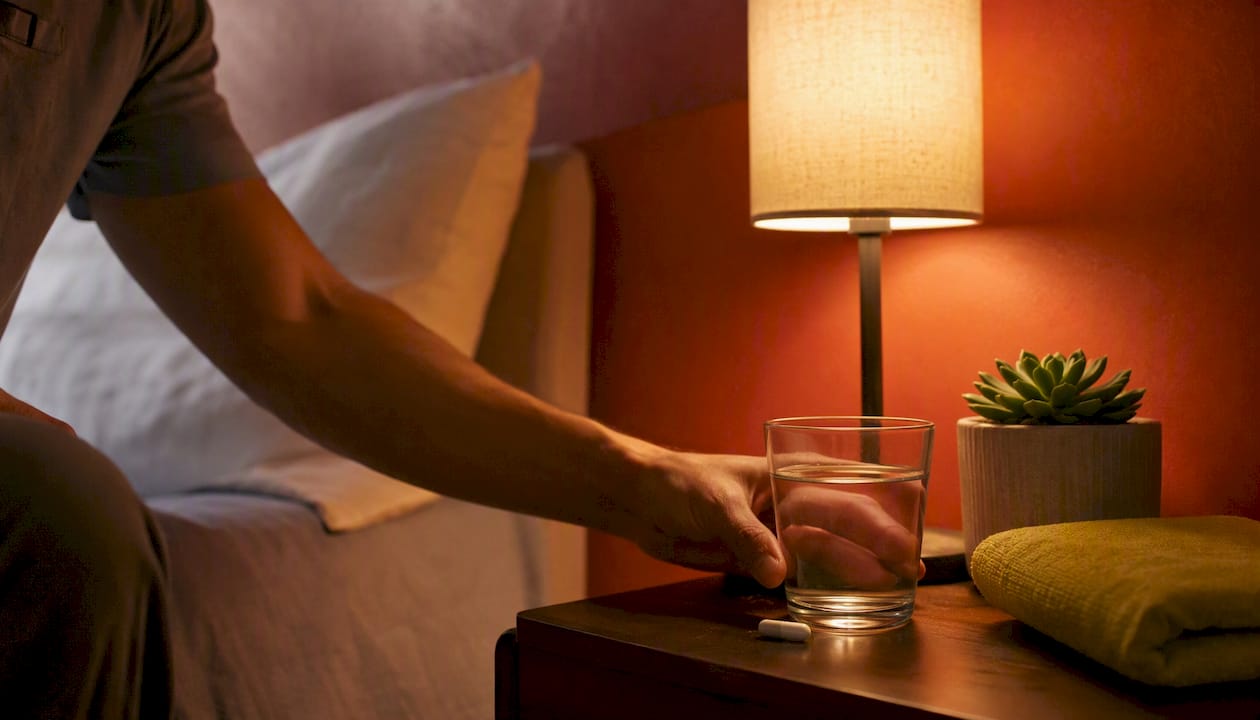
Morning dosing pairs naturally with breakfast and rides along with your gut’s normal daytime activity. Evening dosing has its own logic. Since mild gas and bloating are common early side effects, taking your dose at night means you sleep through the adjustment period instead of feeling it at your desk. Pick whichever slot fits an existing habit, not whichever slot sounds more scientific.
How Do You Take Probiotics With Antibiotics?
Separate your probiotic dose from your antibiotic dose by at least two hours. Antibiotics don’t distinguish between harmful bacteria and the beneficial strains in your supplement, so taking them back to back can wipe out the probiotic before it does any good.
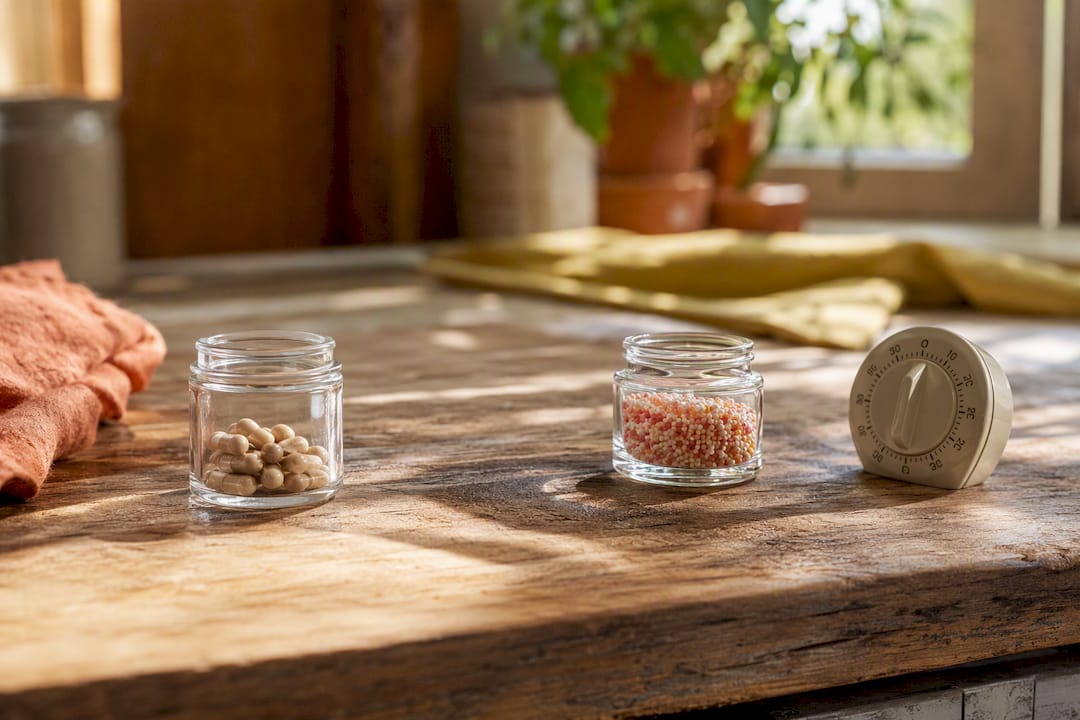
Some strains sidestep this problem entirely. Saccharomyces boulardii, being a yeast, isn’t affected by antibiotics at all, and certain Lactobacillus strains are commonly recommended alongside antibiotic courses specifically because they hold up well with proper spacing. A simple schedule: antibiotic at 8 AM and 8 PM, probiotic at 1 PM or so, right in the gap. Harvard Health notes that continuing probiotics after finishing antibiotics can help support recovery, and CDC guidance on antibiotic use confirms these drugs disrupt gut microbes broadly, which is exactly why spacing and follow-through matter. If you’re hospitalized or severely ill, loop in your clinician before adding anything.
Who Should Be Cautious About Taking Probiotics?
Most people notice nothing worse than temporary gas or bloating in the first week or two. The rarer but more serious risk is infection, and it lands almost exclusively in people whose immune systems are already compromised.
Check with a clinician first if you fall into any of these groups:
- You’re immunocompromised or undergoing cancer treatment.
- You’re hospitalized or seriously ill.
- You’re caring for a newborn or premature infant.
- You’re pregnant or nursing and taking other medications.
NCCIH’s consumer guidance flags all of these as scenarios where professional input should come before self-directed supplementation. If you develop fever, severe abdominal pain, or symptoms that worsen instead of settle, stop the supplement and seek care.
How Long Until Probiotics Start Working?
Plan on a trial of at least four to eight weeks before judging whether a probiotic is doing anything for you. Some effects show up faster. Less bloating and more consistent stools often improve within the first couple of weeks for people who tolerate the strain well.

Deeper issues take longer. Recurring IBS symptoms or a genuine shift in your microbiome’s composition typically need the full trial window, and a narrative review of probiotic studies found that trial length varied considerably by strain and target outcome, which is a nice way of saying there’s no universal deadline. Track your own results with a short log: note stool frequency and consistency, bloating or gas, the time you took your dose, and anything unusual. Patterns show up faster on paper than in memory.
Building a Probiotic Routine You Will Actually Keep
Check your label before anything else. Some probiotics need refrigeration to keep the organisms alive; others are shelf-stable by design. CFU counts and enteric coatings both affect how a product should be stored and timed, so don’t assume one bottle’s rules apply to the next.
A simple daily checklist:
- Take your dose at the same anchor point every day.
- Pair it with food if your strain calls for it.
- Confirm refrigeration status weekly if your product requires it.
- Jot a quick note on symptoms or side effects.
Pro Tip: Anchor your probiotic to something you already do without thinking, like brushing your teeth or brewing coffee. Habit stacking beats willpower for keeping any daily supplement, including the prebiotic fiber routines that often pair well with probiotics, on schedule long term.
A pragmatic approach to timing and consistency
Don’t obsess over the exact hour. Pick a strain-appropriate window, whether that’s before breakfast, with dinner, or spaced from an antibiotic, and repeat it daily without renegotiating each morning. If you fall into a higher-risk group, a quick conversation with your clinician beats guesswork every time.
Give your gut bacteria a fair shot by pairing consistent timing with the right nutritional support. Tryrevivify’s daily gel supplement combines superoxide dismutase, prebiotic fiber, polyphenols, and lactobacillus in one formula built to support digestion, reduce oxidative stress, and back your gut’s daily workload from the inside out. It’s third-party tested, plant-based, and backed by a risk-free guarantee, with subscription options if you’d rather not think about reordering.
Frequently Asked Questions
When should I take probiotics daily for the best results? Pick one consistent time, ideally with a meal containing fat or protein, and repeat it every day. Habit matters more than the specific hour you choose.
Should I take probiotics before or after meals? Many strains, including Lactobacillus and Bifidobacterium, do well taken up to 30 minutes before eating or with a meal. Check your label since enteric-coated products often work anytime.
Can I take probiotics on an empty stomach? Some strains, particularly spore-formers and Saccharomyces boulardii, tolerate an empty stomach fine. Most others benefit from some food to buffer stomach acid.
Do probiotics work better in the morning or at night? Both work equally well biologically. Night dosing can help some people sleep through initial gas or bloating, while morning dosing pairs naturally with breakfast.
How long should I keep taking probiotics with antibiotics? Continue during the antibiotic course, spaced two hours apart from each dose, and for at least two weeks afterward unless your clinician advises otherwise.
This article is general information, not a substitute for advice from a qualified doctor. Consult a qualified healthcare professional about your own circumstances before acting on anything here.
Sources
- When Is the Best Time to Take Probiotics? (Cleveland Clinic)
- Is There a Best Time to Take Probiotics? (Healthline)
- Peer-reviewed probiotic review (PMC4045285)
- Probiotics: What You Need to Know (NCCIH)
- Should you take probiotics? (Harvard Health)
- Antibiotic use Q&A (CDC)