

Why Free Radicals Trigger Cardiac Damage to Your Heart
Free radicals are unstable molecules that steal electrons from healthy heart cells, triggering a chain of oxidative damage known clinically as oxidative stress. This process is the primary reason why free radicals trigger cardiac damage: when reactive oxygen species (ROS) overwhelm the heart’s natural antioxidant defenses, they destroy cell membranes, impair energy production, and kill cardiomyocytes (the muscle cells that make your heart beat). The heart is especially vulnerable because it runs on enormous amounts of ATP energy and never gets to rest. Understanding this mechanism is the first step toward protecting your cardiac health at the cellular level.
Why free radicals trigger cardiac damage at the cellular level
The heart muscle operates under constant mechanical and metabolic demand. That demand makes it one of the most energy-hungry organs in the body, and energy production is exactly where free radical damage begins.
Cardiomyocytes generate ATP inside mitochondria. During that process, electrons occasionally escape the respiratory chain and react with oxygen to form superoxide, a reactive oxygen species. Under normal conditions, antioxidant enzymes neutralize these molecules before they cause harm. When ROS production outpaces the body’s defenses, oxidative stress causes injury including cardiomyocyte apoptosis, fibrosis, and myocardial remodeling. That imbalance is the core of the problem.
Free radicals attack three critical targets inside heart cells:
- Cell membranes: Lipid peroxidation is a self-amplifying chain reaction. One free radical strips an electron from a membrane fatty acid, creating another radical, which attacks the next fatty acid, and so on. Timely antioxidant intervention is critical to stop this cascade before widespread membrane damage occurs.
- Proteins and enzymes: ROS oxidize amino acid side chains, inactivating the contractile proteins that allow heart muscle to squeeze and relax properly.
- DNA: Mitochondrial DNA sits close to the electron transport chain with minimal protective histones. Mitochondrial DNA damage is more detrimental than cytoplasmic damage for cardiac energy and function because the heart’s ATP demand is so high that even partial mitochondrial failure reduces contractile force.
The most destructive individual radical is the hydroxyl radical (•OH). It forms primarily through the Fenton reaction, where iron ions catalyze the conversion of hydrogen peroxide into •OH. The Fenton reaction near cardiomyocyte mitochondria links iron overload directly to accelerated cardiac damage, which is why iron dysregulation is a recognized risk factor in heart failure patients.
Pro Tip: Think of mitochondrial DNA as the heart’s power plant blueprint. Once free radicals shred that blueprint, the plant cannot rebuild itself efficiently. Protecting mitochondria is not just about energy; it is about keeping the entire cardiac repair system functional.
Where do free radicals in heart tissue actually come from?
Knowing the source of ROS helps explain why certain lifestyle factors and medical conditions accelerate cardiac damage. The heart generates free radicals from several distinct enzymatic and metabolic pathways.
| ROS Source | Mechanism | Primary Effect on Heart |
|---|---|---|
| Mitochondrial respiratory chain | Electron leak during ATP synthesis | Mitochondrial DNA damage, reduced contractility |
| NADPH oxidase (NOX isoforms) | Enzymatic superoxide production | Endothelial dysfunction, foam cell formation |
| Xanthine oxidase | Purine catabolism during ischemia | Reperfusion injury, cardiomyocyte death |
| Uncoupled eNOS | Nitric oxide synthase producing superoxide instead of NO | Vascular inflammation, arterial stiffness |
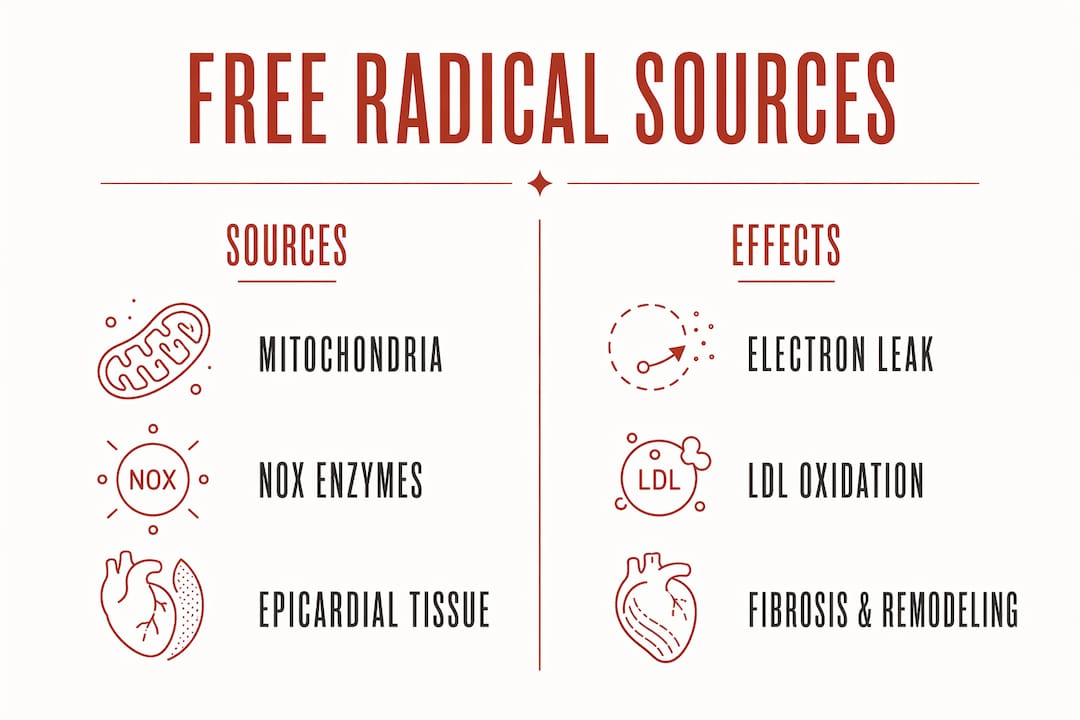
NOX1, NOX2, and NOX5 isoforms generate oxidized LDL that triggers foam cell formation and structural remodeling in arterial walls. This is how free radical damage to arterial health progresses from a cellular event into visible plaque buildup. Uncoupled eNOS is particularly insidious because it converts an enzyme meant to protect blood vessels into one that attacks them.
ROS do not stay confined to their origin site. Oxidative stress is systemic: ROS from epicardial adipose tissue and endothelial cells spread injury to cardiomyocytes through paracrine signaling, amplifying damage far beyond the initial source. This means that visceral fat around the heart is not just a passive bystander. It actively produces free radicals that reach and damage heart muscle cells.
How oxidative stress leads to cardiac remodeling and heart failure
Acute free radical damage is serious. Chronic oxidative stress is catastrophic. When ROS exposure persists over months and years, the heart undergoes structural changes called cardiac remodeling, and those changes are largely irreversible without intervention.
ROS activate redox-sensitive kinases and transcription factors that promote extracellular matrix remodeling and cardiomyocyte dysfunction. In practical terms, this means the heart muscle stiffens, scar tissue replaces functional muscle, and the chambers change shape in ways that reduce pumping efficiency. The key structural changes include:
- Hypertrophy: Heart muscle cells enlarge in response to oxidative stress signals, thickening the walls but reducing flexibility.
- Fibrosis: Activated fibroblasts deposit excess collagen, replacing elastic muscle tissue with rigid scar tissue.
- Impaired calcium handling: ROS oxidize the proteins that regulate calcium flow in and out of cardiomyocytes. Calcium dysregulation directly weakens the heart’s ability to contract and relax on schedule.
- TGF-β pathway activation: Transforming growth factor beta, a key signaling molecule, is triggered by ROS and drives both fibrosis and hypertrophy simultaneously.
The downstream result is heart failure. The heart can no longer fill or pump blood efficiently, and the oxidative damage that started at the mitochondrial level has now reshaped the entire organ. Cardiologists recognize oxidative stress as both a cause and a target for cardiac therapy, though translating antioxidant benefits into consistent clinical outcomes remains an active challenge.
Pro Tip: Redox balance, not radical elimination, is the real goal. Your heart needs low-level ROS for normal signaling. The problem starts when production chronically exceeds your body’s ability to neutralize it. Maintaining that balance is what separates a healthy heart from one on a path toward remodeling.
How the body’s antioxidant defenses protect the heart
Your body runs a sophisticated antioxidant defense network. Think of it as a relay team, with each enzyme passing the neutralization job to the next.
Superoxide dismutase (SOD) acts as the first runner. It converts superoxide into hydrogen peroxide, which is still reactive but less destructive. Catalase and glutathione peroxidase then break hydrogen peroxide down into water and oxygen, completing the neutralization. Natural antioxidants including SOD, catalase, and glutathione peroxidase defend against ROS effectively under normal conditions. You can read more about how SOD protects heart cells specifically and why its activity levels matter for cardiac outcomes.
| Antioxidant Defense | Type | Role in Cardiac Protection |
|---|---|---|
| Superoxide dismutase (SOD) | Enzyme | Converts superoxide to H₂O₂; first line of defense |
| Catalase | Enzyme | Breaks H₂O₂ into water and oxygen |
| Glutathione peroxidase | Enzyme | Neutralizes H₂O₂ and lipid peroxides; requires selenium |
| Vitamin E (tocopherol) | Dietary antioxidant | Interrupts lipid peroxidation chain reactions in membranes |
| Selenium | Mineral cofactor | Required for glutathione peroxidase activity; deficiency impairs ROS defense |
Selenium deficiency is a concrete example of how nutritional gaps translate into cardiac risk. Without adequate selenium, glutathione peroxidase cannot function, and hydrogen peroxide accumulates to levels that damage cardiomyocytes and contribute to cardiomyopathy.
The defense system has real limits. Under chronic oxidative stress, SOD and catalase activity declines, glutathione stores deplete, and the relay team falls apart. Targeted antioxidant delivery to subcellular compartments like mitochondria is crucial because generic supplements often fail to reach the sites where ROS are actually generated. This is the central challenge in antioxidant therapy for heart disease: getting the right molecule to the right place at the right time.
Practical ways to reduce free radical damage and support heart health
Protecting your heart from oxidative damage requires a consistent, multi-layered approach. No single action eliminates the risk, but the combination of lifestyle choices and targeted support makes a measurable difference.
- Eat a diet rich in polyphenols and antioxidants. Berries, leafy greens, nuts, and olive oil supply dietary antioxidants that reinforce your enzymatic defenses. Vitamin E from nuts and seeds directly interrupts lipid peroxidation in cell membranes.
- Exercise regularly, but avoid overtraining. Moderate aerobic exercise increases endogenous SOD and catalase activity. Excessive, unrecovered training temporarily spikes ROS production beyond what the body can handle.
- Minimize toxin exposure. Cigarette smoke, air pollution, and alcohol are major external sources of ROS. Each cigarette delivers billions of free radicals directly into the bloodstream and lungs, accelerating free radical damage to arteries.
- Manage chronic inflammation. Inflammatory conditions amplify NOX isoform activity and increase ROS production. Controlling conditions like hypertension and metabolic syndrome reduces the oxidative load on your heart.
- Support your antioxidant enzyme system. Dietary selenium, zinc, and manganese are essential cofactors for SOD and glutathione peroxidase. Deficiencies in these minerals quietly erode your cardiac defenses over time.
- Consider targeted supplementation. Generic antioxidant supplements have mixed clinical results because of delivery challenges. Look for formulations designed to support antioxidant enzyme activity at the cellular level rather than simply adding more antioxidant molecules to circulation.
The goal is redox homeostasis: a state where ROS production and neutralization stay in balance. You are not trying to eliminate free radicals entirely. You are trying to keep the system from tipping into chronic overproduction.
Key Takeaways
Free radicals trigger cardiac damage by overwhelming antioxidant defenses, causing lipid peroxidation, mitochondrial DNA injury, and cardiomyocyte death that progresses to fibrosis, remodeling, and heart failure.
| Point | Details |
|---|---|
| ROS overwhelm defenses | Chronic oxidative stress outpaces SOD, catalase, and glutathione peroxidase, leaving heart cells unprotected. |
| Mitochondria are the critical target | Mitochondrial DNA damage reduces ATP production, directly impairing the heart’s contractile force. |
| Cardiac remodeling is the long-term risk | Persistent ROS activate TGF-β and fibrosis pathways, stiffening and reshaping the heart toward failure. |
| Antioxidant delivery matters | Generic supplements often miss mitochondrial targets; cellular-level support is more effective than broad-spectrum dosing. |
| Redox balance is the goal | Low-level ROS are necessary for signaling; the aim is balance, not elimination. |
The nuance most heart health advice gets wrong
People hear “free radicals are bad” and assume the answer is simple: take antioxidants, eliminate radicals, protect your heart. I have spent years reading the research on oxidative stress and cardiac outcomes, and that framing misses the most important point.
Low, transient ROS levels are not the enemy. They regulate immune defense, cell proliferation, and vascular tone. Wipe them out completely and you create a different set of problems. The real target is the chronic overproduction state where ROS accumulate faster than the body can clear them.
What I find most underappreciated is the systemic nature of this problem. Oxidative damage does not stay in one place. ROS from fat tissue around the heart, from inflamed blood vessels, and from immune cells all converge on cardiomyocytes through paracrine signaling. Your heart is absorbing oxidative pressure from multiple directions simultaneously. That is why localized antioxidant strategies often underperform in clinical trials. The problem is distributed, and the solution needs to be too.
The most promising direction I see is supporting the body’s own enzymatic antioxidant system rather than flooding the bloodstream with dietary antioxidants that may never reach the mitochondria. Superoxide dismutase, in particular, operates at the exact point where the most damaging ROS are generated. Strengthening that first line of defense makes more biochemical sense than adding antioxidants downstream.
— Larry
Tryrevivify: cellular antioxidant support for heart health
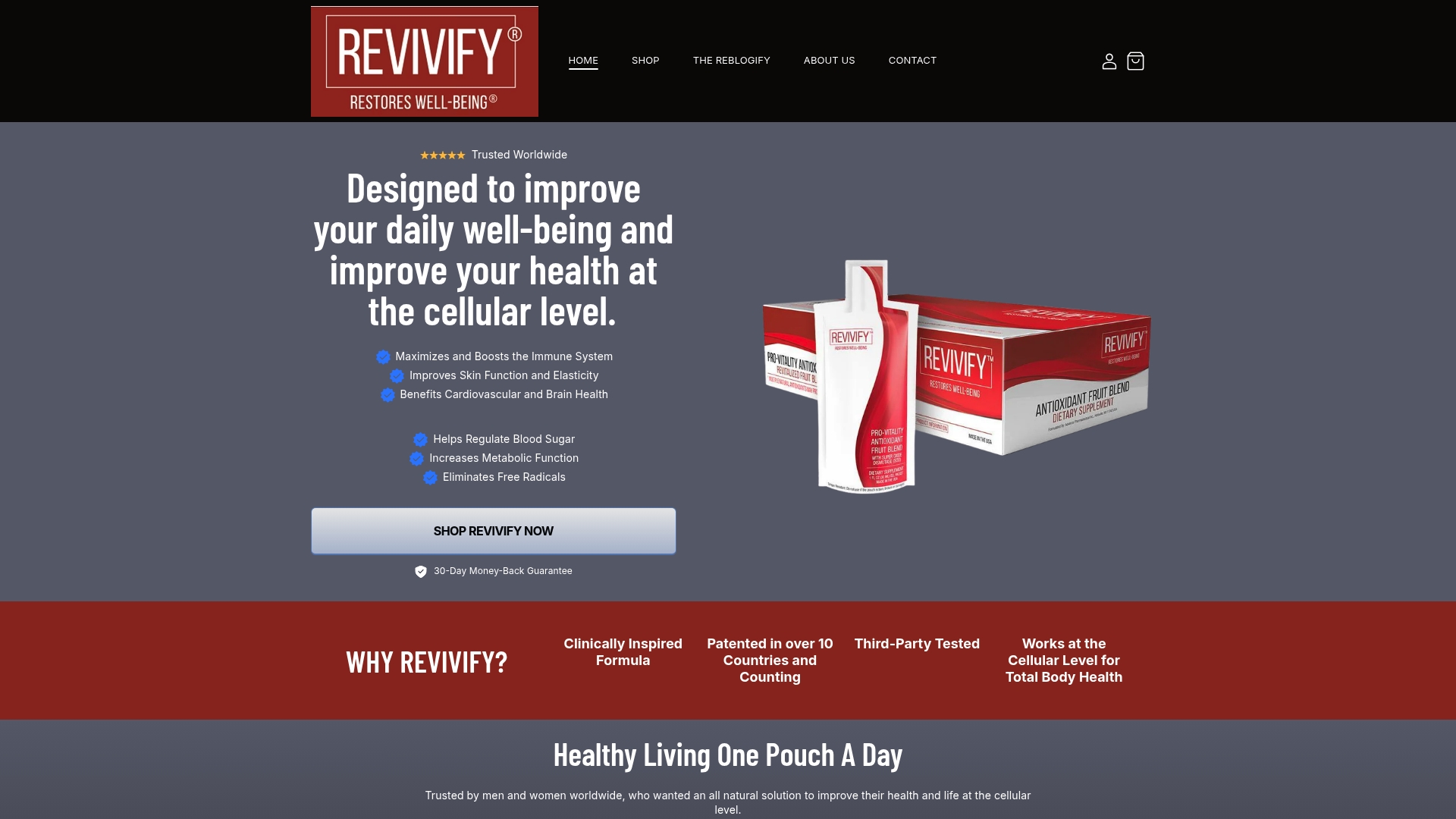
Tryrevivify was built around one core insight: the most effective way to fight oxidative stress is to support the body’s own antioxidant enzyme system at the cellular level. The Revivify daily supplement combines superoxide dismutase with prebiotic fiber in a patented formula designed to reinforce your body’s first line of defense against free radicals. SOD works at the exact site where superoxide is generated, making it far more targeted than standard antioxidant supplements. If you are serious about protecting your heart from the inside out, Tryrevivify offers a science-grounded approach to reducing oxidative burden and supporting long-term cardiac wellness.
FAQ
What exactly causes free radicals to damage heart cells?
Free radicals, primarily reactive oxygen species, attack lipids, proteins, and DNA inside cardiomyocytes through lipid peroxidation and oxidative modification. The Fenton reaction generates the most destructive radical, the hydroxyl radical, which causes chain reactions that destabilize cell membranes and impair mitochondrial function.
How do free radicals damage arteries and contribute to heart disease?
NOX isoforms in vascular cells produce superoxide that oxidizes LDL cholesterol, triggering foam cell formation and plaque buildup in arterial walls. Uncoupled eNOS adds to arterial damage by producing superoxide instead of the protective molecule nitric oxide, promoting inflammation and stiffness.
Can free radicals weaken immune cells as well as heart cells?
Yes. ROS impair T cell function by oxidizing surface receptors and disrupting intracellular signaling pathways that immune cells need to respond to threats. Chronic oxidative stress reduces immune surveillance while simultaneously damaging cardiac tissue, creating a compounding health risk.
Why do antioxidant supplements sometimes fail to protect the heart?
Generic antioxidant supplements often fail because they do not reach the mitochondria, where most cardiac ROS are generated. Effective antioxidant support requires targeted delivery to specific subcellular compartments, not just increased antioxidant levels in general circulation.
Is it possible to have too few free radicals?
Yes. Low, transient ROS levels are necessary for normal cellular signaling, immune defense, and vascular regulation. The goal is redox homeostasis, a balance between production and neutralization, not complete elimination of free radicals.