

Why Gut Health Determines Your Immune Strength
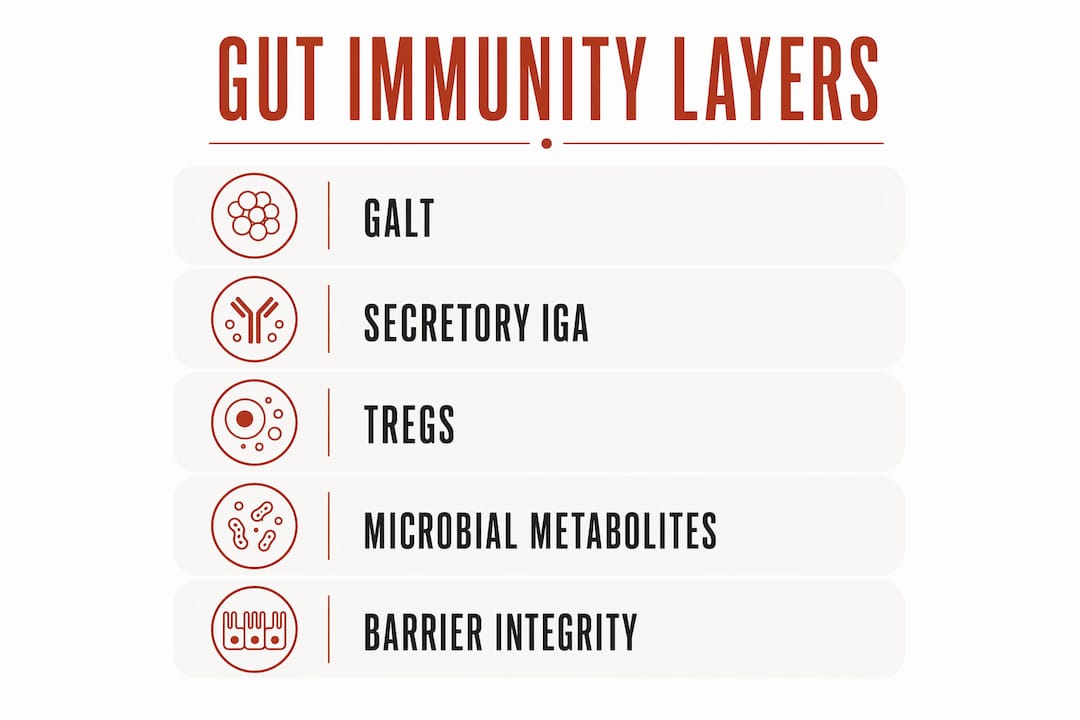
Gut health determines immune strength because 70–80% of the body’s immune tissue resides in the gut, making it the body’s primary site for immune training, regulation, and response. This concentration of immune activity is not coincidental. The gut-associated lymphoid tissue (GALT), the gut microbiome, and the epithelial barrier work together as an integrated system that shapes how your immune cells develop, what they tolerate, and how aggressively they respond to threats. When that system is healthy, your immunity is calibrated and resilient. When it breaks down, the consequences reach far beyond digestion.
Why gut health determines immune strength: the GALT explained
The gut-associated lymphoid tissue, or GALT, is the immune system’s training ground. Think of it as a military academy built directly into your digestive tract. Every day, your gut processes thousands of food antigens, beneficial microbes, and potential pathogens simultaneously. GALT is the structure that decides which of those triggers deserves an immune response and which should be left alone.
GALT includes several specialized structures that most people have never heard of:
- Peyer’s patches: Clusters of lymphoid tissue in the small intestine that sample gut contents and activate immune responses
- Mesenteric lymph nodes: Relay stations that filter immune signals from the gut before they reach systemic circulation
- Lamina propria: The connective tissue layer beneath the gut lining, densely packed with T cells, B cells, and macrophages
- Intraepithelial lymphocytes: Immune cells embedded directly in the gut lining, acting as a first line of defense
The gut also produces more secretory IgA (sIgA) than any other organ in the body. Adequate sIgA levels neutralize pathogens and toxins in the gut lumen before they ever reach the bloodstream. This makes sIgA your gut’s primary antibody shield, and its production depends entirely on a healthy GALT.
T-regulatory cells (Tregs) in the gut act as peacekeepers. They promote immune tolerance, preventing your immune system from attacking harmless food proteins or your own tissues. Low Treg activity correlates directly with autoimmune conditions, which explains why gut dysfunction so often precedes autoimmune flares. The small intestine also maintains a specialized immune regulatory axis distinct from the colon, specifically designed to manage food antigens without triggering harmful inflammation.
Pro Tip: If you experience recurring food sensitivities, the root cause is often a disrupted GALT rather than the foods themselves. Supporting gut immune balance can reduce reactivity over time.
How do gut bacteria and their metabolites shape immunity?
The gut microbiome contains trillions of bacteria, fungi, and viruses. These microbes are not passive residents. They actively communicate with your immune system through chemical signals called metabolites, and the conversation runs in both directions.

The most studied of these metabolites are short-chain fatty acids (SCFAs), particularly butyrate. Microbial metabolites like butyrate regulate anti-inflammatory responses and promote the development of immune cells including macrophages and dendritic cells, even in the bone marrow. That last point is significant. Gut bacteria are influencing immune cell production at the source, not just locally in the digestive tract.
| Metabolite | Produced By | Immune Effect |
|---|---|---|
| Butyrate | Faecalibacterium prausnitzii, Roseburia | Promotes Treg development, reduces gut inflammation |
| Secondary bile acids | Clostridium species | Modulate macrophage and T cell responses |
| Indoles | Lactobacillus species | Strengthen gut barrier, regulate mucosal immunity |
| Propionate | Bacteroides, Veillonella | Supports dendritic cell differentiation |
Non-pathogenic gut bacteria go even further. Over 1,000 bacterial effector interactions with human proteins have been mapped, showing that gut bacteria use secretion systems to inject proteins directly into human cells and modulate immune pathways like NF-κB and cytokine signaling. This is not passive coexistence. Your gut bacteria are actively managing your immune responses at the molecular level.
Microbiome dysbiosis, meaning an imbalance in microbial populations, disrupts this signaling. Dysbiosis and barrier loss increase risks of chronic inflammatory diseases including metabolic syndrome, autoimmunity, and neuroinflammation. The gut-immune axis is also bidirectional in another important way: aging-related immune changes degrade microbiome function and nutrient production over time, creating a feedback loop that requires deliberate intervention to break.
Pro Tip: Fermented foods like plain kefir, kimchi, and sauerkraut introduce live bacterial strains that produce SCFAs. Eating them alongside prebiotic fiber gives those bacteria the fuel to generate butyrate consistently.
What role does gut barrier integrity play in immune defense?
The gut epithelial barrier is a single cell layer separating your bloodstream from trillions of microbes and undigested food particles. That barrier is held together by tight junction proteins, specifically claudins, occludin, and zonula occludens. When these proteins function correctly, the barrier is selectively permeable, allowing nutrients through while blocking pathogens and toxins.
When tight junctions fail, the result is increased intestinal permeability, commonly called leaky gut. Tight junction dysfunction allows bacterial toxins like lipopolysaccharide (LPS) into the bloodstream, triggering a state called endotoxemia. The immune system detects LPS as a danger signal and launches a systemic inflammatory response. When this happens repeatedly, chronic low-grade inflammation becomes the baseline state of your body.
The factors that compromise tight junction integrity are well documented:
- Chronic psychological stress activates the hypothalamic-pituitary-adrenal (HPA) axis, which increases gut permeability through cortisol-driven changes in epithelial cell function
- Gluten in genetically susceptible individuals triggers the release of zonulin, a protein that directly opens tight junctions
- Excessive or repeated antibiotic use eliminates beneficial bacteria that produce butyrate, which is the primary fuel source for colonocytes (gut lining cells)
- Highly processed foods and seed oils promote inflammatory signaling that degrades tight junction protein expression
- Alcohol consumption disrupts the mucus layer and tight junction assembly, accelerating barrier breakdown
Protecting barrier integrity requires the opposite of these triggers. A gut health and immunity guide covering barrier integrity and microbial balance provides a detailed framework for this. The connection between barrier health and chronic systemic inflammation is one of the most clinically significant relationships in modern immunology.
How can you improve gut health to strengthen immunity?
Improving the gut-immune axis requires addressing three areas simultaneously: microbial diversity, barrier integrity, and systemic inflammation. No single intervention covers all three, but a coordinated approach produces measurable results.
Dietary strategies for microbial diversity:
- Eat 30 or more distinct plant foods per week. Variety in fiber types feeds a broader range of beneficial bacterial species.
- Prioritize prebiotic-rich foods: Jerusalem artichokes, chicory root, garlic, leeks, and green bananas feed Bifidobacterium and Lactobacillus strains. Learning how to improve your gut microbiome with prebiotics is one of the highest-return dietary changes you can make.
- Reduce ultra-processed food intake. These products contain emulsifiers like carboxymethylcellulose that directly disrupt the gut mucus layer.
Lifestyle factors with direct gut-immune impact:
- Sleep 7–9 hours per night. Sleep deprivation alters gut microbial composition within days and increases intestinal permeability.
- Manage chronic stress through consistent practices. Yoga, breathwork, and cognitive behavioral therapy all show measurable reductions in gut permeability markers.
- Avoid unnecessary antibiotic courses. Each course can reduce microbial diversity for months, and some species never fully recover.
Targeted supplements that support barrier function:
L-glutamine at 5g per day, zinc carnosine, and butyrate are the most evidence-supported nutrients for reinforcing tight junction integrity and modulating inflammatory immune responses. L-glutamine is the primary fuel source for enterocytes (gut lining cells). Zinc carnosine stabilizes the gastric mucosa. Butyrate feeds colonocytes and signals Treg development. These three work synergistically, not independently.
Addressing immune dysfunction without supporting gut health is ineffective. Healing the gut barrier and restoring microbiome balance upstream is what produces lasting immune resilience, not symptom suppression downstream.
Key takeaways
Gut health determines immune strength because the gut houses the majority of immune tissue and actively regulates immune responses through GALT, microbial metabolites, and barrier integrity.
| Point | Details |
|---|---|
| GALT is the immune command center | 70–80% of immune tissue resides in the gut, where immune cells are trained and regulated daily. |
| Microbial metabolites drive systemic immunity | Butyrate and SCFAs produced by gut bacteria shape immune cell development even in bone marrow. |
| Barrier failure triggers chronic inflammation | Leaky gut allows LPS into the bloodstream, activating systemic immune responses that become chronic. |
| Targeted nutrients rebuild the barrier | L-glutamine, zinc carnosine, and butyrate directly reinforce tight junction integrity and reduce inflammation. |
| Gut-immune health requires a combined approach | Diet, sleep, stress management, and targeted supplementation work together, not in isolation. |
The upstream problem most people miss
Most people treat immunity like a standalone system. They reach for vitamin C, zinc lozenges, or elderberry syrup at the first sign of illness. Those interventions are not wrong, but they address the output, not the source.
What I’ve found, both in reviewing the research and in observing how people respond to gut-focused protocols, is that the immune system rarely fails in isolation. When someone gets sick repeatedly, struggles with chronic inflammation, or develops food sensitivities, the gut is almost always involved upstream. The GALT is undertrained, the microbiome is dysbiotic, or the barrier has been compromised for months before any obvious symptom appears.
The counterintuitive insight here is that a healthy gut does not just prevent gut problems. It calibrates your entire immune system. Tregs trained in a healthy gut prevent autoimmune overreaction. SCFAs produced by a diverse microbiome reduce systemic inflammation. A tight barrier keeps the immune system from being perpetually activated by endotoxins it was never meant to encounter.
The mistake I see most often is people adding immune supplements while continuing to eat processed foods, sleep poorly, and manage stress badly. That approach is like patching a leaking pipe without turning off the water. The gut is where immune health is built. Everything else is downstream from that.
— Larry
Support your gut and immune system with Tryrevivify
If you’re working to strengthen your immune function from the inside out, your supplement strategy should start at the gut level. Tryrevivify combines superoxide dismutase (SOD) with prebiotic fiber in a patented formula designed to support cellular health and gut function simultaneously. SOD fights free radicals at the cellular level, while the prebiotic fiber feeds the beneficial bacteria your gut needs to produce SCFAs and maintain barrier integrity.

This is not a generic multivitamin. Tryrevivify is built around the same gut-immune connection this article describes, targeting oxidative stress and microbial support together. If you’re ready to support your immune strength at the source, explore the Revivify 30-Day Supply and see how a gut-first approach to immunity actually works.
FAQ
What percentage of immune cells live in the gut?
Approximately 70–80% of the body’s immune tissue resides in gut-associated lymphoid tissue (GALT), making the gut the primary site of immune regulation and training.
How does gut bacteria affect immune function?
Gut bacteria produce metabolites like butyrate and SCFAs that regulate immune cell development, modulate inflammatory pathways, and support T-regulatory cell activity throughout the body.
What is leaky gut and why does it matter for immunity?
Leaky gut occurs when tight junction proteins in the gut lining break down, allowing bacterial toxins like LPS into the bloodstream and triggering chronic systemic immune activation.
Which supplements best support gut barrier integrity?
L-glutamine at 5g per day, zinc carnosine, and butyrate are the most evidence-supported options for reinforcing gut barrier function and reducing inflammatory immune responses.
Can improving gut health reduce autoimmune risk?
Yes. T-regulatory cells trained in a healthy gut suppress autoimmune overreaction. Low Treg activity, which correlates with gut dysfunction, is directly linked to autoimmune conditions.