

Why Oxidative Stress Causes Inflammation in Your Body
Oxidative stress and inflammation are often treated as two separate health concerns, but they are deeply intertwined. Understanding why oxidative stress causes inflammation at the molecular level is not just academic. It explains why chronic conditions like heart disease, diabetes, and arthritis are so persistent, and why surface-level fixes rarely hold. The relationship is a self-amplifying loop, and once you see how it works, you can make smarter decisions about the lifestyle habits and supplements that actually move the needle on long-term health.
Table of Contents
- Key takeaways
- Why oxidative stress causes inflammation
- The molecular pathways linking ROS to inflammation
- The vicious cycle in chronic conditions
- Common misconceptions about controlling oxidative stress
- Practical steps to reduce ROS-driven inflammation
- My perspective on the oxidative stress-inflammation reality
- Supporting your cellular health with Tryrevivify
- FAQ
Key takeaways
| Point | Details |
|---|---|
| ROS overproduction is the trigger | Excess reactive oxygen species damage cells and activate immune signaling pathways that produce inflammation. |
| NF-κB is the molecular switch | Oxidative stress activates this master transcription factor, flooding the body with pro-inflammatory cytokines. |
| The cycle is self-reinforcing | Inflammation causes hypoxia, which forces anaerobic respiration and generates even more ROS, perpetuating the loop. |
| Supplements alone are not enough | Antioxidant supplements modulate the cycle but cannot break it without foundational lifestyle changes. |
| Practical steps exist to interrupt the loop | Restoring oxygen delivery, improving sleep, managing stress, and supporting mitochondrial health all reduce ROS-driven inflammation. |
Why oxidative stress causes inflammation

To understand the link, you first need a clear picture of what oxidative stress actually is. Think of your cells as factories running on oxygen. During normal energy production, particularly inside the mitochondria, small reactive molecules called reactive oxygen species (ROS) are generated as byproducts. Under healthy conditions, your body’s antioxidant defenses, including enzymes like superoxide dismutase (SOD) and compounds like glutathione, neutralize these molecules before they cause harm.
Oxidative stress is what happens when that balance tips. ROS production outpaces your antioxidant capacity, leaving excess free radicals to damage cellular structures. The sources of this imbalance are varied:
- Mitochondrial dysfunction: Inefficient energy production leaks more electrons than usual, generating excess superoxide.
- NADPH oxidase (NOX) activity: Enzymes like NOX2, found in immune cells, produce ROS intentionally as part of immune defense. High NOX2 activity becomes a tipping point for chronic inflammation when left unchecked.
- Environmental and lifestyle exposures: UV radiation, air pollution, processed foods, and heavy alcohol consumption all independently increase ROS load.
- Poor metabolic health: High blood sugar and insulin resistance drive ROS generation across multiple tissue types.
The cellular damage that follows takes three main forms. Lipid peroxidation degrades cell membranes, making them leaky and dysfunctional. Protein carbonylation alters proteins so they cannot perform their jobs properly. And direct DNA damage, particularly to mitochondrial DNA, disrupts the cell’s energy-producing machinery at its source. These are not minor inconveniences. They are distress signals that your immune system is hard-wired to respond to.
The molecular pathways linking ROS to inflammation
This is where the science gets genuinely revealing. The connection between oxidative damage and immune activation is not random. It runs through specific, well-studied pathways that explain precisely how oxidative stress triggers inflammation at the cellular level.
-
Mitochondrial DNA damage releases DAMPs. When ROS damage mitochondria, the cell releases molecules called damage-associated molecular patterns (DAMPs). These act as internal alarm signals, telling the immune system that something has gone wrong. Mitochondrial DNA damage directly triggers activation of the NLRP3 inflammasome, a multi-protein complex inside immune cells that acts as a master regulator of inflammatory cytokine production.
-
The NLRP3 inflammasome requires two signals to fire. First, NF-κB primes the system. Then DAMPs from oxidative damage activate the inflammasome. NLRP3 activation then unleashes caspase-1, which converts inactive precursors into the pro-inflammatory cytokines IL-1β and IL-18. It also triggers pyroptosis, a form of inflammatory cell death that spills more DAMPs into the surrounding tissue, amplifying the response.
-
NF-κB becomes chronically active. This transcription factor is essentially the master inflammatory switch. ROS, including hydrogen peroxide, directly activate NF-κB, which then sustains cytokine expression for TNF-α, IL-6, and adhesion molecules that recruit more immune cells to the site.
-
Nitric oxide gets hijacked. Under normal conditions, nitric oxide (NO) keeps blood vessels relaxed and flexible. But excess free radicals react with NO to form peroxynitrite, a far more damaging compound. This process prevents proper vessel relaxation and worsens vascular inflammation, which is a key reason the link between oxidative stress and inflammation shows up so clearly in cardiovascular disease.
-
Recruited immune cells generate more ROS. The neutrophils and macrophages that flood inflamed tissue use ROS as weapons. While this kills pathogens effectively, in the absence of an actual infection, it simply adds to the existing oxidative burden and feeds the cycle further.
Pro Tip: If you want to understand your own inflammatory burden, ask your doctor about testing high-sensitivity CRP (hsCRP) and oxidized LDL. These biomarkers give you a real-time window into whether the ROS-inflammation cycle is active in your body.
The vicious cycle in chronic conditions
Here is where the story gets more complicated and more clinically important. The inflammation caused by oxidative damage does not simply resolve once the initial ROS burst subsides. It creates conditions that generate more ROS, which means the cycle feeds itself indefinitely without intervention.
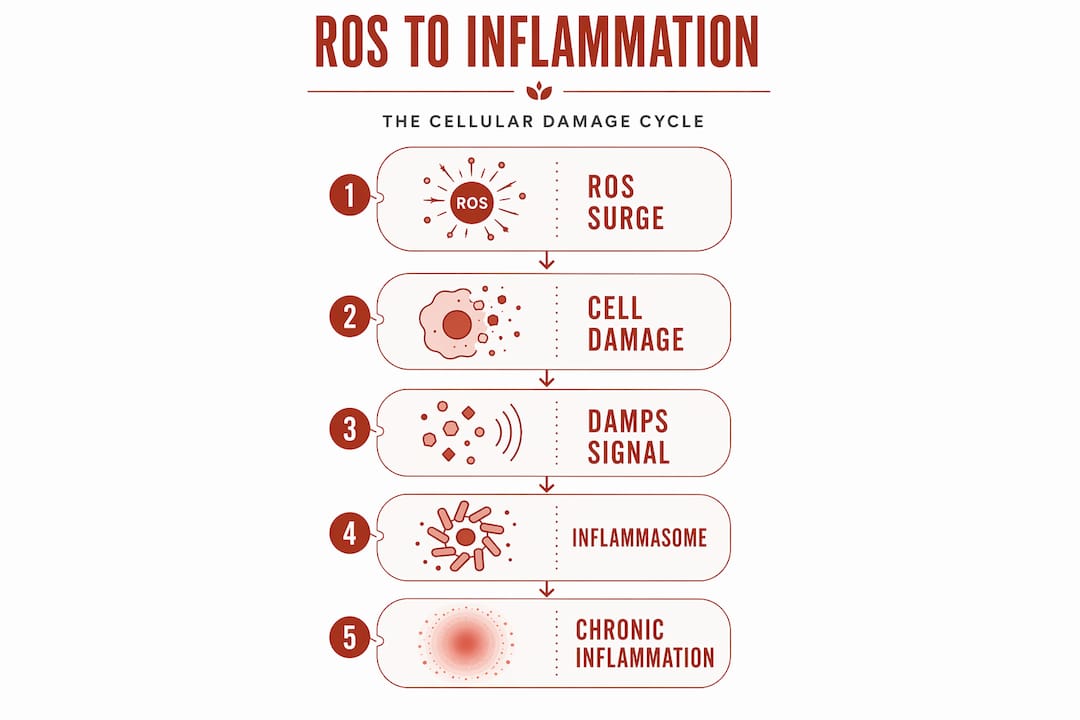
When inflammation causes tissue swelling, it restricts blood flow to the affected area. That restriction reduces oxygen delivery, creating localized hypoxia. Cells deprived of oxygen shift to anaerobic respiration, which produces lactic acid and metabolic waste. These byproducts signal additional inflammatory pathways, including hypoxia-inducible factor 1-alpha (HIF-1α), which keeps immune activation switched on even after the original trigger is gone.
The table below shows how this bidirectional relationship manifests across common chronic conditions.
| Condition | Role of oxidative stress | Role of inflammation |
|---|---|---|
| Cardiovascular disease | ROS damages endothelial cells, reduces nitric oxide | Cytokines promote plaque formation and arterial stiffness |
| Type 2 diabetes | Excess glucose drives ROS in mitochondria | Inflammatory cytokines worsen insulin resistance |
| Rheumatoid arthritis | ROS in joint tissue damages cartilage | Immune cell infiltration accelerates joint destruction |
| Metabolic syndrome | ROS disrupts nitric oxide balance | Systemic inflammation impairs insulin signaling |
“Experts increasingly view oxidative stress and inflammation not as two separate processes but as a single self-reinforcing cycle. Breaking it requires simultaneously restoring oxygen delivery and dampening immune activation. Treating only one side rarely produces lasting results.”
Macrophages stuck in an inflammatory tissue environment shift toward what researchers call the M1 phenotype, a highly pro-inflammatory state. These cells release TNF-α and IL-6, both of which upregulate oxidant enzymes, ensuring the next round of ROS production is even larger. You can see why simply taking a supplement and hoping for the best rarely works at this level of complexity. Understanding the symptoms of oxidative stress inflammation can help you recognize when this cycle may already be active in your body.
Common misconceptions about controlling oxidative stress
This is where a lot of well-intentioned health advice goes wrong. The market for antioxidant supplements is enormous, and many people assume that loading up on curcumin, astaxanthin, or high-dose vitamin C will break the inflammation cycle. The reality is more nuanced.
- Supplements modulate, not cure. Curcumin and astaxanthin can meaningfully reduce inflammatory signaling, but they work within a system. If the underlying drivers of ROS production, poor sleep, chronic stress, processed food, physical inactivity, remain in place, the oxidative load will simply overwhelm whatever supplemental antioxidant capacity you have added.
- Single-pathway thinking is too simple. Some people focus entirely on one intervention, a single supplement, or cutting one food group. The ROS-inflammation cycle involves mitochondrial health, immune cell behavior, vascular function, and metabolic state simultaneously.
- More antioxidants is not always better. At very high doses, some antioxidants can actually blunt the hormetic benefits of mild, short-term ROS production, which cells use to signal adaptation and repair.
- Emerging therapies are promising but not yet mainstream. Research into ROS-responsive nanomedicines and lipid mediator class switching offers genuinely exciting possibilities for precise inflammatory pathway targeting. These approaches are still largely experimental, but they show the scientific community takes the ROS-inflammation connection seriously enough to engineer solutions at the molecular level.
Pro Tip: Before adding multiple antioxidant supplements to your routine, take an honest inventory of your sleep quality, stress levels, and dietary patterns. Those factors drive more of the ROS equation than any capsule can compensate for.
Practical steps to reduce ROS-driven inflammation
Understanding the mechanism is the first move. Acting on it is where the real benefit comes. Here is a clear sequence of changes that address the cycle at multiple points simultaneously.
-
Prioritize sleep quality. Deep sleep is the body’s primary repair window. Sleep deprivation increases inflammatory cytokine levels within 24 hours and raises cortisol, which impairs antioxidant enzyme activity. Aim for 7 to 9 hours of consistent, uninterrupted sleep.
-
Move your body daily. Regular moderate exercise actually trains mitochondria to produce less ROS per unit of energy. It also improves oxygen delivery to tissues, directly addressing the hypoxia component of the vicious cycle. You do not need intense training. A 30-minute brisk walk, most days of the week, shifts the metabolic balance meaningfully.
-
Eat to support antioxidant enzyme production. Rather than focusing on isolated antioxidant compounds, build a diet that gives your body the raw materials to produce its own antioxidant enzymes. Zinc, manganese, and copper are cofactors for SOD. Foods like legumes, nuts, leafy greens, and whole grains supply all three.
-
Manage the stress response actively. Chronic psychological stress elevates cortisol and activates NF-κB, feeding directly into the inflammatory pathway. Even 10 minutes of daily breathwork or meditation measurably reduces markers of systemic inflammation over time.
-
Consider targeted supplementation as a complement. Supplements that support mitochondrial efficiency and antioxidant enzyme activity, rather than just adding more dietary antioxidants, address the root cause more effectively. This is especially relevant for understanding chronic systemic inflammation and how lifestyle interacts with it.
My perspective on the oxidative stress-inflammation reality
I have spent years looking at the research on oxidative stress and inflammation, and the thing that consistently strikes me is how poorly the complexity of this cycle gets communicated to people who actually want to manage their health.
Most popular health content still frames this as “eat more antioxidants, feel better.” But when I look at the evidence, what I see is a deeply entrenched bidirectional process where oxygen deprivation, immune activation, and mitochondrial dysfunction all reinforce each other simultaneously. Simply adding antioxidants rarely breaks this cycle because the metabolic and lifestyle drivers keep recreating the oxidative load faster than any supplement can neutralize it.
What I think works, and what the evidence increasingly supports, is a systems approach. Fix oxygen delivery through movement and breathing practices. Rebuild mitochondrial efficiency through sleep and whole food nutrition. Then use well-designed supplements to support the antioxidant enzyme systems that your body has already evolved to rely on. Lifestyle coach Luke Coutinho puts it well: sleep, food, movement, and stress management form the foundation. Supplements built on the right molecular targets are genuinely helpful within that framework.
My honest advice is to stop looking for the one thing that will solve it. The cycle is bidirectional. Your solution needs to be too.
— Larry
Supporting your cellular health with Tryrevivify
At Tryrevivify, we built our patented daily supplement specifically to address the antioxidant enzyme side of this equation. Revivify combines superoxide dismutase (SOD), your body’s first-line defense against superoxide radicals, with prebiotic fiber that supports gut-level antioxidant activity. SOD acts like the lead runner in an antioxidant relay, neutralizing the most reactive free radicals before they trigger the NLRP3 inflammasome or activate NF-κB. This is not a generic antioxidant blend. It is a formula designed to support the cellular infrastructure that manages ROS at its source. As a complement to the lifestyle strategies covered above, Revivify is designed for people who want to support their long-term health at the cellular level. Explore Revivify and see how the patented formula fits into your wellness routine, or check out the 30-day supply to get started.
FAQ
Why does oxidative stress cause inflammation specifically?
Oxidative stress damages mitochondria and cellular structures, releasing DAMPs that activate the NLRP3 inflammasome and the NF-κB pathway, both of which trigger pro-inflammatory cytokine production. This is a direct, mechanistic cause-and-effect relationship, not a coincidental association.
Can you have oxidative stress without inflammation?
Yes, briefly. Mild, transient oxidative stress, such as the kind produced during exercise, does not always trigger a full inflammatory response and can actually stimulate beneficial cellular repair. It becomes inflammatory when ROS overproduction is chronic and overwhelms antioxidant defenses.
What is the fastest way to reduce inflammation caused by oxidative damage?
Improving sleep quality and reducing processed food intake reduce both ROS production and inflammatory cytokine levels relatively quickly. These lifestyle changes address the drivers of the cycle, rather than just the symptoms.
Does antioxidant supplementation stop the ROS-inflammation cycle?
Antioxidant supplements can modulate the intensity of the cycle, but they cannot replace foundational lifestyle changes. Supplements work best as complements to sleep, diet, movement, and stress management, not substitutes for them.
What chronic conditions are most affected by the link between oxidative stress and inflammation?
Cardiovascular disease, type 2 diabetes, rheumatoid arthritis, and metabolic syndrome all show strong evidence of ROS-driven inflammatory damage. In each condition, ROS-mediated mechanisms impair normal cellular function and perpetuate immune activation over time.