

88% Improved in a MIMO Case Series: Prebiotics for Acid Reflux
Prebiotics can help some people manage acid reflux, but the benefit depends heavily on which fiber you choose and what is driving your symptoms. The evidence base is still thin: most of what we know comes from a handful of trials, one notable case series, and research on probiotics rather than prebiotics alone. We walk through the mechanisms, the actual data, and a cautious, stepwise plan you can discuss with your clinician before changing anything about your reflux routine.
TL;DR:
- Only specific prebiotic fibers like MIMO have shown preliminary symptom improvements in small, uncontrolled studies, but strong evidence is lacking.
- Fast-fermenting fibers such as FOS may increase reflux symptoms by triggering rapid gas production and relaxation of the lower esophageal sphincter.
- Most benefits appear when prebiotics are used as an adjunct to acid suppression therapy, not as a standalone treatment for reflux.
- Starting with whole foods and gradually increasing fiber intake over several weeks is the safest way to trial prebiotics for reflux.
- Certain high-risk groups, including immunocompromised or post-surgical patients, should consult their clinician before experimenting with prebiotics or probiotics.
Table of Contents
- How prebiotics might affect reflux
- Clinical evidence: trials, case series, and guideline context
- Which prebiotics to favor and which may worsen reflux
- A step-by-step plan to try prebiotics safely with reflux
- Safety, side effects, and who should consult a clinician first
- Where Revivify fits into this picture
- Our honest take on prebiotics and reflux
- Consider REVIVIFY® as part of your routine
- FAQ
- Sources
How prebiotics might affect reflux
Prebiotics are fermentable fibers, like inulin and oligofructose, that feed the bacteria living in your colon. When those bacteria break the fiber down, they produce short-chain fatty acids (SCFAs) such as butyrate, which help maintain the gut lining and calm inflammation.
That part of the story is fairly settled. What’s less clear is how those downstream effects reach the esophagus. A 2025 review in Frontiers lays out several plausible pathways connecting the gut microbiota, immune signaling, and gut-brain axis to GERD, including the observation that acid-suppressing drugs themselves can reshape gut bacteria.
A few mechanisms researchers point to:
- Barrier support: butyrate nourishes colon cells and may reduce local inflammation.
- Motility signals: SCFAs can influence gut motility, and some researchers suspect a link to transient lower esophageal sphincter relaxations (TLESRs), the brief sphincter openings that let stomach contents escape upward.
- Fermentation location: fibers that ferment quickly near the top of the colon produce different gas and SCFA patterns than slow-fermenting ones.
None of this proves a direct causal line from prebiotic fiber to fewer reflux episodes. Most of the clean mechanistic data comes from colon studies, not the upper gastrointestinal tract where reflux actually happens.
Clinical evidence: trials, case series, and guideline context
The strongest human data we have does not test prebiotics in isolation. A 2026 randomized, double-blind, placebo-controlled trial found that adjunctive probiotic therapy alongside rabeprazole produced a significantly greater reduction in Reflux Disease Questionnaire scores after 12 weeks compared to placebo. That is a meaningful signal, but it tested probiotics layered on top of standard acid suppression, not prebiotic fiber by itself.
The most direct prebiotic evidence for reflux comes from a smaller, lower-quality source: a case series following 24 GERD patients given a MIMO fiber supplement daily. Maltosyl-isomaltooligosaccharide, or MIMO, is a fermented soluble fiber, and 88% of participants reported symptom improvement, with 17% achieving complete resolution. Two patients were able to stop their PPI therapy. Case series like this one have no control group and no blinding, so they hint at a possibility rather than confirm an effect.
What the evidence adds up to:
- Adjunctive probiotics have the best controlled-trial support, used alongside acid suppression rather than replacing it.
- MIMO specifically has repeated, if preliminary, reports of benefit that make it worth watching.
- Prebiotic-only randomized trials for reflux are still rare, which the AGA’s technical review on probiotics in digestive disorders implicitly acknowledges by focusing almost entirely on probiotic strains.
The 36.51% greater RDQ reduction seen with adjunctive probiotic therapy is currently the single clearest number in this space, and it applies to combination treatment, not prebiotic fiber alone.
Treat prebiotics as a supportive piece of a reflux plan rather than a standalone fix until better trials exist.

Which prebiotics to favor and which may worsen reflux
Not every prebiotic fiber behaves the same way in your gut. Molecular size, how fast it ferments, and where along the digestive tract it breaks down all determine whether it raises SCFAs smoothly or produces the gas and bloating that can aggravate reflux.
Common prebiotic fibers and where to find them, according to Harvard’s Nutrition Source:
- Inulin and oligofructose: chicory root, onion, garlic, leek, and banana.
- MIMO: found in some targeted fiber supplements rather than common whole foods.
- Fructooligosaccharides (FOS): found in many of the same foods as inulin, but reported in some cases to increase TLESRs and worsen reflux symptoms.
Whole-food sources come with built-in moderation since you’re unlikely to eat enough garlic or chicory root to overload your system in one sitting. Concentrated supplements make dosing precise, but that precision cuts both ways: too much, too fast, is the most common reason people blame prebiotics for a flare-up that was really a dosing problem.
A short checklist before buying a supplement: check the fiber type listed on the label, start with the lowest dose offered, and avoid products that blend in high doses of FOS if you already know rapid fermentation triggers your symptoms.
Pro Tip: If a food or supplement reliably triggers bloating within a few hours, that’s your body telling you the fermentation rate is too fast for your gut right now, not necessarily that prebiotics as a category are wrong for you.
A step-by-step plan to try prebiotics safely with reflux
A cautious, structured trial beats guessing. Here’s a sequence that lines up with what the evidence actually supports:
- Start with food, not supplements. Add small amounts of fiber-rich vegetables and fruit over 2 to 4 weeks, watching how your symptoms respond.
- Ramp any supplement slowly. Begin at the lowest labeled dose for a week before increasing, which reduces the gas and bloating that often get mistaken for worsening reflux.
- Commit to a real trial window. Give any change 4 to 12 weeks before judging it, tracking symptoms with a simple daily diary or a Reflux Disease Questionnaire-style scale.
- Separate timing from your PPI when possible. There’s no strong trial data dictating exact spacing, so the practical approach is consistency: take your supplement and medication at the same times each day so you can tell what’s doing what.
- Talk to your clinician before adjusting PPI doses. Symptom improvement on fiber or probiotics is not a reason to stop reflux medication on your own.
| Week | Focus | What to track |
|---|---|---|
| 1-2 | Whole-food fiber increase | Baseline symptom frequency |
| 3-4 | Introduce low-dose supplement if desired | Bloating, gas, reflux episodes |
| 5-12 | Maintain and reassess | RDQ-style score, PPI use |
Stop and call your clinician if reflux worsens sharply, you notice difficulty swallowing, unexplained weight loss, or black stools, none of which should wait for the end of a trial period.
Safety, side effects, and who should consult a clinician first
Bloating, gas, and loose stools are the most common complaints with any new fiber source, prebiotic or otherwise, and they usually ease as your gut bacteria adjust over one to two weeks. Starting low and increasing slowly is the simplest way to avoid them.
Fast-fermenting fibers like FOS carry reports of increasing TLESRs, the sphincter relaxations tied to reflux episodes, which is why they’re a reasonable one to avoid first if you’re prone to symptoms.
Certain people should loop in a clinician before experimenting on their own:
- People who are immunocompromised, since fermentable fiber can shift gut bacteria in ways that need monitoring.
- Anyone with a severe motility disorder, where added fermentation could worsen bloating or discomfort disproportionately.
- Patients recovering from recent gastrointestinal surgery.
- Pregnant individuals, who should run any new supplement by their provider first.
Mayo Clinic notes that prebiotics and probiotics are generally mild in healthy adults, but “generally mild” is not the same as risk-free for everyone, particularly those in the groups above.
Where Revivify fits into this picture
We offer a daily supplement designed around the idea that comprehensive cellular-level support is important. Our product combines several ingredients including superoxide dismutase, prebiotic fiber, polyphenols, and lactobacillus, and it undergoes third-party testing so you can see what you’re actually getting.
That lines up with the checklist we just walked through: know your fiber type, start low, and look for products that back up their claims with testing rather than marketing language alone. If you want more detail on specific probiotic strains studied for reflux, we’ve covered that separately in our piece on probiotic strains and reflux timelines, and our guide to how the gut microbiome affects digestion goes deeper into the mechanisms above.
As always, check with your clinician before changing PPI therapy or adding a new supplement, especially if you fall into one of the higher-risk groups.
Our honest take on prebiotics and reflux
The honest answer is that prebiotics are a supporting player here, not a headline act. The MIMO case series is the most reflux-specific prebiotic data we have, and it’s compelling enough to justify interest, but 24 uncontrolled patients is not the same as proof. The 2026 probiotic trial is stronger methodologically, yet it tested a combination therapy, which means we’re borrowing confidence from probiotics to talk about prebiotics.
Where conventional advice falls short is in treating all fiber as interchangeable. Lumping inulin, FOS, and MIMO together obscures the one distinction that actually matters for reflux: fermentation speed and location. A reader who tries a fast-fermenting FOS blend and flares up may conclude prebiotics don’t work for them, when a slower-fermenting option might have done the opposite.
If we had to prioritize one thing, it would be patience over product. Give whole-food fiber a real multi-week trial before reaching for a concentrated supplement, and keep your PPI conversation with your clinician separate from your fiber experiment.
— Larry
Consider REVIVIFY® as part of your routine
If you’re looking for a daily supplement that pairs prebiotic fiber with broader cellular support, there are products combining that fiber with superoxide dismutase, polyphenols, and lactobacillus in a third-party tested formula.
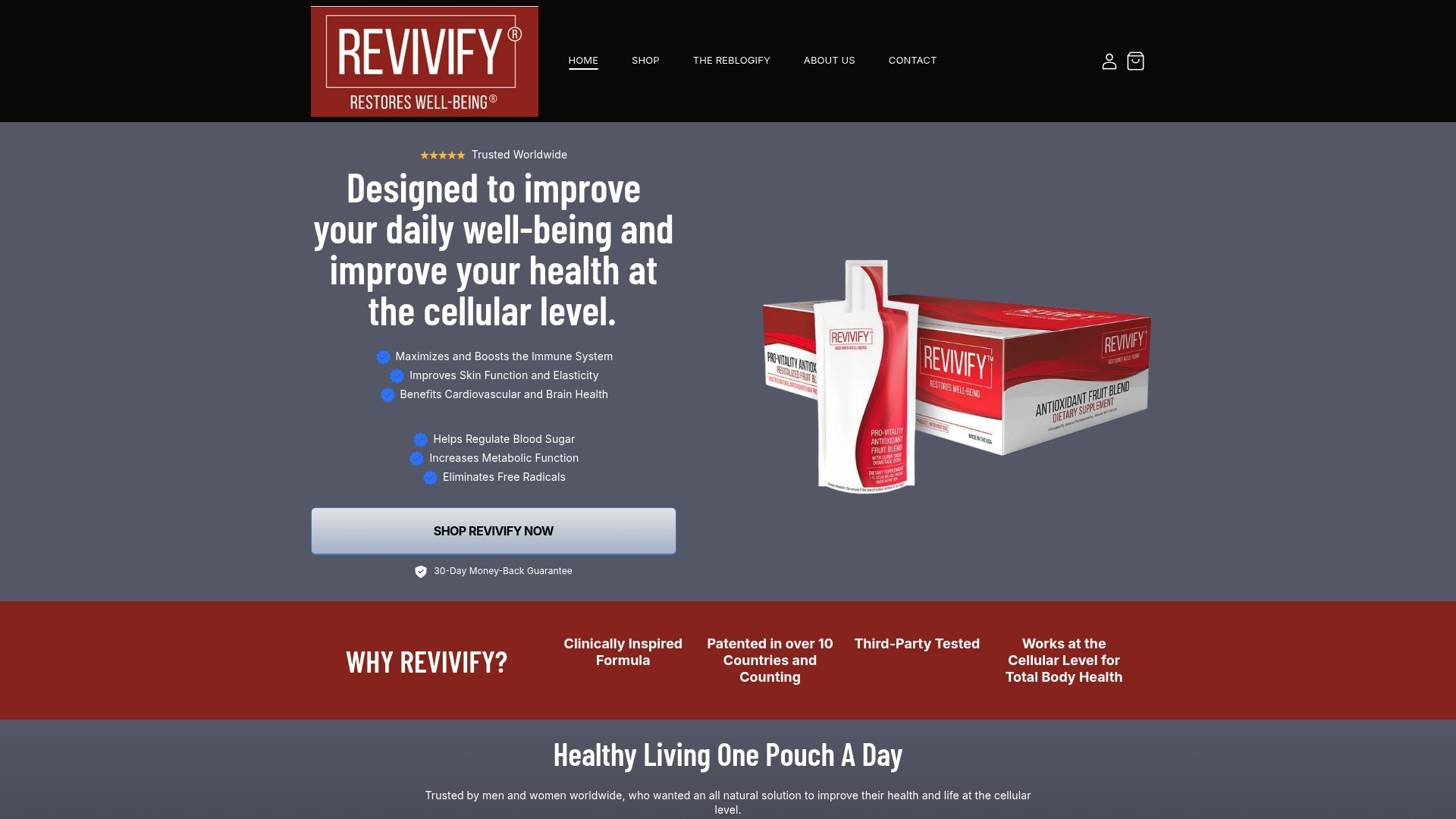
We designed it as one option among many, not a replacement for your reflux medication or your clinician’s guidance. You can review the REVIVIFY® 30-Day Supply on our product page and decide whether it fits alongside the stepwise plan outlined above, ideally after a conversation with your doctor about your specific case.
This article is general information, not a substitute for advice from a qualified doctor. Consult a qualified healthcare professional about your own circumstances before acting on anything here.
FAQ
Does a prebiotic help with acid reflux?
Prebiotics may help some people, particularly through fibers like MIMO, which showed symptom improvement in a small case series. The evidence is preliminary, and results likely depend on the specific fiber type and the person’s underlying reflux pattern.
What are the signs you need prebiotics?
There’s no single test that tells you to start prebiotics specifically for reflux. People considering them usually have ongoing digestive symptoms alongside reflux and want to support gut bacteria diversity through fiber, ideally starting with food sources before supplements.
How do I reset my gut from acid reflux?
A gradual approach works best: increase whole-food fiber over several weeks, consider a slow-fermenting prebiotic if tolerated, and track symptoms with a simple diary. Reflux medication changes should go through your clinician, especially since PPIs themselves can alter gut microbiota composition.
Why do cardiologists warn against probiotics?
This caution usually centers on specific high-risk patients, such as those who are critically ill or immunocompromised, rather than probiotics as a category for the general population. For most healthy adults, Mayo Clinic describes probiotics and prebiotics as generally mild, though anyone with significant health conditions should check with their own care team first.
Sources
- Adjunctive probiotic therapy with rabeprazole: randomized double-blind trial (PubMed record)
- Improvement in gastroesophageal reflux symptoms from a food-grade MIMO soluble fiber supplement: a case series (PMC)
- Multidimensional mechanisms and therapies underlying gastroesophageal reflux disease — Frontiers (2025)
- Probiotics for gut health • The Nutrition Source — Harvard T.H. Chan School of Public Health
- Probiotics and prebiotics: What you should know — Mayo Clinic