

Test Probiotic Strains for SIBO in 4–12 Weeks: Evidence Based Trial
Probiotics can play a conditional, supporting role in SIBO management, but they are not a universal fix and the evidence is strain-specific. Certain strains, particularly Saccharomyces boulardii and select Bacillus species, show the clearest clinical signal. Still, no major guideline recommends a single probiotic as standard therapy, so strain choice, dosing, and clinician guidance all matter. If you are immunocompromised, talk to a clinician before starting any live probiotic.
TL;DR:
- Probiotics like Saccharomyces boulardii and Bacillus species show some symptom relief, especially when combined with antibiotics, but lack consistent evidence for standalone use.
- Small studies vary widely in design, sample size, and measures, making it difficult to draw firm conclusions about probiotic effectiveness for SIBO.
- Probiotic effects are strain-specific, with some potentially worsening methane gas production or causing adverse effects like D-lactic acidosis in susceptible individuals.
- Timing probiotics around antibiotics and monitoring symptoms during a 4 to 12 week trial can help determine individual responses and safety.
- Choosing products with clearly labeled strains, CFU counts, third-party testing, and confirmed human data improves safety and potential efficacy.
Table of Contents
- What Clinical Guidelines and Research Say About Probiotics for SIBO
- Which Probiotic Strains Have Evidence Behind Them
- How to Fit a Probiotic Into Your SIBO Treatment Plan
- Risks, Red Flags, and What to Do if Symptoms Get Worse
- A Practical Checklist Before You Try a Probiotic for SIBO
- Our Honest Take on Probiotics as Part of SIBO Care
- Where Revivify Fits as Daily Gut Support
- FAQ
- Sources
What Clinical Guidelines and Research Say About Probiotics for SIBO
The 2020 ACG clinical guideline on small intestinal bacterial overgrowth states plainly that there is not enough consistent, high-quality data to recommend any specific probiotic for treating SIBO. That single sentence frames almost everything else in this article: probiotics are being studied, some results look promising, but nothing has earned a blanket recommendation yet.
A 2014 clinical review in PMC looked at small trials involving probiotics, prebiotics, and synbiotics in SIBO and found a mixed but not discouraging picture. Several trials using Bacillus clausii, assorted Lactobacillus strains, and synbiotic combinations reported genuine symptom improvement. The catch is that these were small studies with different designs, different patient populations, and different ways of measuring success, which makes it hard to draw one firm conclusion.
A more recent 2024 open-access study in PMC adds a useful wrinkle. When probiotics or synbiotics were added to standard SIBO treatment, breath-test gas readings did not consistently improve, yet patients often reported feeling better, especially those with methane-predominant SIBO. That gap between how someone feels and what a breath test shows comes up often enough in this literature that it is worth remembering: symptom relief and breath-test normalization are not the same outcome, and a probiotic trial that eases bloating without “curing” the breath test on paper is not necessarily a failure.

Cleveland Clinic’s patient-facing overview of SIBO takes a similarly measured stance. The recommendation there is to address the root cause of SIBO first, whether that is a motility disorder, a structural issue, or something else, and to consider probiotics as part of the broader management plan when the underlying cause cannot be fully corrected.
Taken together, a few limitations show up repeatedly across this body of research:
- Sample sizes in most trials are small, often fewer than 50 participants per arm.
- Studies use different breath-test methods (lactulose versus glucose), which affects how SIBO is even diagnosed.
- Endpoints vary: some trials measure symptom scores, others measure breath-test gas levels, and the two do not always move together.
- Strain and dose differ from study to study, so results from one product rarely transfer cleanly to another.
None of this means probiotics are useless for SIBO. It means the honest answer is “it depends on the strain, the dose, and your individual case,” which is exactly why the next section goes strain by strain.
Which Probiotic Strains Have Evidence Behind Them
Not all probiotics are interchangeable, and treating “probiotic” as a single category is one of the most common mistakes in this space. Here is what the human data actually shows for the strains that come up most often in SIBO research.
Saccharomyces boulardii is a yeast, not a bacterium, and that distinction matters clinically. Because antibiotics target bacteria, S. boulardii generally survives a course of rifaximin or other SIBO antibiotics largely intact, which is why it shows up repeatedly as an add-on during or after antibiotic treatment. A 2024-2025 review in PMC notes that yeast-based probiotics are favored in many protocols for exactly this reason: they can be co-administered with antibiotics without the antibiotic wiping them out. Study doses commonly fall in the range of several billion colony-forming units (CFU) per day, though exact amounts vary by trial and product.
Bacillus clausii and Bacillus coagulans have been studied both alone and as part of synbiotic formulas (probiotic plus prebiotic fiber combined). Pilot trials summarized in the 2014 PMC review reported symptom improvement with Bacillus-based synbiotics, particularly when used alongside standard antibiotic treatment rather than as a replacement for it.
Lactobacillus and Bifidobacterium species produce the most mixed evidence of the group. Some small trials report symptom improvement, while others have observed a paradoxical increase in methane gas production with certain strains, which is a meaningful concern for anyone with methane-predominant SIBO (sometimes labeled intestinal methanogen overgrowth). This is the clearest illustration of why strain identity matters more than the broad category name.

Strain-specific caution also applies to adverse outcomes. Case reports have linked certain probiotic use to D-lactic acidosis, a rare but serious metabolic complication, along with worsened bloating in susceptible patients. Research on strain specificity and dose dependence underscores that probiotic effects do not generalize across products: a strain that helped in one trial says nothing definitive about a different strain, or even a different dose of the same strain.
Practical takeaway: choose strains with SIBO-specific human data behind them rather than trusting a generic “supports gut health” label on the bottle.
How to Fit a Probiotic Into Your SIBO Treatment Plan
If you and your clinician decide a probiotic trial is reasonable, the sequencing and monitoring matter as much as the product you pick.
- Time it around antibiotics, if you’re using one. Several studies rotate or follow antibiotic treatment with a probiotic or synbiotic rather than starting both at once, aiming to limit interference during active antibiotic therapy.
- Favor yeast-based options during antibiotics. Because S. boulardii is a yeast, it tends to survive concurrent antibiotic use better than bacterial strains, which is a big part of why it is so commonly paired with rifaximin protocols.
- Set a defined trial window. A 4 to 12 week period gives enough time to judge symptom change without committing to something indefinitely.
- Track symptoms, not just breath tests. Given that symptom relief and breath-test normalization do not always align, keep a simple daily or weekly log of bloating, bowel pattern, and energy.
- Use study-based dosing where it exists, and defer to product labeling plus your clinician’s input when it does not.
Pro Tip: Document your baseline symptoms before you start, set two check-in dates at 4 weeks and again at 8 to 12 weeks, and stop the product immediately if symptoms worsen rather than waiting out the full trial.
On the timing side, some gut-health guidance also recommends spacing probiotics away from certain foods and beverages. A practical timing guide on pairing probiotics with coffee suggests a 30 to 60 minute buffer to limit interference with live cultures, a small but easy adjustment if your routine includes both.
Risks, Red Flags, and What to Do if Symptoms Get Worse
Probiotics are not risk-free, and SIBO is a condition where the wrong product can genuinely make you feel worse before it makes you feel better, if it helps at all.
- Worsened gas or bloating has been reported with certain strains, particularly in methane-predominant cases, where some Lactobacillus or Bifidobacterium strains may paradoxically raise gas production.
- D-lactic acidosis, a rare metabolic complication, has appeared in case reports tied to probiotic use in susceptible patients and requires prompt medical attention.
- Immunocompromised patients, those with indwelling medical devices, or anyone critically ill are generally advised to avoid live probiotics without specialist guidance, since rare systemic infections have been documented in these higher-risk groups.
- Prebiotics and fiber can raise breath-test gas levels on their own, so timing matters if you are tracking symptoms around a breath test.
If symptoms worsen after starting a probiotic, stop the product and contact your clinician. Depending on your case, that may mean repeat breath testing or a short antibiotic course if your clinician judges it necessary. Our strain safety checklist walks through a simple four-step process for evaluating a strain before you commit to it, and our guide on histamine-related strain sensitivities covers another category of individual reaction worth ruling out if bloating or flushing appears alongside digestive symptoms.
A Practical Checklist Before You Try a Probiotic for SIBO
Before starting anything, run through a short risk screen with your clinician: Are you pregnant, immunosuppressed, severely malnourished, or recently discharged from an ICU stay? Any of these warrants a direct conversation before you try a live probiotic on your own.
When you do pick a product, run it through this checklist:
- Does the label name specific strains, rather than just “probiotic blend”?
- Does it state CFU count per dose?
- Is it yeast-based (like S. boulardii) or bacterial, and does that fit your antibiotic timing?
- Has it been third-party tested?
- Does it disclose prebiotic fiber content, since fiber can affect breath-test gas readings?
| Element | What to record |
|---|---|
| Product and strain | Name and specific strain(s) listed on the label |
| Dose | CFU per serving and frequency |
| Start date | Day you begin the trial |
| Metrics tracked | Symptom score, bowel pattern, bloating severity |
| Check-in dates | Week 4 and week 8 to 12 |
| Stop criteria | Worsening symptoms or no change by week 12 |
Escalate to your clinician for targeted therapy if symptoms persist past the trial window, if you notice unintended weight loss, or if signs of malabsorption appear.
Our Honest Take on Probiotics as Part of SIBO Care
We think the evidence supports cautious, individualized experimentation rather than blanket enthusiasm or blanket dismissal. Some patients clearly feel better on the right strain at the right time, and some trials back that up. Plenty of questions remain unanswered, and no single product deserves to be called a fix.
If you decide to try one, lean on strain-specific data rather than marketing language, and use a structured trial instead of guessing. Our 4-step strain safety checklist and our case-timing guide for lactose intolerance trials both walk through the same structured approach applied to other conditions, which translates directly to SIBO. Involve your clinician, especially around antibiotic timing.
— Larry
Where Revivify Fits as Daily Gut Support
We built Revivify around a different question: not “what treats SIBO” but “what supports your gut environment day to day, regardless of what else you’re managing.” Our formula combines patented superoxide dismutase with prebiotic fiber, aimed at reducing oxidative stress at the cellular level rather than targeting bacterial overgrowth directly.
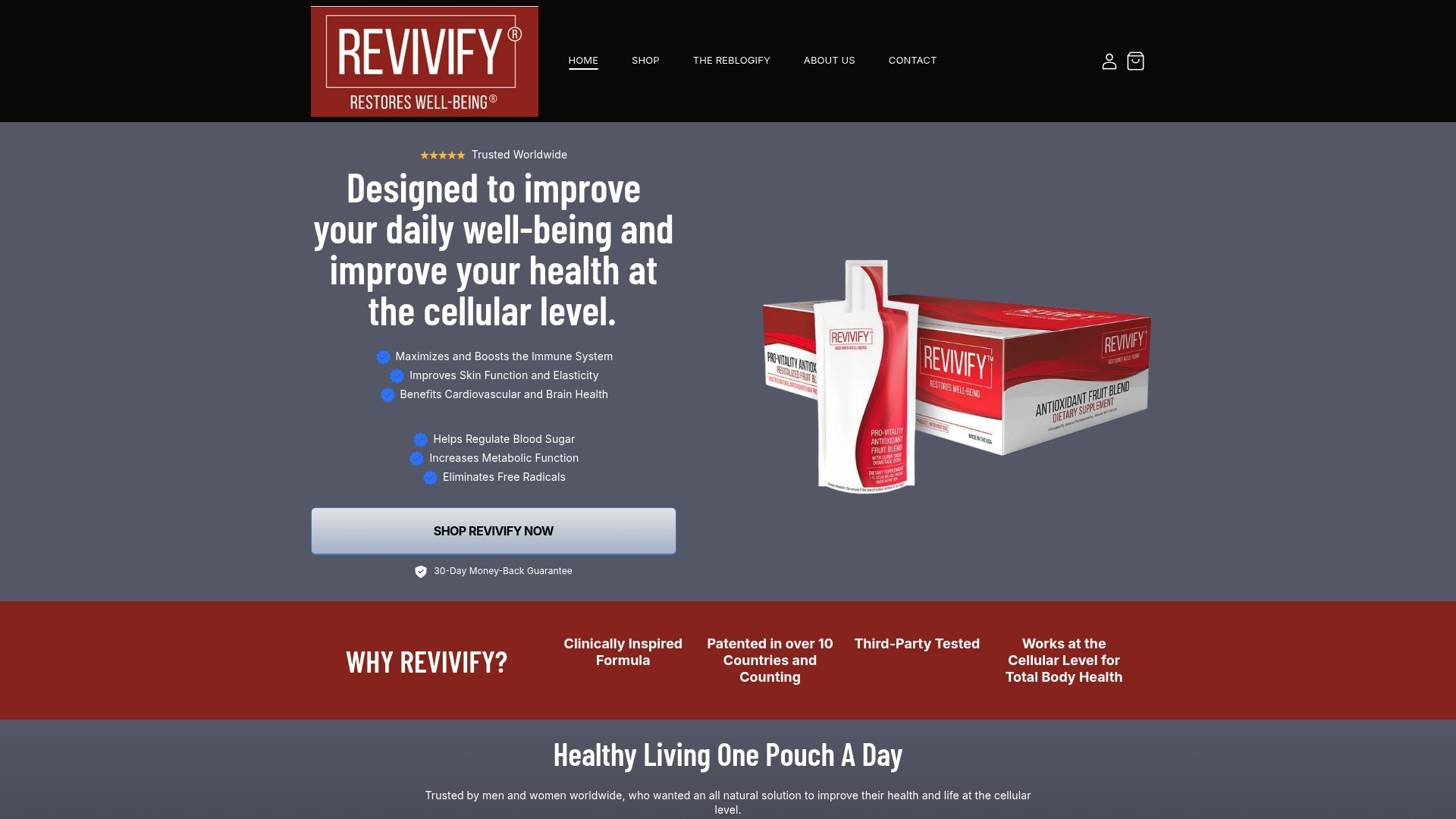
- Our formula pairs SOD with prebiotic fiber in a patented combination.
- We position Revivify as daily cellular support, not a therapy for acute SIBO treatment.
- If you have active SIBO, talk to your clinician before adding any new supplement to your routine.
If daily gut and cellular support fits into your broader plan, you can see the REVIVIFY 30-Day Supply details, including subscription and guarantee options, or browse our full product lineup to get started.
This article is general information, not a substitute for advice from a qualified doctor. Consult a qualified healthcare professional about your own circumstances before acting on anything here.
FAQ
What kills SIBO naturally?
No natural remedy is established as a reliable way to eliminate SIBO on its own. Some dietary adjustments and specific probiotic strains show modest symptom improvement in small trials, but the ACG guideline does not endorse a natural cure, and antibiotics remain the standard first-line treatment.
Can I take probiotics while on antibiotics for SIBO?
Yeast-based probiotics like Saccharomyces boulardii are often used alongside antibiotics because antibiotics do not affect yeast the way they affect bacteria. Bacterial strains are more likely to be reduced by concurrent antibiotic use, so many protocols save those for after treatment; check with your clinician about your specific regimen.
Should I be taking probiotics if I have SIBO?
It depends on your situation. Some strains, particularly S. boulardii and certain Bacillus species, have supporting pilot data, but the ACG guideline stops short of recommending any specific probiotic, so this is best decided with your clinician based on your SIBO type and health status.
What are the first signs of SIBO?
Common early signs include bloating, excess gas, abdominal discomfort, and changes in bowel habits, often worsening after meals. These symptoms overlap with several other digestive conditions, which is why breath testing and clinical evaluation are typically needed to confirm a diagnosis.
Sources
- ACG clinical guideline: Small intestinal bacterial overgrowth
- Probiotics, prebiotics & synbiotics in small intestinal bacterial overgrowth (PMC)
- SIBO: Small Intestinal Bacterial Overgrowth — Cleveland Clinic