

Probiotics and Mood: What a 4–8 Week Trial Can Actually Show
Probiotics can produce modest, strain-specific improvements in negative mood for some people, and certain formulations may help mild to moderate depressive or anxiety symptoms when used alongside standard care. Effects often begin around two weeks in, with clearer changes showing up between weeks four and eight. They work best as an addition to psychiatric treatment, never a replacement, and some people should check with a clinician before starting.
TL;DR:
- Choose a product that names the exact strain code and matches human mood trial evidence; a higher CFU count alone does not predict better results.
- Check that the label guarantees CFU through expiration, states storage needs, and carries independent testing; some strains require refrigeration to remain viable.
- Track mood for three to five baseline days, then take the same daily dose for four to eight weeks while keeping routines stable.
- People who are immunocompromised, critically ill, or have central venous lines face rare infection risks; those taking psychiatric medication should consult a clinician about interactions.
- If mood shows no sustained improvement after an honest eight week trial, reassess rather than continuing indefinitely; long term outcome data remain limited.
Table of Contents
- How the Gut-Brain Axis Makes Probiotic Effects Plausible
- What the Clinical Evidence Actually Shows
- Strain, Dose, and Timeline: Practical Evidence-Based Choices
- Safety, Side Effects, and When to Check With Your Clinician
- A Step-by-Step Protocol for Testing a Probiotic’s Effect on Your Mood
- Do Prebiotics and Postbiotics Change the Picture?
- Why Diet, Stress, and Sleep Shape Your Results
- Can Combining Probiotics With Other Habits Boost the Effect?
- Should You Take Probiotics Short-Term or Keep Taking Them?
- Our Take on Where the Microbiome-Mood Conversation Is Heading
- A Daily Supplement That Supports the Gut Environment Behind the Science
- FAQ
- Sources
How the Gut-Brain Axis Makes Probiotic Effects Plausible
Your gut and your brain are in constant conversation, and that conversation runs through four main channels. The vagus nerve carries signals directly between the digestive tract and the brain. Immune cells in the gut release cytokines that can influence mood-related inflammation. The endocrine system ties gut activity to the HPA axis, the loop that regulates cortisol and your stress response. And metabolic byproducts, including short-chain fatty acids and compounds from the tryptophan-kynurenine pathway, shuttle information between microbes and neurons.
This network is what Harvard Health Publishing points to when explaining why probiotics could plausibly affect mood: gut bacteria participate in producing neurotransmitters like serotonin and GABA, and they help regulate the inflammation that’s increasingly linked to depressive symptoms.
The main communication channels include:
- Neural: the vagus nerve relays signals between gut and brain in both directions.
- Immune: cytokines released in the gut can affect brain function and mood.
- Endocrine: the HPA axis connects gut signals to cortisol and stress regulation.
- Metabolic: short-chain fatty acids and tryptophan-kynurenine byproducts influence neurotransmitter availability.
One data point worth knowing: daily self-report studies find that negative mood can measurably decrease starting around two weeks into probiotic use, a window that single before-and-after questionnaires tend to miss entirely.
None of this amounts to proof that swallowing a probiotic capsule rewires your brain chemistry. What it means is that the pathway is real and biologically coherent enough to justify testing it, which is exactly what researchers have been doing. The honest takeaway is that the mechanism supports possibility, not certainty, so expectations should stay modest and individual results will vary.
What the Clinical Evidence Actually Shows
Here’s where the science gets more nuanced than most headlines suggest. Pooled data from recent meta-analyses indicate a small-to-modest overall effect of probiotics on depressive symptoms, not a dramatic one. A systematic review and meta-analysis covering multiple trials found consistent but modest benefit, paired with a clear warning: heterogeneity across studies is substantial, and that limits how confidently anyone can generalize the findings.
That heterogeneity shows up differently depending on who’s being studied.
- Healthy volunteers: modest reductions in negative mood, often detected through daily tracking rather than one-time assessments.
- Working adults under everyday stress: small but meaningful improvements in subclinical depression, anxiety, and stress measures in some trials, alongside reduced cortisol in a subset of studies.
- People with mild to moderate depressive symptoms: some randomized trials report improved mood scores and shifts in biochemical markers like serotonin after several weeks of multi-strain supplementation, though results vary by strain and study design.
- Major depressive disorder: evidence remains thinner and more mixed, reinforcing that probiotics function as an adjunct, not a frontline treatment.
Experts caution that heterogeneity in strains, doses, and trial designs makes broad recommendations difficult, and the field needs larger, independently funded randomized controlled trials to identify reliable psychobiotic interventions.
That caution matters because the heterogeneity isn’t just academic nitpicking. It comes from real differences in how trials are built. Studies mix single strains with multi-strain blends, use CFU counts that range widely, run for anywhere from a few weeks to several months, and sometimes carry funding ties to the companies whose products they’re testing. Put a dozen of these studies into one meta-analysis and the pooled effect size becomes a blurry average of very different interventions.
What does that mean practically? It means a positive meta-analytic finding tells you probiotics can move the needle on mood for some people under some conditions, not that any bottle labeled “probiotic” will do the job. A deeper look at the gut-brain axis mechanisms behind these findings helps explain why strain choice ends up mattering so much, which is exactly the next question worth answering.
If you want the original data behind the working-adult findings, including the cortisol results, the peer-reviewed meta-analysis in BMC Psychology lays out the full picture with effect sizes and study-by-study comparisons.
Strain, Dose, and Timeline: Practical Evidence-Based Choices
Not every probiotic is a psychobiotic, and that distinction is the single most important thing to understand before buying anything. A psychobiotic is a specific strain or combination shown in trials to influence mood or stress markers. Plenty of probiotics support digestion perfectly well without having any such evidence behind them for mental health outcomes.
The strains that show up repeatedly in mood-related research include specific Lactobacillus species, certain Bifidobacterium species, and newer entrants like Bacillus coagulans, sometimes classified under Weizmannia, which is a spore-forming strain built to survive stomach acid. One pilot study on the BC99 strain found promising early signals, though the authors were clear that larger, independent trials are still needed before anyone treats it as established.
Dosage is where a lot of marketing copy gets misleading. According to the NIH Office of Dietary Supplements, probiotic effects are strain-specific and dose-dependent, and a higher CFU count on the label is not an automatic sign of better results. What matters more is whether that specific strain, at that specific dose, has actual human trial data behind it.
On timeline, patience pays off. Daily mood tracking can pick up subtle shifts as early as two weeks in, but most trials run four to eight weeks before drawing conclusions, and that’s the window worth giving any product before judging it.
Before buying, run through this label checklist:
- Strain identification down to the specific species and strain code, not just the genus.
- CFU count guaranteed at expiration, not just at the time of manufacture.
- Storage requirements clearly stated, since some strains need refrigeration to stay viable.
- Third-party testing seals confirming the product contains what the label claims.
Pro Tip: Skip any probiotic that lists only the genus and species without a strain code. Without that code, there’s no way to connect the product to actual clinical evidence.
Safety, Side Effects, and When to Check With Your Clinician
For most healthy adults, probiotics are well tolerated, and the most common complaints are unremarkable.
- Mild gas and bloating during the first few days as gut flora adjusts, typically resolving on its own.
- Occasional digestive upset, which some people avoid by starting with a lower dose and building up.
- Rare but serious infections in vulnerable populations, including people who are immunocompromised, critically ill, or have central venous lines, a risk the FDA has specifically flagged for highly vulnerable groups like pre-term infants.
- Interactions with psychiatric medications are not well studied, which is reason enough to loop in a prescriber before adding a new supplement to an existing regimen.
It’s worth understanding the regulatory backdrop here. The NIH’s National Center for Complementary and Integrative Health notes that probiotics are regulated as dietary supplements in the United States, which means they don’t go through the same premarket approval process the FDA requires for drugs. That doesn’t make them unsafe, but it does mean the burden falls on you to choose products that carry third-party testing and to involve a physician if you’re managing a clinical mental health condition rather than general wellness. Our own strain safety checklist walks through this in more detail for anyone in a higher-risk category.
A Step-by-Step Protocol for Testing a Probiotic’s Effect on Your Mood
Running your own trial sounds informal, but a little discipline turns a vague impression into a useful signal.
- Pick a strain with trial evidence behind it for mood, checking strain code, CFU at expiration, and third-party testing.
- Record a baseline for three to five days before starting, rating your mood once or twice daily on a simple one-to-ten scale.
- Take the same dose at the same time every day for at least four weeks, ideally extending to eight for a clearer signal.
- Log anything that could confound results, including sleep changes, new stress, diet shifts, or medication adjustments.
- Review your log at four weeks, then again at eight, comparing trends rather than single good or bad days.
A few extra habits sharpen the results:
- Keep the rest of your routine stable so you’re not testing five variables at once.
- Watch for placebo effects by focusing on sustained trends across weeks, not short-term mood swings.
- Stop and consult a clinician if you notice worsening mood, new symptoms, or digestive distress that doesn’t resolve.
If you’re also curious how strain timelines play out for other outcomes, our breakdown of testing strain-specific probiotics for sleep uses the same four-to-eight-week framework, since sleep and mood often move together. At the end of your trial, you’ll have something more useful than a gut feeling: an actual log showing whether your mood trended up, stayed flat, or didn’t change at all.
Do Prebiotics and Postbiotics Change the Picture?
Probiotics don’t work in isolation. Prebiotics, the fiber compounds that feed beneficial bacteria, create the environment those strains need to survive and multiply in your gut. Postbiotics, the metabolic byproducts bacteria produce as they break down fiber, include some of the same short-chain fatty acids tied to gut-brain signaling.

A probiotic strain with solid mood-related trial data can still underperform if it’s dropped into a gut environment that’s hostile to it, low in fiber, high in processed food, or recently disrupted by antibiotics. That’s part of why some formulations pair specific strains with prebiotic fiber rather than offering the bacteria alone.
This doesn’t mean you need a dozen supplements stacked together. It means the supporting environment matters as much as the strain you choose. Our comparison of prebiotics versus probiotics breaks down which role each one plays and why combining them thoughtfully, rather than randomly, tends to produce more consistent results.
Why Diet, Stress, and Sleep Shape Your Results
A probiotic trial run during a chaotic month rarely gives you a clean answer. Diet quality affects which bacteria thrive in your gut in the first place, since fiber-poor diets leave less fuel for the beneficial strains you’re trying to support. Chronic stress keeps cortisol elevated through the same HPA axis that gut bacteria help regulate, which can mask or blunt whatever mood benefit a probiotic might otherwise produce.
Sleep deprivation compounds the problem, since poor sleep itself worsens mood and disrupts gut microbial balance, creating a loop that’s hard to break with a supplement alone. None of this means lifestyle factors replace the value of testing a probiotic. It means they’re confounders worth controlling for, which is exactly why the trial protocol above asks you to log diet, sleep, and stress changes alongside your mood ratings. A probiotic tested against a stable baseline tells you far more than one tested during finals week or a move across town.
Can Combining Probiotics With Other Habits Boost the Effect?
Probiotics appear to work best as one piece of a larger pattern rather than a stand-alone fix. Regular physical activity influences the same inflammatory and HPA-axis pathways that gut bacteria act on, and a diet rich in fiber and fermented foods gives probiotic strains a better chance of establishing themselves.
This is less about stacking supplements and more about not expecting a capsule to outwork a sedentary, low-fiber routine. The research on probiotics and mood almost never isolates the supplement from diet and exercise entirely, which means real-world results likely reflect some combination of all three. If you’re already working on sleep, movement, and nutrition, adding a well-chosen probiotic is a reasonable next layer rather than a replacement for those fundamentals. If you’re not, the supplement alone is unlikely to carry the full weight of a mood improvement on its own.
Should You Take Probiotics Short-Term or Keep Taking Them?
Most of the trials behind the mood findings ran for four to eight weeks, which tells you how long it takes to see a signal but not necessarily how long you should stay on a product afterward. Some people use a strain short-term, around a specific stressful period or season, and reassess. Others maintain a strain long-term, reasoning that a microbiome shift this subtle may fade if you stop feeding it the bacteria that produced the benefit.
There isn’t strong long-term outcome data settling this either way, since most studies simply didn’t run long enough to answer it. A reasonable approach is to complete your eight-week trial, assess your log, and if you see a genuine trend, continue for another stretch while periodically checking in on whether the benefit holds. If nothing changed after eight honest weeks, there’s little reason to keep taking that particular strain indefinitely. For a closer look at how this plays out with other strain-specific outcomes, our acid reflux strain timeline guide walks through a similar eight-to-twelve-week reassessment pattern.
Our Take on Where the Microbiome-Mood Conversation Is Heading
We offer a daily health supplement designed to support the body’s overall health at the cellular level, combining superoxide dismutase and prebiotic fiber in its formula. (Tryrevivify)
We think the biggest misunderstanding in this space isn’t about whether probiotics work. It’s about what “working” should look like. People expect a mood supplement to feel like a mild antidepressant, fast and obvious. The honest evidence points to something quieter: a gradual shift detectable mostly through disciplined tracking, not a dramatic before-and-after. That’s not a disappointing finding, it’s a more useful one, because it tells you exactly how to test a product honestly instead of guessing.
For readers who want to go deeper, our guide to gut-brain axis mechanics and our strain safety checklist are built to support that kind of informed experimentation. For a clinically grounded explainer from outside our own blog, the gut-brain axis guide from Bright Medical Wellness covers the same mechanisms through a medically supervised lens. We see our role as a resource for people testing microbiome approaches carefully, not as a substitute for psychiatric care when that’s what’s actually needed.
— Larry
A Daily Supplement That Supports the Gut Environment Behind the Science
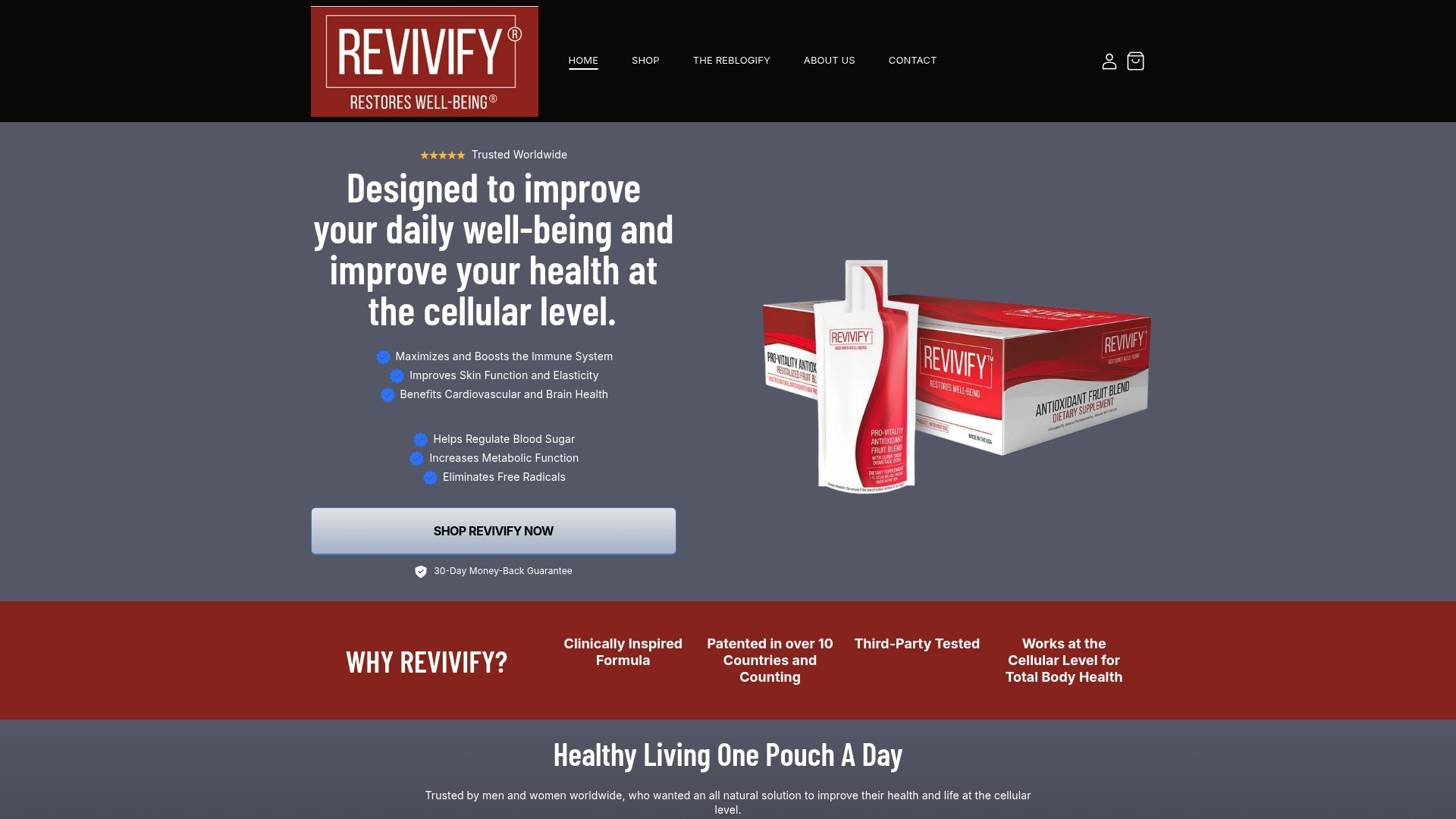
Everything above points to one practical conclusion: strain choice matters, but so does the gut environment that strain has to survive in. That’s the gap our REVIVIFY® 30-Day Supply is built to address. Our patented formula combines superoxide dismutase, a powerful antioxidant enzyme, with prebiotic fiber, giving beneficial bacteria the fuel they need while supporting your body’s cellular health more broadly.
We’re not positioning this as a replacement for a strain-specific psychobiotic trial. Think of it as the supportive layer underneath one: a foundation of reduced oxidative stress and better-fed gut flora that a targeted mood-focused strain can build on.
Before you order, check the product page for information on subscription options, any guarantees offered, and details about third-party testing.
Browse the full Revivify collection to see which option fits your routine.
This article is general information, not a substitute for advice from a qualified doctor. Consult a qualified healthcare professional about your own circumstances before acting on anything here.
FAQ
Do probiotics affect your mood?
Some probiotic strains can produce modest improvements in mood, particularly reductions in negative mood detectable through daily self-report tracking. The effect size across pooled clinical trials is small to modest, not dramatic, and depends heavily on which strain you use.
Why do probiotics make me feel so good?
If you notice a mood lift, it’s likely tied to gut bacteria’s role in producing neurotransmitters like serotonin and GABA and in regulating inflammation, pathways described by Harvard Health Publishing. It can also reflect better digestion, improved sleep, or a placebo response, which is why tracking your mood against a stable baseline matters.
Which probiotics are best for mood?
No single strain carries a universal “best for mood” label, since benefits are strain-specific rather than class-wide, according to NIH dietary supplement guidance. Look for a product listing a specific strain code with human trial evidence for mood or stress outcomes, rather than a generic blend.
What is the best supplement for a happy mood?
There’s no proven single supplement that reliably produces a “happy mood” on its own, and probiotics are best understood as a modest, adjunctive tool rather than a standalone fix. A strain-specific probiotic tested over four to eight weeks, alongside steady sleep, diet, and activity, gives you the clearest honest read on what actually helps your mood.
Sources
- Probiotics: In depth (NCCIH/NIH)
- Probiotics may help boost mood and cognitive function (Harvard Health Publishing)
- Probiotics reduce negative mood over time: the value of daily self-reports (PMC)